Six Books (and One Film) About Bad Fathers
Victoria Shorr Recommends Hilary Mantel, Alice Munro, Emily Brontë, and More
I had finished writing the book, Fatherland, a book about a bad father and his daughter, and written “The End,” but it turned out that it wasn’t. True, the book was finished, but it wasn’t as if the problem was solved. He, the father in the book, must have seen me hit send, close the file, brush myself off and start talking on the phone about early feminism or the death of Trotsky. Over and out.
But it wasn’t. There he lingered, like one of those nightmare guests who are still there in the morning, still drinking when you stumble down, shaking for coffee. Wanting, on top of it all, their bacon and eggs.
“Nothing doing,” I whispered to the phantom. “I’m a grown woman, fathers are nothing to me now.” And to further distance him, I turned to my bookcase where he himself was unlikely to ever venture. Instead, though, I found it crawling with fathers, ranging from the bad to the very bad. Fathers I knew, men I had taken in, one after another, from about age fourteen when I read Wuthering Heights, to last year, when my hand reached, almost of its own accord, for Lolita again.
I tried picking from the shelf something calming, like Dorothy Wordsworth. But the notes told me that she too had a dreadful father, who sent her away, Hansel and Gretl style, when her mother died. I moved that volume next to Grimm. That felt like action, even vengeance. And what about the rest of them? Why not try rearranging them by category of crime?
Because once I started looking at them this way, I saw that even those who seemed most like stand-alone villains, wreaking a unique form of havoc on the lives of those at their mercy, actually fell into rather neat categories—distinctive little circles of hell.
This turned out to be fun. I offer you here some of the first ones that came to hand.
*
The Simple Brute:
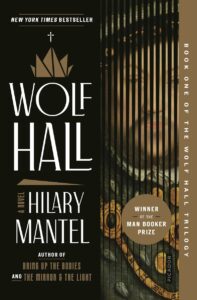
Thomas Cromwell’s father, Walter, in Wolf Hall
He beats his son brutality, more than once nearly to death. Those scenes are painful to read, but eventually son Cromwell runs away and finds an easy life first as a mercenary soldier. Death on the battlefield being a walk in the park next to a thrashing in a smithy by his savage blacksmith father.
The Monster:
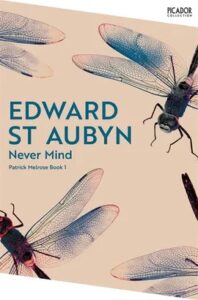
Patrick Melrose’s father, David, in Edward St. Aubyn’s Never Mind
David’s brutality is simply sadistic, as he repeatedly rapes his little son, starting when the child, Patrick, is five years old. The mother, who falls into another series of categories, is an alcoholic who wanders deaf, dumb and off to France, and offers no protection. Patrick at age eight finally turns on his father, little fists raised like a boxer, and the monster melts, like the Wicked Witch of the West. Too late, however, to save Patrick from a lifetime of seeking shelter via heroin addiction.
The Monster II:
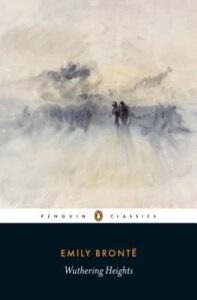
Heathcliff in Emily Brontë’s Wuthering Heights
Heathcliff’s monsterhood is actually more complicated, stemming from an impassioned thirst for vengeance rather than garden-variety sadism. After losing Cathy Earnshaw whom he’s loved all his life, he seduces her sister-in-law and marries her for vengeance, degrades and destroys her and her—his—son for vengeance, but at least ends up starving himself to death.
More Monsters: Alphonso in Alice Walker’s The Color Purple; James MacNamara in Edna O’Brien’s Down by the River.
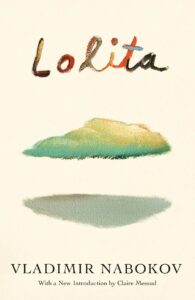
The Pederast with a Free Hand:
Humbert Humbert in Nabokov’s Lolita
The rapist here marries grown woman who, like all grown women, repels him but there is a child, a daughter, in the wings, pre-pubescent, which is exactly his cup of tea. By one of those Nabokovian sleight of hands [vid. “Picnic, lightning,” in same book, re: the death of Humbert’s mother], the grown woman is killed and the girl falls into his hands. During a hallucinatory road trip, she manages to escape him, but Nabokov takes Humbert’s vengeance for him: he gives her a terrible husband and kills her in childbirth. Humbert himself at least dies in prison, but one’s pleasure at that is mitigated by the fact that it’s murder he’s charged with, not child-rape.
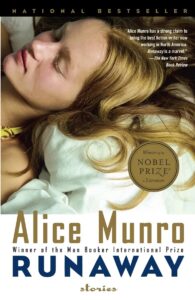
The Devious Pederast
In Alice Munro’s book, Runaway, Munro writes beautifully in several stories about a charismatic boyfriend brutalizing a child while the mother does nothing to protect her. As an aside, this is exactly what happened. Her own 9-year-old daughter was subjected to serious predation in Munro’s house during summer visits. Munro, also deaf and blind, won the Nobel Prize. Her daughter, on the other hand, made several attempts to kill herself. She has migraines and can’t sleep.
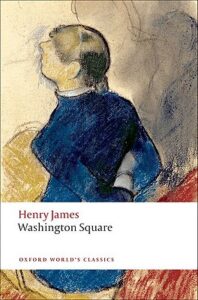
Freeze-out Fathers
This is a class of fathers whose daughters are not pretty enough to be worthy of their beneficence, generally looking like themselves rather than their mothers, the pretty women they’d married. Dr. Sloper in Henry James’s Washington Square, is a prime example. His pretty, vivacious wife dies, leaving him with a plain, quiet daughter, whom he raises in cold rooms, with a cold heart. Love finally enters her life, to the horror of Sloper himself, in the form of a fortune hunter, who gets her in his sites and dances with her. Smitten, she determines to marry him; Sloper makes sure that this is not to be. He is right, but he is monstrous. Catherine Sloper dies alone.
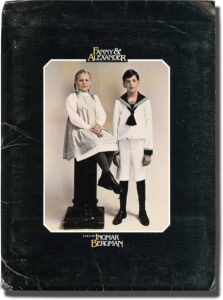
The Ghost
First encountered most intensely not on any pages, but in a dark movie theatre in São Paulo, where I’d gone to watch Ingmar Bergman’s Fanny and Alexander, which I assumed to be a charming period piece. True, it looked that way—the costumes were 1900s, but the film turned out to be horrifying, and unforgettable. There is a brutal stepfather, with beating scenes I couldn’t and can’t watch, who finally, to my unmitigated joy, burns up in his bed. We cheer. He is gone, but then he isn’t. We forgot about dreams.
Thus, in Fatherland, Josie’s father doesn’t abuse his children physically. He simply disappears from their lives. But Josie still sees him, first in her frosty windows at night and then again, years later, when he has become nothing to her, when she is strong and successful and untouchable—she thinks. She too had forgotten about dreams.
__________________________________
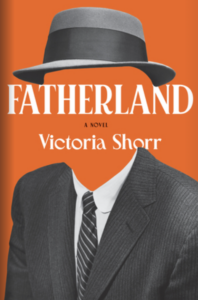
Fatherland by Victoria Shorr is available from W. W. Norton and Co.
Victoria Shorr
Victoria Shorr is author of the novels The Plum Trees, Midnight, and Backlands. She cofounded the Archer School for Girls in Los Angeles and the Pine Ridge Girls' School in South Dakota, the first independent, culturally based college-prep school for girls on a Native reservation in America. She lives in New York, New York.