Seven books that expand the conversation around ambivalent parenthood.
Earlier this month, The Cut launched a new vertical, “Oh Baby,” with an eye toward aggravating one demographic: the ambivalent prospective parent.
Over a week, readers were treated to a raft of anxious baby content. There was this piece about the resurgence of a sleeper self-help hit in the family planning canon (Merle Bombardieri’s The Baby Decision). Or this one, about the women who do regret having children. There was this advice column, aimed at thirtysomethings with biological clock agita. And this one, decrying the abundance of information that’s making it extra hard to “choose” these days.
In some ways, the baby decision (lowercase) is evergreen. At least in our modern times. One of the second wave’s more dubious gains was a reductive can-women-have-it-all discourse that stays conveniently blind to material conditions.
On the other hand, evidence that Millennials are putting a new spin on that discourse continues to mount. My generation is having kids later and less often, citing the economy and l’apocalyptic vibes. Which can help explain “Oh Baby,” and the growing canon of ambivalent parent literature.
As Bombardieri’s Baby Decision argues, treating the question like a single binary—to procreate or not—risks reducing a very chewy discussion. So here are a few books that aim to expand the conversation around modern parenthood. For readers who are ambivalent, prospective, prickly, curious, on the fence, or just plain interested in what’s possible.
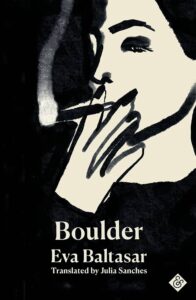
Eva Baltasar, translated by Julia Sanches, Boulder
Some recent ambiva-parent books, like Sheila Heti’s Motherhood or Torrey Peters’ Detransition, Baby, explore parenting as a hypothetical. Protagonists weigh the emotional and logistical pros, cons, and costs of procreation under less than ideal conditions. The engine is the question, in such novels: will there be a baby, at the end of this? And if so, will they be worth it?
Baltasar’s Boulder is a prime specimen of this vexy micro-canon. Shortlisted for the International Booker in 2023, this thorny queer novel drops us straight into the brain of a woman who gets swept up in her lover’s quest for parenthood. Though her own enthusiasm is half-mast at best.
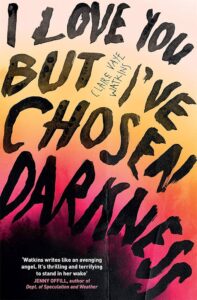
Claire Vaye Watkins, I Love You But I’ve Chosen Darkness
Other novels in the “Oh Baby” canon document the aftermath of The Decision. Novels like Rachel Yoder’s Nightbitch depict the surreal and alienating days of early parenthood with an eye to de-glamorizing the post-partum experience.
Watkins’ I Love You… sits cozy under this umbrella. This stylish novel, full of sentence-level pyrotechnics and mad dashes through the Mojave, traces a new mother’s descent into what’s either rebirth or psychosis. Your mileage will vary.
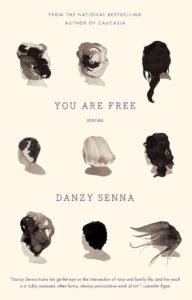
Danzy Senna, You Are Free
A lot of the ambivalent parent discourse tends to coagulate around white cis-het mothers of a certain milieu. I’ve got my suspicions as to why this should be, but for sake of list let’s kick off with a counterpoint.
Senna, whose light satirical touch brought us 2024’s terrific Colored Television, is shrewd on the conundrums unique to parents of color moving around mostly white spaces. This collection hums with multiracial dread, and explores the nuances of family making outside hegemony.
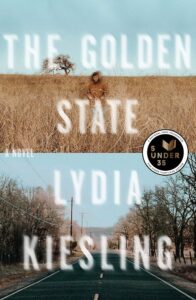
Lydia Kiesling, The Golden State
I inhaled this 2019 novel. Mostly because Kiesling’s voice is delightful, and this chronicle of Daphne—a young mother-intellectual on the verge of a nervous breakdown—is open-hearted and unsparing about the work that goes into balancing infant care with day job.
This book still feels revelatory for dramatizing all the little indignities that make American mothering harder than it should be. For instance: Daphne’s husband is stuck outside of the country, thanks to a visa problem. Her bank balance is in flux, because her university job is insecure. But despite it all, she loves Honey, the baby black hole at the center of this mess.
(To parrot Matty Healy of The 1975, “It’s about money, really, babies, isn’t it?”)
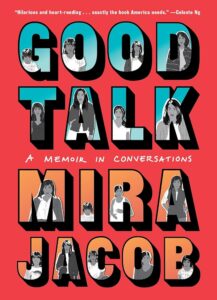
Mira Jacob, Good Talk
This graphic memoir isn’t ambivalent about parenting so much as it is thrillingly frank about a task it necessitates: explaining an amoral world to a child. Framed as a series of conversations between Jacob and her then six year old son, this beautiful book recreates hard talks about racism and systemic injustice. How do you teach your baby that the world is unfair?
I’d throw this one into the hands of all fence-sitting Millennials who worry about the next generation’s national inheritance.
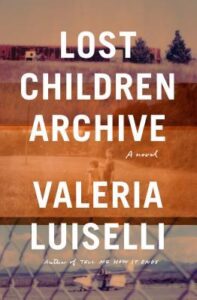
Valeria Luiselli, Lost Children Archive
This ambitious folio of a novel also takes the next generation seriously, from several angles. Luiselli’s masterpiece is at once a road trip, an intimate look at a blended family, and a work of impassioned social criticism.
It’s hard to bind this one with plot description, but here’s a taste: two parents are making a documentary about child migrants at the US-Mexico border, while their own precocious offspring are feeling neglected in the back seat. This one was especially prescient on its 2019 release. But Luiselli’s depiction of parents made myopic or careless in the face of polycrisis obviously still resonates.
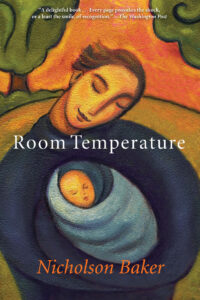
Nicholson Baker, Room Temperature
Perhaps you’ve heard that modern lit has a stay-at-home dad problem. Eric Magnuson’s fair gripe in The Atlantic last week pointed me to this hypnotic novella from one of our best fever dreamers.
Baker’s story hinges on a father’s interior monologue as he gives his “six-month-old Bug her late-afternoon bottle.” The daily work of keeping a small human alive is depicted here as mundane and holy by turns. Stay for the dazzling descriptions. And of course, the equal opportunity recognition.
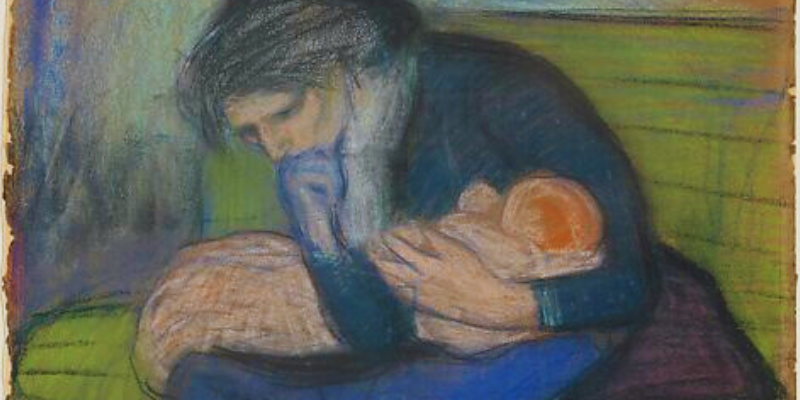
Header image: Pablo Picasso’s “Mother and Child on a Bench”
Brittany Allen
Brittany K. Allen is a writer and actor living in Brooklyn.