Remembering Tom Stoppard, the thinker’s playwright.
Tis a truth universally acknowledged: all precocious theatre kids raised up in Western traditions meet Arcadia or Rosencrantz and Guildenstern are Dead at some point sophomore year, then frantically try to secure the performance rights for one or the other until pushback from the Stoppard estate sends them back to the public domain.
This is the case because Tom Stoppard, the late, great Czech-British dramatist who died over the weekend at 88, represents our first acquaintance with electric, muscular, contemporary language. He is the first Not Shakespeare. The first Modern Man. Or he was mine, anyway.
The only playwright to win five Tony awards for Best Play, Stoppard’s canon spanned fifty years. He was prolific all the way through, and as an autodidact—Stoppard never got his degree—his interests were capacious.
As Michael Billington put it in a remembrance for The Guardian, Stoppard’s unique genius was in taking “seemingly esoteric subjects—from chaos theory to moral philosophy and the mystery of consciousness—and turn[ing] them into witty, inventive and often moving dramas.” He did this with all those feted projects—The Coast of Utopia, The Real Thing, Travesties, Leopoldstadt, and the aforementioned Rosencrantz. (Arcadia was robbed.)
Stoppard was an idea-driven writer and a heavy researcher, as wont to tango with the Velvet Revolution as the plight of Russian dissidents. Yet unlike predecessor/peers Harold Pinter or Mike Leigh, he resisted openly political work. Pyrotechnic argument was his mode, and philosophy was his way in. (Thus the appeal to sophomores.)
In fact, his most personal play, Leopoldstadt—which drew on his own family history during World War II—did not see daylight until 2007.
If you weren’t in the Drama Club but yearned to be, you may know the man better for his Hollywork. With Marc Norman, he co-wrote Shakespeare in Love, one of the top five movies to 1) ever send kids to theatre camp and 2) actually earn its Oscar nods. He dabbled with punch-ups, in the Indiana Jones universe. He never set his pen down.
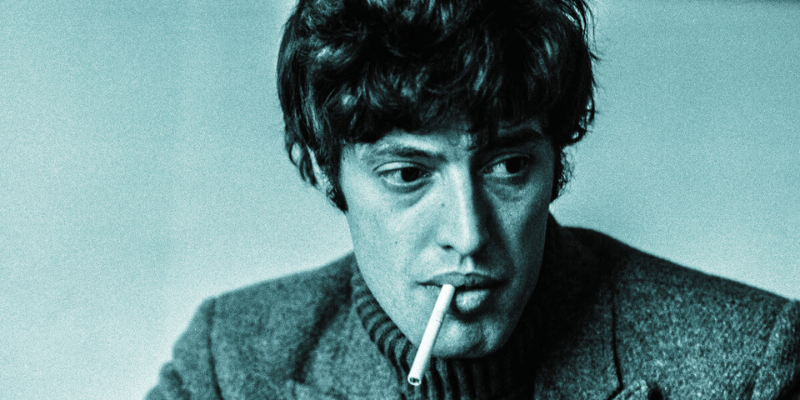
And the scarves! Oh, the scarves. These days, the glamorous iconoclast is in short supply across every writerly medium. But Stoppard, in his sweeping get-ups, could have been their king. Here’s Helen Shaw, in The New Yorker:
His air of louche mischief attended his farces about Dada and James Joyce and moral determinism, his cleverness worn as lightly as a scarf. Stoppard was the rare man-of-the-theatre known to the world outside the stage door: he was knighted in 1997; he was Mick Jagger’s favorite playwright and spiritual double, as well as what the playwright David Hare called a “conservative with a small ‘c,’ ” both in his literary tastes and courtly country-squire persona. (He swaggered like a dandy but dropped Latin declensions like an old boy; that’s how you become beloved by both your rock gods and your Queen.)
We’ll miss the romantic figure, yes. But this old drama kid thinks it’s the provocations that will linger, from classrooms here to Illyria.
Why? Here’s Shaw again: “For me, and I think for others, too, Stoppard offered a kind of on-ramp into the canon, offering to make us comfortable enough among the Great Authors to have our own thoughts about them. His was an inclusive elitism, an invitation into a life of unabashed, unstoppable thinking.” Which is to say he saw the fools and the wise, and pushed us both.
Rest well, good sir.
Image via

Brittany Allen
Brittany K. Allen is a writer and actor living in Brooklyn.