Rebecca Hall Reflects on Her Father’s Groundbreaking Book, Negro Liberation
“Being a child of a famous Communist father, who had me when he was older than I am now, is a strange thing.”
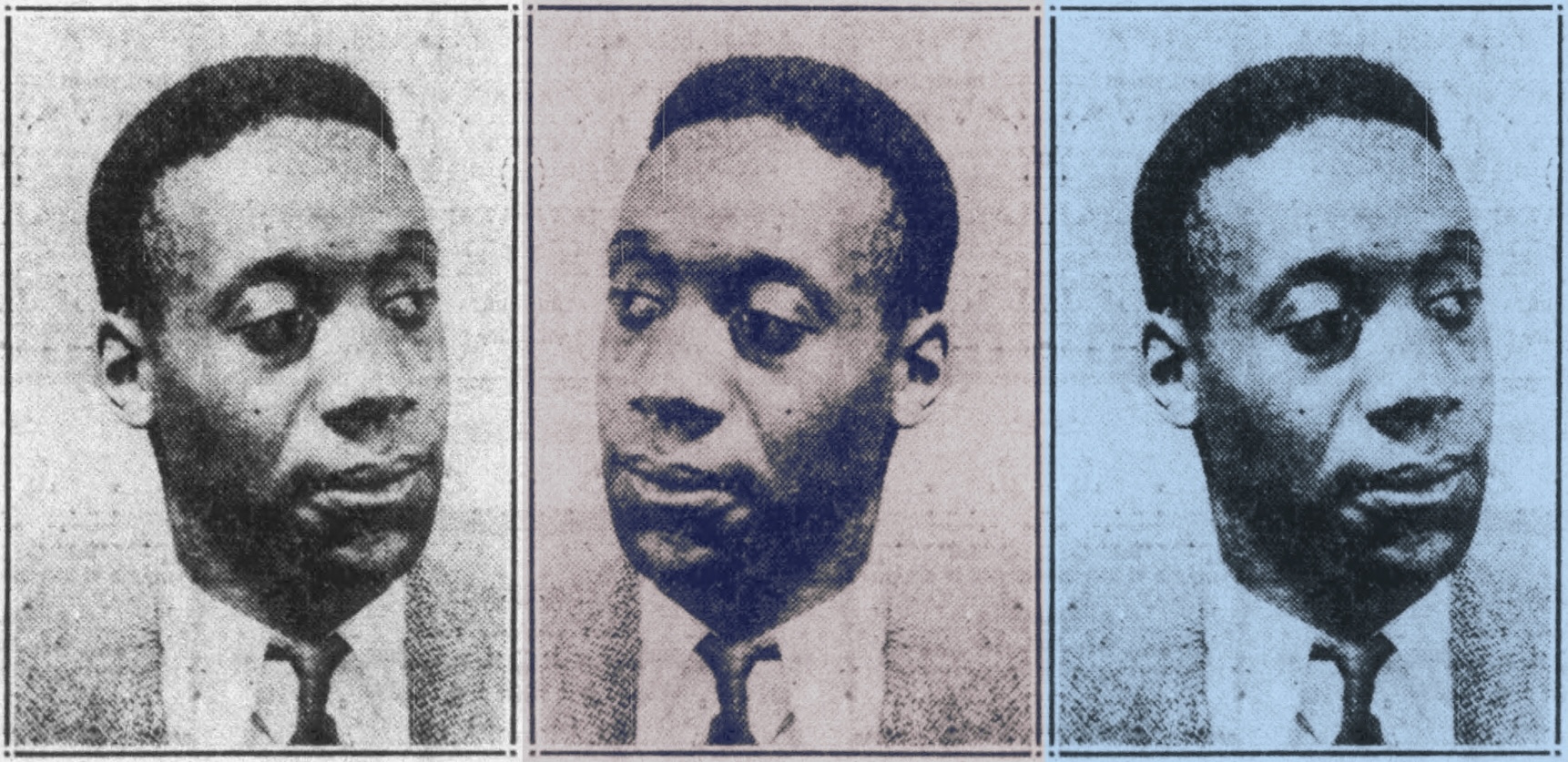
My dad, Harry Haywood, wrote Negro Liberation in 1948, fifteen years before I was born. I was with him when he died at eighty-seven, on my twenty-second birthday. That was forty years ago.
I am writing this while at a hot springs in Northern California, trying to recover and reset my nervous system after the 2024 election and the failure of liberalism. Join me on my prodigal daughter character arc. Watch out. The path is slippery.
My father spent his whole life developing a revolutionary position on the Negro question. He was obsessed. He knew that liberalism would fail and needed to articulate an alternative. Without this revolutionary position, fascism prevails. He fought fascism his whole life.
Being a child of a famous Communist father, who had me when he was older than I am now, is a strange thing.
I decided to bring his book back into print when young people I work with were regularly citing Negro Liberation. I needed to understand why folks were drawing on a book written in 1948. What did they see in it that I couldn’t? I became determined to know.
This has always been a point of grief for me—being an adult without my father. On the last day of his life, I went to his VA nursing home in Queens to hang out with him. It was my birthday, and I wanted to spend time with him and let him know I had finished Swarthmore College. When I got there, he couldn’t talk. He looked at me, but he was struggling to breathe. I rode with him in the ambulance to the hospital, as we kept powerful eye contact. I just talked and talked and told him I loved him as he died. Frankly, this ruined my birthday for me for the next forty years. There were 364 other days he could have died. Why my birthday? It is only now, during my prodigal daughter character arc, that I realized he might have been waiting for me so he didn’t die alone.
Being a child of a famous Communist father, who had me when he was older than I am now, is a strange thing. I did not have him as long as I would have liked, but I have memories. Memories that make me smile include his hysterical expressions:
Where does she tend bar? Meaning: “Tell me everything about her.”
Don’t look at me in that tone of voice. Meaning: obvious.
And wild advice that cracked me up as a teen, and which I now realize is excellent advice:
If you go out at night, watch out for footpads, and whatever you do, don’t stagger.
Always sit with your back to a wall.
Whenever I was heading out to go backpacking, he would say, “Remember to dig a hole for your hip, and watch out for hoop snakes, because they put their tails in their mouths, flip onto their side, become a hoop, and chase your ass through the woods.” I believed in hoop snakes until I was twenty-five years old.
He was also an incredibly dapper dresser. He accepted that I was a screaming tomboy and taught me how to fold my pants with a seam and hang them properly. I felt so seen by this.
I never could keep up with him when we walked through the neighborhood, even when I was a teen and he was eighty years old. I remember visiting him when he was living in Newark, and the USDA was delivering free cheese to Black neighborhoods. Don’t ask me why. But my dad and I quick-walked twenty blocks until we found that ruck. I was gasping for breath while we waited in line. My dad was just getting started. When we got to the front, he asked “Do you have any Brie?” All they had was big blocks of Velveeta, which he told me was not food. This was life in these Velveeta streets.
I loved reading with him. And now that I have been thinking about it, reviewing his papers and books, I realize that I am my father’s daughter.
He always had this following of young white Maoists who kept giving me copies of Mao’s little red book, starting when I was twelve, which is really weird, now that I think about it.
My dad also gave me some weird things to read for our little one-on-one Communist training, like Lenin’s On the National Question, which was a big ask of a twelve-year-old. But he also read so many other things with me. He fostered my interest in slave revolts. “Rebecca, read this book, American Negro Slave Revolts, and we can talk about it when you are finished. Great job! Now, here is a memoir by Angelo Herndon called Let Me Live.” Clearly, he was training me to be a warrior.
I loved reading with him. And now that I have been thinking about it, reviewing his papers and books, I realize that I am my father’s daughter.
He had little notebooks and a pen on him at all times to write down his thoughts. So do I. Now, at sixty-two, I have almost as many notebooks as he had.
He was an autodidact who never finished eighth grade because he refused to tolerate racism in the classroom. I have an insane amount of higher education, with that Berkeley Law degree and history PhD, but I am also an autodidact. I taught myself how to write a graphic narrative. It won awards. It’s out in eight languages. He gave me confidence in my ability to teach myself.
He wrote in self-defense. So do I. He worked all kinds of jobs—a shoeshine boy, a waiter, a Pullman porter. And he kept getting fired because he refused to be disrespected. So have I! I have been fired four times, once as a law professor and three times as a high school teacher, when I refused to teach racist history.
My political thought developed at a different time than my father’s, with different influences.
I am my father’s daughter.
I came out as lesbian at seventeen, in 1980, and I was terrified to come out to my dad, as he was surrounded by virulent homophobic Communists who insisted that homosexuality was “a symptom of the decay of the capitalist state.”
But when I finally came out to him in a letter, he wrote back: “We used to believe that homosexuality was a symptom of the decay of the capitalist state, but no more.” He talked about the Black gay people he worked with and admired. Like “brother Langston” and “brother Baldwin.”
My political activism has focused on front-line and fence-line climate justice issues and Black and Indigenous solidarity. I went to law school, over my father’s objection. Most parents would be thrilled. He said he didn’t want me to become a “Philadelphia lawyer” (whatever that means). Instead, he wanted me to work in a factory and mingle with the masses. I told him that sounds physically painful, and “I don’t know them.” I told him I wanted to be a “movement lawyer.” I practiced law for eight years as a legal services attorney, suing slumlords and preventing evictions. It became clear to me that nothing would change systemically this way. The racialized gender hidden in so-called fair outcomes, when it was clearly all about power, was too much for me. And I was tired of being the branch of welfare that sues welfare. Maybe that is what a Philadelphia lawyer is.
When I went back to school to get my PhD in history, I stayed active with the National Lawyer’s Guild, doing legal observer trainings on the Dineh reservation, at Standing Rock, and Line 3.
My political thought developed at a different time than my father’s, with different influences. In one of the last political arguments we had, I told him, “I see what you did with Marxism and race. Can you do gender next?” as I handed him the newly released Combahee River Statement. He did not take me up on my offer.
It wasn’t until I read Professor Burden-Stelly’s introduction to Negro Liberation that I understood my father wasn’t really writing about race. He was writing about colonialism. Still, I was struck by the Indigenous erasure in the book. It made no sense to me, since his work was so grounded in the fight against colonialism. And now, I’m sitting in this hot spring, trying to heal. This water is sacred. And, if you know my work, you know that I inhabit a deep understanding of history. So the next question I had was “Whose sacred?” What settler stole this sacred land and is now charging me for these healing waters? Who is this white woman telling me to “use an inside voice?” I told her we are outside, and she can come back after quiet hours. Settlers are relentless. It’s exhausting.
I learned so much from him, but his most powerful lesson was the one he embodied: How to have courage.
Negro liberation demands land from settlers in reparation for slavery and all the extraction that came after. That continues, even in this hot tub. We Black descendants of enslaved Africans are not indigenous to this place, but we are most certainly colonized. A true revolutionary position would not demand the land of others from the colonizer. To truly Free the Land, Black and Indigenous people must be in ethical relationship to each other and support the radical demand of Indigenous stewardship. We can figure out how to bring justice to both our communities, because our survival is bound up together. I am confident that we can build on my dad’s crucial work and take it to the next level. Black and Indigenous folks in solidarity.
Until recently, I didn’t even have an English copy of Negro Liberation—just the Hungarian version. When I found the English out-of-print version, I saw that my dad had dedicated the book to my grandmother, Harriet Thorpe, “who taught him how to fight.” I burst into tears when I saw this, because my book, Wake, is dedicated to her as well. Born enslaved, my grandmother taught my father how to fight. Then my father taught me how to fight. She died thirty-six years before I was born. I conjure her. I conjure my father. I carry this torch.
I learned so much from him, but his most powerful lesson was the one he embodied: How to have courage. It’s a practice. It starts with the small things you won’t stand for. It’s only then that you get to your authentic self, where courage is the only option.
Thank you, dad, for everything. I will never forget your courage and your absolute refusal to accept capitalism, imperialism, fascism, and white supremacy.
__________________________________
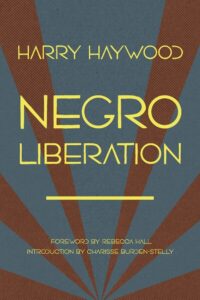
Excerpted from Negro Liberation by Harry Haywood. This edition published in 2026 by Haymarket Books.
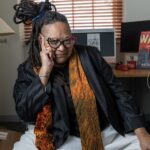
Rebecca Hall
Rebecca Hall, JD PhD is an independent scholar, activist, and educator. Her paternal grandparents were born enslaved and she is the daughter of Harry Haywood. Dr. Hall writes and publishes on the history of race, gender, law, and resistance as well as articles on climate justice and intersectional feminist theory. She is a graduate of Swarthmore College, Berkeley Law, and University of Santa Cruz. Her most recent book, Wake: The Hidden History of Women-Led Slave Revolts (Simon & Schuster, 2021) has won multiple awards, and was a finalist for the N.A.A.C.P. Image Awards and the Pen America Open Book Award. Wake has been listed as a Best Book of 2021 by NPR and The Washington Post, Forbes, Ms. Magazine, and has been released in eight languages. She has been a fellow at the Harvard Radcliffe Institute (2022-23) The Schomburg Center for Research in Black Culture, and The Stanford Humanities Center 2023-24). Her work has been supported by numerous grants and fellowships.