Reading the Stars: On Iconic Actors in the Age of Generative AI
Jadie Stillwell Reads Melissa Anderson’s The Hunger
Was there ever a time before we read the stars? From astronomy to astrology, humankind has been turning to heavenly bodies to make meaning for as long as we’ve been in existence. For Melissa Anderson, lead film critic at 4Columns and former senior film critic at the Village Voice, reading the stars has a different, though still crucial, valence. Her celestial bodies don’t inhabit the night sky, but rather the silver screen—and yet, reading them has become as necessary in 2026 as observing the Milky Way was to Galileo in the 1600s.
A self-described “acteurist,” Anderson’s first collected work, The Hunger: Film Writing 2012 – 2024, out from Film Desk at the end of last year, charts a gimlet-eyed attention to the movie star, one of cinema’s sui generis elements. (The term, borrowed from curator and critic Dave Kehr, designates stars as “vehicles of meaning in their movies.”)
Such attention opens onto Anderson’s frisky engagement with the motive force of cinephilia. That is: desire. Anderson never shies away from the pleasure that makes movie-watching a proper love affair. Better yet, she centers a lesbian attraction that renders her tastes and their articulations a splendid archive of queer spectatorship, right up there with Boyd McDonald’s legendary Cruising the Movies, which Anderson cites as “a model critical text” in her collected 2016 review.
Implicit in all star studies is the idea of the performing body as text.
But even more than an argument for the necessity of more lesbian film criticism (anyone who reads or has read Anderson will find this point inarguable), Anderson’s work evinces a subtler argument for a mode of critically reading that is rapidly disappearing, or at least becoming more ontologically insecure. Organized into four sections, the last of which is called “Star Studies,” The Hunger puts forth a strong case for reading our movie stars as one of the most generative, embodied modes of interpretation out there. It also, perhaps unintentionally but no less critically, reminds us that, in the age of generative AI performance, an “acteurist” mode of reading may be one of the last refuges for purely human art-making.
*
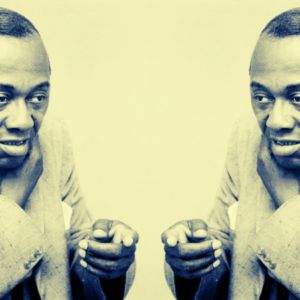
In Anderson’s book, “Star Studies” refers to discrete profiles on icons like Sidney Poitier, Lily Tomlin, Jane Fonda (where Anderson offers her own astute theory of what the star ‘says,’ and, therefore, means). It is also the name of a genuine field of academic study. With the publication of Richard Dyer’s 1979 monograph, Stars, scholars were invited to see the titular object as “an image… constructed out of a range of materials.” Those materials included, among other things, the logic of commodity capitalism and cultural preconceptions of their time. In the nearly 50 years since Dyer’s text arrived, the field has retained its heterogeneity and developed into a complex set of constellations.
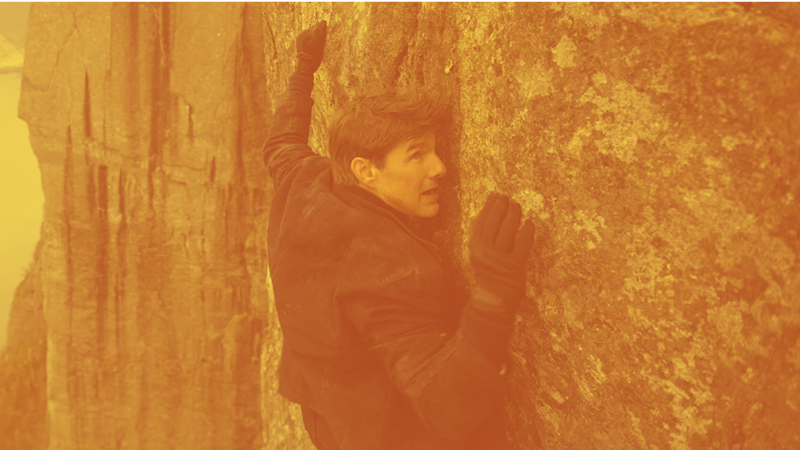
Works like Sharon Marcus’s The Drama of the Celebrity or Anne Anlin Cheng’s Second Skin: Josephine Baker and the Modern Surface further the study of the star as a site of gendered, cultural, and racialized formation. Meanwhile collected works like Starring Tom Cruise activate star discourse to read a single celebrity for what their stardom suggests about fame, nation, and sex.
In popular settings, star studies might take the form of anything from film criticism like Anderson’s, which often draws from famous biography to situate a performance’s peculiar resonance, to works like Tavi Gevinson’s Fan Fiction, which imagines a discourse with the hall of mirrors that is Taylor Swift.
Implicit in all star studies, though, is the idea of the performing body as text. Even when it draws extensively from cultural and social contexts—elements that, after Dyer, are inextricable from the concept of the star itself—the celebrity’s physical form is a necessary locus of exploration. For feminist scholar Jennifer Bean, for instance, the “extraordinary,” stunt-performing body of the early female movie star is essential to understanding the way that stars retain both their distance from and connection to “ordinary” humanity.
*
Throughout Anderson’s text, a pull toward a particular star is grounded in an attempt to “articulate a film’s effect on [the critic].” That effect, in Anderson’s succinct terms, is one of pleasure or displeasure—both are embedded in an experience as much of the body as the intellect.
The movie star remains poised, though precariously, to remain the one thing not replicable by generative AI.
When recounting her own earliest days of cinephilia—solo cinema trips to see nunsploitation film Agnes of God—Anderson notes her “repeat viewings were mandated by a lust that I… could not fully make sense of at the time.” As a critic, however, Anderson understands and wields this response well. Her readings of films ranging from Madonna: Truth or Dare to Sebastián Lelio’s A Fantastic Woman are enlivened by a recognition of the human material at the foundation of a star’s construction.
Of the Madonna in Truth or Dare, Anderson describes a “tiny, hard body bearing the weight of the symbols and symbolism ascribed to her (by herself, by others, by me).” Here, as elsewhere, Anderson’s genius is to locate her own viewing body as one of those making sense of these larger-than-life forms. In the A Fantastic Woman piece, she levies this awareness to launch a piquant critique of the film’s “fixation” on its trans star’s body, while acknowledging that that stardom is established through bodily pose: “Daniela Vega… elevates even the most minor gesture—petting a dog, lifting an arm to active a motion-sensor hallway light—into a gesture of minor majesty.” For Anderson, this elegance, deeply corporeal, is the mark of a “true star.”
*
What might happen to stars and those who read them, then, as the human body becomes less available to us on the big screen? The value of star studies is in part the way in which it privileges cinema’s inimitable ability to capture living human beings. While reading for cinematography, editing, and sound are all meaningful aspects of film criticism, the star is perhaps the only filmic element previously irreducible to purely digital forms.
Even in the age of James Cameron’s Avatar films, there is no “star” reading available to motion-captured or largely CGI bodies. Familiar faces, with all their attending cultural signifiers, are simply not present when digitally masked on the screen. Case in point: a friend and I recently spent fifteen minutes post-Fire and Ash trying to remember who “plays” leading man Jake Sully. That kind of discourse is the antithesis of star studies. (It’s Sam Worthington, by the way.)
When SAG struck in 2023, one of the central issues was the question of AI co-optation of actors’ performances and bodies. Though the union fought hard for better guardrails and protections, the latest reports from Hollywood suggest studios are making some actors’ employment contingent on their acceptance of “digital replicas.”
With this in mind, the “acteurist” mode of reading that The Hunger displays becomes not just specialized, but essential. Anderson argues this, beautifully and preemptively, in her piece on 2019’s vexing Ad Astra. There, the critic offers Brad Pitt (the film’s “supernova”) as a superior form of VFX. “For all of Ad Astra’s visual acumen,” writes Anderson, “the technical virtuosity remains subordinate to the film’s greatest special effect: the maturing, tear-dampened visage of an actor who emits a force field more powerful than earth-destroying cosmic rays.”
She’s right, of course, even for those viewers less affected by Pitt’s luminescence. The movie star remains poised, though precariously, to remain the one thing not replicable by generative AI—despite the best efforts of projects like AI-production company Particle6’s Tilly Norwood. But that guarantee is not in the technology of stardom itself (which, I’ve argued elsewhere, is faulty machinery); rather, the pre-eminance of the human thing at the center of our silver screens depends on the way we scan for it, look for it, and, as Anderson teaches, read. It shouldn’t be so hard. After all: looking to the stars has long been humanity’s favorite thing.

Jadie Stillwell
Jadie Stillwell is a writer, editor, and film programmer based in New York. Her work has appeared or is forthcoming in Screen Slate, Interview, Little White Lies, Public Books, and more.