Progressive Except for Palestine: On Growing Up in Bari Weiss’s “Urban Shtetl”
Laura Kraftowitz Examines the Fault Lines and False Choices of Liberal Judaism
Bari Weiss is in the news again, as part of the Trumpian takeover of legacy media. Months before Stephen Colbert was fired and became the “martyr [of] late night,” it was widely reported that Weiss, the unofficial spokeswoman of the Jewish American right, was in talks to sell CBS her anti-woke mouthpiece, The Free Press, for $150 million. And now, seven years after the horrific Tree of Life shooting, two years after October 7th and the beginning of Israel’s genocidal campaign, she has been appointed Editor-in-Chief at CBS News.
“The most upwardly mobile Jew since Moses,” Weiss grew up five minutes from me, in Squirrel Hill, the center of Jewish life in Pittsburgh. She’s called it an “urban shtetl,” which, sure, though my experience is less shtetl than suburb—kosher wine tastings at Pinskers for Baby Boomers in Patagonia, synagogue parking lots filled with Subarus and Lexuses.
My congregation was an outsider in Bari’s shtetl—a hippie chavurah founded by liberal academics. We met in the rented auditorium of the local Jewish day school, had no rabbi, and were led by a female cantor. Some of Squirrel Hill’s Jews didn’t even consider us coreligionists.
These alienating bonafides signaled to me that my congregation was at the vanguard of the Jewish community, tradition-bucking progressives in a sea of normies.
I was made aware of our status whenever I attended classmates’ bat-mitzvahs in multistory prayer halls with floor-to-ceiling stained glass. Or received side-eye from Hasidic families walking to Shabbat services as we heretically exited the car. These alienating bonafides signaled to me that my congregation was at the vanguard of the Jewish community, tradition-bucking progressives in a sea of normies. I believed this, and took pride in it, until I lived in Gaza for a year, came home, and realized how devastatingly similar we were.
Most people already know a thing or two about Weiss, like how she was hired by The New York Times during Trump 1.0 as a gesture to “ideological DEI,” then left in a huff with a dramatic goodbye note to start an anti-woke university mired in controversy and resignations. More recently, many believe her tweets put a target on Refaat Alareer and helped get him killed.
Weiss’s entrée into the public sphere was trying to ruin Arab and Muslim professors’ careers. In 2003, Bari Weiss, then an undergrad at Columbia University, tried to get Palestinian American historian Joseph Massad fired, along with several of his colleagues. (While unsuccessful then, we are currently watching similar campaigns bear fruit.) The strategy at the time was that Weiss and others, in coordination with Hillel, would attend classes by professors from the MENA region who criticized Israel. They asked antagonizing questions, hoping to bait them into saying something antisemitic. This effort was unsuccessful—it would appear the professors were not, in fact, antisemites.
Undeterred, Weiss founded Columbians for Academic Freedom and co-produced Columbia Unbecoming, a documentary funded by the AIPAC-adjacent David Project, in which the students misquoted the professors. The smear campaign, whose high-profile supporters included disgraced Democratic congressman Anthony Weiner, was also an utter failure—after an extensive inquiry, the professors were exonerated. If you enjoy withering academic takedowns, I recommend Massad’s response from that time.
But Weiss kept at it. The next year, she founded The Current, a student-run Jewish affairs journal in which she wrote her first widely-read piece, “Lessons from the Palestine Solidarity Movement.” The article, reporting from a conference at Georgetown, lamented that pro-Palestine activists had more “aesthetic appeal” than the Jewish Defense League, the designated hate group that she equated them to. She fretted that in contrast to the “Jewish mafia” with its “thug-like bodyguards” whose members “stood in front of a giant Israeli flag passing out materials equating Palestinians to Nazis,” the pro-Palestine activists wore jeans and graphic tees and spoke the language of “moral conscience.” She worried that this was “making Zionism look like it’s inherently antithetical to human rights.” With messaging like that, Weiss predicted, “[t]here was no contest.” Palestine solidarity activists would “win over the hearts and minds of anyone.”
We placed our bodies in front of the bulldozers and tanks, attempting to disrupt the destruction.
Like Bari Weiss, I also attended the Palestine solidarity conference—as a participant. (The year I went, I did not encounter Weiss, but her ridiculous counterpart Lee Kaplan, a self-described “undercover investigative journalist” who disguised himself “as a Pakistani Muslim… equipped with a hidden camera.” If memory serves, this involved a glued-on mustache and a bad accent.)
I’d recently returned from Gaza. It was the Second Intifada and Israel had denied entry to UN peacekeepers. In response, the International Solidarity Movement (precursor to the Freedom Flotilla) brought people from around the world to witness what was happening, and when possible, to intervene. I was one of the hundreds of activists who went to Palestine. I was stationed in Rafah, in the south of the Gaza Strip. Our main intervention was at the border with Egypt—a dizzying strip of sand littered with tank tracks and crushed houses where Israel was establishing a “military zone.” We placed our bodies in front of the bulldozers and tanks, attempting to disrupt the destruction.
Israeli soldiers killed two of our colleagues—Rachel Corrie, 23, and Tom Hurndall, 21. They deported the others, and imposed new restrictions that made it nearly impossible for the international community to enter Gaza. I managed to stay behind with my co-coordinator Mohammed. By night, I stayed with families on the border whose homes were targeted by sniper towers and would one day be demolished. By day, I wrote down the families’ stories to send back home. As the city crumbled, my emails became more desperate, as if recording every detail could protect against loss. Two days before I was scheduled to leave to attend Tom’s funeral, Israeli bulldozers surrounded the street where I’d stayed, and demolished the whole block.
In Bari Weiss’s younger sister’s infamous essay in The Wall Street Journal, she blamed DEI for her failure to get into an Ivy League school. “I offer about as much diversity as a saltine cracker,” Suzy Weiss lamented, in what reads like a preview to our current crisis. “To those claiming that I am bitter—you bet I am! An underachieving selfish teenager making excuses for her own failures? That too!”
Inflexible, conformist, authoritarian viewpoints are particularly transmissible across generations, still more so when accompanied by insularity and a history of oppression.
As a teenager in the sheltered bubble of Pittsburgh, I, too, absorbed the idea that my special combination of white upper-class Americanness, laced with the moral weight of generational trauma, had predestined me to rise to the top of some important, highly visible profession. Growing up in Pittsburgh’s Jewish community was the social justice corollary to growing up in LA with nepo babies in your student body. Even my scrappy congregation churned out a Nobel laureate, a Sundance winner, and the country’s leading expert on white supremacy. It was a little stressful. Or in Suzy’s words, “To those kids who by age 14 got their doctorate, cured a disease, or discovered a guilt-free brownie recipe: My parents make me watch your 60 Minutes segments, and they’ve clipped your newspaper articles for me to read before bed.”
In case career pressure wasn’t enough, there was also survivor’s guilt, driven into us via Holocaust imagery and “Never Again” incantations that made my very existence feel like original sin. One thing I suspect Weiss and I have in common is that we are both trying to carry that burden. We want to redeem the horrors of our past by protecting our community in contemporary times. There’s just one key difference—who it is we see as being part of our community, and who gets left out.
The field of political psychology has long seen the immediate family as the place where these core values are passed down. Inflexible, conformist, authoritarian viewpoints are particularly transmissible across generations, still more so when accompanied by insularity and a history of oppression. And many children, in seeking to heal the wounds of patriarchy, replicate them. These once groundbreaking theories have become so common sense that they’re now slogans and memes. “The personal is political.” “Hurt people hurt people.” “Fascism begins at home.”
Even when my childhood congregation fails to apply its own values when it comes to genocide, I always will.
Like many in her congregation, Bari Weiss went to the same high school where her parents met. Publicly, Weiss often speaks proudly of having grown up in a home with passionate political disagreement—but in an interview with her parents in the Jewish Chronicle, “the Weiss Patriarch” is given twice as much room as his wife to speak, and objectifies her three times. Does it surprise anyone that when it comes to politics, her “bleeding heart conservative” father and “very moderate liberal Democrat” mother “find harmony” in supporting whichever political “candidates are good” on Israel?
Patriarchal, conservative-leaning families with a defensive identitarian politic are not unique to Jews (see: every populist nationalist movement ever). Tribalist political outlooks are exceptionally hard to shake. Most Jews do not join outsidery congregations like the one I grew up in—the Reconstructionist denomination we’re a part of numbers less than 1 out of every 37.
But even if the exception only proves the rule, it bears looking at how the rule gets broken. Take me as Exhibit A—unlike Weiss, I didn’t attend my parents’ high school, because like most families in my congregation, my parents moved to Pittsburgh from other states. We were led by women instead of the all-male cast of rabbis that blanketed the other bimahs across town.
My mother, as Membership Chair, supported outreach to the LGBTQ+ community. This helped make our congregation, whose name Dor Hadash translates from Hebrew to “New Generation,” grow at a time when congregations across the board were shrinking, and become the local spiritual home of young progressive Jews. My father now strategizes with some of these newcomers to move their congregation toward anti-zionism—or at least a more robust critique of Israel. There is, for now, open intergenerational disagreement.
My childhood congregation is far from perfect. Their “PEP” (progressive except for Palestine) politics repelled me long ago. But it’s important to ask why the generations it has raised have been uniquely able to shed the Palestine exception to their progressivism. Out of six kids who attended my Hebrew School class, one grew up to become pro-Palestine representative Summer Lee’s campaign manager and defeat $4 million of AIPAC money. Another married a Quaker from Ramallah and now works for immigrant rights on the Texan border. And then there’s me, who’s devoted much of my adult life to Palestinian liberation. (It’s worth noting that we are also the three women of our class.)
Weiss gets under my skin not only because of who she is, but because she reminds me how unstable the boundary is. How easily I could have turned out just like them—and just like her.
I believe the cosmopolitan, empathic Judaism we grew up with, with families steeped in the values of openness and gender equality, is the reason I see my ancestors’ faces in the faces of my friends in Gaza. So that even when my childhood congregation fails to apply its own values when it comes to genocide, I always will. Whereas Weiss’s Holocaust survivor’s guilt, like that of too many Jewish Americans, has been shaped by an upbringing of insularity, fear, and antiquated norms. So she sees Palestinians as Germans.
The tragedy of Jewish support for Israel is that it is tied up in individual failings. Families are wiped out in Gaza because we are susceptible to community pressure, the desire to make our parents (fathers) proud, the fear of being destroyed or cast out. Bari Weiss isn’t exceptional.
She’s the neighbor who expressed open disdain for my human rights work to my mother.
She’s the dentist who filled the cavities I’d acquired from tray upon tray of Gazan sweet tea, while gleefully pontificating about Yasser Arafat’s death.
She’s the urban farmer who asked, “Isn’t ethnic cleansing just how states are made?
She’s the French tutor who screamed at me over dinner, “They’re animals!”
She’s the relative I once looked up to, who disagrees with Israel’s starvation campaign but considers Peter Beinart “a radical.”
And if I’m honest, she’s many of the people in my childhood congregation, which welcomes interracial couples and polyamorous triads—but once blocked interfaith initiatives by the local Muslim-Jewish Discussion Group. And when some congregants tried to invite pro-Palestinian speakers last year, the board preempted their efforts by pushing through an initiative declaring the congregation was “liberal Zionist.”
When I returned from Gaza to Pittsburgh, despite everything I’d witnessed, I was full of hope. I was convinced my community’s uncritical support for Israel was a misunderstanding I could help clear up. I believed that no one with a shred of humanity could sign off on Israel’s occupation and siege, and I’d always known the people I grew up with to be deeply humane. They’d raised me to mistrust authority, resist groupthink, and fight for justice. They’d taught me never to put my head in the sand as the German citizenry had. I figured that once I—someone they trusted, someone of them—shared my stories and showed them my pictures, the wool would fall from their eyes.
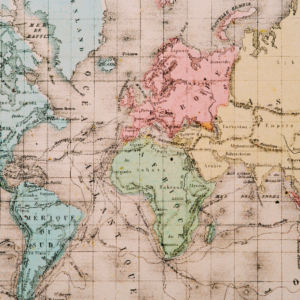
Instead, my cantor denied Gaza even existed. “When I look at the map,” she said, “all I see is Israel.”
Weiss gets under my skin not only because of who she is, but because she reminds me how unstable the boundary is. How easily I could have turned out just like them—and just like her.
Seven years ago, the mass shooting at Tree of Life tore through Weiss’s and my community. My congregation, which was renting space at Weiss’s synagogue at the time, had attracted the shooter’s attention through its public support of immigrants. Among others, we lost Jerry Rabinowitz, a doctor who’d cared for my grandmother at the end of her life and given my sister her first job.
I remember the surreal drive to the funeral in the dark before dawn. I remember how our cantor looked hollowed out on the skewed projector screen at the Jewish Community Center gymnasium where we assembled. Tree of Life had been closed off by the FBI, and she said our physical distance on bleachers and theater seats reminded her of our displacement. “Shover oyvin omachniah zodim,” she pronounced, “end our exile,” and the words of the amidah cradled me across loss.
Within a year of the shooting, Bari Weiss would publish her rallying cry, How to Fight Anti-Semitism. (Among other things, the book would describe the Council on American-Islamic Relations—which had raised $200,000 to support Pittsburgh’s Jewish community after the shooting—as “a Hamas-affiliated anti-Semitic propaganda organization.”) I would co-found City of Asylum/Detroit, an organization that provides safe haven fellowships to exiled immigrant writers and artists, as a way to uplift the social justice work that the shooter wished to erase.
My organization’s newest fellows are from Gaza, an artist-writer couple with a two-year-old son. Their visas were revoked right before they were set to travel to the US, so they’ve become our fellows-in-exile. Sometimes when I talk to them, I can’t help but think of my great-grandfather, who traveled here from Poland between world wars and lost everyone back home. Our fellows escaped to Cairo before Rafah’s border closed, but their families are still in Gaza. I wonder if Weiss would see them as villains in her story—or merely the unfortunate collateral she’s convinced is necessary for Jews to be safe.
In many ways, I actually admire her fighting spirit—if only she’d point it in the right direction. It’s such a tragically simple, seemingly impossible fix. Israel’s war crimes endanger Jews, but die-hard Zionists, like MAGA acolytes, are deployed against their own self-interest. Call it Palestine Derangement Syndrome.
There are aspects of my religion that I have always loved: its earthiness, its pragmatism, its emphasis on tikkun olam, the repair of the world. And maybe, as I’ve been hearing from my parents for twenty years, it is finally true that “things are changing.” Maybe one day, like so many German young adults who today make pilgrimage to kibbutzim as a form of repair, Jewish Americans will visit Palestinian villages en masse to rebuild homes and replant olive groves. But even if that utopian vision comes to pass, it will be too little, too late.
The time for our people to wake up is decades past. For those who tried, we’ve failed to wake them, and maybe we never could. Now Bari Weiss is ascending to the top of network news, and the moral high ground once bestowed on us through unspeakable suffering lies under Gaza’s rubble and mass graves. As Weiss’s favorite professor Joseph Massad put it, “Palestinians are the Jews’ Jews.”

Laura Kraftowitz
Laura Kraftowitz is the founding co-director of City of Asylum/Detroit. Her writing appears or is forthcoming in The Kenyon Review, Poetry, Protean, and elsewhere. Previously, she was an on-the-ground reporter in Gaza for The Electronic Intifada. Her first leadership role was as a coordinator for the International Solidarity Movement, using nonviolent civil disobedience to oppose Israel’s military occupation.