Pepper Basham on How The Secret Garden Inspired Her Love for British Literature
"I can still find my way there through these pages. Some gardens, it turns out, are always in season."
The world was not necessarily a small place for me as a child, but it was consistent.
Big Sunday lunches with cousins playing in the nearby creek together, a small elementary school that had two grades per room, and a swing on Granny’s front porch where I fell in love with stories. The stories she told were passed down through seven or eight generations, all woven with an Appalachian culture of victories and hardships and, as Granny would often remind me, a thread of hope.
I suppose those moments were what first sparked my imagination for bigger and vaster places beyond my hemmed-in mountain world.
I was a spark waiting for the right flicker to set my imagination alight with even more stories.
That is ultimately what The Secret Garden is about—the stubborn, almost unreasonable insistence of living things to grow toward the light.
And in my sixth-grade year of school, it happened.
Now, I’d been a reader for years. The Boxcar Children, Nancy Drew, anything I could get my hands on in our little school library, but in my sixth-grade year, the sweet librarian hand-picked a book for me that she “thought I would like.”
The Secret Garden by Frances Hodgson Burnett.
And what happened when I read that book redirected my story-heart toward England—really, the whole world of the UK—a real place I wouldn’t visit for nearly twenty years.
My little cousin, Rose, and I both got the flu right after the librarian gave me The Secret Garden, so for several days we sat together in bed with our chicken noodle soup, and I read aloud to her. What unfolded between those pages was unlike anything I had encountered before. Burnett described a world that felt ancient and almost fabled—wide, grey Yorkshire moors that stretched endlessly under heavy skies, so different from my own mountains and yet somehow carrying the same wildness. Where my world was hemmed in by ridgelines and holler roads, Mary Lennox’s world was hemmed in by fog and wind and the low moan of a manor house that seemed to breathe on its own.
What were manor houses, exactly? The question delighted me. I could picture the dark corridors Burnett described, the locked doors, the sense that Misselthwaite held more secrets than any person living inside it fully understood. Oh, and the grief was almost a person of its own, darkening the minds of some of the characters as much as any lightless corridor could darken a space.
And in this place in England, people built walls around their gardens! I knew about fences around some people’s vegetable gardens where I lived, but walls? And gardens entirely full of flowers? I’d never imagined anything like it. Walls that kept these gardens private for people who let their gardens go to ruin and then, astonishingly, brought them back to life. That image lodged itself somewhere deep in me and never quite left.
But it was the characters who truly captured my heart.
Mary herself was not an easy character to love, and I think that was precisely why I couldn’t put her down. I wanted to watch her redemption.
She arrived in Yorkshire selfish and contrary and entirely unaware of how lost she was. Orphaned in India after a cholera epidemic swept through the life she had known, she was transplanted into a grey, unfamiliar world with no mother, no father, no softness to cushion the landing. She reminded me, in a strange way, of the old stories Granny told—the ones about broken people who’d lost everything and had to find their footing again on completely different ground. Of the stubborn hearts in these mountains of mine who wore pride like a coat and refused to bow beneath the shadows these mountains could cast in both heart and spirit.
Mary was prickly and proud, but underneath all of it she was searching, the way most of us are searching, for somewhere to belong.
Then there was Colin, her reclusive cousin, certain he was dying, certain the world owed him its sympathy. He was dramatic and insufferable and somehow entirely compelling. Watching Mary refuse to coddle him, watching the two of them strike sparks off each other until something like friendship and then something like healing emerged—it was one of the first times I saw in fiction how broken people could find healing through love.
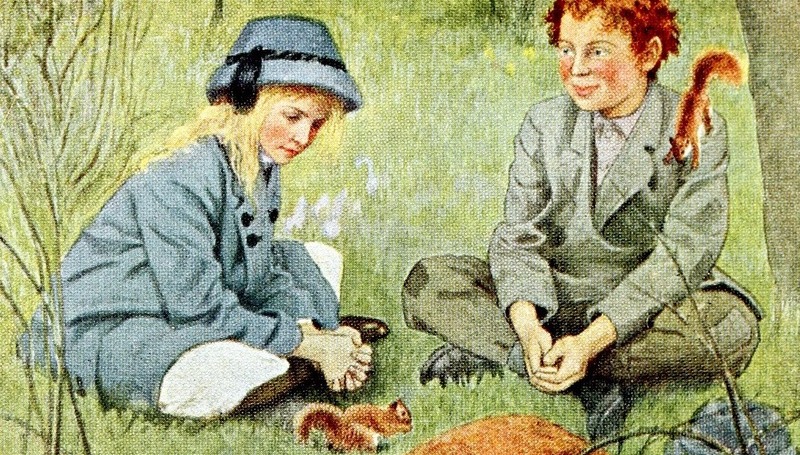
And Dickon. Oh, Dickon. The boy who walked the moors freely and called the wild things to him, who spoke to animals and coaxed life out of the cold ground. He was magic of the most believable kind, the sort that doesn’t announce itself but simply is. I could actually envision him in some of the stories my Granny told about my ancestors roaming these Blue Ridge Mountains, learning to live and understand the land.
It’s that the book still does what it always did: it pulls me toward hope and belonging and beauty, and it reminds me that neglected things can be coaxed back into bloom.
Dickon was that thread of hope made into a person.
Because that is ultimately what The Secret Garden is about—the stubborn, almost unreasonable insistence of living things to grow toward the light. Mary arrives withered. The garden arrives neglected. Colin arrives convinced of his own decay. And then, slowly, inexplicably, things begin to push up through the dark soil anyway.
I was smitten. It was like my two worlds converged in the most remarkable of ways.
England became an almost mythical place from my beautiful mountains, and I wanted to know more of it. Thus began my slow-growing love for English literature. In middle school I read Jane Eyre. In high school I fell in love with Austen. Each new addition reshaped my imagination, led me deeper into that misty, walled-garden world, and always left me hungry for the next story. All because a librarian introduced me to a selfish, spoiled girl who desperately needed a place to belong.
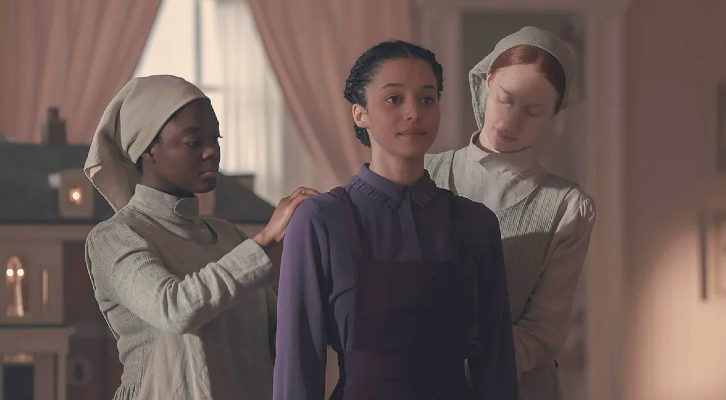
I have returned to The Secret Garden again as an adult, and I find I love it more rather than less. Partly it’s nostalgia—the memory of Rose and the chicken noodle soup and the flu-day magic of it all. Partly it’s the wonderful Hallmark film adaptation that brought the story to life in a new way. But mostly it’s that the book still does what it always did: it pulls me toward hope and belonging and beauty, and it reminds me that neglected things can be coaxed back into bloom. As a writer now, I notice what I couldn’t as a child—the quiet craft of it, the way Burnett makes the garden’s slow revival breathe. It’s a tender and encouraging re-entry every time I revisit it, and it’s not a long book but it’s full. If I can’t make it to the UK as often as I’d like (which is rather often), I can still find my way there through these pages. Some gardens, it turns out, are always in season.
__________________________________
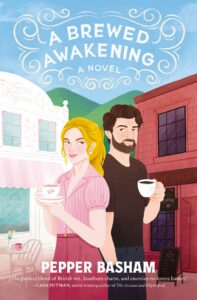
A Brewed Awakening by Pepper Basham will be published by Thomas Nelson Fiction in May 2026.

Pepper Basham
Pepper Basham is an award-winning author who writes romance “peppered” with grace and humor. Writing both historical and contemporary novels, she loves to incorporate her native Appalachian culture and/or her unabashed adoration of the UK into her stories. She currently resides in the lovely mountains of Asheville, NC, where she is the wife of a fantastic pastor, the mom of five great kids, a speech-language pathologist, and a lover of chocolate, jazz, hats, and Jesus. You can learn more about Pepper and her books on her website at pepperdbasham.com; Facebook: @pepperbasham; Instagram: @pepperbasham; X: @pepperbasham; BookBub: @pepperbasham.