One Person’s Trash... On the Joys of Collecting Junk
Kate Bowler Considers Her Son’s Obsession in Light of Her Own Struggle to Find Happiness
It’s beautiful in North Carolina in March, which means that Zach has set out to use his metal detector in the woods near our house. He is certain that we are about to embark on a new journey as a family: owning our own junkyard.
I tried to explain that a family who owns a junkyard near the woods is actually the premise of a recent bestselling memoir in which the heroine needs to be rescued from her family and taught to read. But to no avail. Yesterday he found a 1936 Chevrolet hubcap and I am done for.
I canvass friends for opinions on whether garbage will add to my quality of life or whether I will simply, you know, incur the wrath of my new neighbors. My friends, being my friends, invariably champion the necessity of objects piling up in my yard. My friend Alex tells me about his friend, a French artist in Russia, whose preferred canvas for paintings is old doors and bits of fencing.
In fact, she earned the abiding goodwill of her local Moscow municipal garbage depot after she invited them to her studio and they concluded she was a harmless foreign eccentric and not a trash spy. Such was their friendship that when she left Russia last summer, they invited her to a farewell lunch in the dump. They set up an electric hotpot amidst the piles of trash and recycling, and it was by far her favorite farewell party.
Most of the joy I have known has been a kind of escape hatch from pain—a type of joy despite circumstances.
Being Canadian, I am not above a dump party. As a teenager, I discovered that one of the real advantages of working at a rural Bible camp was the privilege of driving the truck to the dump in hopes of holding someone’s hand while you watched the bears eat garbage. I even used the occasion to write the chorus of a country music ballad about two people who don’t know if what they are feeling is the heat between them or the burning of the trash.
“What’s the difference between junk and garbage?” I ask Zach. I have been reading a book by social critic Christopher Lasch about how the endless rush of mass-produced objects makes it harder and harder for us to distinguish reality from fantasy and inevitably blurs the boundaries of the self. In the end, we become our preferences and cannot separate our identities from our coffee orders.
Zach is hunched over a bowl of fruit-adjacent cereal studying a Calvin and Hobbes book lying open on the counter. He looks up momentarily. “Garbage is plastic or cans… but junk could be a couch with a lot of cat scratches. You still want to sit on that couch.”
“Then how do you decide what to keep?”
He puts down his spoon. “When I dig things up, I am finding something and I keep it for my own collection. So…junk is when you find something and give it a new job.”
“Like making you happy?”
He looks at me gravely.
“By the way, Calvin has a saw.” He jabs a finger at the page. I look closer. Indeed, Calvin is cheerfully lobotomizing a snowman.
My son uses this little phrase “by the way” sparingly but effectively when he means to accuse me of something. By the way, I didn’t have my lunch today. By the way, Chris’s dad lets him use a knife when they are camping. By the way, I am filing a formal complaint.
“I don’t think a saw is going to make you or me any happier, Zach.”
I keep thinking back to the happiness theory known as hedonic adaptation, which posits that people return to a default level of happiness even if something really wonderful (winning the lottery!) or really terrible (lobotomization!) has happened.
I feel the truth of it—that I am constantly adjusting too quickly. Did I get a brand-new car? In a week, it’s just a car. Did I mostly survive the end of cancer? Now I’m back to worrying about my weight. What could feel like a miracle is a Tuesday again.
“Mom,” Zach says, looking at me evaluatively, “when I find a saw, I will keep it under the law of Finders Keepers. Let’s go for a walk.” By which he meant, come watch me use the metal detector.
After sunscreen, backpacks, the detector, and a pocket of granola bars, we step outside.
“Ahhhhh!” cries Zach, recoiling like a vampire. “The sun is interrupting my face!”
“Dude, this is the whole big thing. You’re outside now. You’re supposed to love nature and hobbies and become an adult who talks about birds and tomatoes all the time,” I say. I have been feeling very crusty since the pandemic about the whole concept of ordinary pleasures that are supposed to add up to an enriched life. My friend Sarah became a wonderful knitter, her sister mastered watercolors, and the Best Friend would not give it a rest about composting. It was horrible.
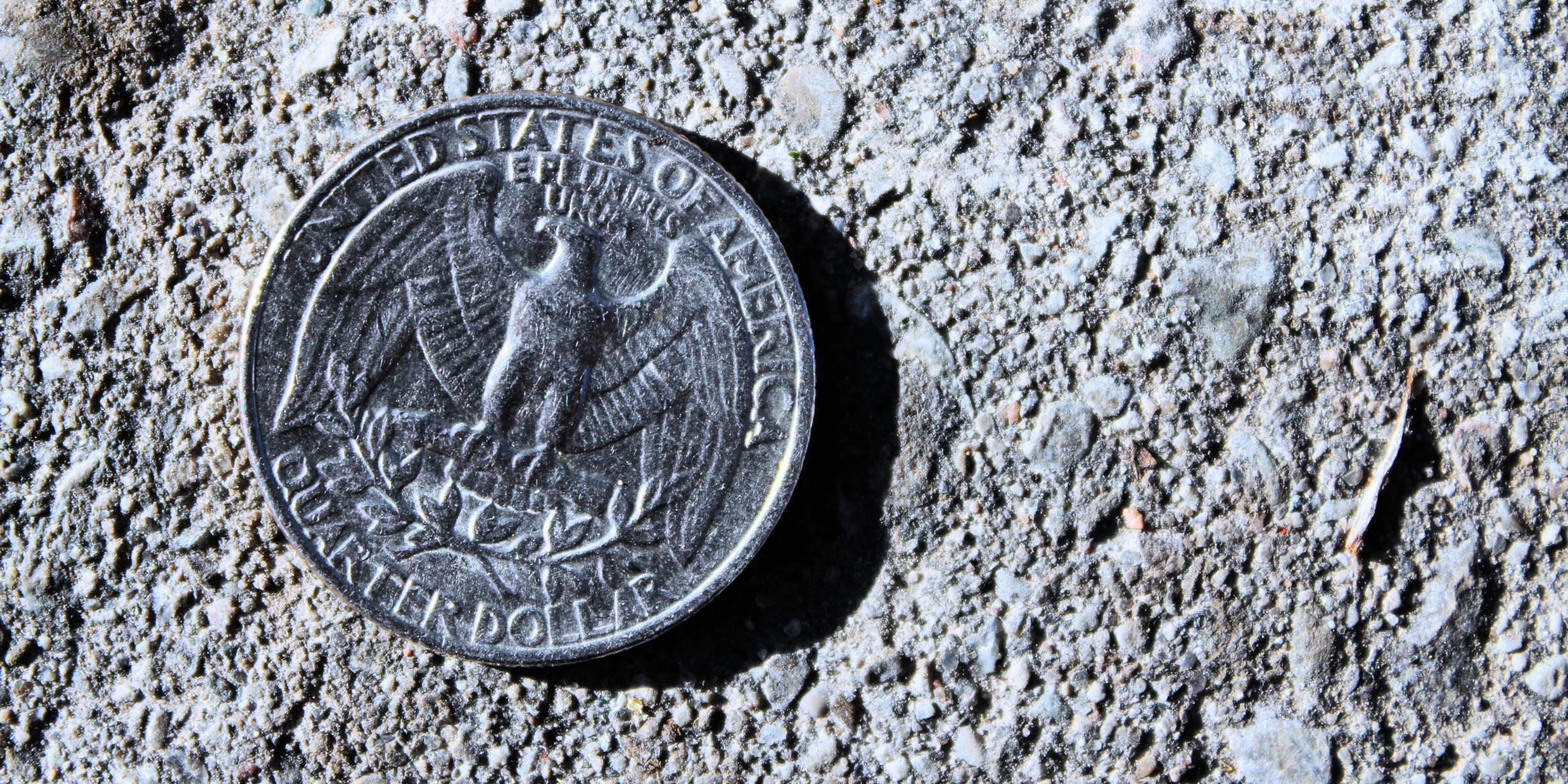
“Ahhhh!” he says again, though less apocalyptically. “A dime!”
He bends over to pick a coin from the concrete. He holds it two inches from his eyeballs for a good long minute and then places it in a heavy pocket of his sweater.
“Any trash in there?” I ask, eyeing his jacket, though I know. Once a week I have to stop the dryer because I am laundering too many rocks, and then I give a long speech about bringing too much nature into the house. However, Zach is too pleased to be baited and asks me politely if, from here on out, that I refer to his findings as “junk” but not “trash.”
I pull out my phone to find a new audience for my complaints.
Me
I am on a trash walk with Zach.
Best Friend
I love how his joy makes you insane.
Me
It’s not joy. It’s hoarding.
Best Friend
I’m going to start leaving my garbage bins out for him. Do you think he can fight off the raccoons?
I look up and find that Zach’s eyeballs have spotted a distant paper clip glittering in the grass. It is one of the supernatural qualities of children I resent the most: their higher degree of attention. Philosopher William James once described that “curious sense of the whole residual cosmos” as the very definition of spirituality. You don’t just live in the world, you behold it.
Perhaps there is a kind of joy that makes you younger and younger. Maybe even though someone tells you when to go to bed and what to eat and what you believe and that saws are reserved for trees and murder, somehow, you feel the unlimitedness—the anywhereness—of life’s great surprises.
Later that night Zach wants to add his dime to my vast coin collection, which allows him to have all of his pirate treasure feelings while I review the evidence of having been very unpopular in junior high.
Feeling like an especially good mom, I ask him if he wants to get a coin-collecting book so we can put each piece behind a shiny strip of plastic and separate them by country and value. He shakes his head. Some things are better in piles, he explains. Then he runs his toes through his piles before I ask him to stop doing that please. Would he like me to get a coin cleaning and polishing kit so we can examine them more carefully? No thanks. It’s better when they look old, he says.
If you want to be habitually joyful, you have to fill your pockets with ordinary joys.
So we have this box of treasure. He pats the box lid like there, there.
I keep trying to make these objects into objects, and he resists me. He is too busy filling his pockets with rocks, with his joy.
“How do you know this is a joy?” I ask, pulling the tab of an aluminum can out of his jacket before I hang it in the closet.
“Oh, that!” he exclaims. “My Dr Pepper! The best drink of the day!
C.S. Lewis once wrote that a joy is a joy because it is a reminder. It’s not a this or a that, not a thing to be possessed. Any joy is an arrow back to the heart.
When I look at Zach, trying desperately not to roll my eyes at having to keep yet another miniscule item deposited in my home, I realize what an endeavor this would be if I were to follow in his footsteps. Most of the joy I have known has been a kind of escape hatch from pain—a type of joy despite circumstances.
But this seems to be a quieter species of joy… a joy buried inside of the smallest forms of delight. My son seems to possess a disposition for joy that, coincidentally, I have not seen when he is asked to do laundry. But don’t I see children everywhere bursting with the ability to be joyful? If I were going to let joy come in through this door, I would have to treat it like homework. Joy would have to be something I accepted as an assignment of gratitude. I would have to learn to respond to everyday graces. Plus, on further reflection, there is probably only one way to conquer the problem of hedonic adaptation: you must rewind the tape and go back to the time when you could be pleased by all the things that cost little or nothing at all.
If you want to be habitually joyful, you have to fill your pockets with ordinary joys.
Zach is in bed with another heavy volume of cartoons and sighs reluctantly as I turn off his bedside lamp. Every night we will review the day, and then we will take turns praying out loud about countries at war and mostly bad dreams. And there, on my knees, I will feel the necessity of this worship at the altar of love.
“Who are you to me?” I ask, pulling the covers up to his chin and kissing his sticky forehead.
We’ve been watching Pirates of the Caribbean again and I still find myself overwhelmed by the same scene of a pirate and his beloved daughter. Who are you to me?
“Treasure,” he says, and turns to sleep.
__________________________________
Excerpted from Joyful, Anyway by Kate Bowler. Copyright © 2026 by Kate Bowler. All rights reserved. No part of this excerpt may be reproduced or reprinted without permission in writing from the publisher.

Kate Bowler
Kate Bowler is the four-time New York Times bestselling author of Everything Happens for a Reason: And Other Lies I’ve Loved, No Cure for Being Human, Good Enough, The Lives We Actually Have, Blessed and The Preacher’s Wife, and hosts the popular podcast Everything Happens. She is a professor of history at Duke University and shuttles home to Winnipeg for the summer with her husband and son.