One of the Best American Backpacking Books Was Written by a Japanese Buddhist Beat Poet
Brad Rassler on the Dharma of Albert Saijo, Who Distilled the Trauma of Internment Into a Minimalist Philosophy of the Outdoors
On a rainy San Francisco evening in late November 1959, Albert Saijo, a thirty-three-year-old Japanese American poet, climbed into the back of an eastbound Willys Jeep station wagon. The wagon belonged to the red-haired poet Lew Welch, also thirty-three; in the passenger seat was the author Jack Kerouac, thirty-seven, fresh from an appearance on the Steve Allen Show, and eager to be home on Long Island, New York, for Thanksgiving. Welch held the Willys steady at 75 mph, winding southeast through the Mojave and onto Route 66 toward Kerouac’s home in Northport. He and Kerouac talked non-stop, shuttling a bottle of Scotch between them. All three men spitballed open-form poems and haiku, which they scribbled into their notebooks and later published in a book, Trip Trap.
The road trip would become a minor footnote in Beat folklore. But it should be remembered as much for backpacking as for literature. Saijo—a Nisei poet, jikijitsu of poet Gary Snyder’s Mill Valley zendo, and recently out of an Oakland tuberculosis ward—sat crosslegged on a mattress, watching an America he’d never seen. He knew deprivation firsthand of liberty, health, possessions—and understood not only its humiliations but its strange freedom. Applied to the mountains, that logic became what he later called “ultralight”: not a gear system, but a way of thinking.
He knew deprivation firsthand of liberty, health, possessions—and understood not only its humiliations but its strange freedom.
He saw a white horse in an empty storefront; grain elevators tilted across the land like abandoned toys. He thought of “that whore in Chicago and the tub of oysters,” a line that would later surface in a road poem called “Fucking with the Muse in Texas.” Four years later, in the novel Big Sur, Kerouac would memorialize Saijo as George Baso, “the little Japanese Zen master hepcat.” (Hepcat or not, “I’ve had strong attraction to all low things & whoring,” Saijo would later admit in a letter to Snyder.)
At one point, Welch and Kerouac asked Saijo for a poem, and he said nothing. Later he said, “It is hard being born in the Dharma, in America. We’re real pioneers.” Nobody disagreed. Postwar American prosperity, with its ideology of more, seemed stacked against the restraint required of Zen Buddhist practice. Kerouac had already framed the problem in The Dharma Bums, where a character modeled on Gary Snyder called for a rucksack revolution to counter America’s addiction to muchness.
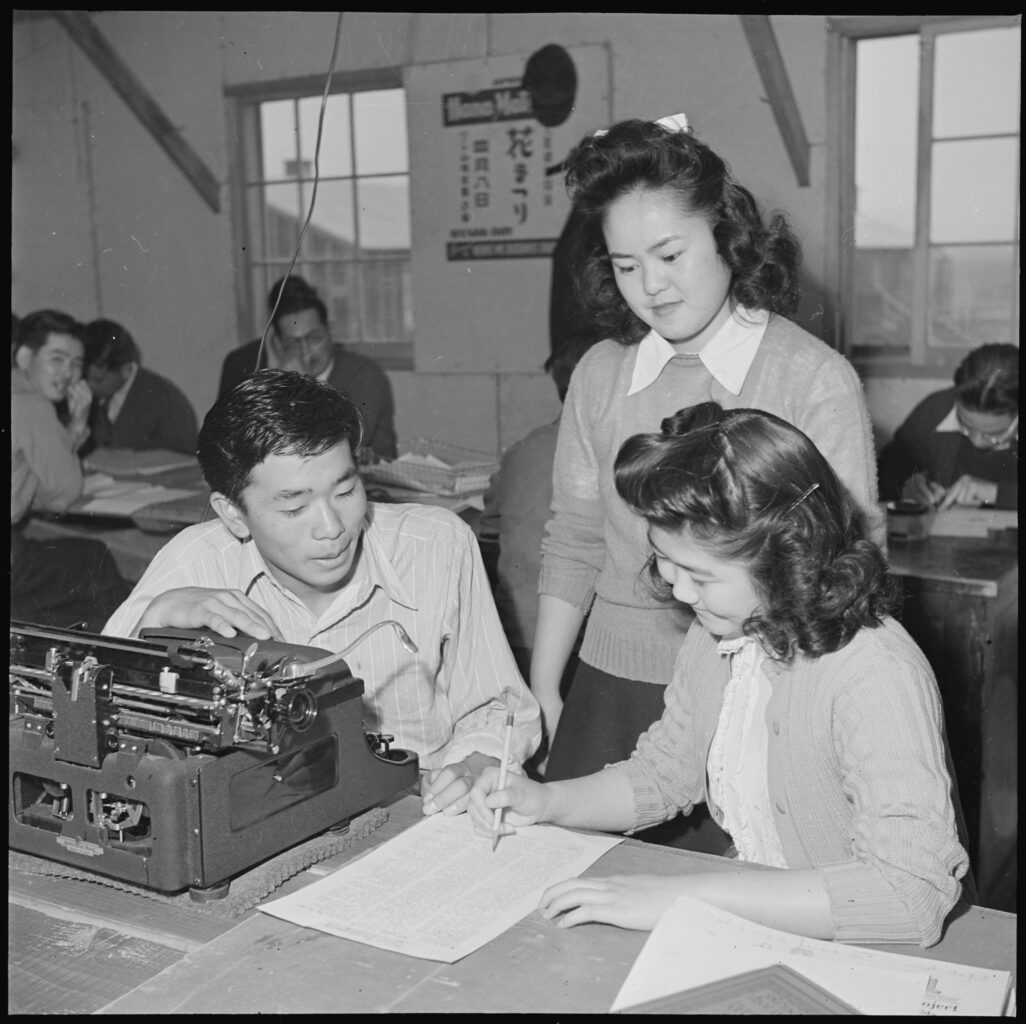 Heart Mountain Relocation Center, Heart Mountain, Wyoming. Albert Saijo, second semester editor of Echoes, Heart Mountain high school publication, talks things over with Hisako Takehara and Alice Tanouye, first semester co-editors.
Thirteen years later, in a 1973 feature for Backpacker magazine, Saijo put it plainly. “The ultralight gear will follow as soon as we get our heads ultralight,” he wrote, insisting that mind came before body when it came to lightening one’s load.
Saijo had already committed himself to the Dharma. He’d studied Zen formally while finishing an undergraduate degree at the University of Southern California and was fashioning a life of voluntary simplicity increasingly oriented toward the outdoors. He’d come to the Beat scene through a dramatically different path than the white, middle-class, and mostly male poets writing open-form verse in San Francisco in the late 1950s.
Born in the San Gabriel Valley in 1926 to first-generation Japanese Americans, Albert Fairfield Saijo’s 16-year-old life was upended in the spring of 1942 when the family of five was ordered to appear at the county park carrying nothing but two suitcases. Army buses shuttled the Saijos and other Japanese American families to a temporary detention center. That summer they were ferried by train to the Heart Mountain Relocation Center in Wyoming, where they lived in a tarpaper cell block, one family to a room. (“It was oddly liberating,” Saijo would later write.) He graduated from Heart Mountain’s high school in 1943, having served as the newspaper’s editor-in-chief, and enlisted in the 100th Battalion of the 442nd Regimental Combat Team, a Nisei Army unit known for its bravery and atrociously high death rates.
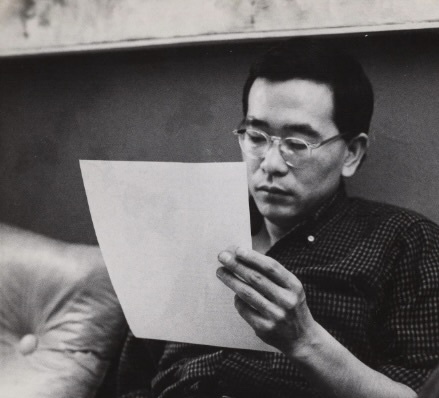 This photo was taken on the Trip Trap road trip. It’s Albert in Fred McDarrah’s NYC apartment. The photo ran in McDarrah’s book, The Beat Scene.
He contracted tuberculosis in Italy and returned to California to convalesce for years in TB wards, eventually receiving his bachelor’s degree, studying Zen, and completing several years of graduate work before quitting Los Angeles for San Francisco. He moved north to Mill Valley among the “Gary Snyder crowd,” as he put it. He bought a home, married, raised four stepchildren, studied, and wrote. He spent much of the 60s in thrall to hallucinogens, writing Snyder in 1968 of a compulsion to share the riches, to “do everything possible to get… more people on to acid and grass.” Once, he canceled a backpacking trip with Snyder to the Wind River Range because he was in the midst of a 45-day fast.
*
By 1972, Saijo was the last standing of the road trip trio. Kerouac was dead from complications of alcohol use, Welch, another alcoholic, was gone too, vanished into the Sierra foothills, a suicide. As Snyder’s rucksack revolution was calcifying into Zen and backpacking industrial complexes, Saijo wrote a slim how-to, markedly different from the many that were being published on the topic of walking into the woods. He called it The Backpacker. The book featured his brother Gompers’s line drawings, the text and illustrations hinting at how one might cultivate an entire dharmic ethos by the method and mindset one took into the mountains.
The Backpacker declared itself in the first sentence: “No one has worked out a backcountry style as light and elegant as that of the Himalayan yogi,” Saijo wrote. On the facing page was Gompers’s block print/line drawing of the Tibetan saint and poet Milarepa sitting in a lotus position, a Sierra cup at his feet, and a Campingaz Bleuet stove resting on a boulder. Saijo explained that the yogi needed little clothing (he heated his body by meditating), no bedding, and only a bowl for nettle soup. “We may well work our way back to Milarepa,” Saijo wrote. “Ever simpler, ever lighter.”
If Milarepa was too obscure a model, Saijo’s beloved John Muir surely wasn’t. As for the why? “You might say the wilderness experience gives us a standard by which to measure our sanity… The savage wants out. He wants to be expressed.” Ultimately, though, Saijo divined the phenomenology of the pursuit. “[Y]ou get the feeling that you are all involved in some mystery or vaster allegory, in which you are all devotees of a space. A space not even outside, perhaps. What you might be doing is a pilgrimage to a more authentic outback inside yourself. But is there an inside and an outside? And you thought you were just backpacking?”
The Backpacker was as bantamweight as its five foot, five inch, 125-pound author. It measured four by eight inches and weighed four ounces, the parsimony and aesthetic precisely the point: a lesson in form and function, medium and message. Its 96 pages, uncoated paper, oatmeal in color, declared “small independent press.” It sold for $1.95 in 1972, a quarter of the price of its competitors. Gompers’s line drawings fused Heinz Edelmann with the woodblock frontispiece of the Chinese translation of the Diamond Sutra. In the acknowledgements, Saijo thanked Locke McCorkle (“Sean Monahan” in The Dharma Bums), who’d introduced him to the Sierra Nevada, and Snyder, who’d said of backpacking, “it can be like tea ceremony.”
It is hard being born in the Dharma, in America. Saijo understood that.
In 1973, the book reviewers of a new magazine called Backpacker were charmed by Saijo’s fugitive sensibility while lauding his prose, writing, “No longer the backpacker, you’ll be a sojourner—a twentieth-century anomaly allowing free flight to your ‘savage’ instincts.” They placed it alongside the era’s bestsellers as “those that best reflect the…view of the editors and publisher.” As backpacking books went, the book was sui generis, in opposition to so-called father of backpacking Colin Fletcher; Saijo wrote it for seekers, not consumers.
The book arrived when Americans had begun to fetishize Zen, applying the “inner game” to tennis, motorcycles, and being here now. But while those other manuals for the mind became bestsellers, The Backpacker stayed on the margins. In May 1972, Saijo sent a copy of the book to Snyder, bemoaning the editors’ heavy hand. It’s “painful for me to see what they’ve done…perhaps it’s seventy percent of the book I wrote…humbling Deva pride suffers.”
And yet, when 101 Productions published a revision in 1977, its nearly 200 pages did contain a few additional piquant ideas, although it was Gompers’s Southwest-inspired block prints (entirely devoid of human figures) that marked the most dramatic change. It was that 1977 edition I showed to Gary Snyder at his home in the Sierra foothills in 2024. He took The Backpacker in his 94-year-old hands, turning to his son Kai to ask if they owned it. They didn’t—not that edition, anyway. Snyder wanted it; I referred him to online used booksellers.
While writing The Backpacker, Saijo was newly divorced, reconciling myriad selves: Nisei, internee, soldier, and tuberculosis patient. Soon he would remarry, move to Humboldt County to homestead, write, and cultivate cannabis. When the government rained helicopters on his garden, he and his wife moved to Hawai’i, where he hand-built a small house at the base of Kilauea. In 1997, his first book of poetry, Outspeaks: A Rhapsody, was published, its mordant jeremiads fulfilling a lifetime of study and praxis. Another volume, Woodrat Flat, was published in 2015, posthumously. The two books of poetry and both editions of The Backpacker: all long out of print.
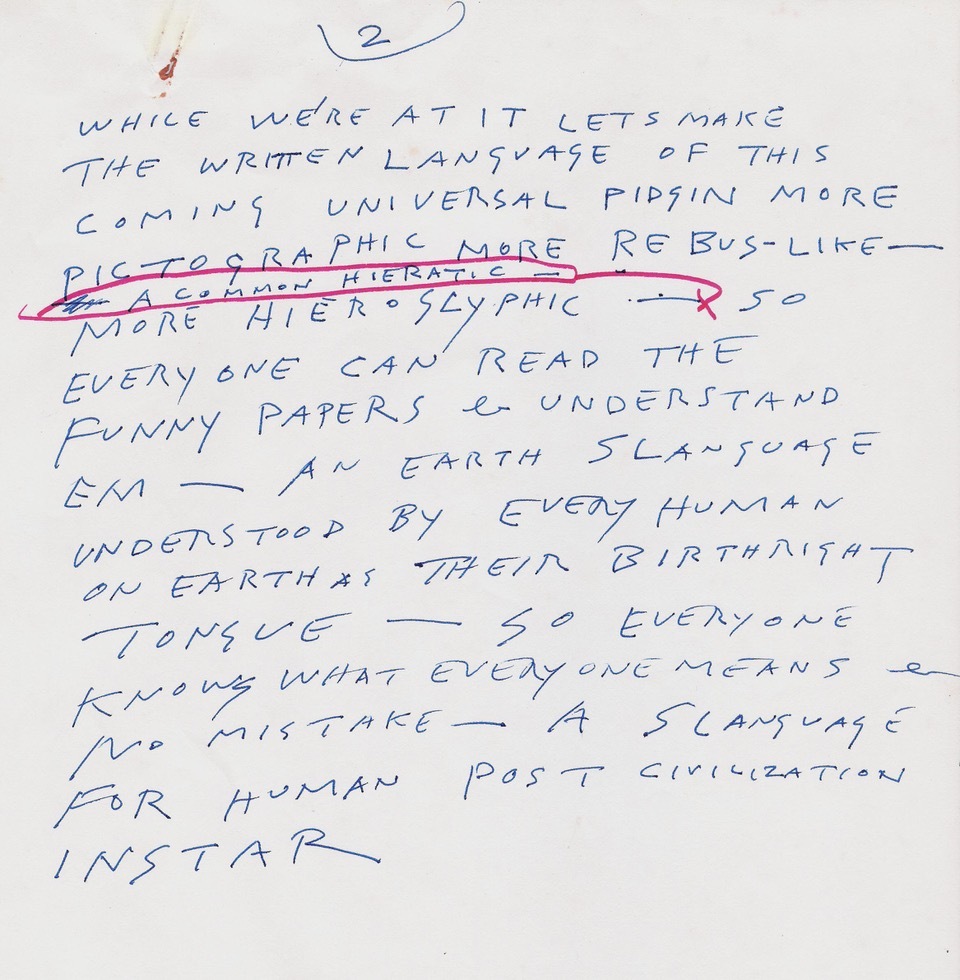
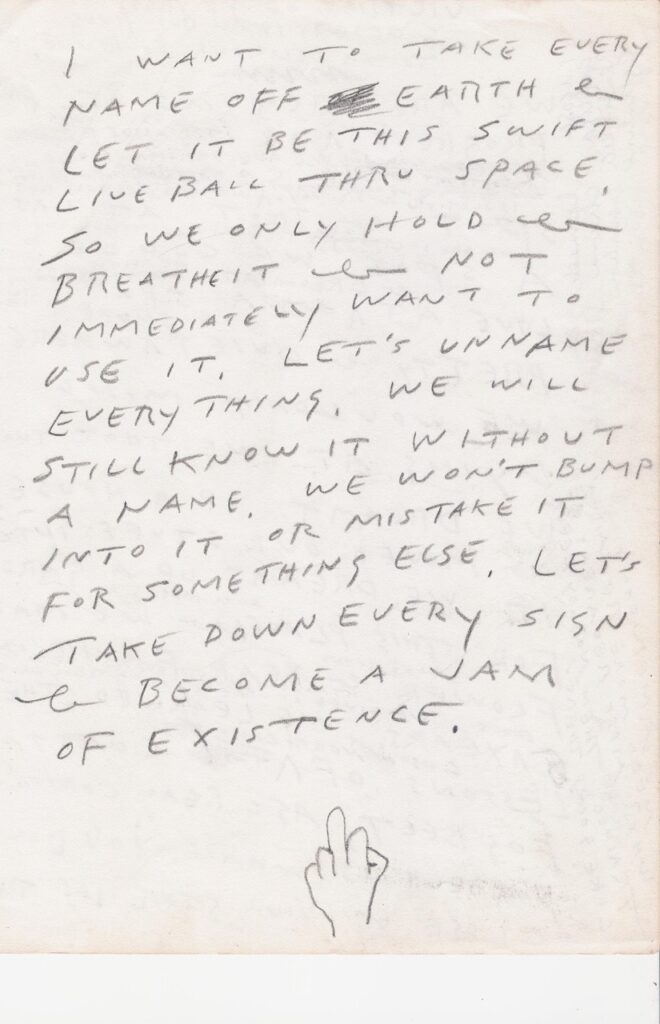
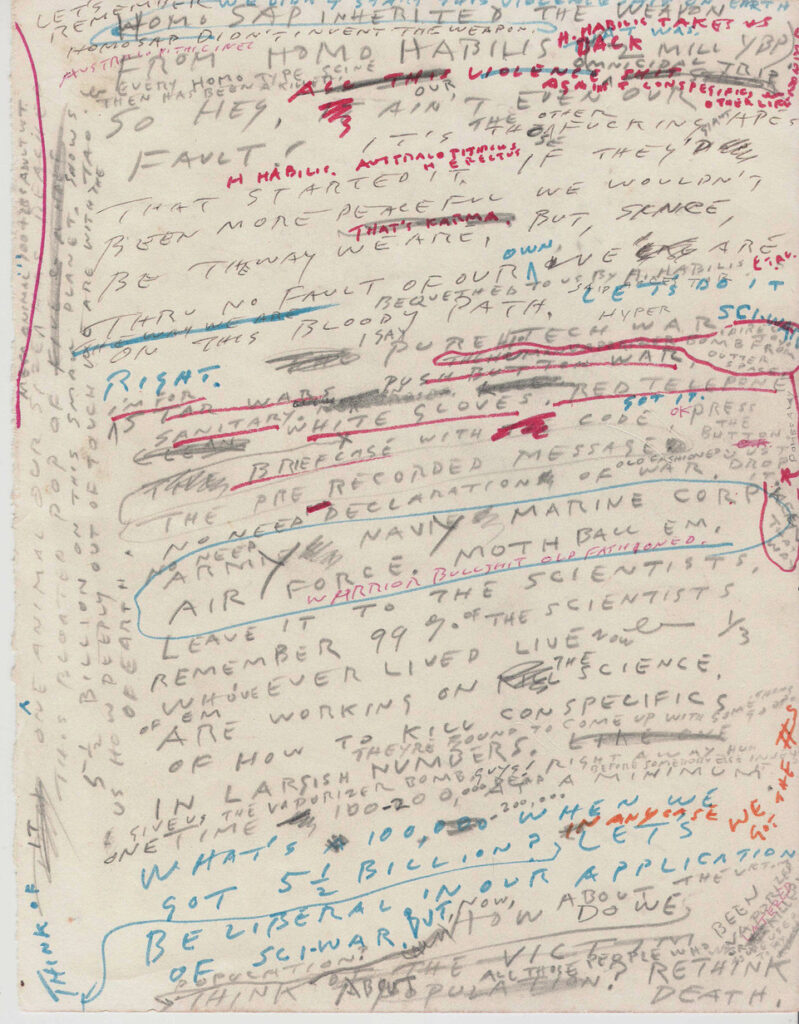
In 1989, he’d been jotting his “rhapsodies” in a series of notebooks and deemed them fit for print. To Snyder he wrote, “As I read what I write I am surprised to see what I think. I am an incendiary revolutionary and I want to bring down civilization, I want an interesting old age!”
In Outspeaks, he let the animal out:
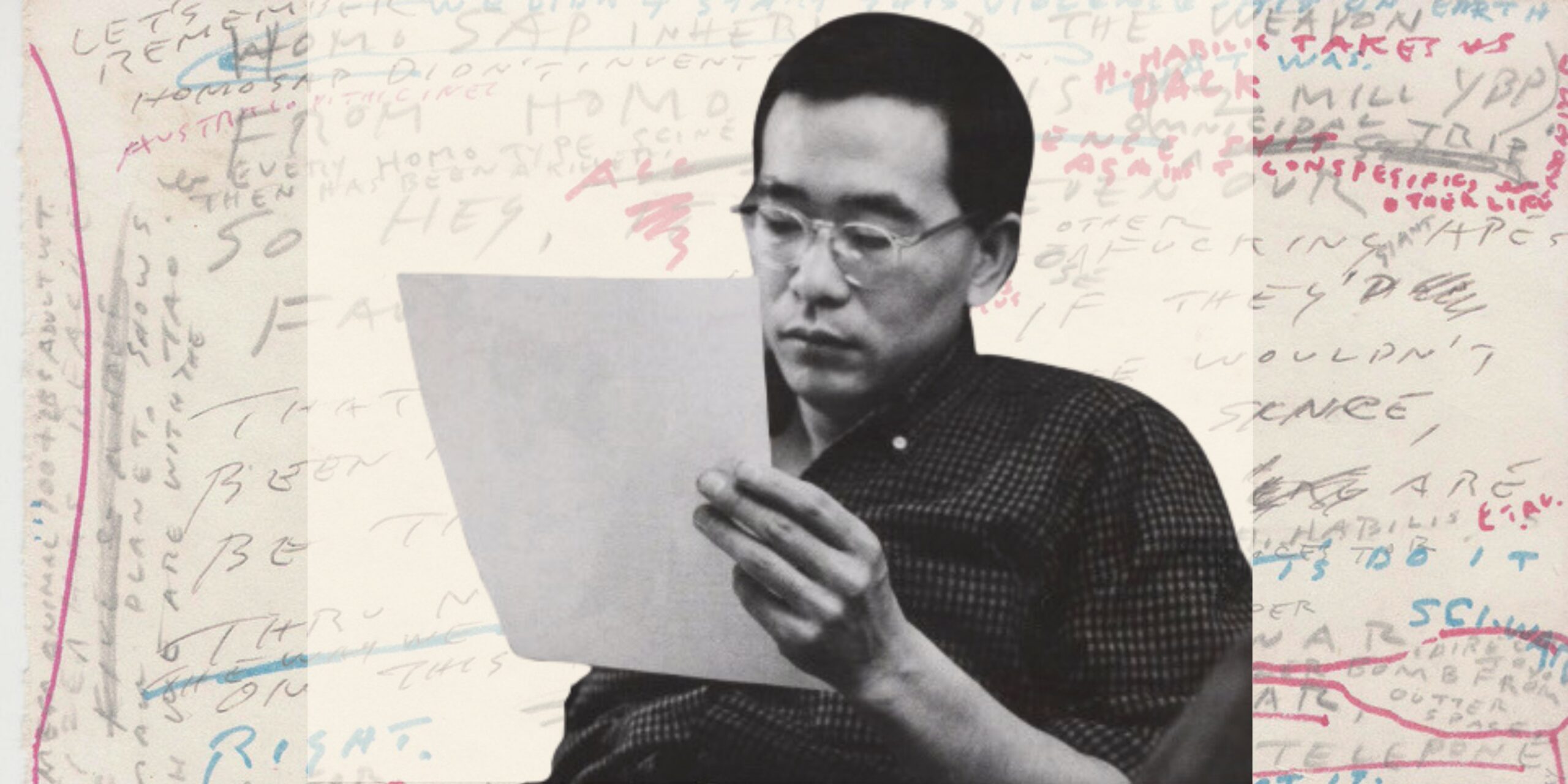
I WANT TO RHAPSODIZE—BUT I WOULD NOT BE PUT INTO ANY LITERARY CATEGORY—I CAN HONESTLY SAY I HAVE NO LITERARY CONCERN—I AM AN ANIMAL IN A CAGE & I AM BARKING TO BE LET OUT—AS IT HAPPENS MY BARK IS RHAPSODIC.
It is hard being born in the Dharma, in America. Saijo understood that. In 1972, he made a book that weighed four ounces. On a rainy night in early June 2011, Albert Saijo lay on a mattress, a fire blazing in the hearth, his wife by his side. Mount Kilauea loomed in the dark overhead. Fifty-two years earlier, he’d ridden a mattress across America, watching the country unspool through the windows of a Willys Jeep wagon. Now the view was of the void. He died that night. He was eighty-five. Few know his name today.
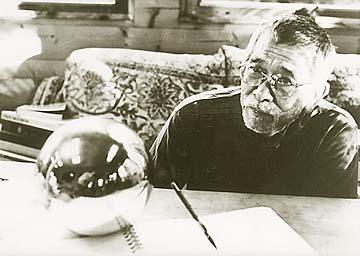
In the 1977 edition of The Backpacker, Saijo wrote, “So it’s a provident and saving backcountry style we want. Lean. Ultralight. Appreciative of the wild as a refuge and sanctuary where we go to shake off the dust of the world. And because we know wild earth to be a kind of flesh, we go in a way not to wound it. We go light. As though, being stalked, we don’t leave a trace.”
____________________________
“Zen Bivy: Our Favorite Book on Backpacking was Written by a Buddhist Japanese Beat Poet” by Brad Rassler appears in Adventure Journal #40.

Brad Rassler
Brad Rassler writes literary nonfiction about the American West — its landscapes, its subcultures, and the people who shaped how we move through wild country. He treats play — climbing, skiing, backcountry travel — as a cultural and political act rather than an escape from the world, and brings both an insider's knowledge and a reporter's distance to the territory. His subjects range from land use politics to disappearing poets to the suicide of his uncle on a Michigan trout stream. His investigations have opened sealed police files, traced the influence of obscure gear designers, and embedded with a new generation of social-media-savvy bush pilots to understand how technology is remaking the backcountry. Rassler's work appears in Outside, Alta Journal, Alpinist, and Adventure Journal. His forensic account of the poet Lew Welch's disappearance was named one of Alta's top stories of the year and selected as a Longreads Top 5 — the second of his stories to earn that distinction. Rassler lives in Nevada's Carson Range.