On the Infinite Lives of the Library
Steve Edwards Loves Nothing More Than Library Hours
One might say that a library’s most abundant resource—what it lends most freely—is not books and information but time. Time to think, breathe, be, and become. Last spring, in exchange for my service as writer-in-residence, the historic Concord Free Public Library in Concord, Massachusetts lent me six months and the use of a private office upstairs in a refurbished 300-year-old house-turned-working wing just off the Children’s Room. The space had everything a writer could want: a desk, comfy chair for reading, privacy, and good light.
I wrote in the morning, in the company of the muted sounds of children and their varied syntaxes. Each Thursday, the knitting club—Knit and Sip—gathered around a table in the makerspace and gabbed while the soft textile projects at their fingertips steadily grew and changed. The sounds of play and connected chatter wasn’t an interruption of my work but a reminder of its purpose. I had come to contribute something to the life of the community.
Concord’s library models reciprocal giving. For access to a universe of understanding and more, we, as patrons, need only return the small things we have borrowed. But time—especially for a writer—is no small thing. A question preoccupied me: What could I give back that would mean as much as what I’d been given?
On Fridays I held an informal “office hour” in the Common Room where I met with anyone and everyone who wanted to talk about writing and books. All kinds of people showed up: A retiree out and about for the first time since a hip replacement, who had read an essay of mine about Thoreau and autism and the myriad ways we miss each other. A middle school janitor who was at work on a picture book about friendship. A science teacher who moonlighted as a singer-songwriter. A woman—I’m not even sure if she wrote—who lamented that a favorite tree at a nearby arboretum had recently been cut down, and who then showed me pictures on her phone of all the things her service dog (an ailing 16-year-old chihuahua) had peed on in the last week. “It’s his art,” she said, “His ‘Pee-casso’ phase.”
Another woman talked for so long about the book she wanted to write that one of the children’s librarians faked a phone call to rescue me. But I didn’t need rescuing. The library lent me these hours, and it only seemed fitting to share them with people who had taken time from their own lives to seek me out. Week by week, my visitors and I enjoyed asking each other questions, telling stories, laughing, commiserating. Our conversations became part of the library’s vast collection of experiences.
No matter the season of your life, you are welcome at the library.
A sweetness and novelty marked my interactions with those who came looking for advice, or just looking to talk and connect. The world can be a hard place. In my position, I tried to offer a soft respite. One Friday, a former student from my day job teaching writing at a state university—Alex—stopped by to chat. Save for social media, we hadn’t seen each other for a decade. He had grown a mustache and gathered a few lines around his eyes. He was off to Montana in a few weeks, moving for a new take on life.
He had been reluctant to visit, he said, because he felt like he should have accomplished more with his work since our days together.
I was proud he was still trying.
Most people quit.
In sharing such a vulnerable detail, Alex reminded me of my earliest days as a writer and just how badly I had wanted to live up to my mentors’ hopes for me. He reminded me, too—though I shouldn’t need reminding—that I am one of those mentors now, and a good reason to keep writing is so my students will, too.
The library’s reciprocal giving has a twin in teaching. Over the years, students—in both my classrooms and in the writing workshops I occasionally run—have shown me again and again, in a thousand different ways, why stories matter. On another Friday, in early May, instead of holding an “office hour” in the Common Room, I led a nature writing workshop at the library’s Fowler branch. Half a dozen people showed up—retirees and book lovers, eager for conversation. Dorrie, the head of Branch Services at Fowler joined, along with Laura, a librarian, and Laura’s daughter, who was home from college.
I had everyone draw a map of a place they loved and populate their maps with landmarks. Then we all went around and shared our drawings. Inevitably (after first acknowledging our lack of artistic prowess) stories emerged. Walks with long-gone, beloved dogs. Times someone had been caught out in bad weather.
I couldn’t read Hawthorne but Thoreau was indispensable to me. He wrote about the natural world in ways that amplified my experience of it.
Laura shared that as a teenager she had spent summers at a lake in New Hampshire. Some mornings, early, mist on the water, she would take a book and swim out to a shady island and spend the day reading. She described swimming a kind of side-stroke and holding the book aloft to keep from getting it wet. It was a testament to the time we carve out for books, the little rituals of our reading lives. And more than that, as a private memory—as something none of us in that room could have known without Laura telling us—it was a gift. The story originated when she drew a lake on her map. In sharing it, she made a map the rest of us could follow into the dream of her experience. I had come to Fowler that day to talk for an hour about nature writing. I left with summertime, youth, the cool waters of a lake at dawn.
*
No matter the season of your life, you are welcome at the library. My friend Sean visited a month after the death of his wife from cancer. Sean is a history professor. I had a hunch he would find the Concord Free Public Library and its holdings fascinating. We met in the rotunda, mid-morning sunlight spilling from its high windows onto the built-in bookcases stocked shelf by shelf for patrons to enjoy. I showed him around and we took our time admiring the artwork of Concord’s storied past: the marble busts of Louisa May Alcott and Nathaniel Hawthorne, N.C. Wyeth’s paintings of “the men of Concord,” the noble seated figure of Ralph Waldo Emerson by sculptor Daniel Chester French, renowned for creating the likeness we know from the Lincoln Memorial.
In the Goodwin Forum, which holds more than 3,000 books from the personal collection of historian Doris Kearns Goodwin and her late husband Richard, we admired an Andy Warhol silkscreen print of a bald eagle lent by Mass Audubon to the library in honor of the 250th anniversary of the Battles of Lexington and Concord.
It was in this room, I told Sean, that I had had the chance to hear filmmaker Ken Burns speak a few weeks before, on the eve of the anniversary and in anticipation of his new documentary about the American Revolution. We marveled at the Goodwins’ books and how the sleepy farming village of Concord stood as the gathering ground for so many luminaries of American literary and cultural history.
“But I have to tell you something,” I said, looking around to make sure no one could hear. “I really can’t stand Hawthorne.”
“No?” Sean said.
“Unreadable,” I said.
Downstairs in Special Collections, Jessie Hopper—assistant curator and generous sharer—showed us something I had been waiting for when the time felt right to go see: a handwritten manuscript of Thoreau’s essay, “Walking.” I couldn’t read Hawthorne but Thoreau was indispensable to me. He wrote about the natural world in ways that amplified my experience of it. It was an energy and a presence, a miracle, a gift. In my twenties I spent seven months alone in a remote cabin in Oregon. I lived by his words.
I had been saving up the chance to encounter “Walking” in manuscript form. With Sean, the time felt right. Jessie brought it out in its binder. There were the fading pages Thoreau’s hands had brushed over and rested upon. There was his handwriting, slanting and, here and there, a little crooked, his T’s crossed with a flourish.
“We have handwritten chapters from Little Women, too,” Jessie said. “The men always ask for Thoreau. The women want Alcott.”
She told us that Emerson—whose essay “Culture” was also among the library’s holdings—wrote in big looping letters while Alcott wrote in a small, cramped hand. He had money to buy reams of paper. She did not.
When I asked about Thoreau’s sister Sophia helping him to edit “Walking” for publication in The Atlantic, Jessie showed us a page of the manuscript that Sophia herself had transcribed. Her handwriting was neat and efficient, far easier to read than her brother’s. After his death, Jessie told us, Sophia had served as Thoreau’s literary executor, curating his copious journals and performing the painstaking work of preparing various manuscripts for publication. Through sharing of her time and talents, she set in motion a chain of giving that expanded exponentially, from words on a page to clothbound books passed hand to hand and town to town, from radical ideas and inquiries to concrete actions.
As a writer, I never used the library for much beyond perusing books and as a quiet place to work. It’s obviously more than that.
Without Sophia, the Henry David Thoreau we all know wouldn’t exist. The American environmental movement would have no patron saint. Mahatma Gandhi and Martin Luther King Jr. wouldn’t have found his words for inspiration. My own father, a red-headed, freckled schoolboy in rural Illinois in the 1950s—and far from what anyone would call an avid reader—would have to pick a new favorite book.
At noon, Sean and I had lunch at a table under a tree on the front lawn. After a week of intermittent rain and storms, it was a glorious spring day with widespread sunshine and a soft breeze. Everything sparkled and nature glowed a bit greener. We sat and talked for two hours, the way only friends can—honestly—about our teaching lives, our kids, politics, the nice weather, and, yes, books. About the hard stuff of lived experience, too. The inevitability and absurdity of losing everyone we love and care about.
Thoreau fell fatally ill at forty-four after a night of counting tree rings in a rainstorm. “Fools stand on their island of opportunities and look toward another land,” he wrote. “There is no other land; there is no other life but this.”
To some that might sound cold or callous. It’s painful to admit that none of our time here is promised. That none of it lasts. But at the library with Sean on a beautiful spring afternoon—sitting with our truths—the thought seemed like a kind of mercy. Our lives weren’t our own but a borrowed item we must someday return.
*
As a writer, I never used the library for much beyond perusing books and as a quiet place to work. It’s obviously more than that. In Concord, patrons have access to a range of materials. For the artistically inclined, a makerspace complete with a 3D printer and a laser cutter stands at the ready to fabricate digital designs. Multimedia projects can be filmed and edited in the AV room. An extensive seed-sharing library awaits beginning backyard gardeners. One morning on my way upstairs to my office to write, I noticed a telescope in a clear plastic bin in the library’s teen section. I stopped to look at it and thought about how some starry night a kid could set it up in the park and discover the light of a new passion.
Here, the library said to that stargazer. Here is an infinite universe to explore and enjoy. Just have it back in a week.
Implicit in the bargain was permission to do with that time whatever the kid saw fit. No educational goal had to be attained. Nothing had to be learned. Even if the telescope never got taken out of its bin, the exchange itself carried value for having happened. It taught that kid a lesson in the nature of generosity.
To the extent I grew and changed as a result of my time at the library, I now carry those library hours with me wherever I go.
The library showed me incredible generosity, too. Not only was I given six months and the use of a private office, my fifteen-year-old son was allowed (and encouraged) to accompany me. While I attended to my writing each morning, he sat in the common area just outside my office with his laptop and a pile of textbooks: geometry, biology, US history, Latin, and the novels and nonfiction of Mark Twain, John Steinbeck, Rebecca Skloot, and Percival Everett for English class. He attended hybrid online high school, a choice his mom and I had made in part because his auditory processing disorder made traditional classroom spaces challenging to navigate but also because advanced self-directed study suited him.
Unlike the library, however, I struggled with granting him permission to use his time however he saw fit. “Making progress? Working? How’s the practice coming along?” I called every so often, just to check in. He assured me he was working hard, though sometimes I heard the suspicious sounds of YouTube videos.
“Get off YouTube,” I said.
“Fine.”
“Thank you.”
In these last few years before adulthood claimed him for good, it was a privilege to have had this time with him. Working side-by-side and talking over lunch, we made memories—living artifacts—for our own personal Special Collections department. Sometimes when the schoolwork frustrated him, I’d send him out to buy a baguette from the cheese shop, or just to take a walk around to see what he could see.
It was a time of becoming.
And letting go.
All the while, my son also had the great privilege of getting to know the library as a place of dedicated people whose service uplifted us all. On breaks from studying, he spent time with Ricky, the library’s assistant director, who talked to him about competitive Scrabble play and their mutual love of Wes Anderson films. And he got to know Sofia, the library’s director of development, who shared stories from the various places she had called home—Morocco, Belgium, Switzerland—and who gave him tips on the best chocolate to buy his mother for Mother’s Day. He talked Magic card trading with Eric, the teen librarian. Every morning, without fail, Sara and Lauren and Tracy, staff librarians in the Children’s Room, called hello to him by name and made him feel welcome and known.
For a parent, there is perhaps no greater satisfaction and comfort than seeing your child invited into a community and involved in its workings. But for me, the meaning of his time at the library transcended the merely personal. What he was learning amounted to a kind of armor he would need against the ignorance and violence of our era. It is no secret that public and school libraries, museums, and schools and universities around the country face a litany of existential threats: funding cuts, book challenges, the censorship of services and materials, the fear and intimidation leveled against library staff, curators, and faculty who have the courage to stand up for freedom of speech and the intellectual freedom of their patrons and themselves.
This year alone, the Supreme Court will be hearing myriad free speech-related cases. Amid this climate of strife, my son will enter adulthood with both a clear, firsthand understanding of those threats and, more importantly, a vision of the tremendous value libraries create for their communities. When I think about what is genuinely democratic, the public library stands out as perhaps the purest of examples. As such, it seems fitting to me—and deeply moving—that my son had the chance to complete an important part of his studies in a public library. His education isn’t only for him and his future success. It is something he is cultivating, ultimately, to share.
*
The time a library lends, I suspect, is a little like love: the more it gives away, the more comes back to it in kind. At the beginning of my term as writer-in-residence, I had wondered what I could give back that might mean as much as what I had been given. By the end of six months, I realized I had been thinking about it all wrong. My true giving back lay in becoming who and what the library’s generous lending of time had enabled me to become. A better writer and teacher. A deeper listener. A courage-giver.
To the extent I grew and changed as a result of my time at the library, I now carry those library hours with me wherever I go. And by that same token, I will carry the six months of my residency into all the days I have left, however few or many that may be. The experience is a part of me. Anything I give of myself from here on out, in the classroom or on the page, will have been shaped by it.
I remember the moment this became clear to me. Near the end of June (and the end of my term), my son and I volunteered to help out with the Friends of the Library annual book sale. All year long, the Friends collected donations of books in big bins in the basement. Then on book sale day, dozens of volunteers, young and old alike, hauled box after box of books outside and stacked them on long tables to be sold.
My son and I arrived early under a sky sprinkling rain. Not long afterward, the crew of volunteers began the march: the first of 1,400 cardboard boxes of books descended the rain-slicked front steps on dollies. For the next hour and a half, we unloaded them, stacking books on and underneath the tables, covering them with thin plastic tarps, wiping off raindrops with rags. At one point, my back tightened and threatened to spasm, but I didn’t dare stop unloading because the spry 88-year-old woman working alongside me, who said she had been helping with the book sale for decades, hadn’t paused her efforts.
In the meantime, I took delight in my son enjoying the company of strangers at work. If he could do this, I remember thinking—if he could somehow make stacking heavy boxes of books fun—he would find his way in the world.
A little later, I managed to slip away from the scrum and sit for a moment on a bench at the top of the steps. The library’s front lawn, tranquil and park-like when we arrived earlier, had become an open-air bookstore with at least a hundred customers lined up on the sidewalk, ready to dive in. Reading mattered deeply to them, just as it mattered deeply to millions more just like them all around the country. In the silo of my morning writing routine, I had somehow forgotten that someone might actually want to read what I had written. I had forgotten that somewhere out there someone might find value in my words. A moment’s comfort. A ray of understanding. And I had forgotten, too, that readers are no lightweight fighters or short-distance runners.
They are people dedicated to savoring their lives one page at a time. In their minds, they travel vast distances to interrogate new ideas and seek out experiences beyond the ones they have lived in order to better understand the world and their place in it. They hunger to be entertained, challenged, changed, moved. With each new book, they become a truer version of who they already are and always have been. And looking out at the crowd on the sidewalk that rainy June morning, I wanted only to be a writer somehow worthy of their time.
____________________________________
The author wishes to thank the Concord Free Public Library and the Concord Free Public Library Corporation. More information about the writer-in-residency program, including the next submission window, can be found here.
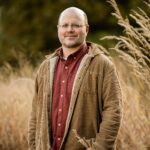
Steve Edwards
Steve Edwards is the author of Rare Good: Essays on Art, Autism, and Astonishment (forthcoming, fall 2026) and the memoir Breaking into the Backcountry, the story of his seven months of solitude along the Rogue National Wild and Scenic River in Oregon. His writing has appeared in: The Sun, The Yale Review, Orion, and elsewhere. Find him online: steveedwardswriter.com