On the Haunted History of Apartheid in South Africa
Nadia Davids Spends Time in the Company of Ghosts
My sister and I are little—perhaps six and eight—and we are visiting my mother’s aunt. We sit in her kitchen and in between cleaning meat and asking us about school, she complains about the ghosts that haunt her home, the ones who never leave, the others who are passing through, en route to bothering someone else. This house, she goes on, though warm and busy and filled with guests seen and unseen, is not the one she wants.
She stops there but we know what she is talking about: the home she longs for, aches for, is the one she grew up in, the one her father built in the early 1900s in the multiracial neighborhood of District Six in Cape Town. A slender building known by everyone as “Number 3,” it had once sat at the end of a mountain slope, the porcelain blue ocean ahead, the mosque, corner-store, doctor, school, all within stepping distance.
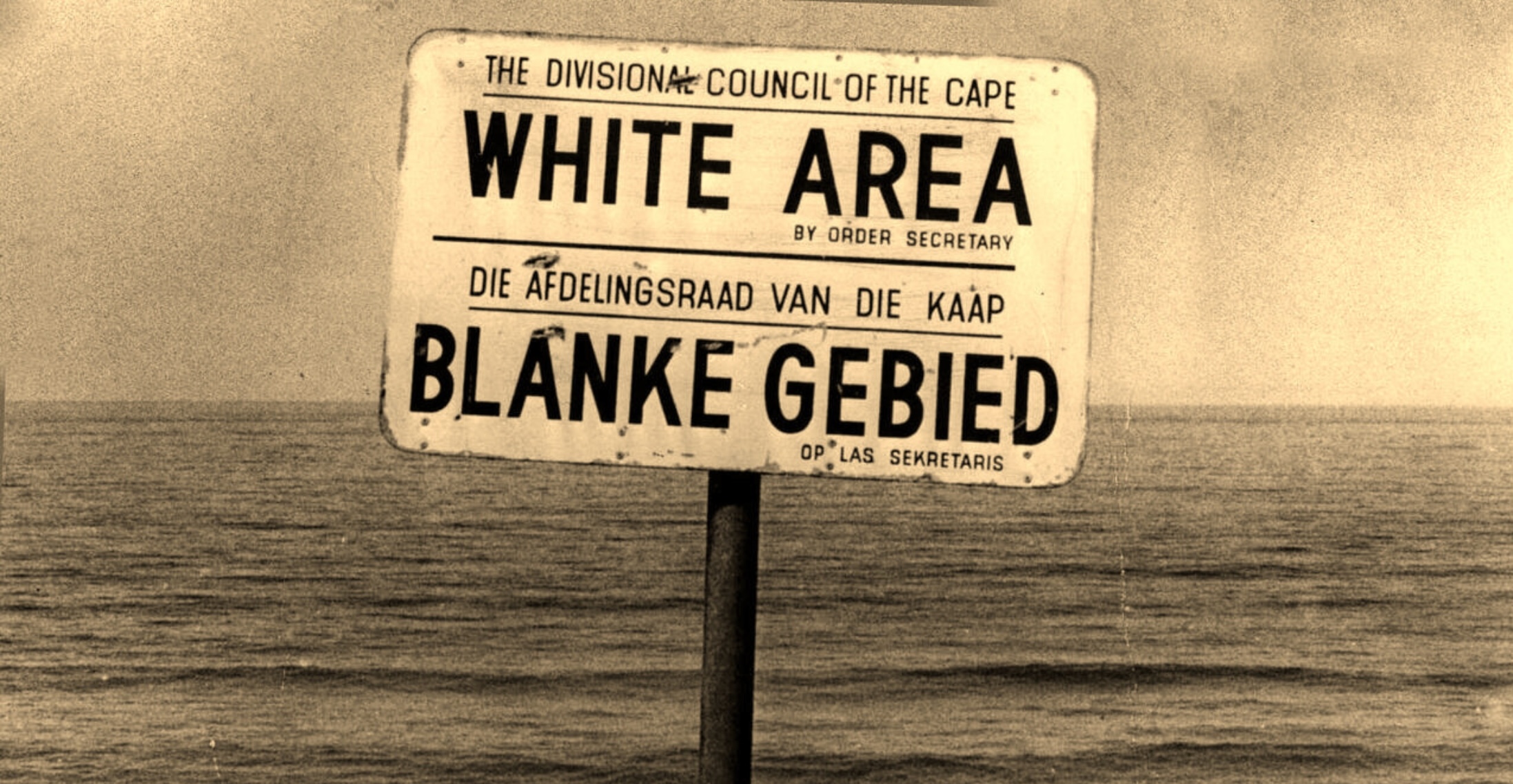
That house, rickety, open-doored, come-inside, set-a-plate, home to the family for sixty years, was destroyed under the Apartheid Group Areas Act when the area was declared “Whites Only.” Along with the rest of the neighborhood, the house was torn to the ground by a bulldozer. My aunt—and dozens of other relatives—were among the sixty-thousand people removed and packed off to live in areas far from the city center.
It is the mid-eighties in South Africa and we are under a State of Emergency.
The kitchen has grown quiet. My sister and I study our juice-cups. It is the mid-eighties in South Africa and we are under a State of Emergency. We are children familiar with stories of loss and state violence—it is a narrative that repeats in different homes, in different ways in both our mother and father’s families—and though we were born after the apex of the removals, we understand what the rubble, the empty landscape, the boxes, the cars we still see riding in convoy stacked high with household goods, means.
We have some knowledge, even as we sit at this table, our legs just about reaching the floor, of the fight that lies behind us and the one still to come.
Our aunt asks us again about school and we promise her that we are doing our best. She listens smiling, before her frustrated sighs begin anew and she announces that just this minute, now-now, a group of them had appeared, that they were moving through the room, making mischief, distracting her while she measures out her spices, flinging open cupboard doors that should be shut. Attention, she says, that’s what they’re after. Attention. My sister and I shiver with fear, but our auntie waves a dismissive, imperious hand, and tells us not to worry.
She turns, voice sharp, expression fierce, addressing her unwelcome guests directly, Los my uit! she says, Shoo. Shoo. Weg is jy. And then, in a more conciliatory tone, Ag. Come back later. You can see I’ve got small children here now. I’ll talk to you later.
In the centuries-old Cape Town Muslim community of my childhood, none of this was particularly unusual; older people spoke freely about ghosts or jinn, counseling us to take precautions of prayers, salt, incense, to limit our interaction with them. The world, we were taught, was mysterious and shared and it was hubris to pretend to understand it all.
My own experience of wrangling the past has been different. I make room for the possibility of ghostly visitors (though, ever-terrified at the prospect, I’d prefer not to), but I mostly think of these psychic intrusions as unfinished political business.
What strikes me today about my aunt’s response to her kitchen visitors, is not that she believed in the supernatural, but that when the past turned up—unhappy, uninvited, unwanted—she seemed to know that it was not after her sanity, but her attention. And more, that it was entitled to it. Her initial response may have been exasperated, fuming, Leave me alone. Off with you, but it was followed almost immediately by an invitation to continue the conversation, Ag. Come back later.
My own experience of wrangling the past has been different. I make room for the possibility of ghostly visitors (though, ever-terrified at the prospect, I’d prefer not to), but I mostly think of these psychic intrusions as unfinished political business. And while I wouldn’t have dared to suggest to my aunt that what she was sensing was not so much a spirit trapped in limbo, but the surfacing of political grief, I’ve always understood the hauntings in my own works as a way of exploring how the past presses up tight against the present.
It is, in my view, impossible to think of Cape Town—uncanny, beautiful, enraging, segregated, psychotically split, dizzy with unfinished business, heaving with the memory of the gravest sins one people can commit against another—genocide, enslavement, colonialism, Apartheid—a place where spectacular natural beauty lines up against historical loss, cited, frequently, as the both the “best city on earth” and the most “unequal place on earth”—as not haunted.
Another memory, a different era. It is the early 2000s and I am a postgraduate student, working part-time alongside a friend at the District Six Museum. The museum is wonderful, ground-breaking and community-driven. It is wholly dedicated to memorializing, not just the neighborhood’s catastrophic ending, but its blazing artistry, activism and inter-racial living. Each time we enter the archives, my friend says, Let us commune with the ghosts. We are young, but so is our country—just a handful of years free of the racist fascism of Apartheid, just a handful of years into liberal democracy. We are filled with political optimism, driven by a patriotism that feels good and uncomplicated.
What, I think to myself, are we supposed to do with all this history?
Tasked with filing the testimonies of the neighborhood’s ex-residents, we sit for hours at a stretch, peering at what had been donated by them: black and white photographs of life before the demolitions, houses, flats, dances, schools, mosques, churches, weddings, hairdressers, fishmongers, carnival processions, funerals, political meetings, carefully preserved deeds to homes, housekeys, housekeys, housekeys, birth certificates, jazz albums, paintings, speeches, pots, pottery.
Occasionally, I catch a glimpse of my own family; see my grandparents in profile at a community gathering, notice one of their friends posed next to a piano, spot familiar faces at a nikha, or at a cricket match. We are free, my friend and I, in ways our parents and grandparents were not, and though the work is inspiring and moving, I also feel utterly overwhelmed. What, I think to myself, are we supposed to do with all this history?
In the years ahead I’d set myself the same task many others did: I’d research the neighborhood, teach on it, write, make theatre, present papers about it. I’d talk to family and community members, trying to shore up their memories, understanding this work of retrieval as a tiny contribution to family, to country. The quality of my work varied; sometimes, in my desperation to document, to fill in all the archival gaps, to address what was unknown or distorted, the telling would suffer. Characters on stage would struggle under the weight of scene-setting, or narration, storylines would stutter, feel clumsy or pleading.
At other times, my need to convey the preciousness of this destroyed place, to insist that the rupture of removals was not confined to just history, but had radiated into the present and short-circuited the future, would mean glossing over instances of crime, or classism, of glancing away from disrepair or poverty. Occasionally, the work would cohere and I’d find a way to animate the ghosts, to bring them into conversation with the now in a way that avoided nostalgia and held the audiences’ focus.
But good work or muddled work, I’ve never lost my initial sense of wonder about, and fear of, the ghosts, have never overcome my overwhelm at the scale of what was lost, of the task ahead. That long ago question, What are we supposed to do with all this history?, remains.
There are days, still and often, when my frustrations at my own limitations, my smallness in the face of that ruined landscape (and the ones being created everyday elsewhere with such unspeakable violence) makes me want to cast the ghosts out, tell them to leave me alone, to stop tugging at my sleeve. But invariably, these moods pass, and I do as I was taught all those years ago in the kitchen. I invite them back in. I promise them my attention. Come back later, I say. I’ll talk to you later.
__________________________________
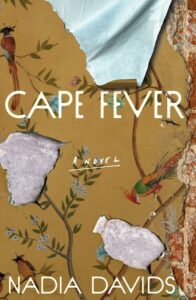
Cape Fever by Nadia Davids is available from Simon & Schuster.

Nadia Davids
Nadia Davids is an acclaimed South African playwright, novelist, academic, and former President of PEN South Africa. Her debut novel An Imperfect Blessing was shortlisted for the Etisalat Prize for Literature. Her plays At Her Feet and What Remains have been staged internationally. She has been a visiting scholar/artist at the University of California, Berkeley, and at New York University, the recipient of a Philip Leverhulme Prize, and has taught theater at Queen Mary University of London and literature at the University of Cape Town. Her writing has appeared in the Los Angeles Review of Books, The American Scholar, Astra Magazine, The Georgia Review, and Zyzzyva Magazine. She won the 2024 Caine Prize for her short story, “Bridling.” She lives in California and was a writer in residence at Aspen Writes.