On the Genius of Frances Burney, Jane Austen’s Most Important Literary Predecessor
Natasha Joukovsky Considers Ahead-of-Their-Time Novels Cecilia and Evelina
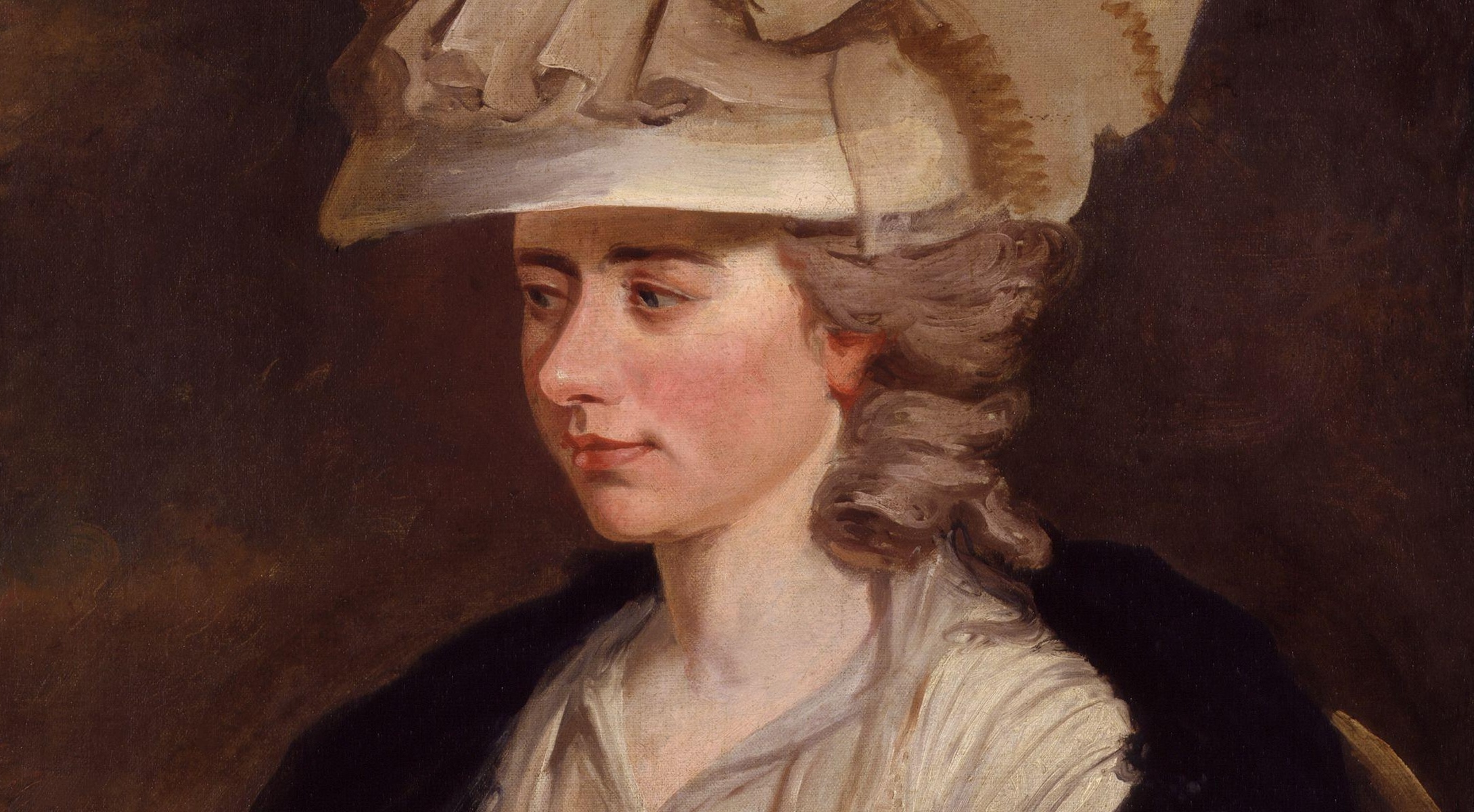
Cecilia—that is, Frances Burney’s magnificent second novel—is breaking my heart. I picked it up after being floored by her first, Evelina, for its cutting wit, epistolary laundering of unladylike opinions, and turns of phrase like universally acknowledged circa 1778.
To the extent Burney is remembered at all, it tends to be for another such line in Cecilia: “‘if to Pride and Prejudice you owe your miseries, so wonderfully is good and evil balanced, that to Pride and Prejudice you will also owe their termination.’”
It is seldom disputed the likely source of Austen’s famous title—and yet, one rarely hears about the full extent of Burney’s literary influence. That she also foreran Austen in terms of character and plot, voice and technique. Often, one hears just the opposite. Austen was the only—, the first—, the inventor of—;—and this is part of what makes her the greatest of all time.
“To my mind, the most important moment in the history of the English novel comes about five pages into Sense and Sensibility (1811),” a representative essay recently published by the New Republic begins.
“Mrs John Dashwood did not at all approve of what her husband intended to do for his sisters. To take three thousand pounds from the fortune of their dear little boy would be impoverishing him to the most dreadful degree. She begged him to think again on the subject. How could he answer it to himself to rob his child, and his only child too, of so large a sum?”
Look at the second and fourth sentences again. Who is speaking here? The grammar is all in the third person: there is no “I” to signal that we have slipped into monologue, no “you” to suggest some kind of direct address. But clearly, in some mysterious way, these words belong to Mrs. John Dashwood. This is a literary discovery of the most dramatic order. “Free indirect style” or “free indirect discourse,” had never been used systematically in an English novel before. It has been used in just about every realist novel since.
Literary reputations can be resurrected, and I am ready to play god.
Except that it had been used systematically in an English novel before. Less pervasively, less realistically, but free indirect discourse appears frequently enough in Cecilia to radically undermine such a claim. Consider this passage from the novel’s first volume, summarizing Cecilia’s initial impressions of the wife of one of her guardians, Mrs. Delville:
She found her sensible, well bred, and high spirited, gifted by nature with superior talents, and polished by education and study with all the elegant embellishments of cultivation. She saw in her, indeed, some portion of the pride she had been taught to expect, but it was so much softened by elegance, and so well tempered with kindness, that it elevated her character, without rendering her manners offensive.
With such a woman, subjects of discourse could never be wanting, nor fertility of powers to make them entertaining . . .
This last line—does it not possess many of the same qualities as the second and fourth sentences of the Dashwood excerpt? Who is speaking here? The “She found”s and “She saw”s have dropped away; this is monologueless, direct-addressless, third-person narration. And yet, “clearly, in some mysterious way, these words belong to” Cecilia!
One would call the narrator’s voice “Austenian” if the passage hadn’t been published in 1782, when Jane Austen was six years old. We must rather admit that Austen is Burneyesque. This needn’t been a timid admission;—she’d be flattered to hear it.
How do we know that Austen revered Cecilia? She tells us herself, in Northanger Abbey:
And while the abilities of the nine-hundredth abridger of the History of England, or of the man who collects and publishes in a volume some dozen lines of Milton, Pope, and Prior, with a paper from the Spectator, and a chapter from Sterne, are eulogized by a thousand pens—there seems almost a general wish of decrying the capacity and undervaluing the labour of the novelist, and of slighting the performances which have only genius, wit, and taste to recommend them. “I am no novel-reader—I seldom look into novels—Do not imagine that I often read novels—It is really very well for a novel.” Such is the common cant. “And what are you reading, Miss——?” “Oh! It is only a novel!” replies the young lady, while she lays down her book with affected indifference, or momentary shame. “It is only Cecilia, or Camilla, or Belinda”; or, in short, only some work in which the greatest powers of the mind are displayed, in which the most thorough knowledge of human nature, the happiest delineation of its varieties, the liveliest effusions of wit and humour, are conveyed to the world in the best-chosen language.
You can’t read a paragraph like this and conclude Burney’s influence diminishes Austen’s in any way. And yet, as the rare book dealer Rebecca Romney explains in Jane Austen’s Bookshelf, Burney’s legacy has been progressively undercut over the centuries specifically on the back of comparison to Austen, as if there was some sort of quota for great female novelists of approximately the same period.
My argument is just the opposite: that being Burney’s literary heiress only makes Austen’s work richer—that Austen became the greatest English novelist of all time precisely by building on the vastly underrated efforts of her luminary predecessor to the limitless credit and compliment of them both.
The novel modeled burgeoning feminine choice not just in the marital sphere, but also more broadly.
The myth of the lone, innate genius—aside from being patently untrue—does nothing to aid Austen here, who has long been justly studied and celebrated for her innumerable merits. But it does hurt Burney—and contemporary readers, bereft of the delights of her work, so deserving of appreciation both in conversation with Austen’s as well as in its own right.
Mercifully, it is not too late! Literary reputations can be resurrected, and I am ready to play god.
Cecilia, or, Memoirs of an Heiress brims with irony, withering dialogue, psychosocial revelation and astute moral inquiry. Our titular heroine, even more “gifted by nature” than she apprizes the elegant Mrs. Deville and with fortune to match, is thrust into the care of three less-than-ideal guardians on the death of her uncle, and must navigate the precarious business of safeguarding her choice of husband amidst a panoply of duplicitous suitors and advisors.
Alas, the only man worthy of Cecilia Beverley’s heart, Mortimer Delville, is also forbidden to marry her. A clause in Cecilia’s uncle’s will stipulates that her future husband must take her surname to keep her estate—an indignity to which Mr. and Mrs. Delville, in their aristocratic family Pride and Prejudice, would never submit.
Superficial objections to the novel dissolve under the lightest scrutiny. “It’s long”—okay, so is Middlemarch; so is War and Peace. “Cecilia is unrealistically perfect”—sure, but Burney follows this convention of her era slyly, often to great comedic effect. Cecilia’s perfection heightens the situational irony of the plot; she has more in common with Max Beerbohm’s 1911 heroine Zuleika Dobson than period archetypes like Emily St. Aubert.
I would have conceded the financial tensions of Pride and Prejudice more relevant to contemporary audiences than Cecilia’s name drama—absent recent popular fascination with the dispute over Brooklyn BeckhamTM. Then—and I’m afraid this is a large part of the hill to climb—there are simply the names themselves. Ironically, Austen recycled Burneyesque names all over the place. Cecilia has a Miss Bennet, Evelina a Mr. Willoughby. But, yes, the name Mortimer Delville is almost comically unappealing, half a step from Cruella, almost as bad as Fanny Burney. Let’s stick to Frances and move on.
For conversely, Cecilia’s recommendations grow and blossom with consideration. The novel modeled burgeoning feminine choice not just in the marital sphere, but also more broadly. “The ‘fashionable language’ of shopping made its actual fictional debut in Frances Burney’s hit novel Evelina of 1778 and less appreciated Cecilia of 1782,” the historian Sophia Rosenfeld explains in her recent book, The Age of Choice. Novels “first put the experience of women as choosers in the world of plenty”—and as an heiress, like Emma Woodhouse after her, Cecilia’s choices are especially plentiful, if also still hard-fought.
One of Cecilia’s first acts on arriving in London, for example—much to the displeasure and astonishment of her guardians—is to procure books. “But what bill at all,” exclaims the spendthrift Mr. Harrel, “can a young lady have with a bookseller?” Meanwhile, Harrel has been all but selling Cecilia to her various suitors in a manner resembling nothing so much as a corrupt real estate broker renting the same apartment to multiple tenants. The contrast is exquisite—and frankly par for the course.
In short, you might say Cecilia is a work in which the greatest powers of the mind are displayed, in which the most thorough knowledge of human nature, the happiest delineation of its varieties, the liveliest effusions of wit and humour, are conveyed to the world in the best-chosen language.—So go pick up a copy if you hold in esteem the heiress-author who did.
__________________________________
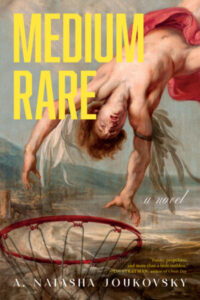
Medium Rare by A. Natasha Joukovsky is available from Melville House.

A. Natasha Joukovsky
A. Natasha Joukovsky is the author of two novels The Portrait of a Mirror and recently released Medium Rare. She writes a "quite useless" newsletter and lives in Washington, DC.