On the Daily Humanity of Trans Life in Casey Plett’s Dream of a Woman
Calvin Gimpelevich Considers the 2021 Story Collection
Coming of age is an endless process, for we are always coming into new ages, the 80-year-old as much as the adolescent, always discovering new facets of self. Gender transition offers a particularly dramatic stage for becoming. Not only is the person transitioning coming into a new public face, but leapfrogging back to address the parts of themselves that could not grow up, properly, in the old dissociated dysphoric casing. A newly transitioning woman can feel, in middle age, with a family, mortgage, and job, like a twelve-year-old girl.
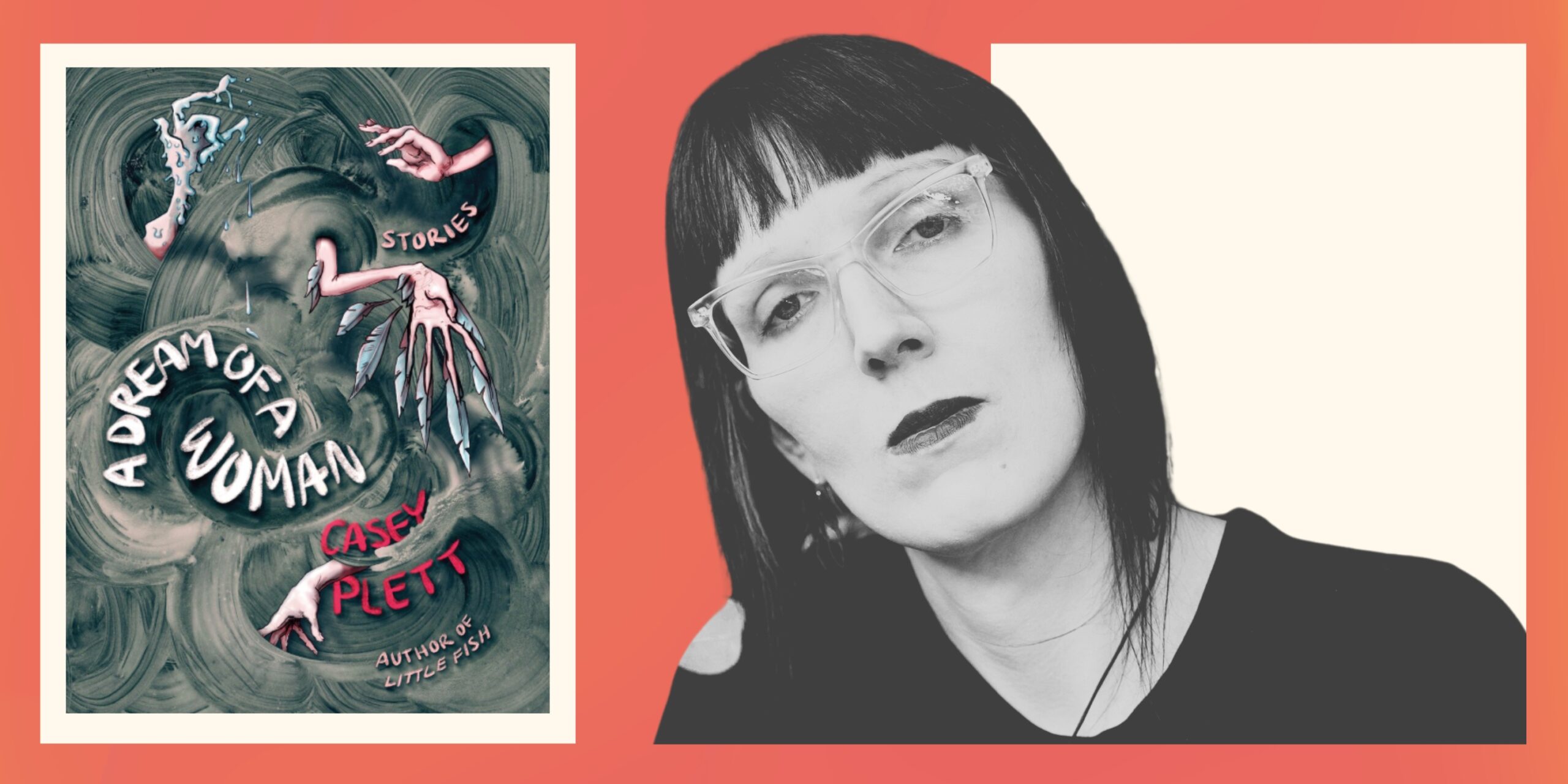
Not all of Casey Plett’s protagonists in the 2021 story collection Dream of a Woman deal with this process, but the central novella does. “Obsolution” traces the arc of Vera’s denial, transition, and actualization in five chapters interspersed through the collection’s other stories. Vera begins as “David” in the Pacific Northwest—suppressed, self-effacing, concerned with being a good (meaning feminist) man—and finds her way, fitfully, into maturity as a woman in New York and beyond. Growth is halted and spurred through her long tumultuous relationship with Iris, Vera’s sometimes lover and sometimes friend, as they reach the limits of how much they can hurt and support each other. A shadow version of the same dance happens with Vera’s mother. Slowly, very slowly, Vera learns how to settle into, and advocate for, herself.
When people tell me they’re thinking about transition, especially younger people, this is the book I recommend.
What else? Dream of a Woman is Plett’s third book of fiction, following the novel Little Fish. In addition to the novella, the collection contains seven shorts whose subject matter and themes remain consistent through her larger body of work. There is the ponderous march of normalcy and daily life. The matter-of-fact. De-sensationalized sex work. Family. Old friends. Returning to home towns. Bad apartments. Dating. Drinking. Scrambling to make a living. The stultification of pre-transition. Harassment. Discrimination. Realizing that life continues after transition, that after shots and pills and surgeries and paperwork and name changes and hormone blockers settle, issues of career, relationships, stability, addiction, and grief lay in wait. Adulthood, in other words. From the first story:
She had no idea what to do with her existence—if she had a future, or if she wanted one. In the absence of the alcohol she’d flooded herself with for half her life, her tired, newly sober body had handed her a sense of alertness that she hadn’t felt since she was a teenager. At the same time, she also felt herself turning into a slug as that body barely moved. Many days, she never left the house. She slept and watched Netflix and cooked.
It is gentle writing. The narrators have soft spots for various failings. There are no jump scares. Tragedy is dealt with quietly, permeating the atmosphere, seldom leading to hysterics or scenes. Characters are more likely to avoid than confront. Silences weigh heavy and often last years. Depression hovers, though the word is seldom used. All of the protagonists are trans women. They are in their twenties or thirties or, sometimes, late teens. They live around the US and Canada, often moving between cities and small towns. Many feel isolated. The ones who do not have kinship with other trans women. Women in general have a heftier emotional presence: the ways they fail and support each other. Sometimes it is the narrators who do the failing, and their subsequent guilt, like their silences, have lingering weight. They are wistful, but hopeful, loving. The character Tiana, in “Couldn’t Hear You Talk Anymore,” sits in her bedroom immersed in a sentiment one can imagine any of Plett’s narrators ruminating upon:
She thought of a generation of girls who might grow up strong and unbothered and untouched, healthy, beautiful, learned, and full of love, who could fall into adulthood knowing girlhood, girlhood in full, having the chance at normal kinds of pain, who would grow and grow and grow and grow and grow and grow and grow and grow and become oceans, gentle armies, thick with passed-down wisdom and love. She believed and took heart from that. She did.
The narrators seldom seem bitter; never enraged. They look at the lives they’ve found themselves in and try to make their ways. They are overtly and explicitly transgender stories, but transness is folded into the larger project of being human. Instead of singular dramatic moments, they focus on the warp and weft of the commonplace. When people tell me they’re thinking about transition, especially younger people, this is the book I recommend.
In the current moment, when transgender people are treated as a political symbol, Plett’s work re-affirms the daily, the human, and the relational. Gentleness counteracts hysterics. Instead of representing a demographic, the trans women she writes of are allowed simply to live.

Calvin Gimpelevich
Calvin Gimpelevich is an NEA Fellow, the recipient of a Lambda Literary Award, and the author of Invasions (Instar 2018). His work has been recognized by Artist Trust, Jack Straw Cultural Center, 4Culture, CODEX/Writer’s Block, Studios at MASS MoCA, and the Kimmel Harding Nelson Center for the Arts; it has appeared in Ploughshares, LARB, Kenyon Review, A Public Space, and The Best American Essays 2022. He founded the T4T Reading Series in Boston, MA. calvingimpelevich.com