On the Complexities of Navigating Indigenous Life in a Relentlessly Modern World
Irina Sadovina on the Important Lessons in Anna Nerkagi’s White Moss
Over the past twenty years, Indigenous issues have gone mainstream. Land acknowledgments, protest movements, scholarly conversations, the UN themed decade, and the Indigenous Literature category on Lit Hub all speak to that. As someone who comes from the Mari community from the Volga region, I welcome these developments.
But I sometimes find myself wondering whether they have made one of the central questions of my own life—what does it actually mean to live as an Indigenous person?—harder to answer. Contemporary conversations on the subject are overrun with opinions about what “authentic” Indigeneity looks like, and what Indigenous people should and shouldn’t do, but the discourse often shies away from the fundamental paradoxes Indigenous people (and young Indigenous people in particular) face.
What happens when the desire for cultural preservation, individual freedom, economic sustainability, physical survival, and even love are in tension? What happens when you are forced to choose between a beautiful, vulnerable tradition and your own self-actualization?
My Mari grandmother, who, at different times, urged me to marry a Mari man and a Moscow boy with good prospects, to have a traditional wedding and a modern one, to move away for a good salary and to stay close to home—she understood these paradoxes well, even if she couldn’t resolve them either. One of the reasons I love Indigenous literature is that it provides space where these questions can be looked at more honestly. And it’s also why I chose to translate Anna Nerkagi’s 1996 novel White Moss into English.
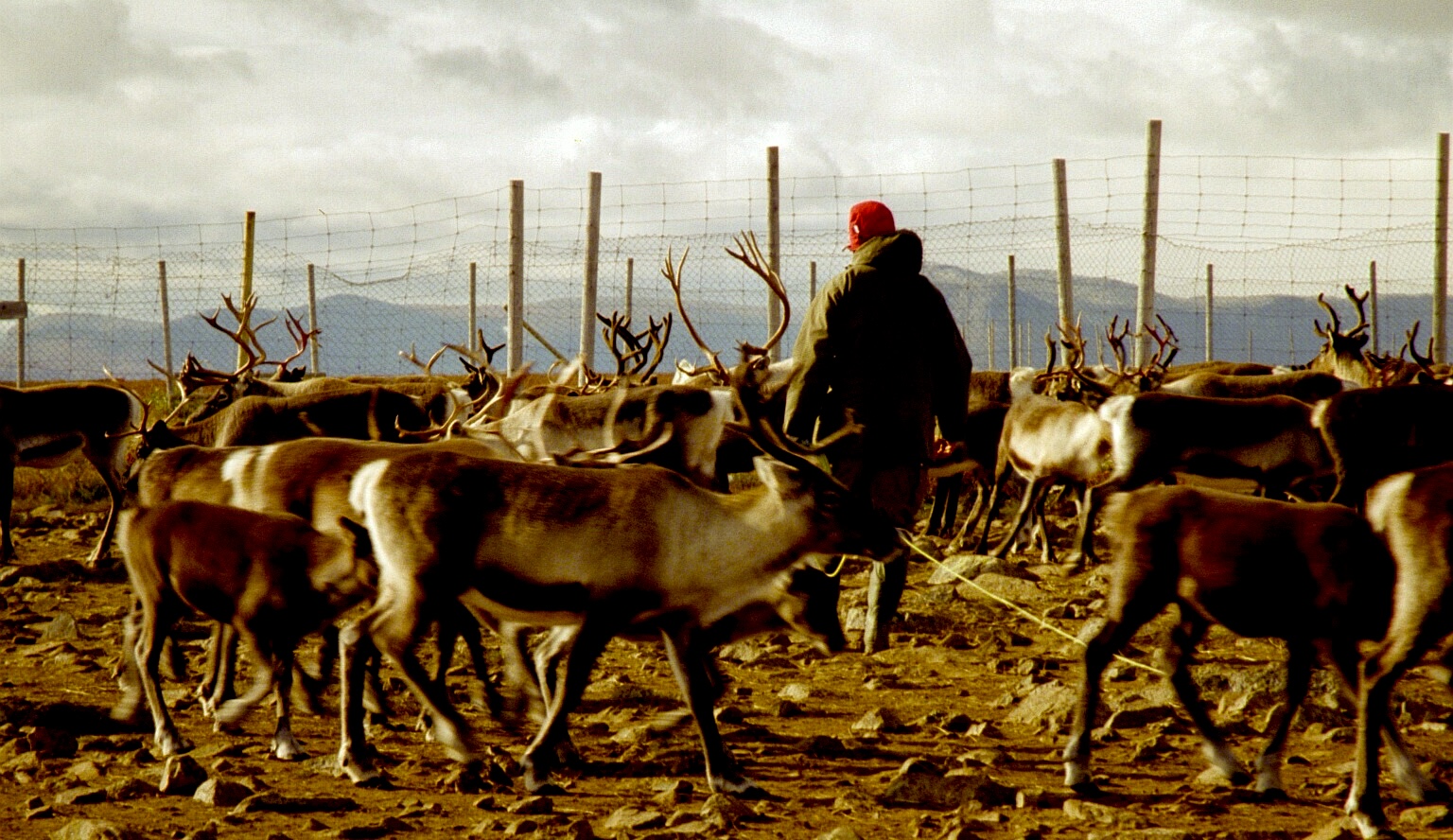
Set in a small Nenets community in the Arctic peninsula of Yamal, Nerkagi’s White Moss invites the reader into the impossible dilemmas of navigating an Indigenous life in the modern world. Its characters are a small band of migrating reindeer herders. Over the course of the twentieth century, with its endless economic and political upheavals, the numbers of both people and reindeer in the camp have dwindled.
Those who remain hang on to the traditional lifeways, but the novel begins in a moment of crisis: the future of the community hangs on Alyoshka, the last young man in a band of aging people. If the elders are not to grow old and die, one by one, alone in the tundra, Alyoshka must have a child. And that means he must get married.
As a reader, you may want Alyoshka to get a grip and do the right thing. But what is the right thing? It depends on who you ask.
Alyoshka is one of the few children of the camp who wasn’t sent to boarding school. It’s not that he didn’t want to go: like his younger brothers, and his childhood sweetheart Ilne, Alyoshka felt the call to adventure and the pull of the big world. But someone had to remain behind and help his mother. None of his siblings have returned, and now he must find a mate if the camp is not to shrivel and disappear, taking with it its wisdom, stories, lifeways, crafts, gods, and language. Alyoshka still hopes that Ilne will come back, but the elders can’t afford to wait. Something has to happen right now. And so he is married off against his will, and forcibly pushed into the role of a family patriarch.
In the opening section of the novel, Nerkagi deftly takes us through the experiences and viewpoints of the members of the camp. Alyoshka’s mother clings to the hope that her son represents, and finds his reluctance to play his role impossible to understand. His young bride—unnamed, like most women in the novel—silently grapples with the realization that she is not wanted. The camp’s elders reminisce about losses past and present: famine, the depredations of wolves, the mismanagement and violence perpetrated by the state, and, most painfully, alienation from their children who have settled in towns and cities.
In the face of such grave concerns, Alyoshka’s torments seem self-indulgent and frustrating, but his problem—whether to leave or stay—is far from insignificant. As a reader, you may want Alyoshka to get a grip and do the right thing. But what is the right thing? It depends on who you ask.
White Moss challenges our most beloved fictions: the romance plot, the salvation plot, the triumphalist narrative in which the trade-offs magically disappear, and we find a way to get everything we want.
It is easy to have an opinion, based on one’s own philosophical and political views, about what Alyoshka should do. But the question is not theoretical for him. The weight of tradition and the pressure of his own desires bear down on him equally, and his choice will have lasting consequences. If he chooses what some readers might recognize as individual freedom, he will kill the camp’s dreams of a possible future. The elders will die, abandoned by their children, and their reindeer will be slaughtered or absorbed into bigger industrial-sized herds. There will be no one left to carry on the camp’s spiritual traditions, which are irrevocably tied to the land.
If, however, Alyoshka chooses the interconnected, land-based life of a Nenets herder, he can preserve this way of life a little longer; but his future will forever be circumscribed by the laws of a community that is far from perfect. The camp is isolated and poorly resourced, and its traditions—including its conception of gender roles—can be painfully rigid. Alyoshka, who has experienced the possibility of a romance with Ilne, bristles at the fact that his young bride was “bought, brought, and laid down” before him, and that the two of them are treated by the community not as individuals but as dogs that can be forced to mate. Indeed, young women like Alyoshka’s bride may be looking at a grim future, in which their husbands, in accordance with tradition, have the right to ignore or even beat them.
It’s not a coincidence that Alyoshka’s lost love is the only woman in the novel who is known by her first name. By staying in the city after her schooling, she has gained new options. But of course, we don’t know where her own path will lead her. She might go to university and meet another man—Russian, or Khanty, or Tatar, or Kazakh—and whatever her new family might be, it will not be Nenets-speaking. She might find herself pacing around her city apartment like a lost reindeer, and, driven to despair, end up drinking herself into oblivion. Or, like Nerkagi herself, Ilne might master a modern art form, and make her community famous far beyond the Yamal. All of this and more could happen to an Indigenous woman in the big city.
Like Ilne, like Alyoshka, like Indigenous children the world over, Anna Nerkagi had to make a choice. Born in the tundra but educated in a boarding school, she lived and studied in the Siberian city of Tyumen. There, she began to write fiction and gained some recognition as a promising young writer. But that’s where her story deviates from the usual trajectory: instead of building on her emerging career as a bright young Indigenous thing, she left city life to return to the tundra and reintegrate into her community. Deeply troubled by the demographic and social problems plaguing the Nenets people, Nerkagi founded the Land of Hope—a tundra school for children which combines modern and traditional education and provides support to orphans and lonely elders.
While working on this translation, I travelled to the Land of Hope, where I got to meet Nerkagi in person. She struck me as quick, pragmatic, driven, and single-minded, as one would have to be to build and maintain such a community. Facing challenging natural conditions, relative geographical isolation, and changing political weather requires a spine of steel. This inner strength is evident both in Nerkagi’s ability to organise the delivery of new equipment to the tundra, and in her strongly individual religious vision.
I found her, in short, to be both intimidating and mesmerizing. When I told her that White Moss would be coming out in English, she seemed quite indifferent to the news. Fair enough, I thought—she didn’t need me to read or translate this book. I was the one who needed to read and translate it, because it said all the things I’ve been trying to say for years.
White Moss challenges our most beloved fictions: the romance plot, the salvation plot, the triumphalist narrative in which the trade-offs magically disappear, and we find a way to get everything we want. It rejects these fictions, and shows us what it looks like to take a way of life seriously, with its wisdom and promises, with its limitations, cruelties, weaknesses, and frustrations. Some choices cannot be optimized, some losses can’t be avoided. History doesn’t unfold the way we want it to. Every generation must find a way to muddle through, to preserve what they can and reject what they must. That’s always been the deal.
__________________________________
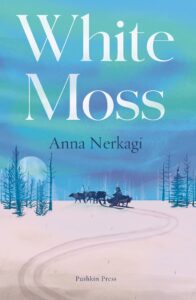
White Moss by Anna Nerkagi with an introduction by Irina Sadovina is available from Pushkin Press.

Irina Sadovina
Irina Sadovina is a literary translator working with Russian and Mari, writer, and language educator. Her translation of Anna Nerkagi's White Moss (Pushkin Press, 2026) was named Blackwell's Book of the Month and reviewed in The Guardian and The Irish Times. Her writing appears in The Sheffield Review, Prototype, and other publications. She holds PhDs in Comparative Literature and Folklore, and teach Russian language at the University of Sheffield. Born in Yoshkar-Ola, Russia, she is currently based in the UK.