On the Aftermath of Conversion Therapy
Davin Malasarn in Conversation With Timothy Schraeder Rodriguez
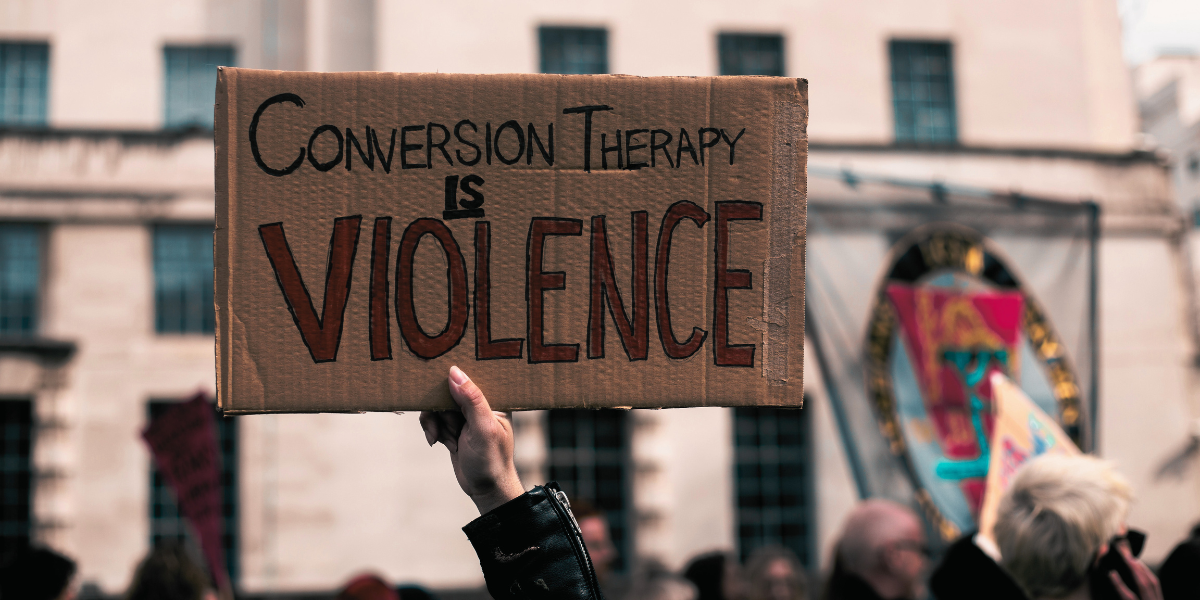
In March, the Supreme Court ruled that Colorado’s ban on conversion therapy discriminated against therapist Kaley Chiles based on first amendment rights. The case reminded us that such disproven practices are still prevalent throughout the country. Despite bans meant to protect minors, conversion therapy has flourished, particularly in religious settings, remaining accessible to anyone seeking to or being forced to try to change their sexuality. According to a 2026 report by The Trevor Project, one in twenty LGBTQIA+ young people reported having been subjected to conversion therapy. The ruling also points to the wide range of conversion therapy practices that exist and the belief that some approaches might be more acceptable–or less harmful–than others.
As the news came out, I was fortunate that a mutual friend connected me with Timothy Schraeder Rodriguez, whose book Conversion Therapy Dropout (Broadleaf Books) is coming out on the same day as my novel, The Outer Country (One World). Both works explore the intersection of religion, culture, family, and queer identity, Tim’s in the form of memoir, and mine in the form of a novel inspired by true events. Both also deal with conversion therapy. In Tim’s case, he spent eight years trying to “pray the gay away.” In my case, a boy named Ben is forced to participate in a Buddhist exorcism to remove the feminine spirit from his body.
–Davin Malasarn
*
Davin Malasarn: When I decided to write about my experience with conversion therapy, I wasn’t interested in describing it from my point of view. That had replayed in my head enough times already. Instead, what interested me was seeing the story from other perspectives, beginning with the aunt who initiated the Buddhist ceremony, but also including other family members. In one sense, I wanted to understand. I realized I could formulate the experiences and thoughts that led each person to make the decisions they did. Part of me also wondered if this could be a way to forgive my family members. So writing a fictional account immediately made sense to me. When you decided to tell your story, was it obvious to you that it would be a memoir?
But really, my book is for anyone who has ever been told that who they are is not enough or has felt like they had to hide who they were or change to find acceptance.
Timothy Schraeder Rodriguez: I never set out to write a memoir about my time in conversion therapy. I’ve always loved essays and flash fiction and thought that may be what I would attempt to write as I began my writing process. I did a writing workshop early on, and the teacher instructed us to write whatever felt the most urgent. I kept coming back to my conversion therapy experiences, which were sometimes even stranger than fiction. Ultimately, I felt like memoir chose me more than I chose it. Given the unique vantage point I had, not only being in conversion therapy but also working with religious institutions that supported and perpetuated the practice, telling it in first person, in my own voice, felt like the best form of resistance to name the real experiences and real people I encountered.
DM: The act of resistance can be empowering. I felt the same way simply by putting the details out there. I was admitting that it happened and that there were long-term consequences. I found power in bringing all that to light. That makes me think about the audiences we are writing for. Did you think of your book as serving others?
TSR: I initially wrote it for myself. I wanted a written record of what I experienced and what I put myself through. But through the process of writing and sharing excerpts with my writing class, it became clear it was a story I needed to share with others. I started to think about how so many memoirs had been a lifeline to me — Augusten Burroughs’ Running with Scissors, anything by David Sedaris, and Alexander Chee’s How to Write an Autobiographical Novel — and realized I owed it to the closeted queer kids in the Midwest, like I once was, to share my story and hopefully help them feel seen and a little less alone. But really, my book is for anyone who has ever been told that who they are is not enough or has felt like they had to hide who they were or change to find acceptance.
DM: That sense of connection was important to me too. I had taken a hiatus from writing that lasted almost a decade because I didn’t want to put a book out into the world if it didn’t bring value to others. What I came to appreciate was that telling our unique stories provides an opportunity for other people to connect with us. Somehow, the more specific we are, the more other people can relate. I wrote The Outer Country with that in mind. I was certainly thinking about the queer community, but I was also thinking about the immigrant community and, really, anyone who is part of a complicated family.
It’s strange and somehow fitting that the same faith that wounded me was also what helped me find my way back to myself.
What do you hope people take away from this book?
TSR: I hope queer people will see that they don’t have to sacrifice their spirituality to embrace their sexuality. That’s a tension that doesn’t get enough attention and that so many navigate in silence and isolation. I also hope the book shines a light on the very real and ongoing harms of conversion therapy. With the recent Supreme Court ruling opening the door for these practices to expand, survivor stories need to be told now more than ever. But ultimately, I hope anyone who picks it up will finish it freer to be who they were always created to be.
DM: Reading your book, I was struck by how much we had in common even though we grew up in very different communities. One of the many commonalities I see in our stories is the way religion served both as the source of injury and the potential for salvation. In my book, Ben is deeply traumatized by his experience with the Buddhist ceremony, which instills in him a deep sense of shame about who he is. As he gets older, he is confronted with the pressure to fit in among straight-acting teenagers, which inevitably involves dating. As a way of protecting himself from that pressure, he considers becoming a monk. He sees the choice as a way of removing himself from a world that will never accept him.
TSR: Faith was, and still is, important to me. Although my faith today looks very different from the institutionalized religion of my past, I cannot deny what a powerful role the church played in my formative years. Like Ben, I made a vow as a teenager to devote myself to working in ministry in Evangelical churches as a means of penance. I hoped that if I did good work for God, that God would do good work in my life and help me get rid of what I believed was a sin. And that belief is ultimately what led me into conversion therapy.
Years later, in my late 30s in New York City, I found myself in a church again, this time not for a service, but because I was desperate to get sober and found my way to a recovery meeting. Although it was initially triggering, it helped me reclaim the sacredness of a space I’d felt excluded from for so long. It’s strange and somehow fitting that the same faith that wounded me was also what helped me find my way back to myself.
How do you handle the “good” memories of your religious upbringing? Is it possible to mourn the loss of the community while condemning the practice of conversion therapy?
DM: My family’s Buddhism practice didn’t require daily or even weekly attendance to temples, so religion didn’t represent community for me. We got together with other Thai families on a regular basis outside of temples. But my religious upbringing included a system for generating good karma. We called it “tam boon.” And I relied on that to help define my values. When I pulled away from Buddhism, I had to redefine purpose for myself. For a while, I felt aimless, though fortunately that didn’t last forever. Today, I can still see value in Buddhist practices. There are some principles I strongly support, like nonviolence and the search for contentment, even in the face of discomfort. I’m able to pursue those things on my own.
Time and trauma have a way of shaping how we view the past.
TSR: This was one of the more surprising revelations that came through the writing process. When I went back through my journals and notebooks, I realized that some of the happiest memories of my young adult life happened during my years in conversion therapy. The friendships I made and the community that formed were real and meaningful, even if the context they were formed in was deeply harmful. And one of the things I’m most thankful for is that years later, I still have many of those people in my life.
As for faith, I did have to leave the church for a while. The institution and the people who claimed to represent God in it had caused too much harm. But through getting sober, I quietly found my way back, and today I practice my faith in an affirming church community that celebrates rather than condemns who I am. And being able to reclaim my presence and worthiness in a space that once excluded me has been its own form of healing.
DM: We’re discussing personal journeys that are decades-long. For me, reconstructing memories from that time in my life was a tremendous challenge. Trauma can distort details. I also had to deal with repressed memories that didn’t re-emerge until I was an adult, transforming my understanding of what I had been through. So I wasn’t sure what was fact and what was something I may have created in my attempt to make sense of things. Finding references to fill in the details was also a challenge. Thai immigrants and their descendants make up such a small percentage of the American population–about 0.7 percent. There isn’t much available in terms of historical resources to draw from. Fortunately, as I pieced together what I knew to be true, other elements fell into place logically. Was it similarly difficult for you? What was your process for piecing your story together?
TSR: While I pride myself on not being one to hang onto clutter, when I did leave conversion therapy, something told me to hang onto everything. So I did. I kept all of my old journals, conference notebooks, workbooks, and books I’d amassed over nearly a decade, and kept them all in a small black shoebox. I finally cracked it open when I began writing my first manuscript. It was a gold mine of stories I’d forgotten, and helped clarify memories that were fuzzy.
I hope that in sharing my story I can shine a light on the ongoing harm of conversion therapy, while also offering hope that you don’t have to abandon your faith to embrace who you are.
It was extremely difficult to re-read so many of those old journals and prayers I scribbled on tear-stained pages. But even with all of that source material, there were still many moments unaccounted for. Time and trauma have a way of shaping how we view the past. So, I had to make peace with the fact that a memoir is just the truest version of a story we can tell from where we stand now. And sometimes the feelings and emotions our memories stir up in us are more honest than a perfect reconstruction of the past.
DM: In terms of defining the scope of your story, was it easy for you to recall the first moment in your life when you realized you were gay and that being gay was unacceptable? In other words, what is the origin story of your book? I describe a moment when Ben’s Aunt Manda catches him dancing with a blanket around his waist. She asks him if he wants to be a girl, and he answers yes. I remember that moment in my real life clearly. I knew nothing about sex, but I was fascinated by the world of women. I also knew that I shouldn’t feel that way, and that admitting to it would potentially get me into trouble, even among the people who loved and cared for me.
TSR: I always remember feeling like an outsider, long before I even understood my sexuality. Being adopted certainly had a lot to do with that. But there was always a sense that I was different in ways I didn’t yet have words for. I came of age as an Evangelical teenager in the Midwest in the 1990s, just as the world at large was grappling with the AIDS crisis. Even though nothing was ever explicitly said in my home or church about being gay, it didn’t take long for me to pick up that whatever I was feeling and experiencing was unacceptable to the world around me. I knew I needed to hide it and do whatever I could to change.
How do you decide where the story ends? Since healing isn’t linear, how did you choose a final scene that felt honest without feeling fully resolved?
DM: Writing fiction made it easier for me to find a clearer ending to my story. I was able to force my characters to bring their conflict to a head. I also could crystallize moments of personal change. As you know, real life wins are often less defined. I would just recognize that a stage of my life felt better than the previous stage. Nevertheless, I did try to capture that sense of nonlinearity and the idea that maybe Ben would never be fully healed.
TSR: I really struggled with the ending because I’m still undoing the harm of conversion therapy, more than a decade after walking out of my therapist’s office for the last time. But I end with a scene from a place that’s been a huge part of my healing and where I wrote a majority of the manuscript, Fire Island. And I close my story with a prayer. Offering a ‘benediction’ for my readers from my writing desk on one of the gayest places on earth felt on-brand and honest for what my life looks like today. I hope that in sharing my story I can shine a light on the ongoing harm of conversion therapy, while also offering hope that you don’t have to abandon your faith to embrace who you are.
Davin Malasarn
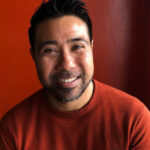
Davin Malasarn was born and raised in Southern California. After completing his PhD in biology at the California Institute of Technology, he earned his MFA in creative writing from Bennington College and completed the Queens University of Charlotte Book Development Program. He was a PEN America Emerging Voices Fellow, a Plympton Writing Downtown Fellow, and a Bennington Alumni Fellow. He co-founded The Granum Foundation, a non-profit dedicated to supporting writers, and hosts The Artist’s Statement podcast.