On Kai Cheng Thom’s Genre-Bending “Confabulous Memoir” Fierce Femmes and Notorious Liars
Emory Oakley Considers the 2016 Novel
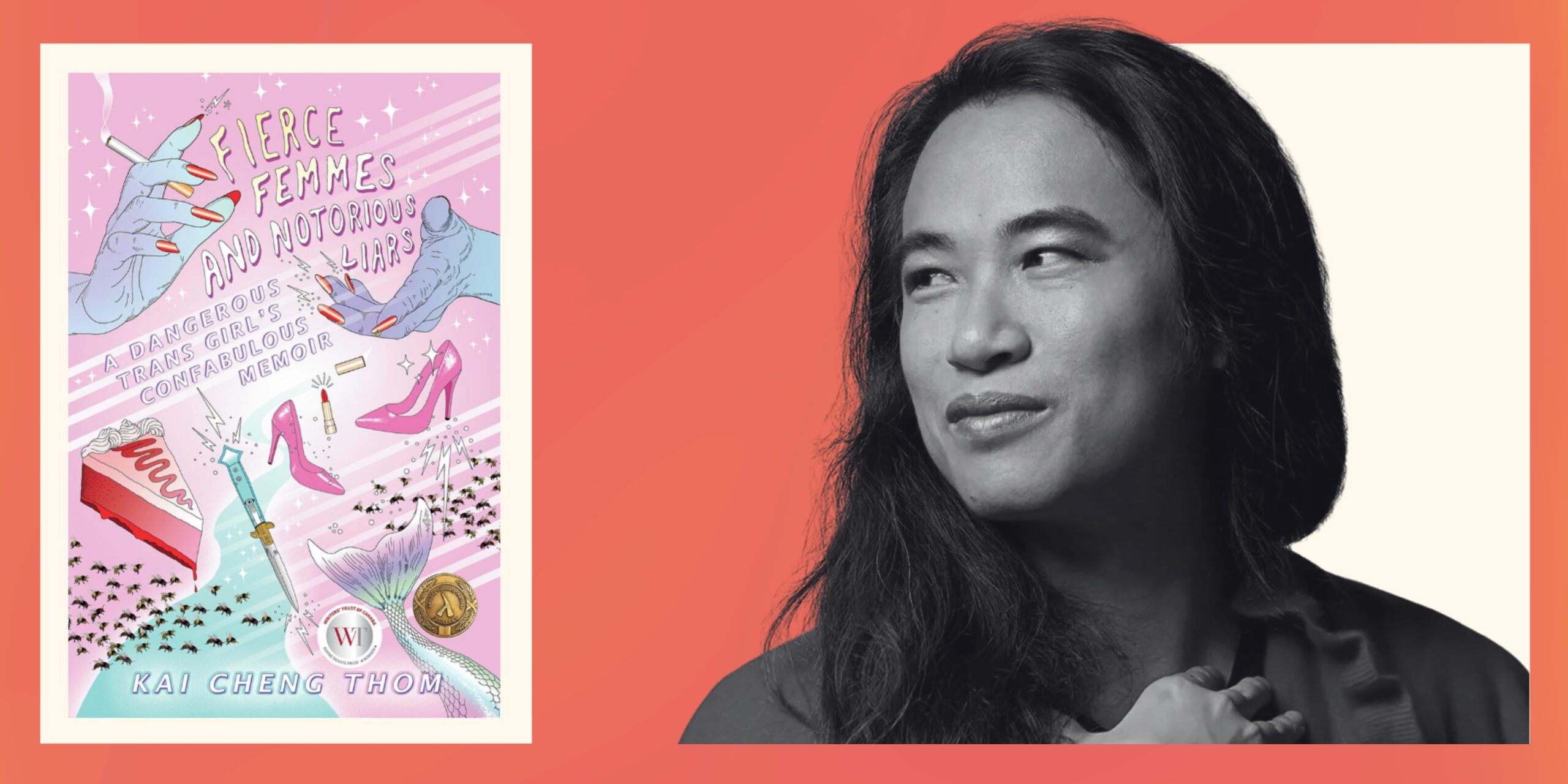
My first read through of Fierce Femmes and Notorious Liars by Kai Cheng Thom felt enchanting and that’s exactly the point. But the very fantasy that makes the book extraordinary may also be why it’s overlooked by the mainstream. The novel refuses to package trans lives as tragic or easily digestible. It doesn’t offer the narrative arc of suffering, survival, and uplift that people have come to expect from trans stories. Instead, Thom gives us something stranger and far more honest: a mythical world where trans girls create their own legends.
Thom writes, “for many generations, trans writers have been pigeonholed into writing memoirs that are intended to educate cis people about the reality of trans life.” In contrast, this Confabulous Memoir is not a memoir at all, but a fairytale narrative and confessional of an unnamed trans girl who runs away from home to find herself and build a future as a woman in the “City of Smoke and Mirrors.” While the main character shares some similarities with Thom, the novel translates these experiences into a magical world that refuses to remain in one genre.
When I first picked up this book, I was a baby trans person still figuring out my relationship with gender. I hadn’t yet sought out many trans narratives because I was afraid of what I might (or might not) find. But Fierce Femmes came highly recommended by the queer community I was starting to feel a part of. Thom is a Canadian trans writer, poet, and speaker also known for I Hope We Choose Love and Falling Back in Love with Being Human. What struck me most then, and strikes me even more now, is how Thom uses fantasy not to obscure reality, but to reveal it. The fantastical world provides a space to explore complex real-world issues like racism and transmisogyny that connect with readers in a way that isn’t too painful to consume.
They carry switchblades, wear lipstick like armor, and rewrite the world in their own blood, rhinestones and glitter.
The Lipstick Lacerators are a great example of this. They are a vigilante girl group who strike back against the cisgender men who attack them, taking charge of their destiny in a way that trans women throughout history have. They carry switchblades, wear lipstick like armor, and rewrite the world in their own blood, rhinestones and glitter. They are fierce and you can’t help but root for them.
What fascinates me most about this girl gang is the intensity, particularly the narrator’s love for fighting. When she is teaching the other Femmes to fight alongside Valaria, who she refers to as The Goddess of War, she says: “She doesn’t love [to fight] the way I do.” However, we already know she can fight before the formation of the gang, as we see her take out her anger on Lucretia at FAB (Femme Alliance Building) and reflect that there’s “nothing better than a fight on a slow evening.”
When we see the Lacterators in their first confrontation, Thom doesn’t shy away from the thrill: “I take him out cleanly, with a huge, arcing punch to the face that snaps his head back and sends a lightning bolt of pain through the bones in my hand, wrist, and arm. The pain sends me into an instant frenzy.” The threat is real, but seeing them kick butt against those who have hurt them feels almost fun.
While it’s empowering to see the narrator fight and the Lipstick Lacerators take back some of their power, doing so complicates the often preferred narrative where trans women are either saints or victims, never flawed, furious, or fallibly human. Thom’s narrator is all of those things. During that same altercation with Lucretia she wonders to herself “why [she] can never solve [her] problems with anything except violence” and admits she hurts people when what she really wants is for them to love her. The pure honesty and complexity of this character makes the reader feel that much closer to her.
The Lacerators’ formation also sparks ideological conflict: is fighting violence with violence justified when society refuses to protect you? Kimya, the founder of FAB, insists on nonviolence. Others, including Valaria and the narrator, see no other option. The novel doesn’t resolve this tension, in fact, Kimya and her long-time partner break up over being on opposite sides of the conflict. Instead of answering the question, the book acknowledges the impossible choices that oppressed communities face: speak up and be ignored, or fight back and be punished.
Do we know that the Lipstick Lacerators are real (or based in fact at all)? No, but we don’t need them to be in order to feel their power. We see the impact they have on the community through the news headlines and the police response and this reminds the reader that trans women are neither passive nor fragile.
At the conclusion of the book, Thom says, “I will write down all the things that happened and all the things I wish had happened and let history decide what’s real and what’s not. Maybe what really matters isn’t whether something is true or false, maybe what matters is the story itself, what kind of doors it opens, what kinds of dreams it brings.” To me, this feels like the thesis of the novel, because those who see themselves in the story are given permission to dream. And isn’t that what we all want? To dream of a better future for ourselves.
While the introduction states the story is written for trans femmes, it has made waves in the queer community. I believe, in part, because of the beautiful language and fantastical storytelling, but also because of the feelings it evokes. As a trans masculine person, I don’t have the same struggles as the women depicted here, but felt deeply connected to the narrator and other femmes in this novel. I absolutely root for the Lacerators success and hope for a version of the future that makes them feel safe.

Emory Oakley
Emory Oakley fell in love with stories before he could read, and has been chasing them ever since. He now works as a freelance content writer, where he spends most of his days thinking about language and the strange power of a well-placed sentence. When he isn’t reading or writing, he can usually be found on an outdoor adventure or drinking a craft beer on a patio.