On a Childhood Longing to Be Delicate
Justin Wymer Remembers an Unsettling Encounter at a Family Reunion
Mom said the folks who’d be at the family reunion were Randy’s people, so I’d probably never met them but that was no reason not to try to talk. It’s true I often stayed quiet. If I raised my voice, I’d be accused of the sin of wrath. If I got too happy, my voice might lilt and sound too much like a girl. If I mumbled, my words would be whispered back to me in affected Michael Jackson breathiness, but I’d be screamed at for being disrespectful if I tried to project. So at 16, when I had to talk, I hid behind quotations. To show sympathy, I once responded to my papaw’s farmer friend telling me about his sick wife by saying, unironically, “The blood blooms clean in you, Ruby. The pain you wake to is not yours” (Plath, “Nick and the Candlestick”).
It was unclear to me whether Randy was blood or something thicker—Mom never spoke about him much. But then again, I never knew who was related to me. I’d seen too many smoke-stinking strangers, young and old, let themselves in the front door of our house when I’d forgotten to lock it after getting home from school. If my mom or brother was home to see me panicked at the kitchen table, doing homework, when someone walked in, they’d just say oh don’t worry, Justin, that’s Cousin Y or Uncle Z. I understood not to ask questions and to treat the strangers as family.
It annoyed me that Mom always insisted on making me show up to events full of these ambiguous relations. She’d introduce me and say I was on the honor roll, beaming. I didn’t want to be at this reunion, talking about the wicked price of gas and the newest obituaries with people likely related to Randy and maybe to me. A sixty-year-old man with cheeks like melted wax. But I hadn’t eaten yet, so I decided to head over for an hour or so. I’d just gotten my license, so I could escape if someone asked me if I had a girlfriend and gave me a dangerous eye when I said no.
Inside the community center, card tables were arranged into a makeshift buffet. Yellow light like tissue paper wrinkled across disposable foil pans. Ambrosia salad called to me with its pill-bottle-bright mandarin slices. But then I saw the dreaded coconut, like the shreds my grandpa painted black to decorate the crotch of the headless naked woman cake he gifted my brother for his sixteenth birthday six years earlier. There was an 8×8 Pyrex of some confection a woman who smelled like lilac called “chess pie,” which I’d misheard as “chest pie,” likely because of the richness, like a chest of gold. I’d eaten three small squares of it before she told me to slow down or I’d get the sugars. But I’d planned for this. These would be my meal for the day. I’d intended to eat four, and she’d stopped me at three.
Mom got in some distant cousin’s car within twenty minutes of arriving, which wasn’t surprising. She told me to go get some more food and she’d be back before I knew it. I looked at the block of baked macaroni, little islands of grease in a toasted-orange sea; the small CrockPot of Lil Smokies sausages in grape jelly and barbecue sauce; and the fluted seafoam Tupperware of assorted “salads” that weren’t really salads. Three concentric circles of halved deviled eggs with paprika sprinkled on top drew me like the more pleasant rings of Dante’s hell, the ones that held the carousers and the hedonists. To save calories, I decided to take a scoop of pasta that seemed fairly naked, which was a brave way to show up to a family reunion, amid such pageantry.
“What are the black things in it?” I asked the man beside me in the buffet line. He looked like a big root, wizened, the soil of shadow settling in his skin-creases. He’d been standing close beside me, digging in a pan topped with sour cream, trying to unearth the eighth layer in a seven-layer dip.
“They always add seeds to spaghetti salad,” he said. “Aincha ever had spaghetti salad?”
I hadn’t. And I didn’t want anything stuck in my teeth. People were always watching.
The man looked at me in a rustling way, swaying toward me, his Styrofoam plate of angel hair and cherry tomatoes dotted with tiny black seeds like ants’ eyes. He held the plate close to me, motioning that I should have some.
“Nothing to be afraid of,” Root said.
He was right. I got some spaghetti salad on own clean plate, and it was vinegar-assertive if not delicious. I could see more clearly after swallowing my quarter-cup of it. All the websites I’d consulted that told me I was obese at 160 pounds cautioned against eating more than that. In fact, they said to avoid carbs altogether. But maybe I’d just been reading the wrong sites, believing the wrong people. Maybe I should talk to people more, I thought—Root had taught me something, after all. So I wanted to teach him something in return, as thanks.
I’d recently been rewatching James and the Giant Peach, in the basement, when my mom and brother were gone somewhere together most nights. I was always drawn to the genre of 90s films I think of as “lonely kid movies.” One day, James, a watchful and solitary child, escapes his bitter family in a sweet peach that floats him away. But before that, he creates a lantern out of paper. It has a candle underneath, held by strings, that makes the miniature hot air balloon rise, but I didn’t know how. The image of James’s paper lantern, let go and floating up into the night sky like a second moon, augurs his eventual fleeing from his family. I rewound and replayed the VHS, over and over. Each time, I imitated his paper-folding technique until I got it right.
I wanted so deeply to be delicate, to curate an image so unimpeachable that it kept me at a remove from danger, but it never worked because all anyone ever wanted was to do was look at my hands.
In the community center, I made one for Root, and he took it in his hand like loam swallows tendrils, nearly crushing it. He thanked me and told me he couldn’t believe we’d never met. But then again he lived on Charleston’s east side, close to the capitol with its gold-painted dome, where the moneyed families of old settled in the Kanawha Valley. I couldn’t imagine how anyone in our family had ever secured such fortune.
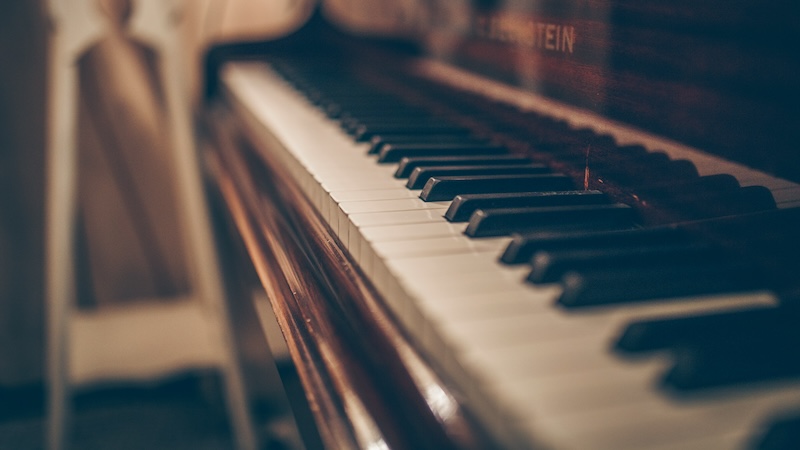
“I was on Broadway, you know,” Root eventually said. “I used to play for the dancers. Piano.”
“Like in New York?”
“The very same.”
“I’ve always wanted to learn to play the piano.”
I had, but I’d been told it was too feminine a pursuit. Plus, practicing might involve my dad allowing me to put in my mom’s house, the one he’d paid for with shiftwork but she got in the divorce, the little church piano his mother bequeathed to me. There wasn’t room for it in his two-bedroom down on Browns Creek. That wasn’t an option; letting my mother receive anything more, even if it was legally mine, would mean allowing her to “win” again. The piano would remain a clunky obstacle my great-grandmother hit every time she parked her Oldsmobile in her garage.
“Can you play anything?” Root asked.
I’d taken a piano class in high school, as my arts elective. I couldn’t get the admin to approve creative writing to count for art. I did the calculations, and I couldn’t take both courses because that would mean I’d have to take a class not designated as honors, which would lower my maximum possible GPA. I needed to look good to colleges and get the hell out of St. Albans, I thought. In piano, I’d ended the semester able to play a pared-down “Canon in D,” and I’d nearly forgotten everything by the time I showed up to the family reunion.
“I’ll try,” I said. I sat down at the piano bench, a couple of yards away from the makeshift buffet. I laced my fingers and extended my arms out straight in front of me to crack my knuckles, in a pantomime of charisma. Root didn’t know me, even if he talked to me like we’d known each other for ages. I could be a confident showman for all he knew.
“No! Don’t ever do that!” Root said.
Everyone in the community center put down their faux salads to stare at us. You would have thought I’d thrown a plate of spaghetti salad across the community center and hit old Miss Myrtle in the face as she sat on the fake velvet, pea-green couch in the corner. He looked genuinely worried. He rushed over and held my right hand in both of his gnarled ones.
“Sorry,” I said.
“You’ll ruin your beautiful fingers.”
“Oh it doesn’t really matter, anyway.”
“Of course it matters. Why wouldn’t it matter?”
It felt strange for someone to care about my fingers—and to care about them remaining delicate, or beautiful, though they never had been. Meg, who last I heard is half her middle school size and hangs out bumming smokes at Go-Mart, told me one day that my fingers looked like sausages. Other times, at smaller family gatherings on my dad’s side, before his parents died and we stopped going, some tired patriarch would tell me to spread my palm wide. He’d hold his adult one up to mine, and he’d compare before saying, “Wow, what a big man you’ll be.” Eventually, I’d be asked to play Mercy, the game of lacing fingers with another, a sudden intimacy interrupted by the need to bend the other’s hand backward, cause enough pain to get them to ask for mercy, to get me to stop.
“You gotta stop hurting yourself,” Root said. “I can teach you. Won’t even charge you much. How’s $10 an hour?”
“That might work. I’m working up at the Bob Evans in South Charleston, so I should have the money.” I pulled my shirt away from my belt, where it had gotten stuck. I’d finally managed to fit into a new pair of 29-inch pants I got from the consignment shop, but they were a little tight.
“I work with kids, big guys like you, all the time.”
Root sat down at the piano bench beside me. I was so excited to learn how to actually play. I was so happy to have actually spoken and not hidden behind Plath again.
“And I do touch them,” Root said. The inflection was strange, as if he were responding to a question I hadn’t asked him. He leaned close enough for me to realize he didn’t smell like spaghetti salad. His breath had the tang of sour bananas. His shirt reeked of the flowery-formaldehyde tartness of mothballs pickling dress pockets in a closet.
“I give the lessons right in my house up on the east side. You have a car, don’t you? Your parents don’t need to drop you off?” he asked.
“I’m working on it,” I lied. I wanted to believe that kin meant kindness, but something about the way he looked at me but just past told me to leave.
I wanted so deeply to be delicate, to curate an image so unimpeachable that it kept me at a remove from danger, but it never worked because all anyone ever wanted was to do was look at my hands. It didn’t matter how sausage-like they were or how thin I tried to make them. They would never touch anyone, I thought. And no one would ever touch them, unless they wanted me to hurt them or to hurt me.
I left the community center under the guise of using the bathroom in the hallway. I grabbed a chess bar on my way out. I took a bite of it, half the square, and held it in my mouth without chewing for the twenty-six steps it took me to get to the car. I got in. I spat the sweetness into the gravel and threw the rest out my car window.
At the first stoplight, I cracked my knuckles, picturing how the air, once held in the joints, when put under pressure, escapes with a crack.
___________________________________
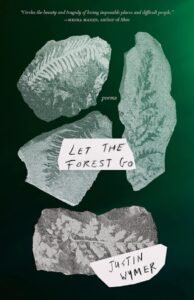
Let the Forest Go by Justin Wymer is available from University Press of Kentucky.

Justin Wymer
Justin Wymer is a writer and professor from West Virginia. He's the author of the poetry collection DEED. His work has appeared in Boston Review, Black Warrior Review, Kenyon Review, The Rumpus, and West Branch, among other places.