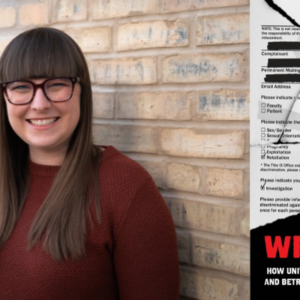
Noah Baldino on the Georgia Review's Spring 2024 Issue
October 2025
Dear Chill Subs Writers—
To be a magazine that truly represents the full stock of literary imagination means valuing emerging writers as much as established ones. The Georgia Review takes this stewardship seriously: in the Spring 2024 issue, for example, emerging poets account for nearly half of the poetry section. As an editor, the only thing more thrilling than scrolling the submission queue and spotting the name of a known literary titan is opening a submission by an unfamiliar name and encountering a literary future.
How, though, amidst thousands of submissions, can an emerging writer catch an editor’s attention? Having worked for over a decade in different queues, I’ve found that emerging writers most distinguish themselves not through novelty or trendiness but through trust. Emerging poet Jim Whiteside’s “La Dame Bleue,” found in this back issue, is a meaningful example. While ekphrasis is exciting, what actually draws me to the poem is what it withholds—what it trusts its reader to comprehend.
“La Dame Bleue” makes two invocations: to Alexander McQueen’s 2008 runway show, and to the speaker’s relationship with his mother. But it notably does not explicate either context. Instead, it trusts the reader, staying as understated as its ending’s “simple, gray dress.” A less confident poet might follow the urge to make more explicit the emotional dynamic between mother and child; instead, Whiteside only suggests. The mother delivers her cancer diagnosis not face-to-face or via call, but through text. The speaker cannot restate the technical name for the mother’s cancer but knows to call a high-fashion headpiece a “fascinator.” To an attentive reader, that’s plenty to work with. Likewise, a less trusting writer might let the poem be dominated by the McQueen show’s lore: it was a tribute to Isabella Blow, the woman who discovered him and who, finding herself eventually alienated from McQueen and the fashion community at-large, took her own life. She was buried in his clothes. As with the best ekphrasis, one can import meaning without knowing these details. But for those who do know, the poem becomes suffused with tension, McQueen and Blow urgent foils to speaker and mother. Then, the restraint that clothes the poem comes into clarity: what Whiteside has made is not a poem about McQueen’s show, nor a poem about his mother’s cancer, but a poem about detachment and its consequence. By resisting the impulse to make the poem’s contexts its content, Whiteside releases the poem, and its reader, to discovery.
Across this issue’s emerging and established poets, you’ll find various approaches to contextual restraint as a kind of trust. Arro Mandell uses the context of eviction to explore ecological intimacy; in deciding not to detail her uncle’s titular suffering, Marianne Boruch makes a poem that can instead hold the complexity of legacy. What’s kept on a poem’s edge speaks, I think, to discernment—a quality crucial to both a writer and editor.
—Noah Baldino
Editor, Poetry and Reviews