No Stars, or: Are We Reviewing Ourselves to Death?
Lucie Britsch on the Importance of Making Art for Art’s Sake
Depending on your beliefs, the first review ever was either Adam telling Eve her leaf bra was shit or an ocean dwelling single cell organism telling another ocean dwelling single cell organism it didn’t like its whole vibe (and done via chemical signalling, the original social media).
Later, an early insect might tell another early insect it didn’t think much of its leaf nest, and so on, until we get to today, where humans insist on telling all the other humans they didn’t think much of something another human (but probably a few) had spent years toiling over, pouring their heart and souls into, to make said thing, all for someone to shit all over, perhaps not realising that thing might not be for them, and that their opinion is just that, their opinion. And of course they are entitled to their opinion, but do we all need to know it?
Something I have been dreaming of recently is a world with no reviews. A world where art can just exist. Art for art’s sake. I’m a Pisces, what can I say? Imagine writing a book (agh, the agony) then releasing that book into the world (agh, double agony) but it just being able to live there, for the people it is for, and everyone else can get fucked. Ooh, nice. Not agony.
And we should be grateful for any art, really. It’s hard enough getting out of bed in this current climate let alone feeling like being creative and actually making something for a world that will likely rip it to shreds, online anyway. Remember a time when you were just glad to have a book in your hand? A film to watch? The world doesn’t deserve our art and yet we keep giving it, because ultimately, we can’t not, and we have faith enough in humanity that that art will find it’s people, even if it has to go through a bunch of shits to get there.
I am lucky enough (I choose lucky over old) to have grown up in a mostly pre-internet world. A pre-internet world was also a mostly pre-review world. There were reviews in magazines and newspapers of course, but I wasn’t reading them. I was reading books though, more than I do now. And films. I was devouring films. TV was just there, and I was glad for it, but it wasn’t a thing like it is now, because there were only a few channels. Ok so I’m old then, not lucky.
This was how I consumed culture back then. I read books that I saw in libraries and bookshops that I thought I might like. I wasn’t even bothered about blurbs, and I didn’t even know it was a racket back then. I also read books that were just there in my house. I am indebted to my sister for introducing me to my mainstays, Margaret Atwood, Angela Carter, Jeanette Winterson, Shirley Jackson, Barbara Gowdy, my dad’s battered paperbacks, Stephen King, Frank Herbert. My mother, not so much. While other girls at school got to sneak read their mothers Virginia Andrews, my mother only seemed to offer up random biographies by people like Roseanne Barr. We read what we had, and when I did get to choose my own books, I opted for a steady diet of Point Horror. But I never once read a review of them, because they would likely say, they’re all the same, what does it matter? There were plenty, and quantity is sometimes necessary.
Back then, you watched what film was on. On the TV, or at the cinema. And you were grateful. If you liked something then you would look out for the next thing by this person or staring this person. If you didn’t like it, you didn’t.
At college I studied gothic literature and feminist science fiction (because that’s where all the jobs are, baby), but the writers I studied remain my favorite to this day. Writing this after previously telling you I used to just read whatever was lying around my house makes me think my tastes seem to mostly be about proximity.
I worked in Oxford for a brief time where I would sneak out of work early to mooch around the many bookshops with a joyful but still somewhat gormless expression on my face, the only time I have been outwardly twattish. Ooh look at me, in Oxford, in a bookshop, lardy dah. You won’t believe me, but Emma Watson even wafted into me one day, my existence was that pretentious. But it was here in these bookshops that I found my writers. Just with my eyes and hands! No internet required. I found the likes of Poe Ballantine, Banana Yoshimoto, Willy Vlautin, Olga Tokarczuk, Erland Loe, Helen Phillips, an eclectic bag of literary masters that I have continued to enjoy over the years. I never really cared what anyone else was reading, always avoiding the tables strewn with best sellers and must reads. Must I? really? Or what will happen?
This is the world now. Something comes out. People immediately go online to post their opinions, quite often with an agenda. Review bombing is a recent phenomenon where by people with nothing better to do mobilize to take down an artist’s offering. Because it is an offering. They are offering up part of themselves to you.
Last year we got a new Naked Gun film. A bad idea on paper. But the people behind it genuinely love it and I believed in them and like their other work (laser cats anyone?). The reviews were middling. My brother loved it. My brain wanted to be able to watch it without the noise. It was fine. I did laugh more than I expected. It is what it is. Turns out I think you do actually need Leslie Nielsen. But I would have liked the space to make up my own opinion about things.
Review bombing is a recent phenomenon whereby people with nothing better to do mobilize to take down an artist’s offering. Because it is an offering. They are offering up part of themselves to you.
My partner doesn’t care about reviews. To be honest, he doesn’t even care what a film is about. He will happily let a thing be what is it, and won’t tear it apart after. He is a pure soul, because he is not a writer perhaps, so hasn’t been on the tail end of reviews.
I don’t read my own reviews anymore, not after I made the mistake of reading my own reviews. If someone tells me something nice, great, but otherwise, I’ve done my part. I made you a thing, world. I gave you a piece of myself. I like to think all books should get at least three stars just for existing. One for existing, two for passing the time, three if it made you laugh even once, four if you actually felt something close to being moved or relatable. Three and a half is actually the perfect score because it means people loved it or hated it, which are the main feelings.
When you step outside your house and hear bird song, you don’t wait to know if it’s up for a Grammy. If your kid does a painting, you don’t wait to hear what Roberta Smith thinks before sticking it on your fridge.
I don’t read my own reviews anymore, not after I made the mistake of reading my own reviews. If someone tells me something nice, great, but otherwise, I’ve done my part. I made you a thing, world. I gave you a piece of myself.
Of course, what I’m really dreaming of is a post-internet world. Of course, you could still say you loved or hated something, privately, or just understand that it is not for you, but still see the merits of the thing, know what went into it, know it isn’t easy making a thing.
I live in hope that one day artists might have had enough. Film makers, musicians, writers, even dancers, because some people can’t even let someone just dance, one day, they might band together and ask the world to just let art be art. For what they made to just be allowed to exist. If you liked it, great, if you didn’t, then it wasn’t for you. No worries. Jog on. Find something else. There will always be hate, of course. As long as there is the internet there will be trolling someone online. Just: can it not be about their art? Art could be pure again. Set free.
Imagine, people previously afraid to put stuff out because of judgement, might do so. Ok so that might mean there is more shit out there, but some people like shit! Look how popular mediocre shows are (insert mediocre show here, but I won’t name any because it’s hard to make a thing remember). You, the consumer, without reviews, will just have to think for yourself. Let’s do away with blurbs while we’re here. We all know you got your friend to say something nice in return for you saying something nice about there’s, or someone just likes seeing their name on someone else’s book.
But without reviews and awards, how would artists know if they were a success? Success is gone baby. Which means failure is also gone. You can just create.
Lucie Britsch
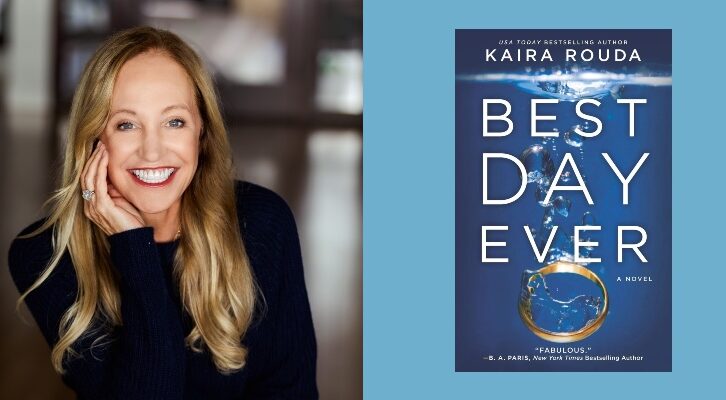
Lucie Britsch is the author of two novels, Sad Janet and Thoughtless.