Nine Feminist Mythological Reimaginings to Read After You Watch The Odyssey
Tanaz Bhathena Recommends Books by Pat Barker, Chitra Banerjee Divakaruni, and More
Mythologies across the world abound with stories that center heroes. Be it Gilgamesh, the Iliad, the Mahabharata or the Shahnameh, great epics highlight the exploits and adventures of men, the women in their lives often relegated to the sidelines, their roles limited to that of dutiful wives, villains, or victims.
The Odyssey picks up after the events of the ten-year Trojan war and focuses on the return of Greek war hero, Odysseus and his men to his home—the island of Ithaca, where Odysseus’s faithful wife Penelope waits for him for another ten years while cleverly staving off the attention of 108 suitors. Penelope’s loyalty is used as a foil to her cousin’s treachery, the oft-villainized Helen of Sparta who left her husband and eloped with a Trojan prince—a lone woman blamed for launching the thousand ships that started the Trojan war.
The most recent take on the story comes in the form of Christopher Nolan’s latest offering. I’ll admit that I have enjoyed Nolan’s films in the past (especially Inception and Oppenheimer) and I will likely watch The Odyssey when it comes out in the theatres this month. While some of the pre-release press, including a piece in Elle, notes that the film does a better job of centering its female characters than most movies, I can’t help but wish that a movie would, for once, focus more deeply on the women in these narratives and make a blockbuster on the scale of Wonder Woman.
Alas, where Hollywood currently fails us, literature still provides hope. Here are nine feminist myth and fairytale retellings to read after watching Nolan’s film.
*
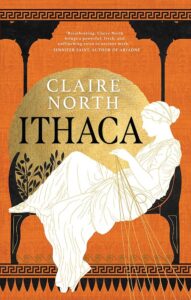 Claire North, Ithaca
Let us begin with a feminist retelling of the Odyssey that showcases the perspectives of Penelope and her maids. The first in a trilogy, Claire North’s Ithaca is narrated by the goddess Hera who pokes fun at the many suitors vying for Penelope’s hand and Odysseus’s throne. While gods still exist in this universe, they rarely interfere in the affairs of humans. The book instead focuses on Penelope’s diplomatic genius, along with her loyal women who form a network of spies for her along with a secret militia that quietly runs the island from the shadows for two decades while their men are away at war.
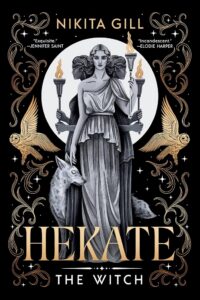 Nikita Gill, Hekate
This novel-in-verse is an exquisite rendering of Hekate’s tale from childhood to growing into her power as a witch and a goddess with the power to visit the underworld. Gill’s talent shines especially in the verses about Hekate’s role as a child of war and while the book focuses on the great war between the Titans and the Olympians, it is not difficult to see its relevance in modern times as well, especially when one considers the current genocide in Gaza.
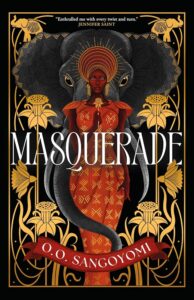 O. O. Sangoyomi, Masquerade
Loosely drawing upon the Hades and Persephone myth, Sangoyomi’s book is set in a world inspired by 15th century West Africa and Yorùbá culture. The protagonist Òdódó is kidnapped by a vagrant who visits her blacksmith’s guild—only to discover later that he is the warrior king of Yorùbáland, who has also captured her hometown. Òdódó’s transformation from a naïve and scared young woman into a powerful and influential queen at the king’s court is both remarkable and realistic, and so is her complex relationship with her husband (and captor). The author does not shy away from exploring Òdódó’s gray side and that makes the read even more enriching.
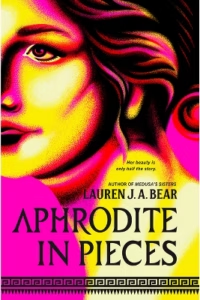 Lauren J.A. Bear, Aphrodite in Pieces
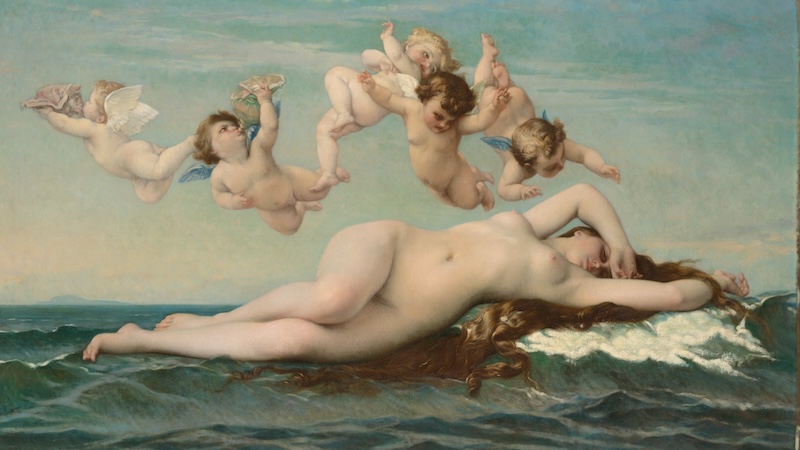
In this novel, Aphrodite’s story begins with the goddess visiting a sculptor in Milos. She tells him her story bit by bit and tells him to create a sculpture of her truest self. We learn of Aphrodite’s tumultuous romance with Ares over the centuries and her failed marriage to Hephaestus. Cleverly weaving together myth with the famous sculpture of Venus de Milo, Bear takes on the challenge of retelling the story of one of Greek mythology’s most complex women—the goddess of love and beauty—and does it with aplomb.
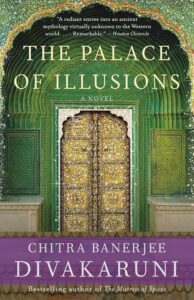 Chitra Banerjee Divakaruni, The Palace of Illusions
When it comes to retellings of Indian mythology, nothing for me has quite compared to this novel by Divakaruni. Set during the time of the great epic, the Mahabharata, the book focuses on Panchali (or Draupadi), a princess who marries five brothers, each embodying one of the five qualities she was looking for in a husband. Panchali is not without her flaws and rejects a worthy suitor simply because of the caste he was born into. That Divakaruni is able to make her protagonist sympathetic and showcase all her shades of gray talks to her remarkable skill as a writer.
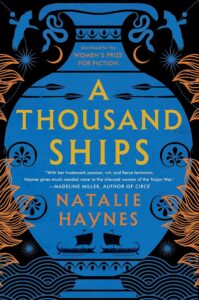 Natalie Haynes, A Thousand Ships
Framed by the narrative of Calliope, the muse of epic poetry, Haynes’s novel is told in 43 chapters, exploring the perspectives of multiple women on both sides of the Trojan war. We hear from Penelope who pens letters to Odysseus, not knowing if he has survived the war, and from Clytemnestra who loses her daughter in her husband’s quest for Troy. But some of the most poignant narratives come from Trojan women like Creusa, wife of Aeneas who escapes Troy and becomes a founding father for Rome, and Hector’s wife, Andromache, who is taken as a war captive by Achilles’s son.
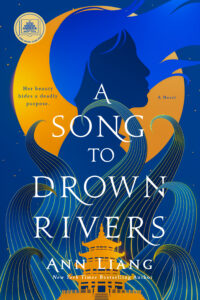 Ann Liang, A Song to Drown Rivers
Inspired by Xishi, one of the four beauties of ancient China, this novel explores the heart-wrenching story of a woman who is recruited by a famous young military commander to infiltrate the palace of their immoral king as a concubine and weaken the palace from within. Liang, best known for her contemporary YA novels, shines in this historical fantasy retelling, exploring each of the three main characters with such nuance and care that it is difficult not to sympathize with them all.
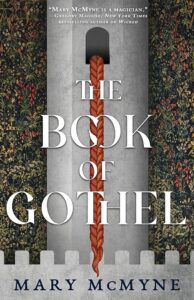 Mary McMyne, The Book of Gothel
A retelling of the classic German fairytale of Rapunzel, The Book of Gothel is written from the perspective of the much-maligned witch, Haelewise, who sets off for the fabled tower of Gothel after her mother dies. Here she discovers a community of women and magic, the tower offering protection to girls and women who seek it. Rapunzel, in fact, barely plays a role in the narrative. But that doesn’t matter. The characters who inhabit Gothel are rich and multifaceted and along with McMyne’s clever combination of magic and history, this makes for an incredibly nuanced and immersive read into Rapunzel’s origin story.
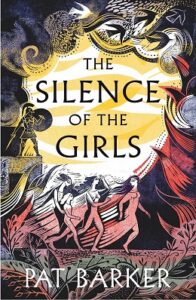 Pat Barker, The Silence of the Girls
When it comes to books about the Trojan war, there are few that explore the plight of the captive Trojan women as well as The Silence of the Girls. Told from the perspective of Briseis, a Trojan woman who becomes the hero Achilles’ war prize, the novel is at once harrowing and captivating, shedding light on the stories of the women who were taken from their homes during the war and subjected to violence and rape, and fought over as commodities to be won in a game or battle. Yet, more than that, it’s a book about their resilience and strength—an ability to find comfort in each other despite the terrible situation they’re in. More recently, Emma Thompson announced that she will be adapting Barker’s book into a film and I can’t wait to see it.
_________________________________________
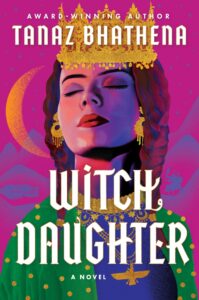 Witch Daughter by Tanaz Bhathena is available for pre-order via Grand Central Publishing.

Tanaz Bhathena
Tanaz Bhathena is an award-winning author of young adult fiction. Her adult debut, Witch Daughter, a feminist myth retelling set in ancient Persia, releases with Grand Central on Sep 22.