Namwali Serpell and Saeed Jones on Toni Morrison, A “Master of Shade”
From the Podcast, PASSAGES: On Morrison
In the words of drag performer Dorian Corey, shade requires you to “go to the fine point.” To throw shade—to insult your subject, either a text or a person, with maximum flare and make it fun for an audience—you have to pick out extremely precise details, naming the specificities of what you dislike.
Toni Morrison was an exceptionally close reader, and this enabled her to be a master of shade.
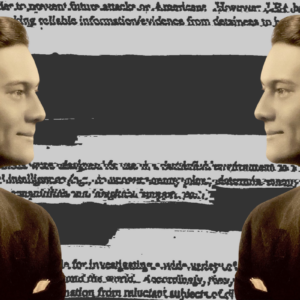
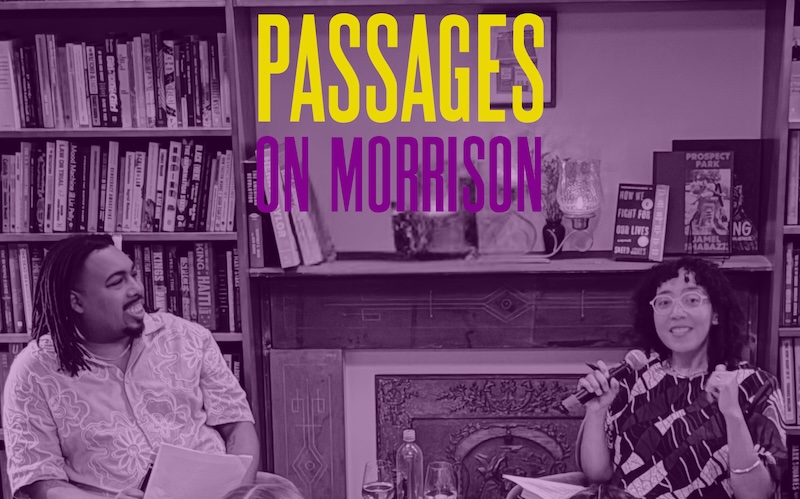
At a celebratory event at the end of her tour for On Morrison, Namwali Serpell discusses Morrison’s shade as critical praxis with poet, memoirist, and host of “Vibe Check” Saeed Jones. They read and open up Morrison’s excoriating review of Regina Nadelson’s Who Is Angela Davis?, an unauthorized biography of the young revolutionary. The review was originally published in 1972 in The New York Times.
*
*
From the podcast:
Namwali Serpell: Another very important aspect of shade as a critical method is that it uses irony. People ask me all the time, “Do we have a literacy crisis?” And I’m like, “Yeah, we do.” But really, we have an irony crisis. People can’t pick up on double meanings anymore, and they can’t pick up on irony. And so here you have Morrison saying things, and the attitude in the sentence is what signals to you that she actually means the opposite. One of the things that she does, which is very novelistic, is she channels what Regina Nadelson must have been thinking right, in order to say, for example, “Naturally, white intelligence informed them both.” Now, Morrison doesn’t believe that, but this is what she’s saying Regina Nadelson believes, right?
We’re so used, I think, to sarcasm as the tone of the internet now, but I think irony is actually more sophisticated, more nuanced, and Morrison is using her ability to get inside the mind of someone in order to parody what they’re saying. And then she quotes her: “’She is kind and funny.’ Yessum, Miss Regina. We all are.”
Saeed Jones: Brutal.
NS: Right? And then so she’s pretending to be the kind of person that Nadelson imagines all Black people to be. So you have to see how complex that back and forth actually is.
SJ: Yeah, and I’m glad you said that. Like, the reason—in addition to the fact that [shade] is historically from a Black queer trans tradition—is that it comes from the vulnerability. It comes from being on the margins. The reason gay kids, for example, become really good at shade is because you gotta be quick. You know, you may not be the strongest person. You may not have different kinds of social capital, but bitch, come for me, right? “I’m gonna come for you.”
So they have to develop that fierceness, that ferocity. But also, you learn to observe from the margins, and I think that’s also part of what Morrison is saying. Like, I can read you down from my positionality, whereas you are so arrogant. You’re walking around in a white fog, and you’re not curious about how that fog came to be around you.
And so the “On the other hand” immediately establishes, “I’ve clocked you.” You know what I mean?
NS: Yes, and there’s this sense of doubleness that is always implicit here. Which is, yes, I am a Black subject like Angela Davis—I am also an author like you. I have that double consciousness. I am both inside and outside. Morrison actually says in an essay, double consciousness should be a strategy for Black studies. It’s not just a pathology or being split. The fact that we know both is second sight. That’s extra.
SJ: Absolutely.
___________________________
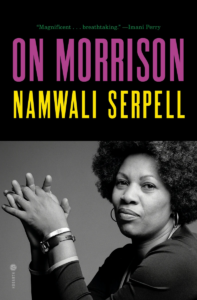
You can purchase On Morrison here and anywhere books are sold.
Cover art includes “Toni Morrison as Song of Solomon” by John Sokol (1981). “PASSAGES: On Morrison” is a production of the Random House Publishing Group.
Passages: On Morrison
“PASSAGES: On Morrison” is a podcast that takes reading on the road. Come along with Namwali Serpell, novelist, critic, and Harvard professor, as she joins fellow writers and skilled readers in conversation to pore over excerpts of Toni Morrison’s prose. Recorded throughout the book tour for On Morrison—Serpell’s electrifying, critical examination of Morrison’s writing—each episode welcomes listeners into rooms full of readers and discussions of how Morrison made her words sing. This show is the record of a traveling salon, a celebration of Morrison’s extraordinary work, and a love letter to reading closely in community.