5 Book Reviews You Need to Read This Week
“The desire for human connection, and the desire to commemorate that connection, transcends everything.”
Our quintet of quality reviews this week includes Dwight Garner on Colin Asher’s The Midnight Special, Hamilton Cain on Teddy Wayne’s The Au Pair, Michael Donkor on Keith Ridgway’s Dooneen, Stephen Marche on Cory Doctorow’s The Reverse Centaur’s Guide to Life After AI, and Ron Charles on Daniel Mason’s Country People.
Brought to you by Book Marks, Lit Hub’s home for book reviews.
*
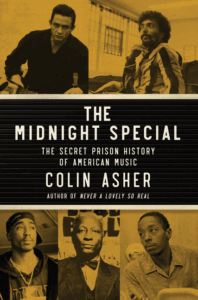
“Asher’s book is a Midnight Special of its own. It’s a fog-piercing down-bound train of a book, better than it had to be. Subtitled ‘The Secret Prison History of American Music,’ it examines how the police, courts and penitentiaries have shaped the nation’s musical culture through profiles of five artists: Lead Belly, Elmo Hope, Johnny Cash, Ike White and Tupac Shakur.
If these profiles had been straightforward, that might’ve been enough. But Asher is a calm and sophisticated storyteller who picks you up and sets you back down in places you didn’t anticipate. Like a good film director, he knows how to stagger his material. Minor characters rise, become major ones, then fall back.
…
Johnny Cash (1932-2003), the only white performer discussed here, occupies a central place. He doesn’t get more room than anyone else. But because he caught vastly more breaks than the Black musicians did, his career is a useful point of comparison.
Cash sang about shooting a man in Reno just to watch him die, recorded landmark albums while performing in California’s Folsom and San Quentin prisons, and cultivated an outlaw, hardened persona. But though he was repeatedly arrested for mayhem related to drugs and alcohol, he never spent more than a night in jail. Instead, he repeatedly received slaps on the wrist. His habit (amphetamines) wasn’t criminalized the way other narcotics were. Asher respects Cash, who recognized the humanity of incarcerated men and became a spokesman for them. Cash counseled musically gifted prisoners and took some to play alongside him on tour. He spoke to Congress about prison reform and pushed for rehabilitation programs. But Asher considers the levels of achievement Black artists might have reached if society had granted them the level of compassion and forgiveness Cash received.
…
“Taken together, the profiles in The Midnight Special amount to a multilayered indictment of America’s prison system, the largest in the world. None of these men were blameless, but the injustice on display will frequently make you sick to your stomach. The book also underlines sheer human resiliency.”
–Dwight Garner on Colin Asher’s The Midnight Special: The Secret Prison History of American Music (The New York Times)
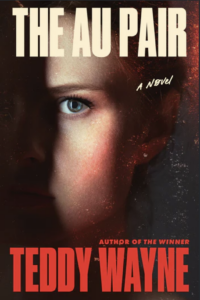
“Novels about writers comprise a vexing genre; few rise to the level of Rachel Cusk’s Outline Trilogy or Lee Cole’s Groundskeeping. Nevertheless publishers continue to produce stories revolving around stalled careers, professional jealousies, and tedious sexcapades. There’s even a common subcategory: the Middle-Aged White Male Author afflicted with ennui and creative block, forever one hit away from canonical glory if he can screw his head on right. Many of these fictional guys live in Brooklyn. Teddy Wayne’s The Au Pair falls squarely amid this terrain.
…
“Wayne is capitalizing on his previous erotic thriller, The Winner, but The Au Pair is really a companion piece to his earlier The Great Man Theory, which was similarly stuffed with male vanity, publishing gossip, and resentments of other authors (Steven’s own status obsession keeps him from his craft, its inspirational booms and busts). Make no mistake: The Au Pair entertains his readers, in true Hollywood fashion. There’s a glimmer of intriguing social commentary, too: How does a marriage prosper when conventional gender roles flip? What happens when a wife wields economic power over her spouse? (Lucy regularly deposits a ‘stipend’ into Steven’s bank account.) Is he correct to yearn for a room of his own, or even just a nubile Nordic blonde half his age? Is he a mere mediocrity, such as Mozart’s peer, the composer Salieri, to whom he compares himself?
Yet despite ample rich material, Wayne never fleshes out his narrative. His prose trails purple lines like Harold’s crayon … The novel spoofs Steven and his ilk but still assumes men are a monolith, ensnared by their narcissistic natures, blind even to the needs of their children. Steven may believe he’s sacrificed for the higher calling of literature; instead he’s sacrificed his family.
Fear not: all’s well that ends well in The Au Pair, which is more fairy tale than honest reflection on the challenges of a writer’s life and the relevance of imagination in the AI era. Wayne could have taken it in any number of directions but indulges in escapism. As he observes of Steven: ‘He knew he was living out a fantasy—a male fantasy, one the culture would judge him for, one he’d judged others for, one he’d roll eyes at if it were the basis of a novel.’”
–Hamilton Cain on Teddy Wayne’s The Au Pair (The Boston Globe)
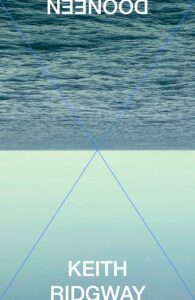
“Irish author Keith Ridgway’s latest novel deals, both mischievously and menacingly, in ambivalence. The book’s epigraph is taken from a misty-eyed ballad pining for the ‘lofty’ magnificence of the Cliffs of Dooneen. But these lines are appended with a footnote cautioning that ‘debate continues concerning the cliffs named in the song—whether they are in County Clare or County Kerry, or whether they exist at all …’
Place and knowledge continue to be wilfully unstable categories once the narrative begins. Bartholomew Port, known as Mew, says goodbye to his partner Mootie as he sets off on a trip from south London to his birthplace, Dublin. In the first of the novel’s Alice in Wonderland-style sleights of hand, Mew is transported to the Irish capital not by air or sea, but by slipping through bushes in Camberwell’s Burgess Park. Mew’s dislocation in this terrain where he should feel most ‘at home’ forms part of Ridgway’s conceptual inquiry into what happens to home when we leave it and when we return. What does home become in our absence—in reality and in our imaginations? The uncanniness is ramped up further because Mew is relating events from a future exile, or perhaps sanctuary, the circumstances of which remain blurry until the end of the novel.
As in Ridgway’s previous fictionalizations of urbanity, the Dublin Mew finds himself in is uncanny—a place that ‘can turn on you in an instant.’ While Mew recognizes the thoroughfares and landmarks, there are sudden, unnerving presences around him. Discomforting apparitions, portentous children at windows and enigmatic passersby wearing vivid yellow momentarily flicker into being in the flow of urban chaos. Reproducing ambivalence on the page in this way might be a risky and potentially alienating strategy for the reader. But it’s thrilling to watch Ridgway play with clarity and certainty; the linguistic energy and variety of the prose gives us plenty of sustenance to keep going as we clamber through the shadows. And there are laughs too: slapstick digressions about split trousers, little disquisitions on the best way to make a crisp sandwich and scheming military horses are all part of Ridgway’s wonderfully absorbing and offbeat comedy.
The most lucid and affecting element of this appealingly labyrinthine novel is Mew’s longing for his beloved Mootie. In a world of political turmoil and botched plans, the desire for human connection, and the desire to commemorate that connection, transcends everything.”
–Michael Donkor on Keith Ridgway’s Dooneen (The Guardian)
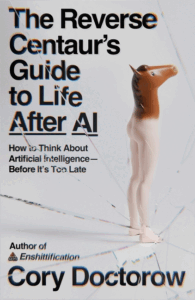
“In a sense, Doctorow has to be prolific. He writes about the effects of technology in a period when technology runs ahead so fast that only writing at breakneck speed can hope to keep up. I, for one, am grateful. To me, he resembles the great rock critics of an earlier era, a high-tech Greil Marcus or even a Lester Bangs. He possesses a useful combination of real knowledge and close observation. In The Reverse Centaur’s Guide to Life After AI, Doctorow takes aim at artificial intelligence with a clever image: the head of a horse on the body of a man. A centaur, in automation theory, is a human assisted by a machine. In Doctorow’s coinage, a ‘reverse centaur’ is ‘a human who is conscripted into acting as an assistant to a machine.’ The idea is to propose a simple division, between humane and inhumane uses of artificial intelligence, based on which head is on top.
…
“A.I. is a much thornier subject than any other technology that Doctorow has tackled. Its workings and effects are more mysterious, and it is already overgrown with tangled vines of hype and hysteria. Doctorow is at his best in the space in between snark and real insight. Unfortunately, A.I. is not particularly amenable to that kind of treatment.
He is superb, as expected, on the anatomy of Silicon Valley rhetoric and self-aggrandizement, on how much humanity has endangered itself to preserve tech companies’ high price-to-earnings ratios, and on ‘the Byzantine premium’ that ‘investors place on an asset that they don’t understand.’ He also makes one of the most convincing arguments I have read about what will happen when the A.I. bubble pops. ‘No matter how much you hate A.I., this will not be a good day,’ he writes. ‘Remember: Seven giant A.I. companies account for 35 percent of the U.S. stock market.’ But his instinct toward humanism, admirable as it is, can lead to oversimplified generalizations about the technology itself.
…
“Still, Doctorow holds technology up to a standard that has otherwise been forgotten: that it should contain the potential for human liberation, in an anarchic spirit of barriers tumbling. Unfortunately, I’m not sure how relevant that vision remains at this point, especially given the drastic change that artificial intelligence represents. Like the earlier rock critics—holding onto the original spirit of rock ’n’ roll as money and celebrity and drugs swallowed the business whole—Doctorow tries to preserve the nub of technology’s original promise. In 2026, it’s a refreshingly unusual concept. I just wish it felt more like a vision of possible futures than a nostalgia trip.”
–Stephen Marche on Cory Doctorow’s The Reverse Centaur’s Guide to Life After AI: How to Think About Artificial Intelligence — Before It’s Too Late (The New York Times Book Review)
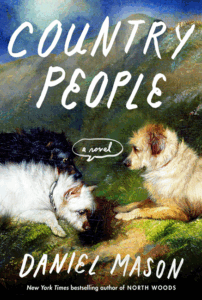
“…you don’t need a psychiatry degree to see the connection between this funny novel and the lightly repressed enchantment that bubbles through even Mason’s most haunting books. Faeries of wit and mischief have always danced around his fiction, whether he’s pursuing a piano through the Burmese jungle or taking an ax to a twin sister.
In the pages of Country People, those whimsical sprites have been given free rein. This story of self-delusions, bizarre eccentrics, and absurd antics is narrated in an arch, long-suffering voice that brings out the comic flavor like salt on caramel. Think of it as a companion to Andrew Sean Greer’s Villa Coco. One comic novel this good feels lucky; two in the same summer feels like cheating.
…
“Drawing on his own family’s year in New England during the Covid pandemic, Mason is hilarious with this West Coast fetishization of ordinary rural life. As a lifelong academic himself, he knows every arcane footnote that a fellow like Miles would append to, say, a third-grade play or a swimmin’ hole. The plot of Country People is no more disciplined than the family’s Italian dog, which chases down every stray scent. This novel never meets a roadside attraction it can resist. But soon enough, all these quirky encounters and diversions accrue into a stalagmite of real mystery.
…
“As a similarly earnest but incompetent man who never finished his own dissertation, I may be guilty of a certain degree of over-identification with Miles. It’s possible that this chronically distracted character whom I enjoyed so much will strike some women readers as a tedious reminder of their first husband. But I hope not. For all his infuriating indirection, Miles remains tremendously endearing. Mason has written a comedy about a man who can’t quite secure his place above ground but senses the wonder lurking just beneath our feet. That and a beloved Italian dog who digs through every pillow, sofa, and floor are all you really need for a book to make the world feel a little lighter, a little warmer.”
–Ron Charles on Daniel Mason’s Country People (Ron Charles Substack)

Book Marks
Visit Book Marks, Lit Hub's home for book reviews, at https://bookmarks.reviews/ or on social media at @bookmarksreads.