Molly Crabapple on History as a Necromantic Art
And Ten Tips to Help Your Conjuring
This first appeared in Lit Hub’s Craft of Writing newsletter—sign up here.
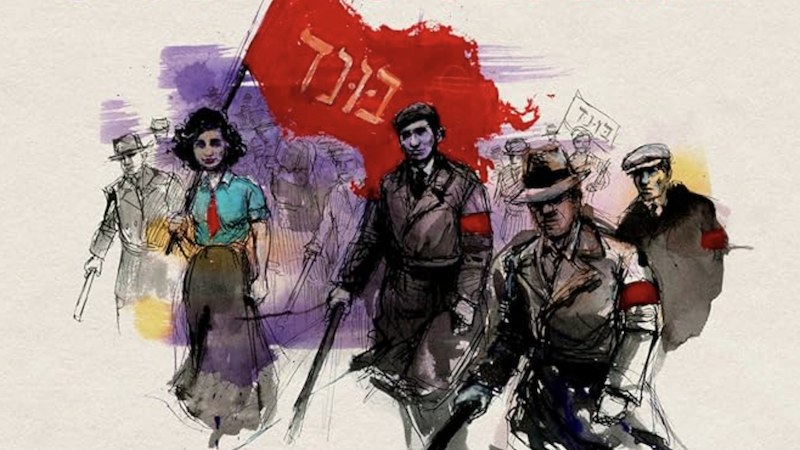
I spent seven years writing my newest book. Here Where We Live is Our Country is the story of the Bund, a secular, socialist, and defiantly Jewish revolutionary party born in the Tsarist Empire’s Pale of Settlement, who rejected Zionism in favor of fighting for freedom and dignity on the land where they lived. To say this book took everything out of me is an understatement. I fed it with my metaphorical blood. In the course of unearthing the Bund’s story, I learned to write about the past in a way so feverishly vivid that it bleeds into the present. Research as conjuring. History as a necromantic art.
Here are some lessons that I’ve learned.
A few preliminary notes.
Before you start, you must rid yourself of any bits of shame about the dorkery of your obsession. No subject need remain dry and dusty on your pages, even if might appear to be so when you first tell your friends about it. I wrote about old socialists, for god’s sake. You can make anything, and I mean anything, sing.
Unfortunately, the only way to write is to write. I remember a Vivian Gornick article about all the gymnastics she did to set herself up to write her book. She needed the perfect desk, the perfect light, the perfect life. While she busied herself with all these preparations, the time for writing never came. Relatable, right? The truth is, you can write anywhere, anyhow, on scraps of paper, while you are bored, miserable, or half dead. So sit the fuck down and write your goddamn book.
Now, for the tips.
1. Research is a luxury and an escape. Research promiscuously. Be a slut about it. Chase up the footnotes. Order up that obscure book from the library to see what was written on a single page. Fly across the world to visit archives and then look at additional pamphlets just because the covers look cute. Get drunk and type random search requests into the digitized collections of out of print newspapers, just to see what such and such commie said about Puerto Rico in 1932. Go on side quests. Get obsessed with the hot bitch you see in a photo from a Siberian penal colony. Waste all day on dead ends. Follow the gossip. If its juicy to you, it might well be juicy to the reader.
2. Trust no one. The dead are as shady as any Fashion Week PR girl. Always fact check those ghosts. For example, I hunted down the minutes of the 1931 Congress of the Socialist and Labor International, which only existed in an antiquarian Berlin bookshop, because I wanted to make sure that a long-dead hooligan had fairly represented matters in his memoir (he did not). Don’t take anyone’s word for anything. Read what their enemies had to say. One hot tip — see if you can track down the reports of undercover policemen. Often, they’re the most honest observers.
3. Follow your obsessions, even if they seem peripheral. Why embark on this low paid business if you deny yourself some fun? I found a bit about a fan dancer in a memoir about a Bundist theorist, and you can bet I did the research to flesh her out. Also avoid what you hate or at least try to find some sideways way to make it interest you. I have hated leftist meetings ever since my father dragged me to the Socialist Scholars’ Conference at the age of five. So, when I covered the Second Congress of the Russian Social Democratic Labor Party of 1903, I didn’t just repeat the inane allegations that various factions were flinging at each other. I found out the Congress took place in the backroom of a Belgian wool cooperative that was completely infested with lice.
4. The past is a foreign country, but you should at least try and get close to its borders. Learn the language your people spoke. Eat the food they ate. Travel to the places they lived, do some shots and pick some wildflowers.
5. As you write, remember, people in the past lived in bodies, much like you do now. Try to imagine yourself in their skin. Ask yourself: How does the cold feel in an unheated train car? What would Latvian sunlight look like through someone else’s half-closed lashes?
6. Be specific. What type of chair did your subject sit on? Victor Serge and Vasily Grossman were my inspirations in this regard. In Stalingrad, Grossman describes the moment before the bombs fall on a besieged city, when all the animals, from cats to sparrows try to escape. Strive for this in your own work. Don’t just read archives. Look at photos or film of events you’re writing about. If you can, visit.
7. Remember: everyone thinks they are doing the right thing, no matter how evil or inane their behavior is. Figure out their internal logic.
8. Most of your readers will never have visited an archive. Talk about the sensual reality of the archive, what it feels like to turn those crumbling pages, to spin the bobbins of microfilm. Let them enter into the excitement of discovery.
9. Type until you’ve killed the horror of the blank page. Your first draft will be word vomit anyway. So go for it. No shame. Then edit. Edit. again. Read the whole thing aloud to your Tinder date. Edit some more. Play around with your language. Decide its dumb. Restate things plainly. Jazz is up. Forty drafts is a fine number of drafts to make.
10. Remember, a book is never finished, only abandoned.
Good luck in resurrecting the dead.
_______________________________________
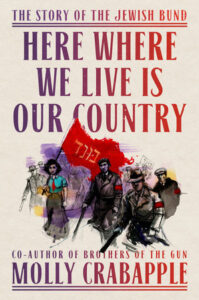
Here Where We Live Is Our Country by Molly Crabapple is available via One World.
Molly Crabapple
Molly Crabapple is an artist and writer based in New York. She is the author of two books, Drawing Blood and Brothers of the Gun (with Marwan Hisham), which was longlisted for a National Book Award. She was a 2020 New America Fellow and her reportage is the winner of the Bernhard Labor Journalism Award, and has been published in The New York Times, New York Review of Books, The Paris Review, Vanity Fair, The Guardian, Rolling Stone, The New Yorker, and elsewhere. Her animations have won two Emmys and an Edward R. Murrow Award. Her art is in the permanent collections of the Museum of Modern Art.