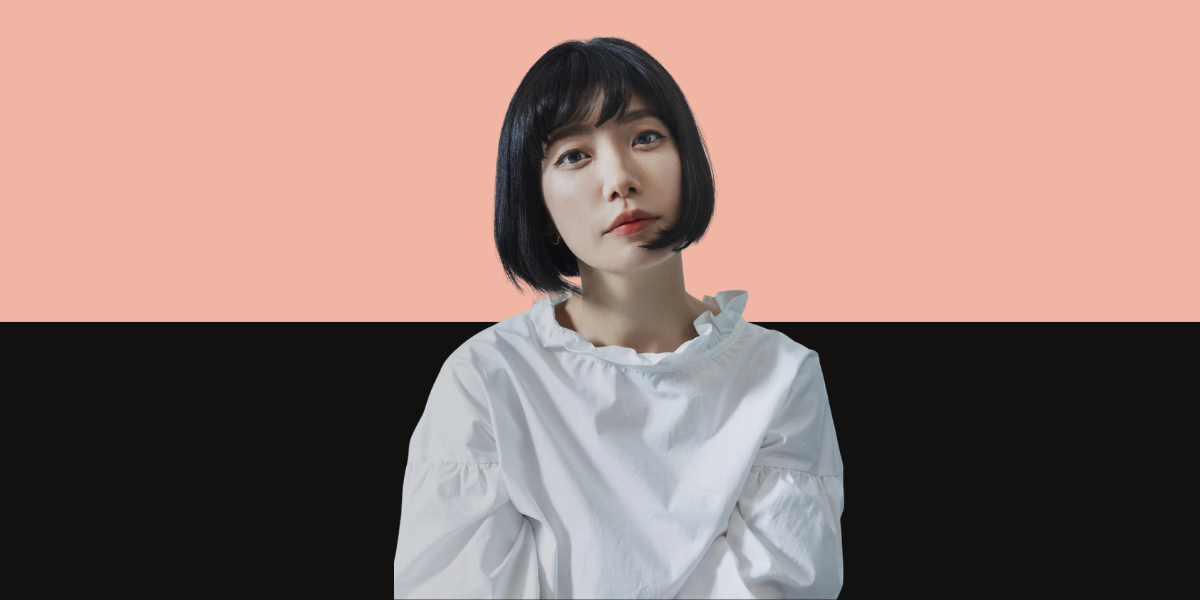
Mieko Kawakami on Sisterhood, Survival, and Finding Hope in the Darkness
In Conversation With Her Translators, Laurel Taylor and Hitomi Yoshio
One of Japan’s most acclaimed contemporary writers, Mieko Kawakami was launched into literary stardom in 2007, when she won the Akutagawa Prize, Japan’s prestigious award for emerging writers. Her work, which has been translated into over forty languages, is known for its philosophical explorations of gender, class, and ethics in modern society.
Increasingly popular overseas as well as at home, her novel Heaven was shortlisted for the 2022 International Booker Prize, and this was followed the next year by All the Lovers in the Night becoming a finalist for the 2023 National Book Critics Circle Award. Like a lot of people, I was greatly looking forward to reading her new novel Sisters in Yellow, which is now out in English, translated by Laurel Taylor and Hitomi Yoshio and published by Knopf.
*
Leanne Ogasawara: The novel opens when the protagonist Hana notices the name of a woman she knows—but thought she had all but forgotten—in a short news article that appears one day on her smartphone screen. That moment unlocks memories of a time twenty years earlier when she lived with Kimiko, along with two other women, in a place she calls the “yellow house.” These memories are something Hana has long sealed away in her mind of a time when the four of them lived and worked alongside one another, helping each other survive in a tough world of poverty and exploitation.
In several interviews, you mentioned that The Sisters in Yellow was a loose homage to Jun’ichiro Tanizaki’s Makioka Sisters, one of the most beloved novels in modern Japanese literature. Tanizaki’s novel about four sisters in an aristocratic family in Osaka, is sometimes described as portraying the fading world of the old merchant-aristocracy, using the sisters’ divergent paths to marriage and work as an exploration of the tensions between tradition and modernity.
At a glance, your four sisters could not appear more different, and I wondered if you could speak just a bit about Tanizaki’s four sisters and your four “sisters?” I am also thinking of the delightful four sisters in Kuniko’s Mukoda’s novel Asura no Gotoku.
What drew you to the question of sisterhood?
(This question continues at the end)
Mieko Kawakami: I did mention offhandedly in an interview once that in the English-language context, if you say four Japanese sisters, Tanizaki’s The Makioka Sisters will probably still be the first thing on people’s minds, and I’d be happy if contemporary readers would see Hana and her friends as a new generation of sisters. Somewhere along the way, it seems people took that as homage… I do enjoy The Makioka Sisters though, and you can really sense Tanizaki’s motivations as an author; it’s come to function as an alternative to the backdrop of the time it was written in and the state of Japan’s literary world during the war.
We’re being used by algorithms, not only on the political level, but even in our most insignificant everyday choices.
In my case, I always want to write about feelings and scenes and human relationships that haven’t been written yet, and I want to shake up, to disrupt, ideas people take as given knowledge—I think that’s what it is to take an alternative stance. People often believe that we can understand things simply by categorizing them, and that bothers me. This might be something Tanizaki and I share in common, though our methods are different. In other words, I think the role of literature is to disturb those who go about their lives without a care, completely sure and never doubting anything, and at the same time to ease, even if only a little, the burdens of those who go through life in a state of anxiety and fear. That’s my job as a writer.
I started writing Sisters in Yellow right as #MeToo and fourth-wave feminism were hitting Japan, and people were beginning to understand how important it was for women to empower each other, how important sisterhood was. Of course, none of the problems these movements sought to tackle have been solved—it’s an uphill battle. At the same time, I think through fiction I wanted to underscore that within women’s solidarity, I believe there’s not only good—there’s an equally strong potential for negativity. I wanted to highlight solidarity’s underlying problems with the same intensity that I believed in its goodness.
The opposite is true as well. If there are things we take for granted as being evil, I want to show in detail the parts of that “evil” that might be good. And I don’t mean just on the conceptual level. We’ll never understand other people, other ideologies, what’s going on in the world, if we only consume what we want to consume, only share the social media we want to share with the people we want to share it with. We’re being used by algorithms, not only on the political level, but even in our most insignificant everyday choices. I think now more than ever, it’s important that when our feeds show us something that leaves an impression on us, that we also cultivate the ability to imagine things that are far beyond those images.
LO: In the novel, the protagonist Hana learns of a feng shui belief that says placing something yellow on the west side of one’s home will improve a person’s financial fortune. My Japanese hardcover copy has a publisher’s marketing strip on the cover which asks: “Why do people become so obsessed with money to the point of committing crimes to chase after it?” But in some sense the four “sisters” are only trying to survive, like the Makioka sisters, in a world that is stacked against them. For me they seemed less obsessed with money than trying to protect themselves in a life without a social safety net. I would love to hear more about your thoughts about money and the color yellow. Not only in terms of prosperity but also about hope. And maybe something about the nightlife, or mizu shobai, in which the women work?
MK: On the catchcopy for the Japanese edition, there’s a phrase: “Committing crime. Mad on money.” But for me, Hana, the protagonist, is the most straight-laced of them all. She’s empathetic and responsible; she’s clever, catches on more quickly than anyone else; and from start to finish, she’s always completely sane. That’s precisely why she needed to live the way she did. At the same time, Hana is a lot like other young women her age. Japan has all of these different kinds of fortune-telling, more than you could possibly count. There are horoscopes at the back of virtually every women’s magazine, and lots of women follow them, letting these fortunes dictate their joys and sorrows.
There are always special edition magazines about fortunetelling at the beginning of the year that completely sell out. They tell you what days you should start new projects, what day you should buy a new wallet, the number of strokes that should be in the characters of your name, lucky directions, instructions for romantic chemistry—people can’t get enough. The reason for this is because so many Japanese people give a particular weight to “fortune.”
This world is comprised almost entirely of things we can’t do anything about, problems no person can solve.
Take, for example, natural disasters. Those are something no one person can do anything about. And from antiquity, Japan has suffered under natural disasters—people’s survival has depended on outside forces. Maybe that’s why we have such a strong sense of “fortune.” In some cultures, your fate might be up to God’s will, but there’s nothing so absolute as God here. Maybe that’s why the Japanese people depend on “fortune” almost like a wind that God blows your way. And moreover, Tokyo in the 1990s was in a spiritual golden age, and for Hana, encountering feng shui and starting her yellow collection then was no different than going to the nail salon for us now. Since Hana is so serious, though, once she’s set her mind to something, she can’t be laid back about it—she has to go all in.
Mizu shobai literally means “water trade,” and refers to nighttime entertainment, especially those that involve alcohol or sex. This is a business that offers a place for people with nowhere to go—a place of drifting “fortunes.” Women in mizu shobai believe that no matter how hard you work or try to logic your way through a problem, in the end more often than not it comes down to luck. But, well, there’s no clear rhyme or reason for why we were born into this world, so I suppose you could say that everything that follows is in fortune’s domain. Falling ill, getting into an accident, meeting someone, what age you die—there’s no reason to any of it. This world is comprised almost entirely of things we can’t do anything about, problems no person can solve.
LO: The novel is such an evocative portrait of the character Kimiko, whose name also means beautiful yellow child. In some way, I was reminded of the Great Gatsby’s portrayal of Gatsby through the eyes of the narrator. Kimiko, like the color yellow standing in for money and gold, seems to be what propels the plot with everyone else having differing interpretations of what it all means: money, the house and also about Kimiko. I was curious about what character first came to you as the story unfolded in your writing, the origin of the Kimiko character, and your view of her role in the story.
MKi: I think in a novel, the most important ingredient isn’t the intricacy of the plot or the theme—it’s whether the narrator, whether a first-person protagonist or an omniscient third-person, can earn the trust of the reader. You need for the reader to think to themselves, “I don’t know where this is going, but this speaker, she’s got me, so I’ll give her a shot.” I think Hana Ito served that role perfectly.
Your narrator doesn’t need to be a good person. She doesn’t need empathy and she doesn’t need to be like you. What a narrator does need is a certain something that makes the reader think, “I want to know where this person came from, and I want to see where she’s going.” And I think you can do that all sorts of ways with all sorts of words. With Sisters in Yellow, I think for readers that feeling comes first from Hana’s determination and innocence, even against the backdrop of Tokyo’s underground, and second from a sense that even once she starts committing crimes, part of a reader thinks she’s doing the right thing.
And if that is what readers are feeling, they start living vicariously through her, questioning of their own volition the common sense divisions between good and evil, or the differences between principles and laws. There are so many ways to read this novel—it really is one thing after another for Hana. But I personally think of this novel as her extraordinary coming of age.
LO: There is a haunting conversation that Hana has with a gangster in which he warns her to not become a “money tree.” The gangster says:
People like Kimiko, you can make them do anything, do anything to them. No family, no connections to the normal world, no real ID. If they disappear all of a sudden, nobody cares. There are lots of folks like that working in the dark, and to some people, they’re just things. Things you can use. Because they’re so easy to get rid of, to sink.
That is heart-breaking. Compared to the sisters in Tanizaki’s work or Mukoda’s, you are shining a much-needed light on people who are seen as throwaway by society. It is a brave choice for an author. We see this in all of your novels. If you wanted to say something about this, please do!
MK: The world’s a tough place, isn’t it. The parts of night untouched by the light of day jostle and crowd against one another not just in Japan but all over the world. Many of the people who live in that dark world are suffused with a kind of energy—both positive and negative—that people who walk in broad daylight can’t begin to imagine. A lot of readers have reacted to Sisters in Yellow with comments about how they’d make mistakes like Hana and were grateful to the parents who took care of them in those moments, or how terrible mothers and uncaring adults perpetuate a negative cycle, and some readers have wondered if our current social safety nets could save someone who’s fallen as far as Hana and her friends?
We live in the information age, and if readers want to do their own research, Wikipedia is only a click away.
In modern-day Japan, the people who have the time and disposable income to pick up a book as thick as Sisters in Yellow are always going to be observers. Of course, that’s one of the thrills of reading, too. But—and this is getting to your next question—Sisters in Yellow was initially published installment by installment in a newspaper, in the morning edition. I got a note from one reader that she was living in a place where the rent was ¥13,200 a month (about 84$US) and she wanted to read this novel so badly that she paid the ¥4,000 monthly subscription fee for the newspaper. She was so excited for each installment that she waited up for the 2AM delivery. She and readers like her are the kind of readers I’m proud to have supporting me. The characters in this novel are forced to live in a neoliberal world where their powerlessness is already predetermined, and they’re ignored by society and told to just keep on living.
Yet still they use their minds, and even with their limited choices, they grab onto any goodness that comes their way and they don’t let go, determined to survive. How can anyone look down on them? I don’t write these characters to incite pity, nor do I wish to enlighten readers. I’m simply shedding light on the complexity and fierce brilliance of the lives of people navigating this reality.
LO: Like so much Japanese fiction of that time period, The Makioka Sisters was serialized in magazines from 1943 to 1948. I was delighted to read that the Yellow Sisters was also first serialized. In this case, in the Yomiuri Shimbun before being published in book-form in 2023. I read in an interview that before beginning the series, all you had in mind was the title and that you knew you would stick to themes surrounding money and home. Also, that since it was being serialized in a newspaper you would kick the novel off with the protagonist Hana reading a news article.
I admire that you were discovering the novel as you were writing it and wondered what really surprised you the most as the story organically unfolded? And how much was edited and smoothed out when the serialized version was transformed into a novel? Serialization must have helped propel the pace!
MK: Normally when I write a long work, I don’t face it until I’ve got a detailed plan and structure in place, but this time, all I’d decided on was that the story would be about four women living together, and I knew the number of chapters and the title of each chapter. I didn’t even know what role Kimiko would have yet. Of course I also knew that the work would be appearing in a newspaper, so I wanted it to have an element of critique with regards to the medium itself. Newspapers convey the truth of reality to us, but only ever via summary. Beyond those bare facts are circumstances we can never know and lives that can never be replaced. There are truths that completely differ from the images and impressions imparted by articles and headlines. My hope is that those who read to the end of Sisters in Yellow find themselves surprised at the complications reality has to offer.
LO: I would love to hear from your two translators as well. Did this aspect of the novel having been serialized at first prove challenging? Or maybe the challenge of translating Japanese street slang and dialect into something understandable, but still true to the original, for English speakers: perhaps that was toughest? Or was there was some other aspect of the translation that you found particularly challenging? Another example, there are so many ways to translate “mizu shobai”—in the novel when you are speaking of this industry in general you refer to it as the nightlife. But that is a challenging term to render into English since terms don’t always easily map from Japanese to English.
Hitomi Yoshio: We didn’t start translating until the novel was completed, but I definitely enjoyed the expansiveness and the pacing of the story. Sisters in Yellow is a real page turner—I couldn’t put it down and read the entire novel in three days. You become so immersed in Hana’s world that you don’t want to leave it, even after you’ve turned the last page.
The novel begins in April 2020, where the protagonist Hana is forty years old. In chapter two, we are thrown back to 1995, when Hana is fifteen, a middle school student, and meets Kimiko for the first time. Then the novel progresses mostly chronologically following Hana’s life in the late 1990s, heading into the 2000s. I’m around Hana’s age, so all of the cultural references of Tokyo in the 1990s feel so nostalgic to me.
There are some hilarious moments, like when Viv’s cell phone ringtone turns out to be this song that was super popular back in the day, “Don’t Give Up” (Makenaide) by ZARD. The gap between Viv’s gangster persona and the upbeat tempo of the song made me laugh so much. Music plays an important role in other moments too—like the song “Full of Memories” (Omoide ga ippai) that Kotomi sings in that emotional karaoke scene, and of course, Momoko’s epic rendition of “Kurenai” by X Japan. Laurel and I had long discussions and made a lot of conscious effort to bring life to that late 1990s culture and vibe.
Laurel Taylor: I think when we were working on the translation, I ended up doing the first drafts on a large swath of the yakuza and tekiya chapters so I was thinking a lot about gangster slang. I had dozens of browser tabs open at any given time, and roughly half of those were lists of yakuza slang, mafia slang, and references to things like common street drug nicknames used in the late nineties. The question of culturally specific slang—both in the sense of the mafia and the yakuza—is a tightrope, I think. The mafia and the yakuza are not a one-to-one equivalent pair of organizations, but at the same time, they do share some similarities. Often, my instinct is to trust readers to their own suspension of disbelief, so I integrated quite a few untranslated yakuza and tekiya specific terms. We live in the information age, and if readers want to do their own research, Wikipedia is only a click away. And for readers who are less interested in that research side of things, my hope is that context makes clear enough what they are reading without Hitomi and I overexplaining everything.
LO: Another question I had was about how the tone and pacing of this novel are more akin to noir. This is such an interesting shift. I am thinking of RF Kuang, who also likes mixing things up writing novels one after another in different genres. Did this affect how you approached the translation?
HY: I’ve been translating Mieko Kawakami’s work since 2014, and I have to say, Sisters in Yellow has a depth and scope that is beyond anything I’ve done before. Many of her stories are about slices of everyday life, mixed with memories and philosophical reflections about the self and identity—from young women to housewives to women of old age. Interior monologues are her forte, expressed in a distinctive stream-of-consciousness style. Sisters in Yellow is her first novel that is truly plot driven, dipping into the noir genre, but it’s still interwoven with the complex internal life of her characters.
In the translation, it was really important for me that each character had a distinct voice that would give room for readers to develop their own relationship with them. All of the characters are flawed in some way, but that’s what draws you in and makes them unforgettable. I love how Kawakami keeps on reinventing herself—I think Sisters in Yellow is her best work yet.
LT: This was my first time translating Kawakami, though I’ve studied her writing a bit for research, so I don’t necessarily have the touchpoints that Hitomi does. That being said, for me, voice is always what is driving my translation work, and in that sense, I was thinking much less about genre than I was about Hana as a tragic, anxiety-driven character. I really wanted that sense of her catastrophizing thought spirals to come through, as well as her naivety and desperation. Hitomi and I went back and forth quite a bit on how much to let her spin out—many of her inner monologues consist of paragraph long sentences and that sense of pacing is always a fun challenge in English translation.
LO: In a fascinating interview in Asymptote, Mieko Kawakami’s previous translators, Sam Bett and David Boyd talked about how they divided the work and collaborated on translation decisions together— rather than translating separately and then patching the text. In their case, I believe one handled the dialogue, while the other focused on the narrative sections. They also served as each other’s first readers, something that can greatly increase readability and accuracy, I think. Other famous team translators have handled the work differently, for example husband and wife team Richard Pevear & Larissa Volokhonsky are loved (and sometimes hated!) for their translations, with one Russian speaker producing a rough literal translation while the other one, who is a native speaker of English polishes the English. Another well-known example is that of David Hawkes and John Minford’s translation of Cao Xueqin’s The Story of the Stone, in which Hawkes translated the first eighty chapters and Minford the last forty. I wondered if you could share a bit about your process.
HY: When I was first asked to translate Sisters in Yellow, I knew I wanted it to be a co-translation. Sisters in Yellow is such a multi-layered piece, with so many voices and dialects and slang and registers of language, that I thought the novel would gain a lot from working with another translator. Laurel and I had briefly experienced co-translating during the BCLT summer translation workshop in 2023, and I knew we could work well together. So I called her up and she said yes, and that’s how we embarked on this journey.
Since we wanted to unify the tone, we decided to alternate the chapters, so Laurel would do one chapter, then I would do the next, and so on and so forth. Then we’d look over each other’s chapters and heavily mark up the text, with no reservations, as if they were our own text. It requires a lot of trust and respect to be able to edit each other’s work like that. Then we’d spend hours and hours and hours on the phone going over every line, sometimes spending forty minutes on a single phrase or sentence. You can imagine how impractical that is, considering the length of the novel. People think that co-translation saves time, but in my experience, if you truly co-translate, it takes twice the time or more. But it’s so worth it.
What made our co-translation successful, I think, is that we have different strengths that complement one another. It wasn’t a question of what our mother tongues were—it was more about sensibility and our attitudes towards language. The scenes and characters that each of us were drawn to were different too—so naturally the weight would shift between us depending on the scenes and chapters. I tended to gravitate toward Hana’s interior monologues and her relationship with the various characters; Laurel took the lead on the criminal yakuza underworld. I loved how organically that happened. It was also fun to come up with creative solutions. Some of my favorites include the nickname “Snoozy” (Torosuke), the made-up expression “kotatsu burrito” (kotatsu buwan), the rhythmic phrase “been runnin’ up that hill, been going through the mill, but now we’re through” (masaka masaka no saka koete), and so on…
My family might not have had money, but it did have unconditional love and humor.
LT: In essence we both had the roughest of rough drafts for the chapters we worked on and then we handed them off to each other for editing. Once we’d done those edits, that’s when we came together to discuss. Hitomi’s not joking about the hours-long conversations, and because we’re based in different countries, Hitomi was working early mornings while I was working late nights to complete the editing process. I think what was most helpful in that process was relying on each other’s ears, so to speak. We talked a great deal about how sentences sounded in Japanese, what images they conveyed, what affects they achieved, and then we talked about if the English was doing something similar.
Even in our favorite parts here, Hitomi and I differ. There’s a chapter narrated primarily from Yeongsu’s point of view, and he mentions that the other kids called him a piece of goldfish shit (kingyo no fun). I was quite taken with this description, but in the editing process, Hitomi pointed out it was idiomatic—a piece of goldfish shit is a hanger-on. This, however, is one of those points where I think translation creates a richness—what is idiomatic for one language becomes an evocative phrase in another (Anyone who’s ever owned goldfish immediately has a vivid image of what a goldfish mid-bowel-movement looks like.), and Hitomi agreed.
We ultimately kept the description as is, and I think that willingness to bend on literalism versus idiomatic translation is probably one of the greatest advantages that came out of co-translating this work. The editing process was certainly long, but in the end, I know we have a better translation for it.
LO: My final question is for the author. I was struck by the way, despite their lives being composed of so much struggle and precariousness, your “sisters” are serene and happy for the most part in so much of the story. I loved this and wondered if you could talk a bit more about hope and happiness in the characters’ lives and in the book?
MK: I’m so happy to hear you read the sisters that way. Like Hana, I was raised by a single mother. I was born in 1976. Yet despite the fact that Japan was entering the height of its economic bubble and the country was flush with cash and that both my mother and I were working very hard, our lives never seemed to get any easier—there weren’t many families poorer than us or struggling to make it the way we were. But my mother loved me unconditionally.
Add to that, the culture of Osaka where I grew up, and we had a humor that let us laugh through the tears, that let laughter carry us through any difficulties or sorrows. It’s as Michael Ende says— humor is not telling jokes or messing around. To live is to inevitably be driven into a wall at some point, to face challenges so difficult it seems impossible to overcome them. How do we choose to face those challenges?—that’s where humor comes in, what it means to live with humor in your heart.
My family might not have had money, but it did have unconditional love and humor. Our mother raised us to live with humor in our hearts. Unfortunately, she passed two years ago, and I’m still crying every day. Where’s that humor now, right? Now more than ever I have to hold tight to my humor. So it’s great to hear that you felt the joy and hope and happiness in this novel. I feel like no matter how difficult or tragic the stories I write, my characters are always protected by a certain lightness and joy. And maybe that lightness is found not in my writing style, but in my voice—the voice my mother gave me. I want my readers to feel that humor, and nothing makes me happier than knowing it might give them a little bit of power and compassion as they face their own lives.
__________________________________
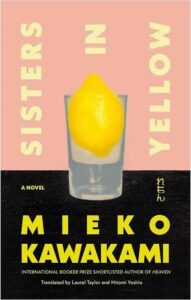
Sisters in Yellow by Mieko Kawakami is available from Knopf, an imprint of Penguin Random House.

Leanne Ogasawara
Leanne Ogasawara lived in Japan, where she worked as a translator for two decades. Her essays have appeared in Aeon, The Millions, Pleiades Magazine, Gulf Coast Journal, Kyoto Journal, River Teeth/Beautiful Things, Hedgehog Review, etc. She currently serves as the translation editor of the Kyoto Journal and writes on things Japanese at https://dreaminginjapanese.substack.com/