Meet Pierre “Peter” Ortiz, Undercover Spy, Marine and Resistance Fighter
Nicholas Reynolds and Katie S. Sanders Remember the Man Who Saved Countless Lives During World War II
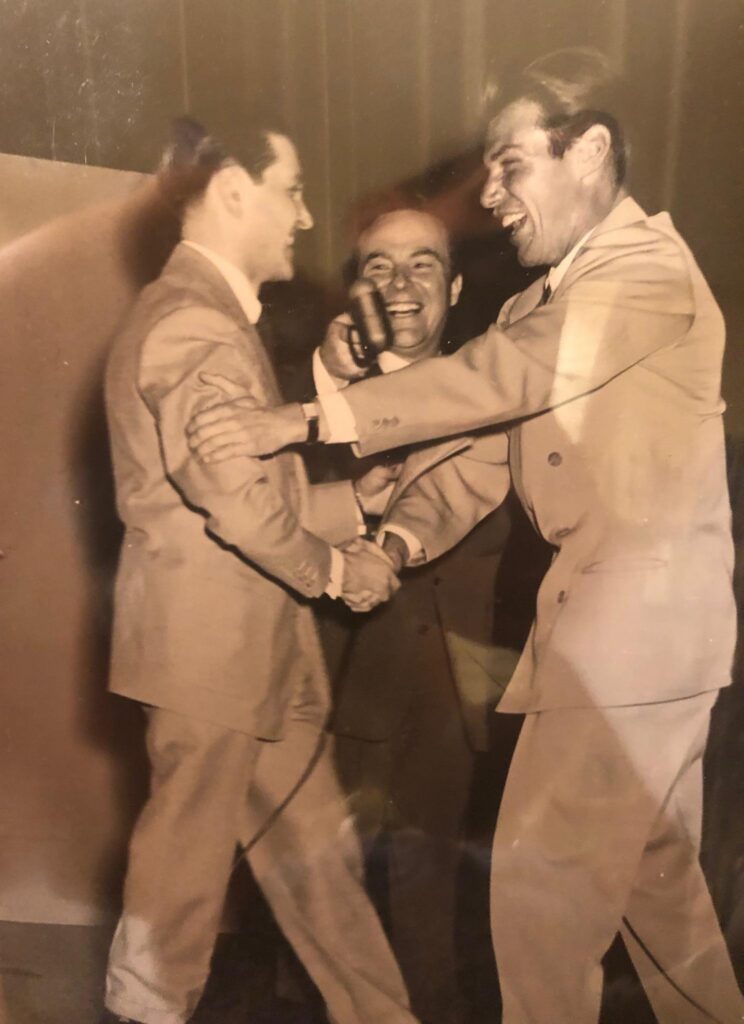
I’ve heard my grandfather’s voice just once. It was on a 1949 episode of the NBC radio show This Is Your Life, recounting his escape from occupied France after a German night fighter shot down the plane he was flying on a secret mission a month before D-Day. Some seventy years after World War II, I perched in a windowless corner of the UCLA Film & TV Library Archives, there on a tip from my uncle that my grandpa had shared a slice of his war story—which he otherwise seldom spoke of—on this popular mid-twentieth-century radio show a few years after the war.
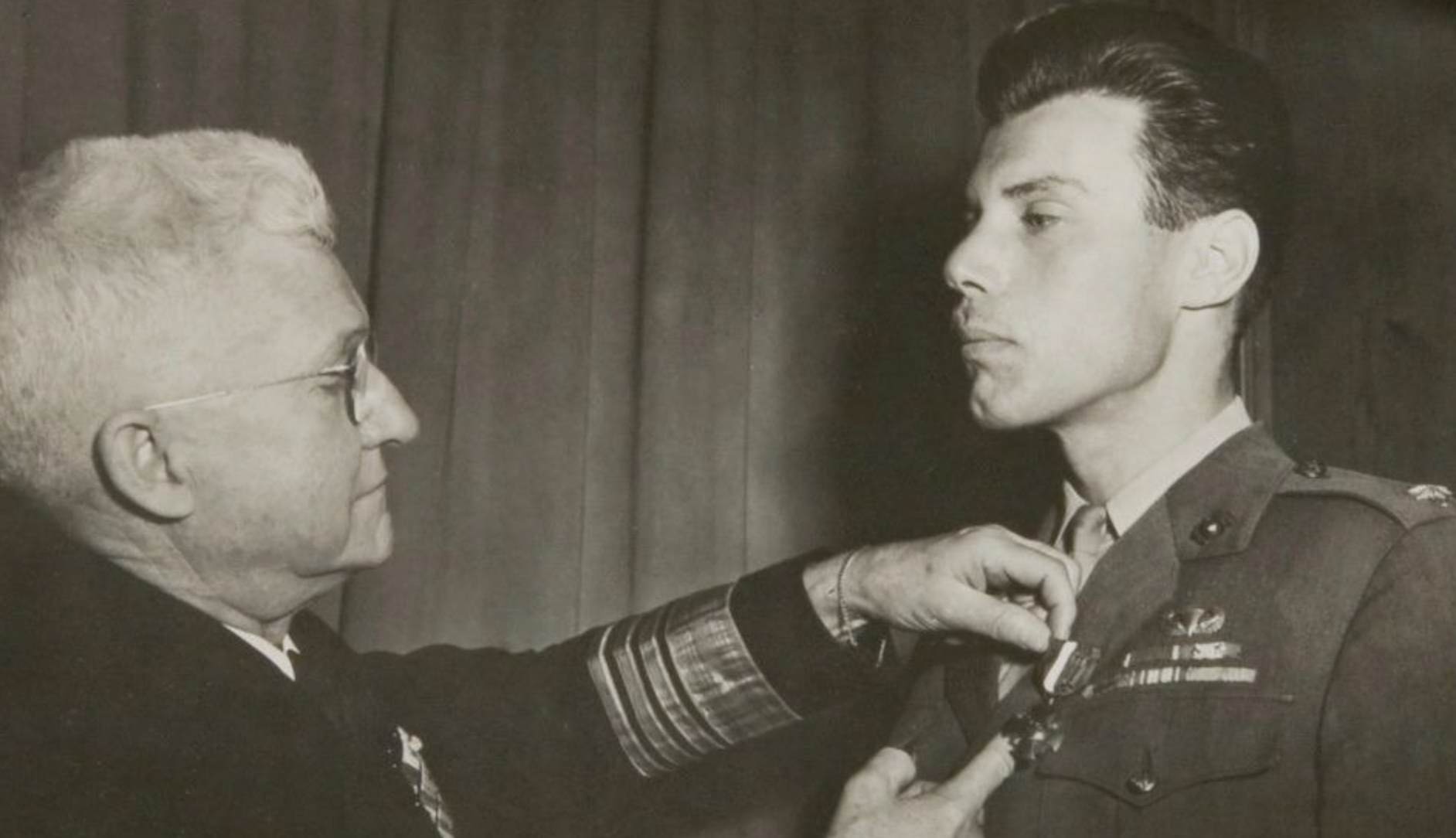
Patriotic marching band music came through my head phones and transported me to another era. Then came the deep, emphatic radio voice of the show’s host, Ralph Edwards, who teed up the episode’s guest of honor: The person-of-the-day whom my grandpa— along with a handful of others from the United States and France whose lives this hero had touched—had been brought to the Hollywood studio to surprise and celebrate. This person was, Edwards announced, “a Marine whose life has been packed with enough adventure, thrills, hair-raising escapes, raw courage, and excitement to make half a dozen movies.” His name was Peter Julien Ortiz.
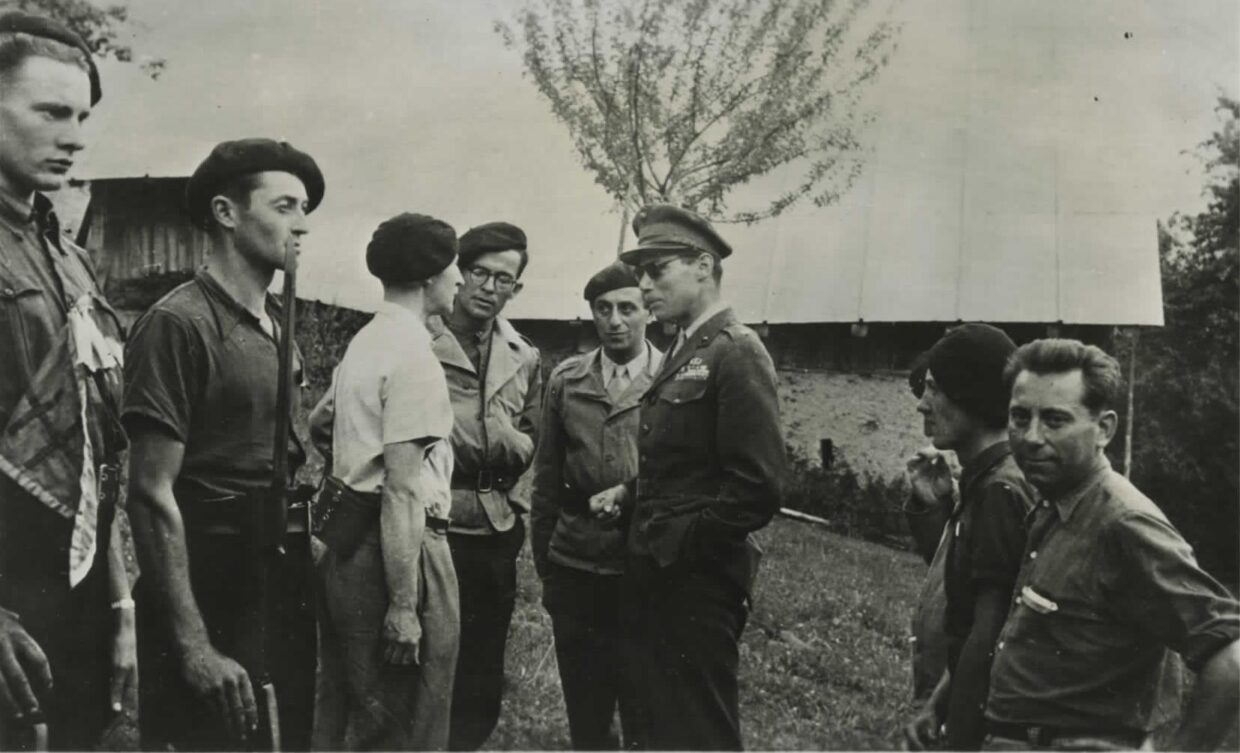
I’d tracked down the This Is Your Life recording to satisfy my curiosity about one Greatest Generation story. After listening to it on repeat and transcribing every word, I left taken with another thread: Who was this multilingual, Hollywood-handsome figure who had parachuted behind enemy lines with bags of cash and ammunition for the Maquis? Who was he at work training, between blowing up Wehrmacht railcars and eavesdropping on off-duty Nazis at pubs? How was this not already a Netflix series? In time, I was introduced to Nicholas Reynolds, a retired US Marine and Oxford-educated historian who knew of Ortiz, too, and together we set out to answer those questions and how this James Bondesque character came to know my grandpa.
It would be a risky journey. But this mysterious Marine major had more than language skills and contacts; he emanated confidence and know-how.
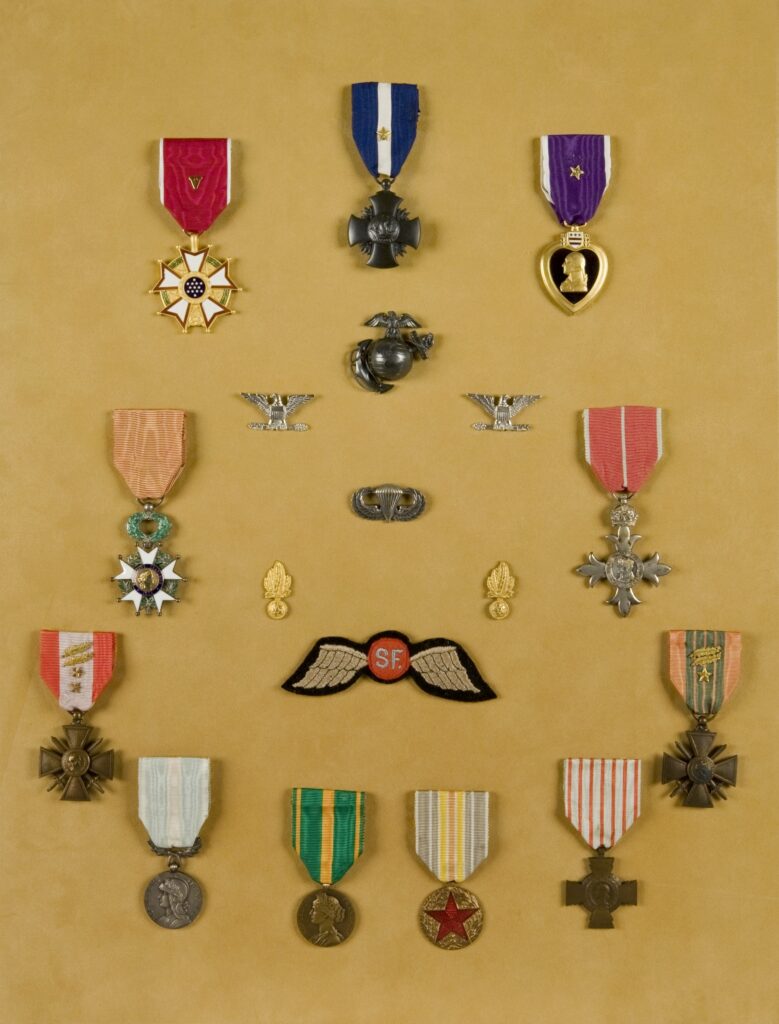
In 1932, a well-to-do American, Peter Ortiz, joined the French Foreign Legion when he was 18-years-old. Ortiz, who was also the son of the founder of Conde Nast’s Paris Vogue, went on to fight the Germans for the Legion in France, and after being captured by the Germans and escaping, he returned to the US and promptly joined the US Marines. His combat expertise, fluency in French, and abilities in Arabic, German, and Spanish made him an ideal special operations recruit for the Office of Strategic Services (OSS) where he served behind enemy lines in wartime France, blowing up Nazi railyards and training Resistance fighters. Ortiz would emerge from World War II with more combat medals than any other member of America’s first spy agency,
In France, he also saved the life of my grandfather, Murray Simon, a 23-year-old 2nd Lt. and pilot of a B-24 Liberator that had been shot down near the French Alps. After bailing out of the doomed aircraft, Simon found himself alone hiding in a shallow ditch by a road. A New-York-born Jew and the youngest son of Russian immigrants, he spoke English, Yiddish, and a smattering of German—but not a word of French. In the daylight he spotted an elderly man accompanied by a slightly younger man. They were walking with purpose and stopped right in front of him. His ditch wasn’t much of a hiding place. “Will you hide me?” the pilot attempted, in halting French spelled out phonetically on his Army-issued language card. The younger man, amused at the stranded pilot’s butchered attempt at French, shot back, in English, “Do not be afraid.”
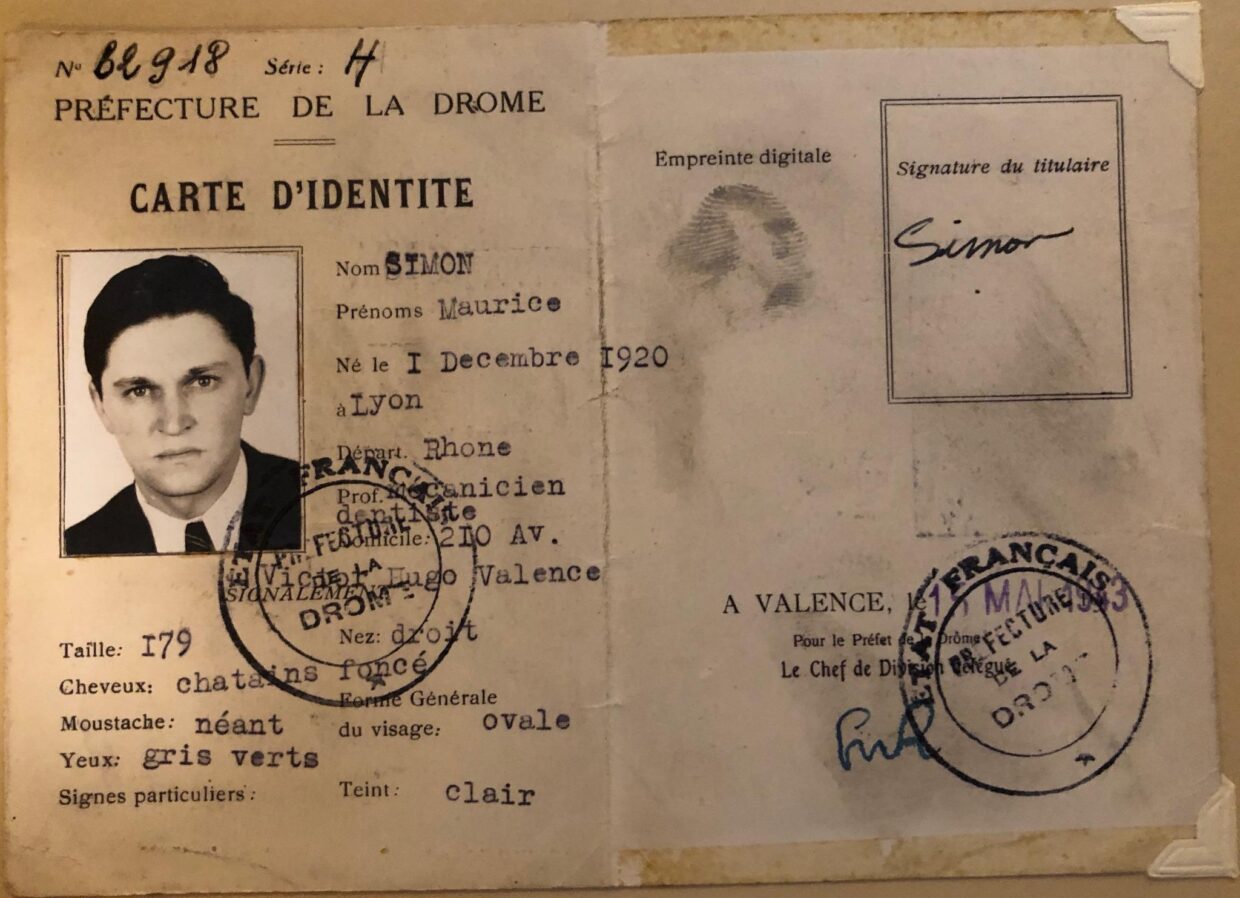
He was Jacques Madjar, a Bulgarian-born Jew and physician who sneaked Simon into the home he shared with his pregnant wife and nine-month-old baby girl. He eventually got Simon out of town and handed him off to a Resistance network that smuggled him into Valence. There, Simon posed for a photo for a forged identity card. He was now Maurice Simon, a deaf and mute Frenchman. Simon’s French helpers assured him that an American agent called Jean-Pierre—or JP—would be arriving in Valence very soon. They told him JP was a Marine major. They claimed he had killed a German with his bare hands and that he was, at that moment, helping another American pilot whose Mustang had been shot down. JP would be returning any day now, and he would know how to help.
A series of missed connections had Simon wondering if the mysterious American agent being referred to as “Jean-Pierre,” “JP,” and “Chambellan” was really coming. Word finally came that JP was back in town. JP was Peter Ortiz. He and Simon chatted, exchanging stories. Before the war, Simon had dropped out of high school to support his widowed mother. He worked as a dental technician and then, looking for a more exciting life, enlisted in the U.S. Army in 1940. He finagled his way from being a private in the infantry to a second lieutenant in the Air Corps. In late 1943, he volunteered for the Carpetbagger Project, an OSS-led aerial supply program that was as secret as it was dangerous. Carpetbagger crews flew solo, low-level night missions in specially-adapted B-24 bombers, dropping supplies and agents to Resistance fighters in German-occupied Europe. Ortiz was pleased to learn that the USAAF was now in the moonlit drop business, formerly a preserve of the RAF.
By now, Ortiz had a blueprint for aiding downed airmen: lead them to reliable guides and trust them to take it from there. This time, since Ortiz had been recalled to London, he and Simon could make their way out of France together. He was open with the pilot that the Gestapo had a growing price on his head and that he was easily identifiable. It would be a risky journey. But this mysterious Marine major had more than language skills and contacts; he emanated confidence and know-how. Simon accepted Ortiz’s invitation to join him.
When Ortiz appeared in a large, official-looking car—like the ones the Gestapo drove, but with a Frenchman at the wheel—Simon did a double take. It was one of several staff cars Ortiz had stolen. Simon got into the Gestapo vehicle—an impossibly strange place for an American flier whose military dog tag was engraved with an “H” for “Hebrew.” As he rode with Ortiz and their driver through the center of town, enemy soldiers waved at them, clearly mistaking Ortiz for one of their own. Ortiz waved back. After dusk they reached Lyon. Ortiz took Simon to an apartment he had the keys to, one of three he used in the area. He told Simon to stay put and went out on business. Simon noticed Ortiz was wearing parts of his Marine Corps uniform and carrying a paratrooper knife. Always in motion, Ortiz shuttled in and out of the apartment over the next few days, writing reports in code, meeting with trade-union comrades. A young woman introduced as Louisette cooked them lunch. Helping plan their next move, Louisette bought Ortiz and Simon two first-class train tickets each, to two different stations beyond their destination. If challenged on the train, Ortiz said, Simon was to stick by his side. They would try to evade the Germans together.
At the station in Lyon, Ortiz and Simon found their train was running late. They passed the time in a café and noticed two men at the next table chatting with each other in a mix of French and German. They did not appear to notice the two Americans. Ortiz wore a jacket zipped over his uniform, while Simon hoped to look casual with a laundry bag. Judging from their clothes and accents, Ortiz was all but sure that the men were Gestapo. He eased Simon out of the café. It was better to walk the platforms, leave the station, and come back in. It came time to board their train—the moment of maximum risk. No one stopped them.
Ortiz vowed to interrogate and, if necessary, kill any traitors who thwarted him and Simon.
For almost two days, Ortiz and Simon rode the rails, traveling south and west to Carcassonne. They went on to the foothills of the Pyrenees. Lucienne, a mountain girl charmed by Ortiz, eased their passage by bribing the right gendarme. Ortiz navigated their way among Russian escapees, Polish fugitives, and tobacco smugglers, all wanting to get to neutral Spain over the mountains. Some of the Poles planned to take three days to make the crossing. Ortiz said that was too long. He wanted to move faster—and not in a cluster with men he did not know. Was there a whiff of treachery among this crew, someone who might betray them to the Germans? Ortiz vowed to interrogate and, if necessary, kill any traitors who thwarted him and Simon.
With the smugglers and the guides, two professions that overlapped, it was more carrot than stick. Tough, mercenary, willing to get a man over the mountains if the price was right, the guides set their own terms and schedule. But as hard as it would be to hurry them along, Ortiz knew it would be harder to get to the other side without them. Signposts were few and far between. The trails for humans looked more like goat paths.
At four o-clock in the morning on May 18, Ortiz and Simon reached a shelter outside the French hamlet of Artigues. They walked two more hours to another shelter. The hardest part was ahead of them: the hike up to Andorra, the tiny neutral principality in the mountains between France and Spain. Together they climbed and climbed, making their way over dirt and scree, around boulders and up slabs of rock. Forest gave way to scrub brush and grass, a complement to the snow-covered peaks in the distance. The wind was harsh, and the air thin at eight thousand feet. Trekkers died of exhaustion and exposure. Simon forced himself to keep up with Ortiz, taking Benzedrine tablets from his survival kit and rationing out a few remaining bits of chocolate.
At two o’clock in the morning on May 19, they crossed into Andorra. Simon calculated they had been walking for twenty-four of the last twenty-nine hours. They had covered more than forty miles at a punishing pace. It felt luxurious to spend a night in a hotel before taking a taxi to the Spanish border and hiding in the hills until dark. They entered Spain at one o’clock on the morning of May 21 but could not rest until they connected with a trusted courier from Barcelona. They needed to avoid the Spanish police. Patrolling in pairs and marked by their black patent leather tricorn hats, the Guardia Civil sometimes forced refugees back into France but more often threw them into spartan jails until the British or the American consul sent for them.
Ortiz and Simon found their courier before the police noticed them. Within three days, they reached the British consulate in Barcelona. Consular officials confirmed their identities and at last the two evaders were safe. They went on to Madrid, where they chanced on a young Pole they had met before starting their climb. The boy told them that Ortiz’s suspicions about a fellow trekker had been well founded; upon crossing into Spain, one of the other Poles had been unmasked as a Gestapo spy.
A week later, Ortiz and Simon set foot on Gibraltar, the two-and-a-half-square-mile British territory at the southern tip of Spain and the mouth of the Mediterranean. Its most prominent feature was the Rock, a small mountain honeycombed with thirty-four miles of tunnels that housed some sixteen thousand British servicemen as well as an American liaison office. There, Simon signed an agreement never to divulge any information about his escape from France.
Below the Rock was a seaport and an airstrip with regular military flights to London. By June 2, Ortiz and Simon were back in England. They parted ways, each returning to his command. The first member of his crew to escape from France, Simon telegrammed his mother: “I am well and safe. No need for worry. Write to my old address.”
____________________________
Adapted from Ortiz’s War: The Allies’ Secret Weapon Against the Nazis by Col. Nicholas Reynolds, USMCR (Ret) and Katie S. Sanders, Murray Simon’s granddaughter. Copyright © 2026. Available from Harper, an imprint of HarperCollins Publishers.

Nicholas Reynolds and Katie S. Sanders
Freshly minted PhD from Oxford University in hand, Nicholas Reynolds joined the United States Marine Corps, serving as an infantry officer and then as a historian. He later served as a CIA officer, ending his career with a years-long stretch as the historian for the CIA Museum. In retirement, he teaches and writes. His most recent book was Need to Know, World War II and the Rise of American Intelligence, designated one of the “Best of 2022” by The New Yorker. He and his wife, Becky, live outside Washington, DC and care for a Havanese named Ruby.
Katie S. Sanders is an award-winning journalist who has written for National Geographic, The New York Times, Washington Post Magazine, New York, TIME, Smithsonian, Vanity Fair, Insider, Glamour, and Marie Claire. Her reporting has brought her to the CIA, the White House, and the homes and reunions of many World War II veterans and Holocaust survivors. After discovering that her late grandfather—a Jewish-American pilot shot down over France—was rescued by Peter Ortiz, she teamed up with Nicholas Reynolds to co-author Ortiz’s War. A graduate of the University of Pennsylvania, she lives in Brookline, MA with her husband, sons, and Havanese.