







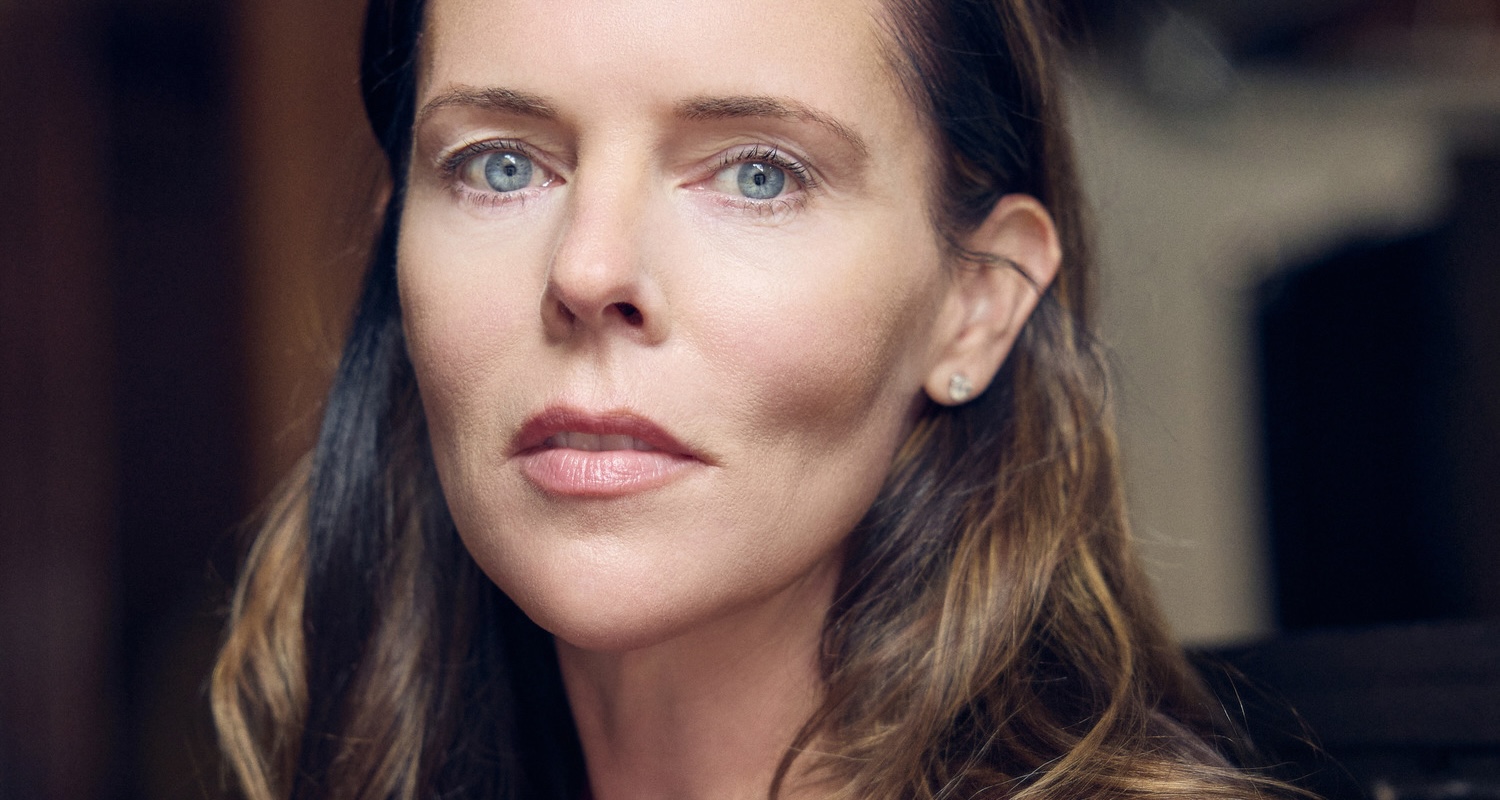
Mary Beth Keane on Writing a Novel of the Irish Diaspora
Jane Ciabattari Talks to the Author of Whale Harbor
I’ve always found reading about Ireland compelling, having family lineage that includes a paternal great great grandmother who immigrated from County Cork to Galveston in the nineteenth century. Mary Beth Keane’s Whale Harbor, her fifth novel, was a revelation. She tracks several generations of one family rooted in Ireland, who migrate to England, Montana, and New York beginning in the 1960s, with intimacy and emotional nuance. Her storytelling gifts as transmitted through the voice of her narrator, the second eldest brother, Mac, are magical.
Once I finished Whale Harbor, I passed the novel along to my darling, Mark, who is descended from Italian and Finnish immigrants and raised among many Irish immigrants in Butte, Montana. (Butte figures in a few early scenes.) He was equally enthralled (he said he found this tale of eleven brothers in the Irish diaspora “captivating”).
Naturally I wanted to know if this historical novel was autobiographical. What inspired her to write it? I asked Keane. “I hate to start on a sad note but this story took root for me just after my father died in 2022,” she explained. “By the time he started hospice care his dementia had become so pronounced that for parts of the day he reverted to speaking his first language, Irish, which my sisters and I don’t understand. When my uncles visited and translated for us they said he was fixated on a decision he made in 1963, soon after his mother died. As the story goes in our family, my dad was emigrating to America at nineteen and one of his younger brothers—so recently motherless—begged to be brought along. But that brother was too young to emigrate, so my father told him to be patient and in a few years, when he had a good job and a reliable place to live, he’d bring him to New York. A year or so later that brother ran away. I didn’t know how guilty my father still felt about that until he was in his last days and kept talking about it.”
*
Jane Ciabattari: You mention in an author’s note that Whale Harbor shares “certain plot points” with your father’s life, and that he grew up in an Irish-speaking village in Connemara, the second of eleven siblings. Does your family history align with this story of various generations rooted in Ireland, who migrate to England, Montana, and New York City?
Once I began writing this family they quickly moved away from their real-life inspirations and became entirely themselves.
Mary Beth Keane: The two central events of the book are taken from my family history—the death of my grandmother just a few weeks after giving birth to her eleventh child, and one of my uncles running away when he was thirteen. Those two events were discussed or referenced at family get-togethers for years, and though no one explained these things to the next generation, we were perceptive eavesdroppers and picked up everything. No one ended up in Montana but I did have an uncle who settled in Alaska and worked on the pipeline there for thirty years. He came to New York to visit every year and some of Mac’s impressions of Montana were borrowed from his experience. I had Mac go to Montana instead because in real life my father had a deep lifelong interest in Montana, and I regret never organizing a trip to get him there. Despite all this overlap, however, the novel truly is a fiction. For me to write well I have to feel like I have full authority over the characters and the story, so once I began writing this family they quickly moved away from their real-life inspirations and became entirely themselves. If I’d tried to match real life in more than the broadest sense I wouldn’t have been able to write without feeling constrained.
JC: How were you able to create so many sibling characters—eleven brothers, who at the beginning of the book are divvied up so the five “oldests” slept in the loft, the next four, the “babies,” slept in the room below, and the newborn slept in the parents’ room?
MBK: This was one of the biggest challenges of the early drafts. There were eleven children in real life so it felt natural to have eleven in the story, but naming them alone was overwhelming. One thing that helped and happened somewhat accidentally was having Coleman, who falls sixth out of eleven, remain close to home because of developmental delays that there wouldn’t have been help for at that time. He is innocent and deeply kind and I thought of him as the heart of the family. Once I imagined Coleman, I thought of the rest of the boys as split into two groups, older than Coleman or younger. I wanted the reader to know there were all these boys around of various ages, all grieving their mother in different ways, but not to feel too concerned about keeping exact track of them. I gave them small differences and tried to indicate to the reader that in some scenes it was not exactly important who said what, but more so that a thought was expressed at all.
JC: Why did you choose the third person point of view, with Mac, the second eldest brother, as your key narrator?
MBK: I find I can get much closer to a character in a close third person point of view than in the first person. I can see things about a character—in this case Mac—that he can’t see about himself. I enjoy reading a novel written in the first person, but writing one, for me, has always felt a little insincere.
JC: In the opening pages of the novel, Mac is walking with his mother when she asks, “Are you missing your brother very much Macdara,” noting that his big brother Sean was in Manchester, England, working at a railyard. Mac “marveled that his mother had a deep understanding of every possible feeling, even when the person himself might not know he was feeling it.” How were you able to tease out the emotional elements of leaving home and being left behind at home—sadness, anger, loneliness, isolation, lost connections.
MBK: Their feelings about leaving home is something I’ve been thinking about all my life. My whole life, I’ve taken the details I know and filled in the blanks for myself in order to understand my parents’ generation a little better. To be a first-generation American is to live in contradiction. My parents loved America, thought it was truly the land of opportunity, and for them it actually was. They saw the flaws—we discussed them at home when my sisters and I were growing up—but in their view it was still one of the only places in the world where you could begin with nothing and build your way into something close to prosperity (definitions of prosperity vary). But home was home and that was always Ireland. Given the choice—if there had been work and opportunity in the west of Ireland in the 1960s—they would have stayed. And so there is a kind of grief that’s just baseline in the new immigrants I knew growing up. Even after a very long time in America there is this sense of looking back and wondering if they’d stayed and gotten through lean years, would everything have been fine, eventually? Would they be looking at a house full of Irish kids instead of a house full of Yanks? On top of that, visiting home as time stretched on was another kind of grief. The home my parents left in 1963 bears very little resemblance to today, and from what I’ve witnessed, that can be a jarring truth to confront.
JC: Mac’s mother dies not long after the birth of Vincent, the youngest brother. This devastating blow disperses the family. Mac’s father, a postal worker, is so overwhelmed with grief and the hard work of childraising that he sends several of his sons away (the newborn Vincent to a cousin in town) and takes a wife, Nuala, an unmarried woman who has returned from Chicago, to help. This is the first of many losses Mac endures. How did you go about portraying the effects of grief on Mac and his family as a dominant theme?
We’ll know that when a character does this or that small thing, that’s grief. All the things we say and do mean themselves but also something else.
MBK: I don’t think about big feelings like grief or sorrow or even joy when I’m writing, especially in the early drafts. I just try to put the characters in action and try to understand the things they might say and do—the specific day-to-day things they might worry about or hope for. I don’t think it’s ever a good idea to describe an emotion in fiction, so I try to bring the point of view as close as possible to the character I’m looking at and just watch them closely. If I know them really really well—and if the reader knows them really well—we’ll know that when a character does this or that small thing, that’s grief. All the things we say and do mean themselves but also something else.
JC: What sort of research was involved in presenting the Cuan, the tiny village in Connemara where your story begins in 1963, the Irish-speaking Joyce family, the stories of olden times?
MBK: Not much research was involved at all, because the town is based on the village where my father is from. Almost every story told at family get-togethers my entire life was set in Ireland in the 1960s. I’d already created a fairly complete picture in my imagination.
JC: How did the whale become such a pivotal creature?
MBK: The whale grew in significance over the course of drafting. I knew the whale would draw the village together in the opening section, but I didn’t know it would keep coming up in different ways until I was writing those scenes. Once that occurred to me as a possibility it made sense to keep it as the connective tissue between the sections and leaps in time.
JC: When Mac’s neighbor PJ (his friend Martin’s big brother) left the Cuan for Montana, their teacher talked to the boys about all the Irish in Butte, Montana, and showed the class a book with photos of a cemetery with tombstones with the same names as in Connemara. When PJ visits the Cuan from Livingston with his wife, Martin goes back to Montana with him, and soon Mac follows. How were you able to develop the scenes of the Irish in Montana?
MBK: I’m not shirking the question…but I just imagined them. First I thought a lot about what Mac was used to in Ireland. The smells and sounds and textures of the natural world around him there. And then I imagined how those things might be different in Montana. The first thing he might have felt was lack of an ocean close by, and so the air would smell different, his skin would feel different. Neighbors were always fairly close by in Ireland, even the rural parts, and they brought sounds—the rattle of a bicycle or a cough near an open window or a conversation on a road. In Montana everything was bigger and further away. We don’t notice or think much about our daily sensory experiences until those things change.
JC: What sources were most helpful in capturing tracing the migration paths of the Irish in New York over the decades you cover? (For instance, by 1982, you write, overstaying a tourist visa didn’t work for the Irish, and to get to the Bronx the youngest brother, Vincent, had to fly to Canada, stay a week, and come across the border in the trunk of a car.)
MBK: Again, this is knowledge I had because my family went through it. In real life my father was the second eldest of eleven siblings, all of whom emigrated to New York. My mother was seventh of nine, some of whom emigrated. The same was true for their social circle once they settled here, and if any stereotype of Irish is true it’s that we like to sit around and tell stories. We lived in small houses and I was an incurable eavesdropper and so I understood from a young age that the people in my life got here in a whole variety of ways depending on the year they arrived.
JC: What are you working on now/next?
MBK: I’m in such an early stage of something that it’s impossible to describe what it is. So far I have character and scenes here and there but I don’t outline so I don’t quite know what it is yet. Sometimes I start with different scenes and I don’t quite know what they have to do with one another until much further along.
_______________________________
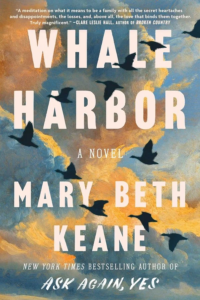
Whale Harbor by Mary Beth Keane is available from Scribner, an imprint of Simon & Schuster.

Jane Ciabattari
Jane Ciabattari, author of the short story collection Stealing the Fire, is a former National Book Critics Circle president (currently on the Advisory Board ) and a member of the Writers Grotto and Page Street. Her reviews, interviews and cultural criticism have appeared in NPR, BBC Culture, the New York Times Book Review, the Guardian, Bookforum, Paris Review, the Washington Post, Boston Globe, and the Los Angeles Times, among other publications.