
Mars Rainfall, Death Monks, and Frankenstein Summer: February’s Best Sci-Fi and Fantasy Books
New books from Matt Dinniman, A.D. Sui, Makana Yamamoto, and more
As we slog through the end of winter, with an extra-nasty flu season and subzero temperatures, at least there are some stellar tales to keep us entertained until the first whispers of spring. Travel to opposite ends of humanity’s timeline; body-hop your consciousness across chassis; take up your weapon of choice for a bloody werewolf hunt. Join a pilgrimage to watch the first rainfall on Mars; trap yourself with a death monk in a locked-room murder mystery—or trap yourself with the Shelleys the summer that Mary got a lightning bolt of literary inspiration.
*

Leila Siddiqui, The Glowing Hours
(Hell’s Hundred, February 3)
The summer that Mary Shelley wrote Frankenstein is one of those stories I will reread in various facets, but Leila Siddiqui’s take is especially compelling: retelling the events through the perspective of the Shelleys’ Indian maid. Mehrunissa Begum wasn’t supposed to be anywhere near Lake Geneva in 1816, instead searching London for her wayward brother. But without any leads nor money to return back to her comfortable life in India, Mehr is forced to work as a housemaid for these eccentric artists Mary and Percy Bysshe Shelley. “Invited” along on a summer trip with the Shelleys’ odd friends—Lord Byron, his lover (and Mary’s stepsister) Claire, and the physician John Polidori—Mehr is less concerned with the romantic psychodramas among the group than with the bizarre happenings at Villa Diodati during the “Year Without a Summer.” Mehr and Mary’s shared nightmares manifest differently, with Mary creatively inspired while Mehr fears she will spiral into madness unnoticed by these self-involved people. Cannot wait.

Jasmin Kirkbride, The Forest on the Edge of Time
(Tor Books, February 3)
This climate fiction time travel adventure straddles three timelines. Much of the action occurs in the lucid dreaming space connecting two time-traveling activists recruited by Project Kairos: Hazel, the only human remaining in a far-future laboratory populated by AI and robots; and Echo, undercover as a healer in ancient Athens. But between them is a teenage girl living in unprecedented times—that is, London in 2020. She may be the key to what has already happened in the past, what consequences have occurred in the future, and what could change.
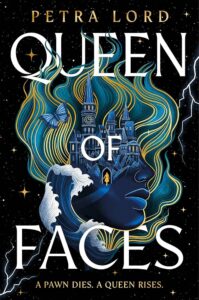
Petra Lord, Queen of Faces
(Henry Holt and Co Books for Young Readers, February 3)
Caimor’s wealthiest citizens can transfer their Pith, or consciousness, into a chassis, or new body, modified to their every whim… or the poor but terminally ill, like nine-year-old Anabelle, can be transferred into a black-market, stock-model Edgar body in order to save her life. Eight years later, teenage Ana is trapped in a rotting male chassis that, if it breaks down entirely, will erase her Pith. Desperate, she applies to the prestigious Paragon Academy, which provides its students with a healthy new body—and when she is rejected, she resorts to stealing instead. But when she’s caught by Paragon’s headmaster himself, Ana must become a mercenary in order to escape execution, and potentially attain both the body and education she so needs.
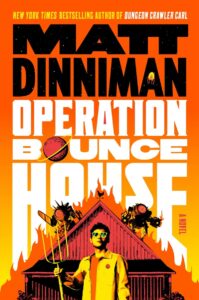
Matt Dinniman, Operation Bounce House
(Ace, February 10)
The author of the wildly popular Dungeon Crawler Carl series has a snarky sci-fi standalone that has shades of Ender’s Game or Ready Player One, but from the other side. On the planet of New Sonora, colonist and farmer Oliver Lewis leads a simple but fulfilling life with clear goals: maintaining the family ranch, playing gigs with his band, hoping New Sonora will eventually be reconnected to Mother Earth. But a rude awakening comes in the form of Operation Bounce House: Apex Industries is forcibly evicting Oliver and his fellow settlers, and they’re using Earth gamers to create their own war machines and raze New Sonora. Can Oliver, using an old book from his grandfather and perhaps his trusty agricultural bots, defend his home from strangers who treat his existence as nothing more than a game?
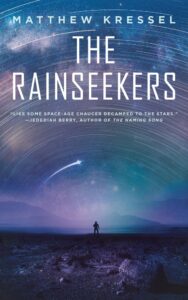
Matthew Kressel, The Rainseekers
(Tordotcom Publishing, February 17)
In a similar vibe, Matthew Kressel’s latest novella transports readers on an unprecedented Mars mission: to witness the first rainfall on the Red Planet, through the eyes and camera lens of a former influencer and recovering addict. Accustomed to selfie mode in her time as a Holo influencer, Sakunja Salazar crashed out hard; now, her only second chance at being taken seriously is in documenting other people’s stories. This sci-fi pilgrimage sounds like the perfect way to end a gloomy winter.

Makana Yamamoto, The Obake Code
(Harper Voyager, February 17)
A standalone sci-fi heist set in the same universe as their debut novel Hammajang Luck, Makana Yamamoto’s The Obake Code follows a supposedly retired superhacker thrown back into the mix. Bored to tears in her lavish loft aboard Kepler Station, Malia gets the jolt she’s been missing when she gets mixed up with vicious gangster Jeongah Song, who wants to use her infamous abilities as the Obake to undermine a crooked politician whose “clean up the streets” campaign is displacing residents. Sure, there’s a certain nobility to helping her fellow Kepler residents, but Malia will also die if she can’t deliver. But despite the thrill of being the Obake again, Malia has to be careful, because the cybernetic enhancements that made her so legendary might also literally burn her out from the inside.
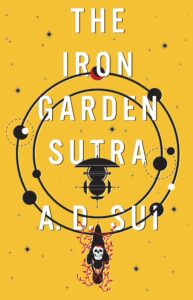
A.D. Sui, The Iron Garden Sutra
(Erewhon Books, February 24)
A death monk stumbles into a locked-room murder mystery on a shipwrecked generation ship in this darkly fascinating sci-fi novel. As part of the Starlit Order, Vessel Iris is accustomed to shepherding lost souls to the Infinite Light. But when he is tasked with exploring the newly-discovered generation ship The Council of Nicaea, lost for over a thousand years, Iris encounters a number of frustrating obstacles. One, it won’t just be him in (relative) solitude with his AI implant, it’ll be an entire team of academics and scientists, including bristly engineer Yan Fukui. Second, something sentient has been lurking in Nicaea’s mossy growths, and it’s picking off its new visitors one by one. And get a load of this tagline: In outer space, no one can hear your prayers. Is it sacrilege that I’m cackling?
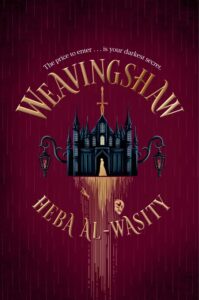
Heba Al-Wasity, Weavingshaw
(Del Rey, February 24)
In this Gothic fantasy debut, Leena Al-Sayer bargains her ability to see the dead in order to pay for the expensive medicine her brother Rami needs to live. Closely guarding her secret, lest she be locked away in an asylum, Leena finds the ideal client: the Saint of Silence, a merchant trading in secrets who needs her help to locate the ghost of Percival Avon, the last lord of Weavingshaw. But as Leena accompanies the Saint to the eponymous estate, she detects more than just traces of Percival—there’s something bloody and hungry lurking on the moors. Should Leena give in to the voices, or ally herself with the cruel Saint and his hidden agenda?
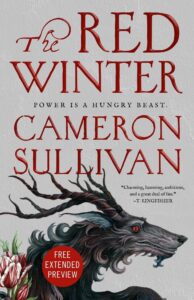
Cameron Sullivan, The Red Winter
(Tor Books, February 24)
A blood-soaked historical fantasy, Cameron Sullivan’s debut retells a little-known werewolf origin story: the Beast of Gévaudan’s three-year terrorizing of French villages in the 1760s. Twenty years after his first failed attempt to slay the Beast, Professor Sebastian Grave grimly prepares for a rematch when his ex-lover Antoine Avenel d’Ocerne begs him to return to the hunt. Sebastian can’t resist the possibility of finally doing away with the Beast for good, nor the possibility of reuniting with Antoine—dark secrets and Sebastian’s indwelling demon Sarmodel be damned.

Natalie Zutter
Natalie Zutter is a Brooklyn-based playwright and pop culture critic whose work has appeared on Tor.com, NPR Books, Den of Geek, and elsewhere. Find her on Twitter @nataliezutter.