Maggie O’Farrell on Grief, Her History with Shakespeare, and Adapting Her Novel to the Screen
Sasha Han in Conversation with the Author of Hamnet
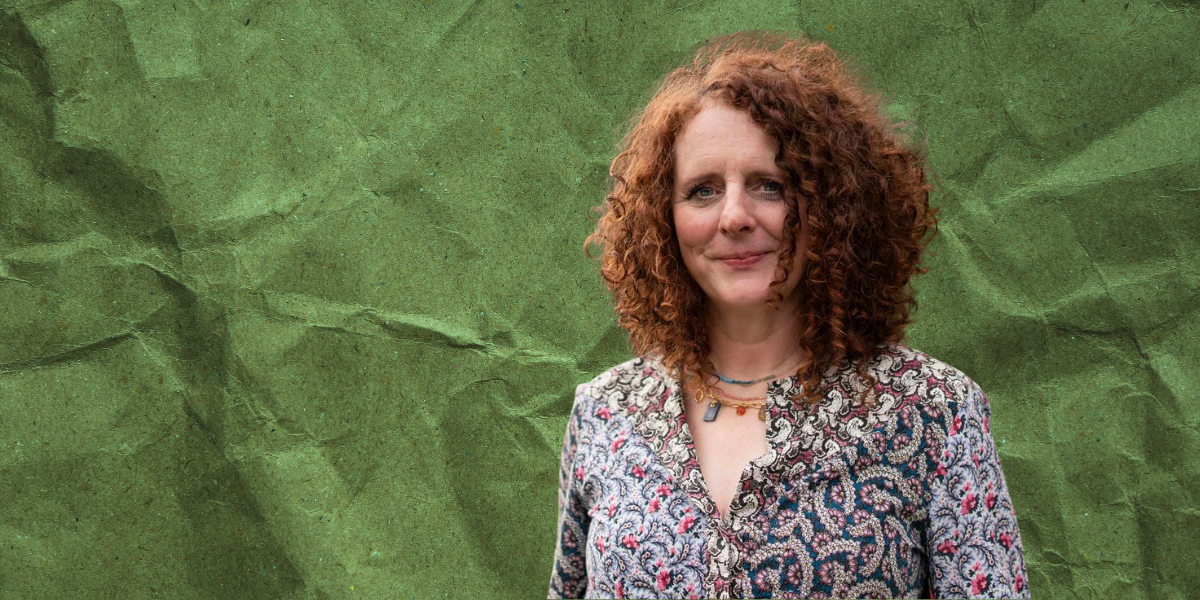
Maggie O’Farrell was first struck by the homophonic similarity between Shakespeare’s son Hamnet and the titular character of his play, Hamlet when she was 16-years-old. She carried that intrigue over three decades and the publication of nine books, including several failed attempts to write a story centering Hamnet. Her “vertigo” as she says, ended after the completion of her memoir, I Am, I Am, I Am (2017).
Published in 2020, Hamnet received critical acclaim, winning the 2020 Women’s Prize for Fiction and soaring to the top of bestseller lists. Following the short life of Shakespeare’s only son, Hamnet has since been adapted for the stage by the Royal Shakespeare Company and, more recently, into a movie by Academy Award-winning director Chloé Zhao. Despite her initial intent to reject the offer to write the screenplay, O’Farrell found herself working with Zhao on the adaptation.
Just before our interview, I watched as O’Farrell joined Zhao and the cast and crew of Hamnet onstage to receive the Best Motion Picture–Drama at the 83rd Golden Globe Awards. The film has since been nominated for eight awards at the Oscars, including Best Adapted Screenplay.
I spoke to O’Farrell about why Hamlet had such a strong hold over her, a moment of wondrous synchronicity with Zhao, and about the Tudor brass pins she found near the Globe Theatre and gave to Paul Mescal, who plays William Shakespeare in the movie.
*
Sasha Han: Hamlet seems to have haunted you since you were a 16-year-old student sitting for your Scottish Highers studying Hamlet. Was there a particular quality to the character of Hamlet that kept the Hamnet-Hamlet puzzle on your mind for over three decades?
Maggie O’Farrell: Hamlet as a play is a real puzzle and quite mysterious. It follows the tropes of a revenge tragedy, but Hamlet is not your classic revenge tragedy hero because he’s summoned to exact revenge by a ghost. Yet he’s ultimately unable to follow through with it. He vacillates and changes his mind, then dies at the end. In every revenge tragedy, the hero goes through a huge amount of trauma and suffering, but he always survives. I imagine it must have been quite shocking for a 17th-century audience to experience this trope subversion and today, even if many of us know the story of Hamlet before we come to it as students, readers or audience, it remains quite confounding. I think that’s why we’re still talking about what these speeches, nuances, and images reveal 500 years later, which reveals the enduring quality of Shakespeare, that he is constantly open to new interpretations and debate.
SH: You’ve mentioned that when you write, it’s like having a conversation with imaginary friends. How have the voices of the characters in Hamlet changed since you’ve first thought of writing the book? Did they become louder, more insistent or did some of them completely drop off?
MOF: I realise the imaginary friends thing makes me sound a bit mad. I was always wedded to the story of Hamlet and Hamlet, Agnes and Anne, the link and the interchangeability of these names, about what happens when your name becomes separated from who you actually are. This interest in names led to my having a huge amount of vertigo about Shakespeare. Every time I sat down to write, a part of me couldn’t stop thinking about what a terrible idea it was to write fiction about the famous playwright William Shakespeare. Shakespeare’s name has become so detached from the human being and works as an adjective that can apply to history, clothing and drama, so taking that name away from the novel was very liberating. I stopped feeling so self-conscious about what I was doing and was able to write and ask readers to consider him as a human being before the playwright.
Shakespeare’s name has become so detached from the human being and works as an adjective that can apply to history, clothing and drama, so taking that name away from the novel was very liberating.
There was also the superstition of my son. I didn’t want to start it until he was very safely past the age of 11. Not that there was a huge risk of him dying of the Black Death, though you can’t be too careful. In that interval period I wrote a memoir, I Am, I Am, I Am, about my close brushes with death. I tried to do something new as a test for myself to learn something. Writing non-fiction was a big learning curve for me, but I was also grappling with the idea of close encounters with death, what it does and how it changes the way you move in life when you’re aware of death. I didn’t know it then, but I was actually laying the ground for Hamnet.
SH: You’ve spoken about how poorly Agnes has been treated in scholarship on Shakespeare and how you wished to address that in the novel. I was moved by how much attention you paid to the domestic care and labour of women as they go about washing the linen or making food in these very humid rooms. Agnes is also depicted tending to her garden, bees, and patients. For me, these moments seem to demystify the idea that she possessed supernatural powers. Agnes isn’t so much a witch as she is sharply observant or so familiar with her work that she’s extremely attentive to minute changes. I wondered if you’d be interested in addressing how people tend to describe that as witch-like, when a lot of labour actually goes into how attuned she is with the world.
MOF: I should say that I originally conceived the novel to be about fathers and sons. While I was researching the novel, I was sidetracked because I became very upset about how history treated Agnes. We’ve only ever really been taught one narrative about Shakespeare’s wife: that she was this ignorant and illiterate peasant who trapped him into marriage by apparently getting pregnant on her own; that ran away to London to get away from her and didn’t love her. There’s literally no evidence for any of this that I could find.
To find Agnes, I went into the plays.
I knew that the novel was going to focus on the boy Hamnet, to bring this boy up from the literary footnotes that he’s been relegated to and into the centre stage. The novel had to be located in Stratford because it wasn’t about Shakespeare’s career in London. So his mother was always going to be a part of the story, but I became so angry about her unjustified vilification that she became a larger part of the novel. To find Agnes, I went into the plays. Now, Shakespeare wears an awful lot of masks as a playwright and an actor, but I’ve always felt that Hamlet is the play that Shakespeare makes himself the most visible. I thought she must be there somewhere too.
On that note, while England at that time was strictly sequestered society and enforced attendance at Protestant Church or be brought to court, looking at Shakespeare’s plays, there was this huge counterculture, this cross-current of other beliefs. There’s literal witches and second sight in his plays. In fleshing Agnes, I thought to give that to her.
SH: Thank you for that. I had read that you fully intended to reject the offer to participate in the script adaptation of Hamnet, yet somehow found yourself returning to the book because of Chloé Zhao. It didn’t make the film, but there’s a moment in the screenplay, when Agnes and William are at the beginning of their courtship when she tells him, “I see you,” which for me was a beautiful moment of recognition. Was there a moment in the call or during your collaboration that a similar moment of recognition happened between you and Chloé where you felt completely aligned with each other?
MOF: The first conversation Chloé and I ever had was over Zoom. I was going to tell her thank you very much for offering, but I’m not doing it. After 40 minutes, I’d completely changed my mind, which I don’t often do. I’m not sure what I expected from a Zoom call with an Oscar-winning director, but I was excited at the thought that I was going to see this incredible L.A. mansion with a butler and maybe a swimming pool in the backyard. Then she came onscreen and I think she’d just been swimming or something. Her hair was kind of wet, and she was wearing a hoodie. It looked like she was in a shed with lots of dogs in the background, which was not what I expected at all.
She’s an impassioned person who is very clear about how she feels and what she thinks about something, which is excellent. I love that kind of person. I’ve also never met anybody who listens as much as Chloé does. Chloé has an extraordinary memory and retains exactly what people say. She’ll bring up things I said a year and a half ago that I have no memory of. I get the feeling she has these invisible antennae picking up on what’s happening in a room, what people are saying and what they’re not. The first time we met was not planned. I’d agreed to write with her, but we barely started writing the screenplay. There was a stage production of Hamnet, and I was in Stratford to do an interview with a TV station in Shakespeare’s house. I didn’t know Chloé was coming, but there she was. We just shared this big hug right in the room where Shakespeare was born, which seems, you know, felicitous, doesn’t it?
SH: I understand you write in a shed with no internet connection, but had to communicate with Chloé almost exclusively over online meetings and voice notes, in particular. What was that process like for you?
MOF: It was actually a very smooth process. Chloé had a very clear idea right from the start about which threads of the novel she wanted to keep and which to cut. Because I know the story in the novel so well, I was able to help with tracking the narrative threads that, if removed, would affect events that occur later or make character motivations unclear. I did the first pass to translate a 350-page novel into a 90-page screenplay, then she did her version of it. After that, there was never a clear draft that was hers or mine. She’s quite a verbal person, Chloé, and as you say, left a lot of voice notes, which is how she works out how she feels about something. I’m completely the opposite. I need to write to work out how I feel about something. Some of the voice notes were 20 seconds long, and the longest ever was 58 minutes, which my daughter thought was a podcast.
But everything and every day changes you. This conversation that we’re having, where we’ve exchanged ideas and thoughts. That’s the most exciting thing about life.
SH: In the film, I wept at all the moments of familial joy, especially when they put on a version of Macbeth and Hamnet says, “When shall we three meet again?” I was shattered because I read the novel and knew what was coming and experienced some anticipatory grief. Compared to the film, there weren’t as many scenes where the Shakespeare family were depicted with such happiness. I’m interested in how these moments were interspersed with this pervasive sense of death, a darkness in the ground or water bodies, that linger throughout the book and film. How did you and Chloe develop these episodes of joy in the screenplay?
MOF: You know, I think writers are terrible people. We play with your emotions. If you didn’t feel any emotional resonance with a character, you’re not going to be upset if they die. So I’m afraid we did deliberately make it look really lovely in order for the audience to be really upset when Hamnet dies. I was being a bit flippant, but biographies of Shakespeare really downplay Hamnet’s death, and say things like, it’s impossible to know whether or not Shakespeare grieved. While child mortality was high in those days, I find it outrageous to suggest that Shakespeare didn’t grieve when his son died. How could you not? It was a constant reality for all families; Shakespeare’s own parents had to deal with the loss of two young daughters. I found purpose in trying to dignify this child’s death and affirm its significance and the loss that was felt.
SH: A number of your books deal with how people experience loss and attempt to manage grief. After so many novels and a screenplay that deals very explicitly with such profound loss, has the way you negotiate or contend with loss changed at all? You mentioned that you write to process things, and I’m wondering if that has helped in any way.
MOF: I’m sure it has. I think all experiences change you, though it’s only often years later that you realise the significance of an event. When I wrote After You’d Gone, I was 27. I wasn’t married. I didn’t have children. I think having children makes you incredibly vulnerable to life’s fears. Medicine has improved an awful lot, but with children, there’s a sense that your heart is living outside your body. But everything and every day changes you. This conversation that we’re having, where we’ve exchanged ideas and thoughts. That’s the most exciting thing about life.
SH: Lastly, Maggie, when you were writing Hamnet, I believe your study was filled with talismans related to Hamlet. These included a Kestrel’s feather, that you couldn’t quite put away years after you were done with the novel. When you were writing the screenplay, did you add anything to this collection?
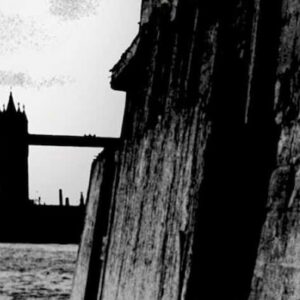
MOF: Oh, that’s a very good question. No one’s ever asked me that. I have to tell you that the Kestrel feather was destroyed. I got a new, naughty Bengal kitten who climbed up my shelves and destroyed it. I do need to get another feather. I actually gave some of the talismans to the cast. Do you know what mudlarking is? You go along the banks of the Thames River in London on the bank, on the shore, to search for objects. It’s like being an amateur archaeologist. I did quite a bit of mudlarking right below where the original Globe Theatre was.
On certain tides, you can find Tudor brass pins that were used in the theatre to pin costumes and hair. You know that they’re Tudor because they are a certain shape. They’re always round at the end. I found quite a lot of these. I kept them because it’s so exciting that they were very likely from the Globe Theatre costumes. I gave some of them to Paul [Mescal] when we started shooting and told him that I wanted him to have it because, while we can’t know for sure, they may well have been worn by Shakespeare himself.

Sasha Han
Sasha Han is interested in the circulation of images in Southeast Asia and its potential for resistance. Her writing has been published by the Asian Film Archive, Documentary Magazine, Film Comment, MARG1N Magazine, Mekong Review and MUBI Notebook. She has presented underground film programmes in Singapore, at Festival Film Dokumenter, and has been part of the pre-selection team at the Singapore International Film Festival since 2022. In 2025, she co-founded Correspondence, a guerilla film publication centred on Southeast Asian films based in Singapore. Her work can be found here: sashahan.com