Long Before Toy Story, It-Narratives Imagined the Inner Lives of Objects
Madeline Zehnder on the History of Thing Narrators
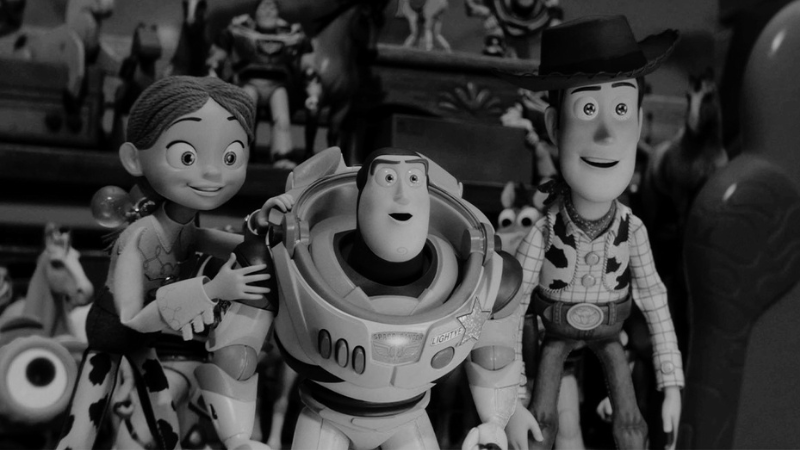
It’s nighttime in the playroom and the toys have gathered for a conference. For modern audiences, this scene likely evokes the imaginative world of Toy Story, the long-running film franchise about the secret lives of children’s toys, which launched to great acclaim in 1995 and recently released its fifth installment. But Woody the cowboy doll and Buzz Lightyear the action figure are not among the group assembled here. Instead, the toys gathered in young Maggy Howard’s room are simple objects crafted from rubber, tin, and wood. One is a fresh arrival from Europe. Another has survived gunfire on the Civil War battlefield. All have something to say. As the night unfolds, so do their tales, which comprise a set of narratives published in 1866 under the title “What the Playthings Said to Each Other on Midsummer Night.”
Although critics hailed the original Toy Story for its “incredibly clever” and “inventive” concept, the film’s central conceit has roots in a literary genre that first became popular in eighteenth-century Britain: the it-narrative. Also known as object tales or novels of circulation, it-narratives relate the adventures of inanimate objects (and, less commonly, animals) as they travel across settings and between different owners. Typically narrated in first person, it-narratives test familiar borders of subject and object, inviting readers to imagine what human society might look like from the perspective of small and easily overlooked things, ranging from corkscrews to pins to literal flies on the wall.
While today we think of Toy Story as children’s media, the it-narrative originated as a decidedly adult genre. Because object narrators tend to be things that circulate across layers of society, the it-narrative offered a ready platform for social satire. What’s more, as tales that turn on the circulation and exchange of commodities, it-narratives were particularly apt vehicles for critiquing Britain’s burgeoning consumer culture. In stories such as Joseph Addison’s “Adventures of a Shilling” (1710) and Charles Johnstone’s Chrysal; or, the Adventures of a Guinea (1760), authors used the fictional adventures of object narrators to expose instances of greed and self-interest drawn from life. The adventures of Addison’s titular shilling include being hoarded, offered as a bribe, and sent as an insulting accompaniment to a letter disinheriting a son. Johnstone’s guinea, meanwhile, bears witness not only to the machinations of hack authors and exploitative merchants, but also to the sufferings of a destitute poet shut out from the literary marketplace, who receives the guinea as a pity gift and immediately uses it to buy food.
More than a few early it-narratives verged on pornography. The capacity of most object narrators to travel in intimate proximity to human bodies prompted authors to relate sensational, fly-on-the-wall details about people’s private lives.
If the ability to circulate enabled object narrators to prompt class critique, it also allowed for more straightforward modes of entertainment. With its episodic structure, the it-narrative echoed the form of picaresque novels such as The History of Tom Jones (1749) and popular adventure fiction such as Robinson Crusoe (1719). It-narratives including Helenus Scott’s The Adventures of a Rupee (1782) served up adventure alongside satire, with Scott’s novel doubling as an orientalist travel narrative; the rupee’s travels, which take place across India, China, and England, include an extended visit to a seraglio. Likewise, in Chrysal, which was perhaps the most popular it-narrative of its day, the guinea’s peregrinations across Europe and the Americas not only reflected the increasingly globalized nature of Britain’s mercantile society but also allowed Johnstone to engage in anthropological fantasy. The novel features several chapters set among an invented group of Indigenous Americans, whose “females” and their private habits come in for voyeuristic scrutiny.
As such details suggest, more than a few early it-narratives verged on pornography. The capacity of most object narrators to travel in intimate proximity to human bodies prompted authors to relate sensational, fly-on-the-wall details about people’s private lives. Chrysal, for instance, features a detailed episode in which an aristocrat picks up a sex worker on the street. A similar desire to titillate motivates a subset of tales narrated by articles of clothing, including coats, silk petticoats, waistcoats, and wigs, as well as the anonymously-authored History of a French Louse (1779). Born on the head of a courtesan, the History’s insect narrator rides shotgun on a series of libidinous adventures that include an assignation with American ambassador to France Benjamin Franklin, whose decaying teeth, the History’s louse reports from his close-up vantage point, “might have been taken for cloves.” It-narratives may have been fiction, but the anonymity afforded by object narrators frequently encouraged authors to dish on real celebrities.
By the mid-nineteenth century, the it-narrative began to interest authors invested less in provoking excitement than in guiding the moral development of their readers. As literary scholar Leah Price has observed, the it-narrative’s premise held special appeal for Christian missionaries, whose evangelical activities likewise hinged on social circulation. A new crop of it-narratives published by religious organizations in both the United States and Britain soon emerged. Often featuring object narrators with a moral valence—Bibles and prayer books were popular—these stories targeted audiences with limited means to select their own reading material, including children.
Like the toys in Toy Story, who reward “good” owners (imaginative children) and punish or seek to escape “bad” ones (violent children, greedy adults), object narrators in nineteenth-century religious and moral fiction do not simply observe human activity; they judge it. For some authors of nineteenth-century children’s literature, it-narratives thus offered a framework for encouraging young readers to self-police their own behavior. Well before Carol Aebersold and Chanda Bell’s The Elf on the Shelf (2005), a picture book packaged with a toy elf that children are instructed to imagine watching their every move, it-narratives sought to transform children’s things into auxiliaries for parental surveillance.
In children’s it-narratives such as The History of a Pocket Prayer Book (1839) and The Adventures of a Work-Bag (1826), authors forego the sharp edge of satire for the blunt instrument of didacticism. Both the prayer book and the work bag openly praise behaviors they view as diligent, such reading a prayer every night or being “dedicated to [one’s] needle.” But they are also quick to criticize habits and behaviors they deem inappropriate. The work bag, for instance, lives in constant fear of falling into the hands “of some rude slatternly girl, who will toss me up and down to my great detriment.” Although the it-narrative as a genre was predicated on an object’s extensive circulation, authors guided their young readers, who were largely white and middle-class, to act in ways that shored up social hierarchies and related ideas of proper comportment.
Just as Toy Story asks audiences to take seriously the world of childhood play, stories like “What the Playthings Said” envision a world in which children and their things make an impact.
Nineteenth-century children themselves, however, had their own take on such tales. Much as the wealth of island stories written by children of this period indexes the widespread popularity of Robinson Crusoe, the presence of it-narratives in archives of children’s writing suggests that the genre appealed to young readers despite its adult use for moralizing purposes.
One such collection of it-narratives survives in the form of the tiny manuscript books authored by children associated with the prominent New England Hale family. Developed by children, for children, these handmade books—which measure less than 10 centimeters in height—were created for circulation via amateur libraries organized by several generations of the Hales, their cousins, and various friends from 1839-69.
In stories centered on objects ranging from a button to a tin soldier, young authors recognize the it-narrative’s potential not only for amusement but for showcasing the power of the small and marginal. Tales including “The Adventures of a Rod” (1844) mark a return to the genre’s anarchic origins: the story chronicles the travails of a roadside shrub, which suffers violent attacks by schoolboys, but later enacts revenge upon becoming a disciplinary switch in the boys’ classroom. Others emphasize the role of objects in networks of human relations. In “What the Playthings Said to Each Other on Midsummer Night,” a rubber soldier gifted by a young boy to his Civil War-bound brother deflects a deadly bullet and saves the older sibling’s life. Just as Toy Story asks audiences to take seriously the world of childhood play, stories like “What the Playthings Said” envision a world in which children and their things make an impact.
Toys, of course, are not the only small things that children carry these days. The antagonist of the new Toy Story film is a tablet, whose addictive presence distracts the toys’ young owner from unstructured, creative play. Yet while screens and smartphones may seem worlds apart from the Hales and their handmade books, we in some ways inhabit a technological present inherited from the it-narrative, a genre whose watchful object narrators look ahead to the media imagination that gave us virtual assistants such as Alexa and Siri. As it-narratives of the past remind us, seemingly inanimate objects may have more power to shape us than we like.

Madeline Zehnder
Madeline Zehnder is a literary historian and postdoctoral researcher at Humboldt-Universität zu Berlin. She is the author of Print for the Pocket: Circulation, Scale, and Nineteenth-Century Imaginaries of the Book.