Lit Hub’s Most Anticipated Books of 2026
314 Books To Read in the New Year
MAY
***
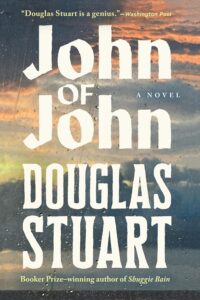 Douglas Stuart, John of John
Grove Press, May 5
Scottish fashion designer turned writer Douglas Stuart burst onto the literary scene in 2020 when his aching autobiographical debut novel, Shuggie Bain, won the Booker Prize and garnered a slew of rave reviews and award nominations. His follow up, 2022’s Young Mungo, was met with similar acclaim. John of John, Stuart’s third novel, follows a closeted young art student returning to his childhood home in Scotland’s Hebrides islands, where his unwell grandmother and conservative lay preacher father live uneasily under the same roof. –DS
 ‘Pemi Aguda, One Leg on Earth
W.W. Norton, May 5
The author of the celebrated 2024 collection Ghostroots is back with a debut novel about a young woman who arrives in Lagos to start a new life, and soon finds that she will be starting two: she is pregnant. “But an inexplicable force is haunting the pregnant women of Lagos,” and she soon “finds herself stalked by a presence she can neither ignore nore appease.” Sounds like pregnancy everywhere right now, which is no doubt (part of) the point. –ET
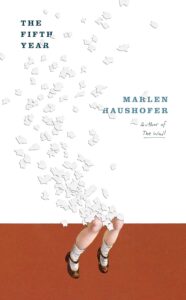 Marlen Haushofer, tr. Shaun Whiteside, The Fifth Year
New Directions, May 5
From the mid-century wizard who brought us The Wall comes another eerie offering. This a dispatch from childhood, following the five year old Marili over a year on her grandparent’s farm. But all is not what it seems in the countryside. Haushofer died in 1970, but she left a huge impression on German letters. (Her fans included Doris Lessing and Elfriede Jelinek.) This new release of an old title is excellent news for English readers. If you like prescient allegories, quiet dystopias, and sentences clean as a bone, pick this up. –BA
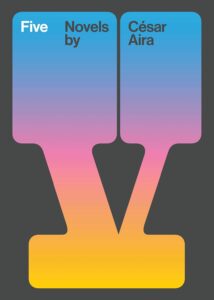 César Aira, tr. Chris Andrews, Five by Aira
New Directions, May 5
What a novelty: a thick Aira book. True, it contains five novels, which were selected from over 100 unpublished works to display “the many facets of Aira’s multifarious mind as he turns expectations inside-out and gleefully explodes genre convention.” As an Aira head, I’m thrilled, but for the uninitiated, it could be a good place to start… –ET
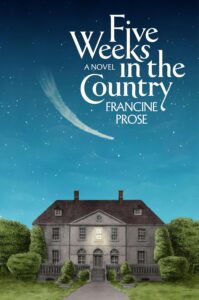 Francine Prose, Five Weeks in the Country
Harper, May 5
This somewhat speculative historical fiction embroiders the real friendship between two stars in the literary firmament: Charles Dickens and Hans Christian Anderson. The prolific Prose has played in history’s sandbox before—as with 2014’s winning Lovers at the Chameleon Club, 1932. And throughout her project, she’s shown an interest in how artists form their practices. I’m hoping this one feels like Blue Moon. Just some great brains going round and round about how they make their art. –BA
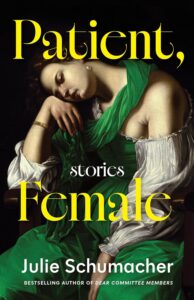 Julie Schumacher, Patient, Female
Milkweed. May 5
Schumacher is really funny (her hilarious novel Dear Committee Member won the Thurber Prize)! In this collection of short stories, there is a story as syllabus, a board game, middle school gamblers, generous dead neighbors, and a professional gynecology patient. With the perfect blend of dark humor and compassion for her characters, Schumacher writes of the absurdity of the human experience. –EF
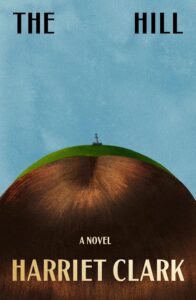 Harriet Clark, The Hill
FSG, May 5
Clark is a former Stegner fellow and graduate of the Iowa Writers’ Workshop. The Hill, her debut novel, has a log-line that calls to mind a certain PTA movie that may have also divided your group chat this year. When her radical mother is busted in a bank heist gone awry, Suzanna Klein is forced to spend her wonder years shuttling between prison visits. Meanwhile her old-school Communist grandmother sneers at the tactics her Red Diaper daughter employed. A politically engaging family story about women who wanted to change the world? Yes, please. –BA
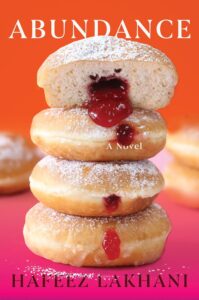 Hafeez Lakhani, Abundance
Counterpoint, May 5
Sakeena left her beloved India thirty years ago for pursuit of the American dream. Now she and her husband co-own a Dunkin franchise in Florida. On receiving a grim prognosis, this matriarch is forced to reconsider all the choices that have brought her to the panhandle. And her family must decide how they ought to support her final wishes.
This debut novel has most all of my favorite ingredients. We have an epic, multigenerational family story, imbued with a strong sense of place and philosophically specific characters. Check, check, check. –BA
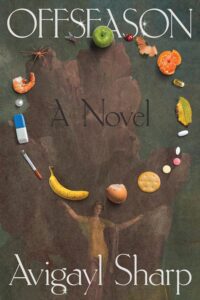 Avigayl Sharp, Offseason
Astra House, May 5
This voicey debut novel from a Paris Review contributor announces its wit on page one. Our bone dry narrator’s bound for a teaching gig at an all-girls boarding school. A creepy seatmate is squeezing her foot, but she’s the sort to allow it. An observer of catastrophes, come what may.
For her humanities-pilled erudition and delusional grasp of task, this narrator’s already inviting comps to misguided educators like Miss Jean Brodie or Professor Pnin. And in this century, Sharp has fans like Hillary Kelly and Catherine Lacey. –BA
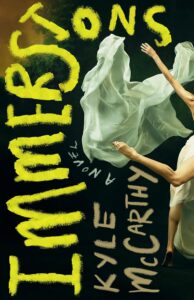 Kyle McCarthy, Immersions
Tin House/Zando, May 5
Kyle McCarthy’s second traces the relationship between two sisters, Charley and Frances, both modern dancers, in the aftermath of Charley decision to leave her company and join an enclosed convent in France and cut off contact with the outside world, including her family. In search of answers, Frances seeks out Charley’s wealthy ex-husband, who she believes to be somehow responsible. This one sounds gripping, dark, and more than a little sexy. –JG
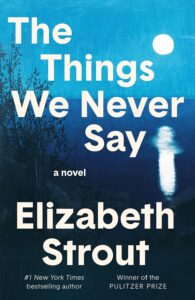 Elizabeth Strout, The Things We Never Say
Random House, May 5
Elizabeth Strout is as prolific as they come: just off Tell Me Everything from 2024, she’s back with a new, poignant, emotional look at relationships, conversation, and feeling less alone in the world. I always know I’m in steady hands when reading Elizabeth Strout, whether it’s a Lucy Barton book, or one from another of her multiverse. The Things We Never Say is not a Barton book: it’s about a man named Artie Dam, a recognizable Strout character in his relentless feeling of isolation amidst his bustling life. He’s plagued by wondering about the world, and about his place in it, until he finds out a secret that threatens to either topple his world entirely, or finally make it all make sense. Strout is consistent and satisfying: her writing is safe, trustworthy, and always delightful, and illuminates the world in new, brighter colors with every book she writes. –JH
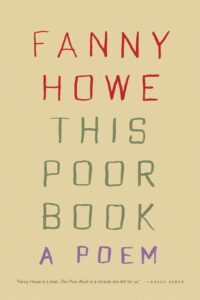 Fanny Howe, This Poor Book
Graywolf, May 5
The beloved poet’s final book, completed just before she died in July of 2025, selects multiple pieces from the last thirty years, and recombines them all into a a single book-length poem. Trust Howe to leave us with something brilliant, spectacular, and utterly new. –ET
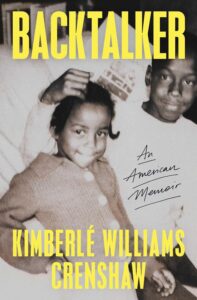 Kimberlé Williams Crenshaw, Backtalker: An American Memoir
Simon & Schuster, May 5
Crenshaw is one of the foundational scholars of contemporary critical race theory; she coined the term “intersectionality,” and in addition to her scholarship on civil rights, race, and feminist theory, is a law professor at both Columbia and UCLA. This memoir shows how she got there—by starting to talk back. Should be a fascinating account from one of our most important public intellectuals. –ET
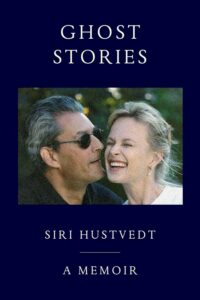 Siri Hustvedt, Ghost Stories: A Memoir
Simon & Schuster, May 5
Siri Hustvedt delivers a gorgeous elegy for Paul Auster, her husband of more than 40 years, in this wide-ranging exploration of grief, intimacy, and time. Apparently, it includes some glimpses at Auster’s unpublished last work, as well as their correspondence over their long marriage—a must-read for the legacy-minded among us. –DB
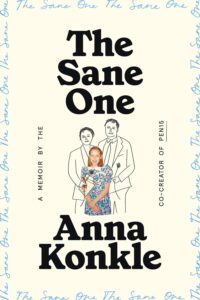 Anna Konkle, The Sane One: A Memoir
Random House, May 5
Along with Maya Erskine, we have Konkle to thank for Pen15–the best television show in recent history/ apex nostalgia object for elder millennials. The Sane One is a memoir, building on subjects Konkle’s loosely autobiographical teen avatar teased in the show– namely, stressful dads, and a traumatic divorce. If “Na’s” rollicking and vulnerable screenwriting voice is anything to go by, this true tale of tricky wonder years should be a hilarious shot to the heart. –BA
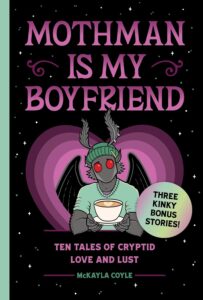 McKayla Coyle, Mothman Is My Boyfriend
Quirk Books, May 5
Lit Hub’s very own McKayla Coyle delivers a totally joyous collection of crypid erotica. It’s unapologetically horny, utterly charming, by turns hilarious and sweet, and featuring all your faves—like the Mothman, Sasquatch, the Jersey Devil, and more—in a cute little town, falling in love (or lust). If you are even vaguely wondering if this might be for you, let me tell you: yes, yes, it is. –DB
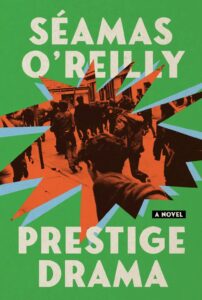 Séamas O’Reilly, Prestige Drama
Cardinal, May 5
I really loved O’Reilly’s actually laugh-out-loud funny and heartbreaking memoir about growing up with ten siblings and a widowed dad in 90s Derry. In his debut novel, a Hollywood actress goes to Derry to research her role for a show about the Troubles—and then goes missing. With a desperate screen writer, a local psychic, and an ex-IRA member part of the story, Prestige Drama is “an indelible portrait of a community both obsessed with its past, and desperate to forget it.” –EF
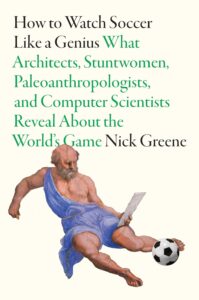 Nick Greene, How to Watch Soccer Like a Genius
Abrams Press, May 12
This book looks absolutely fascinating and no, it will not actually equip you to sit in a pub surrounded by Scotsmen watching their team lose 1-0 to Morocco in this summer’s World Cup (just trust me on this one). However, if you’ve ever wondered why it’s so soothing to take in the large green rectangle of the soccer pitch, or about the shared origins of soccer, rugby, and football, or about what happens to the human brain over the course of a 90-minute match, or about why we kick, then Nick Greene’s book is for you (or the soccer-lover in your life). –JD
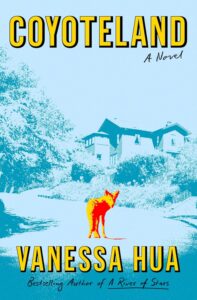 Vanessa Hua, Coyoteland
Flatiron, May 12
Who among us doesn’t enjoy a messy, layered family drama? When Jin Chang’s family thinks their move to an affluent California suburb means a new start—what they don’t know is that Jin has one last plot up his sleeve. As his family tries to settle into their new neighborhood, Jin’s plot creates fissures between him and his wife and daughters, as well as their white, liberal neighbor. Things quickly begin to spiral out of control, and a coyote attack puts Jin’s daughter and her friend on a quest for truth that could upset the balance of the entire town. Coyoteland promises to be as dynamic and explosive a suburban drama as Little Fires Everywhere. –MC
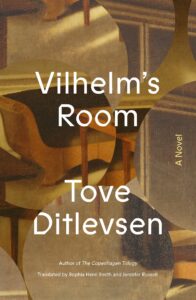 Tove Ditlevsen, tr. Sophia Hersi Smith and Jennifer Russell, Vilhelm’s Room
FSG, May 12
The Danish writer Tove Ditlevsen’s final novel, published the year before she died in 1975, is finally getting a translation into English. Vilhelm’s Room has a strange plot, following a married couple whose life and marriage is upended by a trip to a psych ward and a personals ad. Like Ditlevsen’s incredible Copenhagen Trilogy, this short book is obvious autofiction, about a well known novelist struggling with substance abuse and addiction. Ditlevsen writes beautifully, and her sly and specific humor always manages to both undercut and deepen the madness and love in all of her books. And fittingly for a final novel, Vilhelm’s Room also delves into writing and its processes, a satisfying meta-textual move. –JF
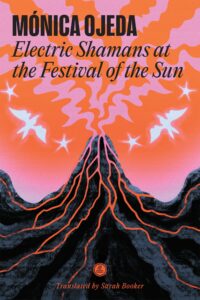 Mónica Ojeda, tr. Sarah Booker, Electric Shamans at the Festival of the Sun
Coffee House Press, May 12
This psychedelic novel follows two friends who travel to a drug-soaked and pleasure-seeking technoshamanistic festival in Ecuador, held at the foot of an active volcano. One friend fully dives in to the dissociative spirit of the event, while the other is more cautious, nagged by the feeling that something might not quite be right. The party warps into something stranger, and one of the women begins speaking in voices not her own. It’s a novel of friendship amidst hidden pasts, uncertain futures, and the supernatural from an exciting young writer. –JF
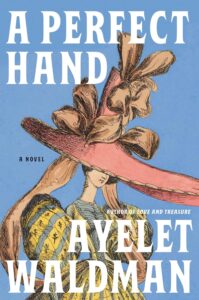 Ayelet Waldman, A Perfect Hand
Knopf, May 19
I refuse to be the last holdout refusing to read romance novels, but I’m going to do it on my terms. An upstairs-downstairs work of historical fiction with a premise farcical enough to fuel an Oscar Wilde play seems like a solid first step toward the genre. –CK
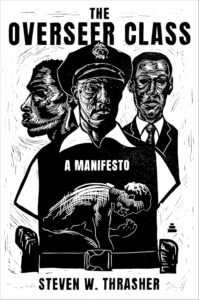 Steven W. Thrasher, The Overseer Class: A Manifesto
Amistad, May 19
Steven Thrasher is always a must-read, and not just when he’s writing for Lit Hub! His follow-up to The Viral Underclass looks at what happens when members of minority groups achieve some kind of institutional power and what can happen when those white-supremacist structures are inhabited by the very people they were designed to oppress. Think Black cops, think Clarence Thomas, and get ready to get mad. –DB
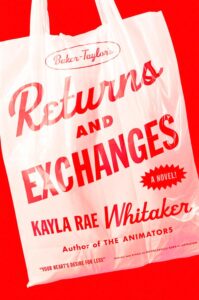 Kayla Rae Whitaker, Returns and Exchanges
Random House, May 19
I think that Whitaker’s The Animators is one of the best debuts of the century so far. I’ve been waiting for this follow-up for nearly a decade now, and what a follow-up it’s shaping up to be: a big family novel, about the trials and travails of a Kentucky family and their department store through the 1980s. I can’t wait to sink my teeth into it. –DB
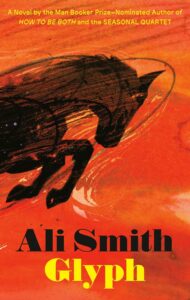 Ali Smith, Glyph
Pantheon, May 19
Smith’s follow-up to Gliff is described as “family to” that first novel, and other details are predictably hard to come by. Siblings, a ghost horse, an anti-war bent and an examination of our near-dystopic near-future are pretty much guaranteed—but beyond that, expect the unexpected, as ever. –DB
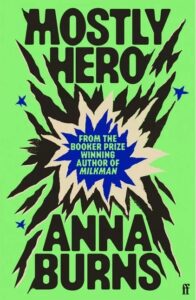 Anna Burns, Mostly Hero
Faber & Faber, May 19
The first US release of Burns’ superhero novella! Not quite what you’d expect from the author of Milkman, but that novel was such a bolt from the blue that I can only imagine her take on superheroes and our modern culture of violence will be a romp and a half. –DB
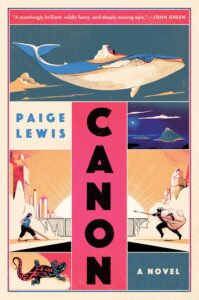 Paige Lewis, Canon
Viking, May 19
Calling it now: this is one of the best novels of 2026. Form-wise, I’ve never read anything quite like it—chatty, polyphonic, unabashedly meta—and content-wise, it manages to take a very old kind of story (chosen one sets out to stop evil warlord) and turn it upside down to see what kind of treats fall out of its pockets. Come for the talking whale, stay for the deep ruminations on belief and fate. This is going to blow your mind. –DB
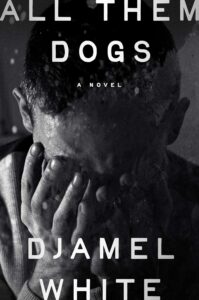 Djamel White, All Them Dogs
Riverhead, May 19
In this debut from Irish novelist White, a gangster called Tony Ward returns to Ireland after years of hiding out in London. But things have changed—his boss is dead, his best friend is out of the game—and as Tony finds his feet, he also finds Flute, with whom be begins a relationship both professional and, unexpectedly, personal. Ann Enright calls it “a stylish, adroit, and gritty debut,” but I’m also here for the slang. –ET
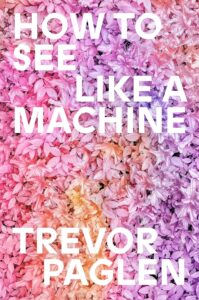 Trevor Paglen, How to See Like a Machine: Art in the Age of AI
Verso, May 19
I used to be an editor at a now-defunct magazine that covered the intersection between art and technology, so I’ve spent an unhinged amount of time thinking about art and AI. As a culture we often consider the practical problems associated with AI (theft, environmental impact, etc.), but the theoretical and philosophical questions are just as important: How will people choose to interact with art in a world where AI can spit out any image desired? When digital platforms value hyperpersonalization over discovery and learn through user surveillance? AI is altering visual culture more insidiously than it even seems, far beyond slop and plagiarism, and we need to understand it. –OS
 Emily LaBarge, Dog Days
Transit Books, May 19
Almost 20 years ago, LaBarge and her family were held hostage at gunpoint. Years later, a therapist encourages her to lie in the same position, “just like how it happened, for as long as it happened, and for as long as it takes until the pain comes out.” Dog Days is a book about telling “the good story,” the version that doesn’t make anyone uncomfortable, the one with a moral, the one that’s easy to digest; combining memoir, criticism, and psychoanalytic theory, LaBarge “interrogates how language and institutional structures constrain and distort our understandings of trauma, violence, and care.” –EF
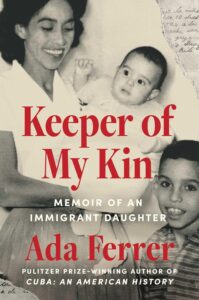 Ada Ferrer, Keeper of My Kin: Memoir of an Immigrant Daughter
Scribner, May 19
Ada Ferrer, the Pulitzer Prize-winning author of Cuba: An American History, is back with a memoir about her family’s history: her mother, who fled Cuba with an infant Ada, leaving her brother Poly behind, the grandmother who raised him, the new life for Ada and her parents, the brother no one knew about, the new life Ada’s parents made in the US. Ferrer is a brilliant historian, and I’m looking forward to seeing her unpack her own family through her expert lens. –ET
 Jesmyn Ward, On Witness and Respair: Essays
Scribner, May 19
With 2013’s Men We Reaped, two-time National Book Award-winning novelist Jermyn Ward wrote one of the most powerful and devastating memoirs of the 21st century. On Witness and Respair is her first book of nonfiction since, and it brings together more than a decade’s worth of essays from a writer who has been lauded as “the heir apparent to Toni Morrison.” The devastating title essay, which recounts the death of Ward’s husband, the father of her children, on the eve of the COVID-19 pandemic, is worth seeking out this collection alone. –DS
 Emily Rapp Black, I Would Die If I Were You: Notes on Art and Truth Telling
Counterpoint, May 19
Rapp Black has written incredibly candid, difficult books—I often think about her memoir Still Point of the Turning World, where she describes the life and death of her young son, Rowan, who was born with Tay-Sachs; this year I happened to read her memoir, Frida Kahlo and My Left Leg, which weaves together Kahlo and Rapp Black’s bodies, amputations, and art. Her new book begins with the answers she must give to awkward questions like, “What happened to your body?” And the response she’s been told more times than she can count: “I would die if I were you.” Part memoir, part craft-book, here Rapp Black posits that grief and loss are part of the human condition, and that art making “can lead us to our fullest truths.” –EF
 David Sedaris, The Land and its People
Little, Brown, May 26
Love him or hate him, a new David Sedaris collection is a publishing event. What kind of biting humour and wild stories will this one contain? From the publicity copy: “He tries on the role of caretaker after his boyfriend Hugh’s hip-replacement surgery, and both succeeds and fails. He buys his sister a cape and discusses his brother with a jaded Duolingo bot. He walks dozens of miles with his friend Dawn and challenges her to eat a truck tire. . . . He is bitten by a dog. A train passenger vomits in his face. A woman on the street late at night either sexually harasses him or doesn’t. Look how hard it is to be alive!” Indeed. –ET
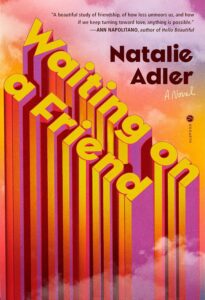 Natalie Adler, Waiting on a Friend
Hogarth, May 26
Renata can see ghosts—and she’s seeing more and more of them as her friends are dying of a new, strange disease. Though when her best friend Mark dies of complications from AIDS, he sadly doesn’t seem to be one of the ghosts that visits her. Then, a police-like force rages through their East Village neighborhood, threatening Renata’s friends, lovers, and the memories of those who have died. This is a magical retelling of queer history, a celebration of NYC youth and friendship. –EF
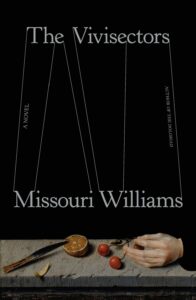 Missouri Williams, The Vivisectors
MCD, May 26
Williams’ first book, The Doloriad, was feted on the indie circuit for its macabre depravity. In her follow-up, a loner narrator haunts a university town that’s been overrun by a “contingent of rogue gardeners.” I’m keen to follow this fresh heart of darkness down a new rabbit hole. –BA
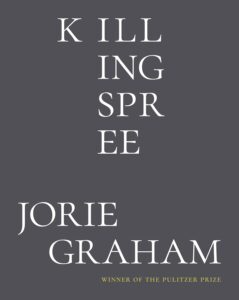 Jorie Graham, Killing Spree: Poems
FSG, May 26
Do I really need to convince you that you should read a new Jorie Graham collection called Killing Spree? I assume not, but nevertheless, this description is extremely compelling: “In perhaps the most unflinching book of her long career, Graham explores how the human spirit, in the face of everything that threatens it, might navigate the rapids of extreme change.” –JG