Lit Hub’s Most Anticipated Books of 2026
314 Books To Read in the New Year
FEBRUARY
***
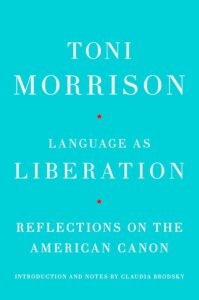 Toni Morrison, Language as Liberation: Reflections on the American Canon
Knopf, February 3
As one of our greatest literary thinkers and speakers, Toni Morrison’s legacy is (almost) as cemented in her lectures and literary criticism as it is in her novels; this series of lectures from her tenure as a professor at Princeton University, collected and introduced by her colleague Claudia Brodsky, centers on Black characters in American literature, and “breaks wide open the American conception of race with energetic, enlivening readings of the nation’s canon, revealing that our liberation from these diminishing notions comes through language.” If you’ve ever wanted to sneak inside one of Morrison’s classes, here’s your chance. –ET
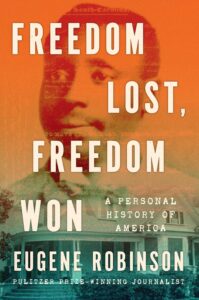 Eugene Robinson, Freedom Lost, Freedom Won: A Personal History of America
Simon & Schuster, February 3
All too often when reckoning with the sheer scale of American slavery—its depravities, its systematized cruelties—one can lose sight of individual stories. And in missing that personal perspective we can fail to understand how the past is intimately connected to the present. Which is why Pulitzer Prize-winning columnist Eugene Robinson’s historical journey is so important, tracing as it does his family’s story all the way back to the purchase of his great-great grandfather Harry (who became Henry Fordham) through the paroxysms of the Civil War, Reconstruction, Jim Crow, and the Civil Rights era. A true—and important—American story. –JD
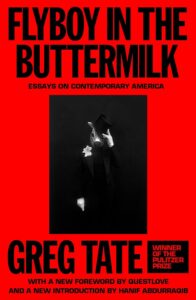 Greg Tate, Flyboy in the Buttermilk: Essays on Contemporary America
FSG, February 3
I use every opportunity these nice people give me to extol the late Greg Tate, whose stylish, crystalline cultural essays cut to the quick of a hundred subjects–from Black Republicans to the Black intellectual, from Bad Brains to Basquiat. This fresh reissue of his excellent, out-of-print collection comes with new front-matter from Questlove and Hanif Abdurraqib. Couldn’t be more excited to see this sacred text find new fans. –Brittany K. Allen, Staff Writer
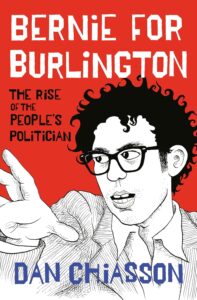 Dan Chiasson, Bernie for Burlington: The Rise of the People’s Politician
Knopf, February 3
Didn’t we almost have it all… Yes, friends, Bernie would have won, and oh what a different country, what a different world, we would all be living in right now if certain DNC power brokers hadn’t made up their minds to anoint Hillary. Still, no sense relitigating all that unpleasantness now. Why torture ourselves? What we can do instead is read a “people’s epic” about the origin story of the most successful and beloved American socialist since Eugene Debs. Poet, literary critic, and proud son of Burlington, Dan Chiasson has written a “portrait of a politician, a place, and a movement that would change America.” –DS
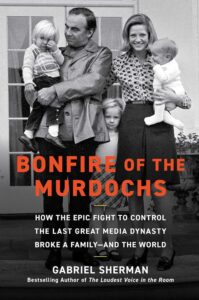 Gabriel Sherman, Bonfire of the Murdochs
Simon & Schuster, February 3
Yup, if you didn’t already know, the saga of Rupert Murdoch’s media empire really was a real-life Succession—except sadder, meaner, and a lot less funny. As in much of Western myth, this is a story of fathers and sons: Rupert himself was driven by a need to impress the malign shade of his own father, and passed that toxicity down to his children, particularly his eldest Lachlan. In pitting his offspring against each other in a battle for the family empire Rupert Murdoch became part of a tale as old as time… A tale well told in Gabe Sherman’s Bonfire of the Murdochs. (Really though, can any story be called mythic if it features cameos by Bill O’Reilly and Donald Trump?) – JD
 Jenny Tinghui Zhang, Superfan
Flatiron, February 3
I’m obsessed with stories about obsession. And as a former (okay, current) stan of One Direction, I’m extra obsessed with stories about boyband obsession. Jenny Tinghui Zhang’s novel Superfan follows Minnie, a young woman who becomes a fan of the boyband HOURglass, especially the band’s token bad boy Halo. When the fandom turns against Halo and a scandal threatens his standing, Minnie takes it upon herself to save him. This novel sounds equally dark and dazzling, like a spotlight flickering on a dim stage. This is a book I’ll be recommending to all my coolest friends. –MC
 Daniel Poppick, The Copywriter
Scribner, February 3
Some of my favorite novelists are actually poets, and this now includes Daniel Poppick, who has written a stimulating and deeply pleasurable book that made me feel homesick for being a young person in New York and talking about literature with my friends, and also, weirdly, hopeful for the future. It takes the form of a set of notebooks, starting in the summer of 2017, into which a poet called D__, who daylights as a copywriter, dumps his observations, some scraps of poetry, various stories from his life, and his dreams, all with a highbrow sensibility and a winking sense of humor. It’s a little bit Renata Adler, a little bit Ben Lerner (sorry!), a little bit Maggie Nelson. –ET
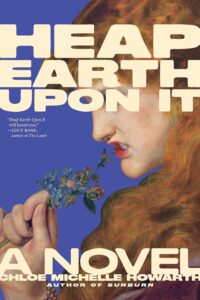 Chloe Michelle Howarth, Heap Earth Upon It
Melville House, February 3
I keep seeing comparisons to Shirley Jackson and Julia Armfield alongside the phrase “sapphic yearning,” which is enough to catch my attention when it comes to literally anything. Sunburn’s been on my TBR for a million years (it seems like I never make as big of a dent as I hope, no matter how much I read), but Heap Earth Upon It might just bump it up. I also love a family drama. –OS
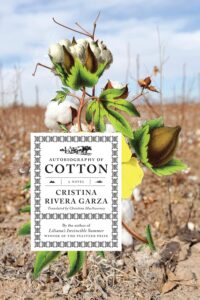 Cristina Rivera Garza, tr. Christina MacSweeney, Autobiography of Cotton
Graywolf, February 3
Garza’s latest (following her Pulitzer-winning memoir Liliana’s Invincible Summer) is a historical novel braided with deep personal narrative and research, creating something unique and almost indefinable—a book about her grandparents, about the US/Mexico border, about José Revueltas and the history of cotton. –DB
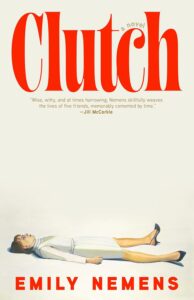 Emily Nemens, Clutch
Tin House/Zando, February 3
Five undergraduate friends find themselves decades later spread across the country, linked by the life-line of a group chat. As they converge on Palm Springs for a reunion, they unpack politics, fertility treatments, addiction, marriage, and aging and absent parents. It’s a big, beautiful novel about what friendship means as we get older. –EF
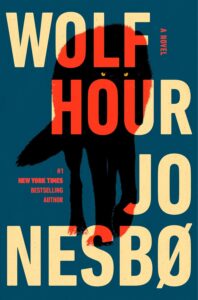 Jo Nesbo, Wolf Hour
Knopf, February 3
Murder mysteries are miracles. Despite roughly one billion crime novels having been written—and the average fan of the genre having read well over half of them—authors still manage to write crime thrillers that can surprise you. That this forthcoming Nesbø release promises to be impossible to put down and full of unpredictable twists isn’t surprising; that I expect it to live up to the hype, however, is. –CK
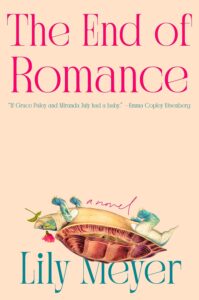 Lily Meyer, The End of Romance
Viking, February 3
My life-long quest is to read every voicey, smart romantic comedy I can get my greedy hands on, and thankfully a new, incisive and world-opening way of looking at this age-old genre is coming down the pike. Lily Meyer’s End of Romance is the anti-rom rom-com of the year. The protagonist has been through the ringer: an emotionally and physically abusive early marriage has contoured her heart and her outlook, as she seeks freedom and a second chapter after leaving her abuser. She does not want love anymore. She does not want romance. She wants sex, and she wants flirtation, and she wants understanding, and intimacy, but her trust in any sort of relationship has been damaged and eroded. She wants something entirely new this time around. The only question is, is it possible to invent a new heterosexual relationship under patriarchy? Meyer is the one for the question, as she wields her considerable intellect and philosophical powers in this heart-warming and thought-provoking book, a romance built for our modern age. –JH
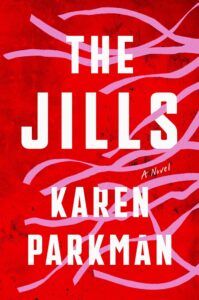 Karen Parkman, The Jills
Balantine, February 10
Parkman’s debut takes us into a familiar-but-unfamiliar subculture: the Jills, also known as the cheerleaders for the Buffalo Bills. When one of the Jills, Jeanine, disappears, her teammate Virginia starts pulling at every thread to find her, until the world as she knows it begins to unravel. Sounds like fun, and also Publishers Weekly called it “the best novel about cheerleaders since Megan Abbott’s Dare Me,” which is saying something. –ET
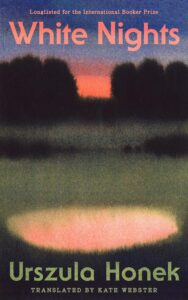 Urszula Honek, tr. Kate Webster, White Nights
Two Lines Press, February 10
Longlisted for the International Booker Prize, this debut short story collection features 13 interconnected stories concerning the various tragedies of the residents of the Beskid Niski region in southern Poland. The Booker judges say, “Honek crafts a narrative mosaic that explores themes of isolation, identity, death, and the longing for connection,” calling it “a dark, lyrical exploration of the ways in which people seek meaning and belonging in a transient world.” Two Lines Press has been publishing incredible literature in translation, and we’re lucky they are bringing this one to the US. –EF
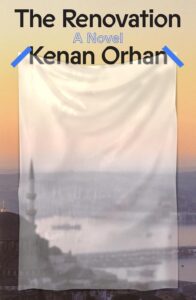 Kenan Orhan, The Renovation
FSG, February 10
In which Dilara, a Turkish woman living in Salerno, renovates her bathroom only to find that it has been, somehow, renovated into a Turkish prison. (Relatable, amirite?) Can’t wait to read this short surrealist novel; sounds just my speed. –ET
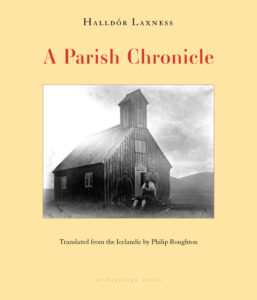 Halldór Laxness, tr. Philip Roughton, A Parish Chronicle
Archipelago, February 10
In the Icelandic Nobel laureate’s tale, Mosfell Church is a small parish fated to be demolished. Known as the ancient burial mound of national hero Egill Skallagrímsson, local farmer Ólafur Magnússon defends the church against the parish priests (he claims to be a descendent of Egill’s). Are artifacts disappearing from the church? Are elf folk taking them? Laxness combines folklore and myth with humble details of the natural world in this delightful novel. –EF
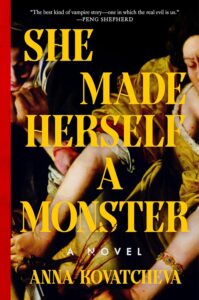 Anna Kovatcheva, She Made Herself a Monster
Mariner, February 10
Me? Reading gothic folk horror about the monsters that live inside all of us? It’s more likely than you think! This book hits almost all of my favorite things to read about. Creatures, autonomy, and a con artist posing as a vampire slayer? Exactly what I look forward to when I open a book. –OS
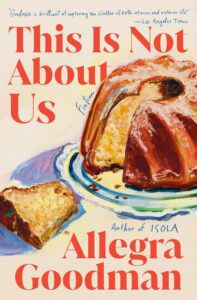 Allegra Goodman, This is Not About Us
The Dial Press, February 10
This is Not About Us is a story of the Rubinstein family across three generations. After the death of their youngest sister, Sylvia and Helen attempt to navigate their grief, but a slight over a slice of apple cake keeps the matriarchs of the family in a decade-long feud. Their children and grandchildren, however, are busy with their own lives and refuse to be involved; in short story-like chapters, Goodman describes their divorces, dates, career failures, college aspirations, dance recitals, and trips… Goodman’s insight into the intimate machinations of a domestic life is absolutely perfect. –EF
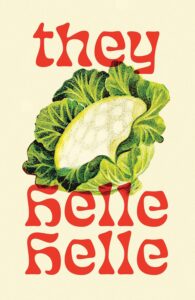 Helle Helle, tr. Martin Aitken, they
New Directions, February 10
I love quiet stories that find meaning in the otherwise mundane, and they is a novel about a mother and daughter so close they’re essentially a single entity, living their regular lives over the backdrop of the mother’s very serious illness. I’m also excited about the form of this novel, and it’s the first book in a trilogy that’s very celebrated in its home country of Denmark. –OS
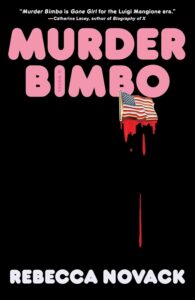 Rebecca Novack, Murder Bimbo
Avid Reader Press, February 10
The title alone has me hooked, but throw in Catherine Lacey calling it “Gone Girl for the Luigi Mangione era” and a synopsis that involves a sex-worker assassin trying to set the story straight (on her favorite podcast, no less) after being sold out in the wake of a political assassination and you’ve got the makings of everything I want this winter. –DB
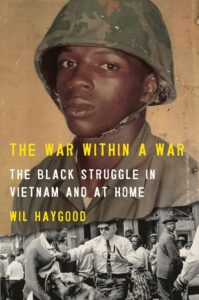 Wil Haygood, The War Within a War: The Black Struggle in Vietnam and at Home
Knopf, February 10
If the Vietnam War was a grim moment in the ongoing collapse of the American dream, it was particularly so for Black Americans. Wil Haygood’s in-depth history explores what amounted to a war on two fronts for Black soldiers, nurses, doctors, journalists, activists, politicians, and celebrities, all of whom had to reckon with both the direct impacts of a brutal war fought for an empire that cared little for them, and a general American populace often unwilling to accept the meager gains of the civil rights era. A hard and important chapter in this country’s history. –JD
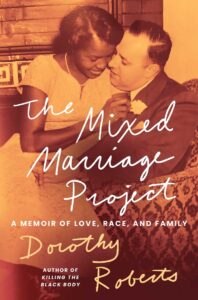 Dorothy Roberts, The Mixed Marriage Project
Atria/One Signal, February 10
From the author of Killing the Black Body, a memoir about growing up in an interracial family in 1960s Chicago, where such a thing was almost unheard of—and also about trying to understand your own parents, complicated and imperfect though they may be. –ET
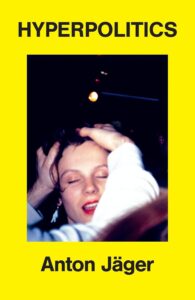 Anton Jäger, Hyperpolitics: Extreme Politicization without Political Consequences
Verso, February 10
Really, wtf is going on? Never have we been aware of so much—corrosive politics, daily catastrophes, celebrity banalities—and known so little. This dizzying and ubiquitous unreality, suggests Anton Jäger, is the era of hyperpolitics, made manifest in “a restless, unsteady public sphere where private passions overflow into politics but rarely build enduring power.” Sounds about right. –JD
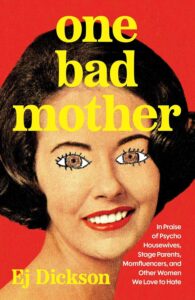 Ej Dickson, One Bad Mother: In Praise of Psycho Housewives, Stage Parents, Momfluencers, and Other Women We Love to Hate
S&S/Simon Element, February 10
What does it mean to be a bad mom? From momfluencers to stage moms to trad wives, NY Mag culture writer of your favorite guilty-pleasure articles Dickson unpacks one of the most polarizing labels: the bad mom. A cultural commentary full of Victorians, influencers, and fictional icons, Dickson places Ballerina Farm next to Mommy Dearest, exposing all our own prejudices for what women are supposed to be and do once they become mothers. –EF
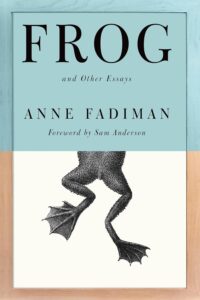 Anne Fadiman, Frog: And Other Essays
FSG, February 10
Fadiman is one of our best personal essayists, and I’ve been excited about her forthcoming collection since stumbling across an excerpt from “Frog” in Harper’s two years back. This poignant chronicle of Bunky, the family’s African clawed frog, is a capacious look at what it means to love a pet. Other pieces in this open-hearted project consider Samuel Taylor Coleridge’s parenthood prospects and bygone printing technologies. –BA
 Richie Hofmann, The Bronze Arms
Knopf, February 10
Richie Hofmann is one of our great poets of the erotic: his last collection, A Hundred Lovers (you know what you’re getting into) somehow managed to balance a formal, almost classical simplicity with a diaristic accounting of sex, lots of queer sex (and the spaces and modes and moods that surround it). With his latest, The Bronze Arms, Hofmann maintains the classical register while moving back further in his life, all the way to a traumatic childhood event, its aftermath and its lifelong symbolism. –JD
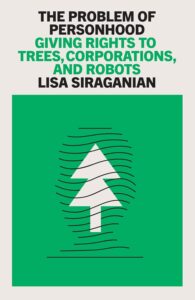 Lisa Siraganian, The Problem of Personhood: Giving Rights to Trees, Corporations and Robots
Verso, February 17
We all know corporations shouldn’t legally be called “people.” That’s crazy. And yet, here we are in the horrible aftermath of Citizens United. But what about unequivocally good things, like trees or rivers? Or even friendly little robots? Should they, too, have the rights of a person? And if so, should we maybe look a little deeper at the unintended consequences? Thankfully we have Lisa Siraganian doing just that in this interdisciplinary investigation of personhood, which examines the political, philosophical, and ethical ramifications of expanding our ideas of personhood. Important reading in the burgeoning age of AI. –JD
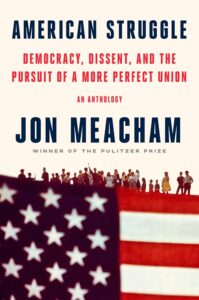 Jon Meacham, American Struggle: Democracy, Dissent, and the Pursuit of a More Perfect Union
Random House, February 17
It’s hard to feel optimistic about the so-called American experiment these days, as two centuries of democratic norms have been pretty much chucked onto the trash pile of history… But historian Jon Meacham’s collection of essays reminds us—covering as it does the full breadth and depth of this country’s past—that there have been countless moments in the history of this republic where all seemed lost. From the colonizers of the early 17th century to the darkness (and light) of the Civil War to the march on Washington, American Struggle reminds us that the founding principles of the United States, as hard as they are to live up to, are still worth fighting for. –JD
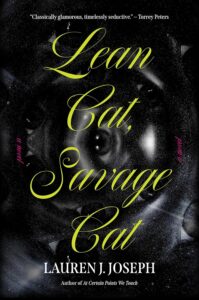 Lauren J. Joseph, Lean Cat, Savage Cat
Catapult, February 17
I love when I read a book that drops me right in the middle of a scene. Not scene as in a piece of a story, but scene as in a scene. A music scene. An art scene. A party scene. The scene that being scene was named after when I was in middle school. But the scene Lean Cat, Savage Cat takes you to is underpinned by a research project centered around iconic Berlin trans nightlife figure (and former lover of David Bowie) Romy Haag. It’s also about an obsession with a present-day Bowie-esque pop star. I’m hoping for something that feels a little like Velvet Goldmine? Even if it doesn’t, I know I’ll find something to love here. –OS
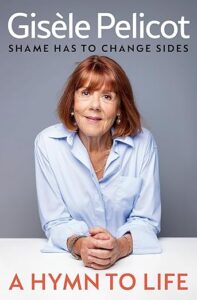 Gisèle Pelicot, A Hymn to Life
Penguin Press, February 17
Contemporary public life seems disproportionately populated by cowardly, self-regarding hypocrites fueled by vanity, insecurity, and greed—which makes the courage of Gisele Pelicot that much more extraordinary. Most are familiar with the horrific crimes of her husband and the men he enlisted to rape her, but in a Hymn to Life, Pelicot, who waived her right to anonymity in pursuit of justice, calls out a society pervasive in its contempt for women, that allows for and often facilitates sexual violence. In telling her own story Pelicot illustrates the urgent need for radical change in how we reckon with abuse and misogyny, both legally and societally. –JD
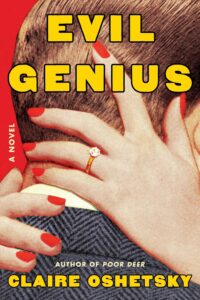 Claire Oshetsky, Evil Genius
Ecco, February 17
I love any books that fall into the Weird Woman genre, and this comic noir about a woman who’s obsessed with the idea of killing or dying for love sounds perfect. The main character of Evil Genius is the natural next step in the evolution of the Weird Woman: the Dangerously Unhinged and Murder-obsessed Woman Who Spends Too Much Time at the Gun Range. You know her, you love her, you want to be her, etc. Oshetsky’s newest novel follows Celia, a young woman whose seemingly idyllic life is upended when a friend of hers is murdered in an affair gone wrong. Celie becomes increasingly fixated on the idea of having her own murderous affair, until nothing can stop her from pursuing her deadliest fantasies. Evil Genius promises to be dark, clever, and razor sharp. –MC
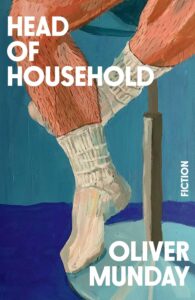 Oliver Munday, Head of Household
Simon & Schuster, February 17
I happen to know that Oliver Munday, who is one of our best working cover designers, has great taste in literature. How annoying that he also has talent in it! Stick to one lane! You can’t be good at everything! Just kidding; I’m excited to read his short story collection, which sounds like a very chaotic portrayal of modern fatherhood. Cover looks great too, naturally. –ET
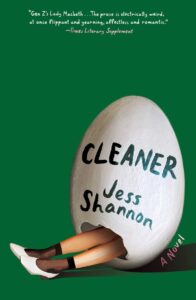 Jess Shannon, Cleaner
February 17
I mean it in the best way possible when I say this book has such a diabolical energy. An artist becomes a cleaner at a gallery and grows obsessed with the work in her post-academia aimlessness, and then begins an affair with another aspiring artist who brings her into the home she shares with her boyfriend by hiring her to clean. What a setup for some incredible drama, and some hard truths about making art under capitalism. –OS
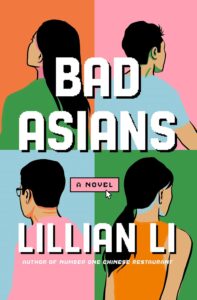 Lillian Li, Bad Asians
Henry Holt, February 17
The second novel from the author of 2018’s Number One Chinese Restaurant follows four Asian-American Millennials who disappoint their parents by graduating into the 2008 recession, and find themselves living at home. Things only get worse when a documentary about the group—by someone who has apparently never ever disappointed her parents—goes viral. Who even are they anymore? Who were they ever? Questions for the ages, in a smart package. –ET
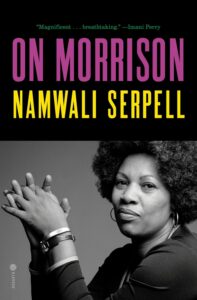 Namwali Serpell, On Morrison
Hogarth, February 17
Serpell is such a delicate critic. And I can’t think of a better reader to conduct this study of Toni Morrison, one of our most feted literary lions. Serpell’s inquiry weighs the consuming mythos around Morrison against the real woman’s complex and thorny output. How do we read, critique, or mourn a monument? –BA
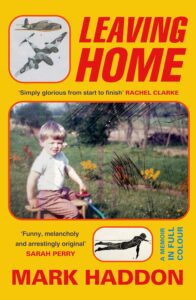 Mark Haddon, Leaving Home: A Memoir in Full Colour
Doubleday, February 17
Booker-nominated English novelist Haddon, best known for his 2003 juggernaut The Curious Incident of the Dog in the Night-Time, is also an acclaimed writer of short fiction and children’s books, but Leaving Home is his first work of nonfiction. An unflinchingly honest, darkly comic, and richly illustrated memoir about Haddon’s unique childhood and how it shaped his view of the world, Leaving Home sounds like a fascinating window into a singular mind. –DS
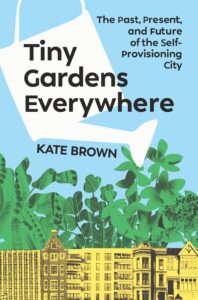 Kate Brown, Tiny Gardens Everywhere: The Past, Present, and Future of the Self-Provisioning City
W.W. Norton, February 17
The phenomenon of the collective urban garden is probably much older than you think. As you will learn in Kate Brown’s Tiny Gardens Everywhere, these hard-won patches of green in the middle of our urban sprawls aren’t just the product of idealistic hippies rolling up their sleeves. In fact, the community garden as we know it is really just an echo of the kinds of 17th-century commons found in London or Paris, or the safety net plots of mid-century Berlin, or the abundant lots of Washington, DC planted by Black southern migrants… Whatever its origin, a community garden represents the best of our collective care, for the land, and for each other. –JD
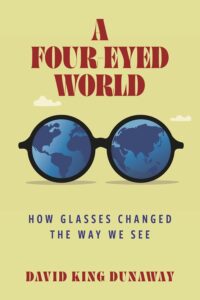 David King Dunaway, A Four-Eyed World: How Glasses Changed the Way We See
Bloomsbury Academic, February 19
Look, I love to learn about the world through the lens—get it?—of some hyper-specific innovation or niche historical figure, but this forthcoming nonfiction title isn’t just about the history of glasses. A Four-Eyed World promises to explore the future of this technology that’s so ubiquitous we forget it’s a form of technology at all. And with ICE agents using Meta’s AI glasses during immigration raids, it’s a crucial time to consider how we integrate glasses into our daily lives. –CK
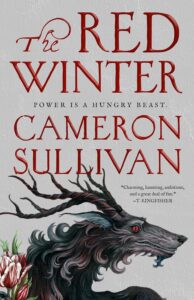 Cameron Sullivan, The Red Winter
Tor, February 24
If a millennial Philip Pullman wrote Jonathan Strange & Mr. Norrell, you might end up with something like The Red Winter. Taking the legends of the Beast of Gévaudan as inspiration, it’s at once a sweeping historical fantasy and a brilliantly playful modern riff on classic storytelling. I hope this is only the first time we get to adventure with Sebastian Grave, because I could’ve hung out in this more-magical version of our world for a thousand more pages. –DB
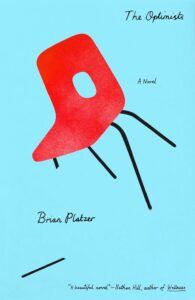 Brian Platzer, The Optimists
Little, Brown, February 24
So many of us had that teacher: the one who inspired us, who lifted us out of our small childhood lives and put us on a track towards where we are now. Imagine if that teacher wrote your story, and in so doing told their own, and you’d have something like Platzer’s latest novel. Plus, he’s a long-time education journalist, so the pedagogy (as it were) is bound to be on point. –DB
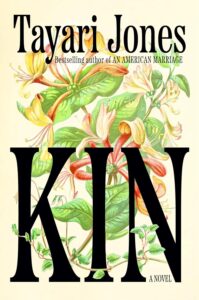
Tayari Jones, Kin
Knopf, February 24
Kin is a novel of mother and daughters, though the two main characters, Vernice and Annie, are motherless themselves. Best friends and neighbors, the girls live radically different lives and grow into very different women. Vernice is raised by her aunt after her mother’s death, and at eighteen she leaves their Louisiana home for Spelman College where she meets strong, connected Black women who open up a new world of possibilities. Annie, who was abandoned by her mother, fixates on the idea of finding her once again. Jones’ American Marriage was a beautiful, emotional story about love and commitment; this new novel is on everyone’s must-read list for good reason! –EF
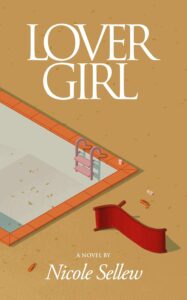 Nicole Sellew, Lover Girl
Clash, February 24
This fresh, freaky picaresque follows “lover girl,” a struggling novelist self-isolating at a rich friend’s house in the Hamptons. When a series of romantic misadventures (in the forms of The Ex and The Host) befall our hero, love takes her miles off course. Sellew is a bold new voice, using sharp, stylish prose to explore the hinterland of contemporary mating. Fans of Halle Butler and Ottessa Moshfegh, please take note. –BA
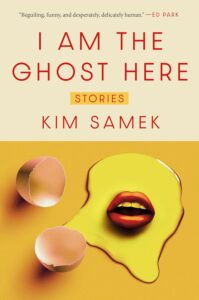 Kim Samek, I Am the Ghost Here: Stories
The Dial Press, February 24
I love reading about the horrors. Big fantastical ones, but also ones that feel so normalized and mundane and get extrapolated to their most dystopian and absurd. I’m always on the lookout for the types of books that remind me a little of those utopian virtual albums about finding artificial happiness in technology and consumerism, and I think I’ve found one in I am the Ghost Here. –OS
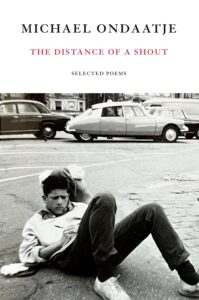 Michael Ondaatje, The Distance of a Shout: Selected Poems
Knopf, February 24
Not that anyone is keeping score (I might be) but Michael Ondaatje remains our very best poet-turned-novelist. For those not familiar with his poetry, Ondaatje has always observed the world with a balanced mix of delight, awe, and humor, deadly serious about matters of the heart without ever taking himself too seriously. With this collection Ondaatje has selected poems from his life in something like a chronological order; from the elation of early loves to the exquisite intensities of fatherhood to the somber meditations of aging, he has created a beautiful memoir in verse, a lasting document of a life lived in wonder and honesty. –JD
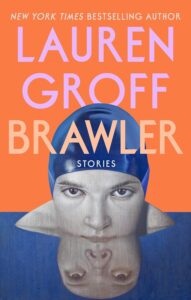 Lauren Groff, Brawler: Stories
Riverhead, February 24
I mean, it’s a new Lauren Groff collection. A friend of mine who primarily reads horror fiction squealed when I told them this was coming in the new year, because she’s that beloved. What more do you need to know? (Okay, okay: nine stories, several of which have seen the light in The New Yorker over the last few years—and every one of them is a true stunner. Morally passionate and beautifully crafted, it’s another excellent collection from one of the best to ever do it.) –DB
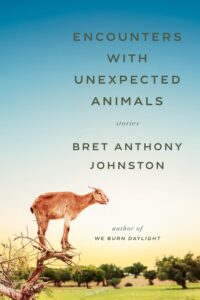 Bret Anthony Johnston, Encounters with Unexpected Animals
Random House, February 24
I remember reading the titular story (or some version of it) from this collection—Johnson’s follow-up to last year’s excellent We Burn Daylight—more than a decade ago, and being deeply impressed by how economically it delivered its punch. I’m looking forward to a whole collection of stuck landings. –JG
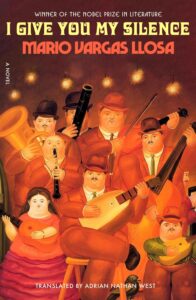 Mario Vargas Llosa, tr. Adrian Nathan West, I Give You My Silence
FSG, February 24
The final novel from the Nobel Prize-winning Peruvian novelist, journalist, essayist, and politician—who passed away in April of last year at the age of 89—is part detective novel, part political allegory, about an idealistic writer who believes that by penning the biography of an elusive musician, he might capture his country’s soul and convince his fellow citizens to lay down their arms. Billed as Vargas Llosa’s “last statement on the revelatory, maddening, and irrepressible belief in the transformative power of art,” I Give You My Silence is the great man’s swan song to his homeland. –DS
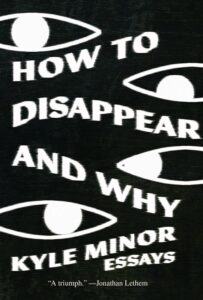 Kyle Minor, How to Disappear and Why: Essays
Sarabande, February 24
I’ve stumbled across so many favorite essay collections thanks to the braintrust at Sarabande. Kyle Minor’s latest looks to be another strange delight. This collection considers the missing. Lyric essays on ghosts and hidden heroes–like Jan Karski, the Polish Resistance fighter–explore the ways and reasons people choose to disappear. This one’s caught my eye especially because Minor deconstructs the essay form, and enlists strange structures to circle his negative space. –BA
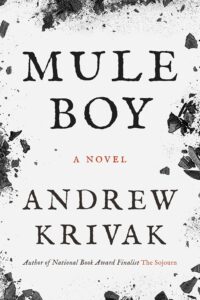 Andrew Krivak, Mule Boy
Bellevue Literary Press, February 24
Andrew Krivak’s 2020 novel The Bear was a quietly riveting masterpiece of post-apocalyptic literature; slyly beautiful and deeply philosophical, it has stayed with me from the moment I turned the final page. So I am eager to get my hands on his newest, Mule Boy, the story of a young mine-worker confronted with an abject tragedy that will shape his life—and those around him—for decades. –JD
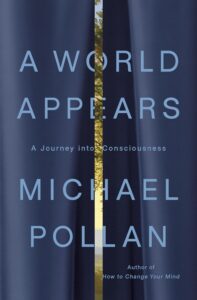 Michael Pollan, A World Appears: A Journey into Consciousness
Penguin Press, February 24
Michael Pollan is at it again. As one of our great nonfiction tour guides Pollan has led us through the complex worlds of co-evolution, agricultural sustainability, psychedelic drugs, and much more. With A World Appears, Pollan is now taking on one of the oldest—and thorniest—questions in the history of human thought: how do we define our own consciousness, and where does it even come from? From the hard materialism of contemporary neuroscience to the fuzzier ideas of our great philosophers to the deeply problematic idea of AI sentience, Pollan explores the many ways we conceive of ourselves as ourselves, and where the idea of consciousness might go from here. –JD
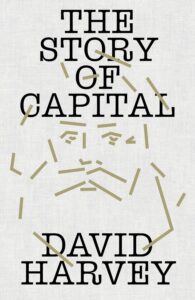 David Harvey, The Story of Capital: What Everyone Should Know About How Capital Works
Verso, February 24
David Harvey is renowned as an academic, but I think he’s probably most widely known as the master Marx explainer—his lectures and analyses have opened up Marx’s work to many new readers, particularly Marx’s massive and complex Capital. Harvey’s ability to entangle the dense work and make it legible is unparalleled, and I’m looking forward to this new book about Marx’s influential economic text, and what Harvey has to teach about its lessons and shortcomings for our contemporary economics and society. –JF
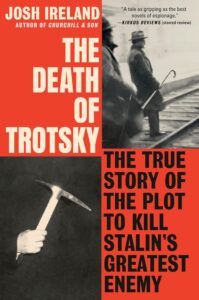 Josh Ireland, The Death of Trotsky: The True Story of the Plot to Kill Stalin’s Greatest Enemy
Dutton, February 24
The famously deadly rivalry between Leon Trotsky and Joseph Stalin gets the historical thriller treatment in this new book, which promises the research of history alongside the drama of true crime. Ireland’s books follows the main players—Trotsky the banished revolutionary, Stalin the ascendant dictator, and Ramón Mercader the Spanish aristocrat and Soviet assassin—as they race towards their historic collision in Mexico City. Ireland’s book leans heavily on detail and tension to bring this story alive, even for the most well-read history buffs. After all, we know where the ice pick of Damocles is going to fall. –JF