Lit Hub’s 43 Favorite Books of 2025
New Stuff We Read This Year
It’s been another hard year for so many people, and in so many ways, but best-of lists are for remembering the good times, and reading is always good (at least the way we do it). Here are the Literary Hub staff’s favorite (new) books of 2025:
*
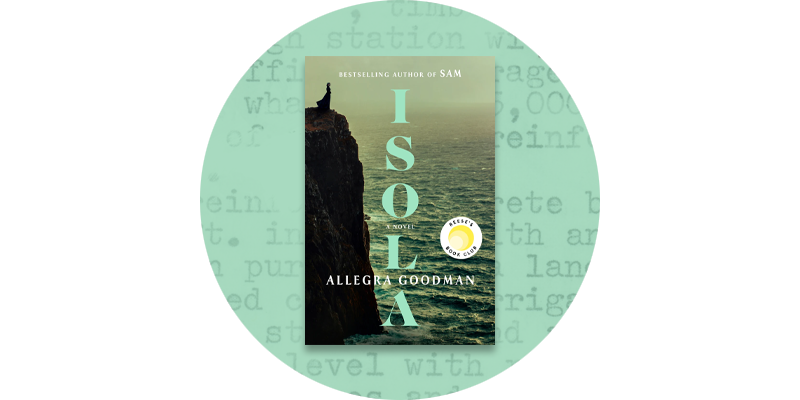
Allegra Goodman, Isola
The Dial Press, February 4
One of the first books I read in 2025 was Allegra Goodman’s Isola, and I knew then it would be one of my favorite books of the year. Even all these months later, I am no less enthusiastic in recounting the story, no less eager to push the book into friends’ hands, and could basically cry remembering the emotional thwap of Marguerite de la Rocque’s remarkable story. Marguerite was, in fact, a real person—a 16th-century French noblewoman who was marooned on an island while on a voyage to New France. In Goodman’s novel, Marguerite is raised by her loving servant Damienne as her mother died in childbirth and her father died fighting for the king. She is educated by Madame D’Artois and befriends her daughter, Claire—a girl who becomes like a sister to Marguerite. Goodman grants so much grace to their friendship, much like in her beautiful novel Sam, which insists that the lives of young women mean something.
In the background of these early chapters of the novel is the threat of Marguerite’s legal guardian, Robervale, who has slowly been depleting Marguerite’s inheritance to pay off his debts and has some other, nefarious future plans for her. After leasing Marguerite’s home to another family, and once she has become of age, he decides to seek his fortune elsewhere, bringing Marguerite and old Damienne on a journey with him to New France. Aboard the ship, Marguerite falls in love with Auguste, Robervale’s clerk, and when Robervale discovers them, he abandons the couple and Damienne on an uninhabited island. The quiet domestic drama becomes a story of literal survival in the wilderness—of the elements, caves, and polar bears. Marguerite finds herself skill-less—she cannot hunt or shoot, grow food or make shelter. Faith becomes a guiding force, but what happens to it when tragedy strikes, again and again? Isola is the story of the strength and will of a woman. Her unbearable loss becomes—of course—bearable, because it must. She must survive. –Emily Firetog, Deputy Editor
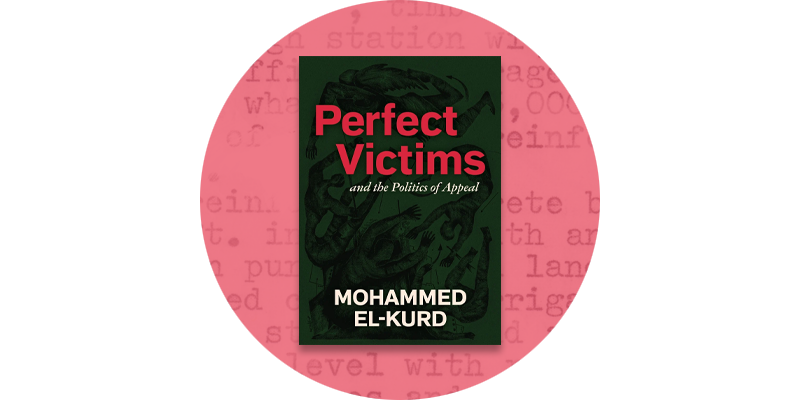
Mohammed el-Kurd, Perfect Victims
Haymarket, February 11
Mohammed El-Kurd is a poet and activist from East Jerusalem who, alongside his twin sister Muna, has spent most of his young life speaking out against Israel’s oppression and subjugation of Palestinians in both the West Bank and Gaza. His nonfiction debut is an extraordinary, lyrical interrogation of the tendency to flatten, neuter, and silence Palestinians—to deny them their rage, their resistance, their complexity—in an effort to make their plight more palatable to liberal Western audiences. This “politics of appeal” is ostensibly designed to combat the rampant dehumanization of Palestinians, but it ends up giving its audience permission to dismiss the humanity, not to mention the liberatory struggle, of vast swathes of people. Furious and thought-provoking, Perfect Victims is an essential book to read right now. –Dan Sheehan, Book Marks Editor-in-Chief
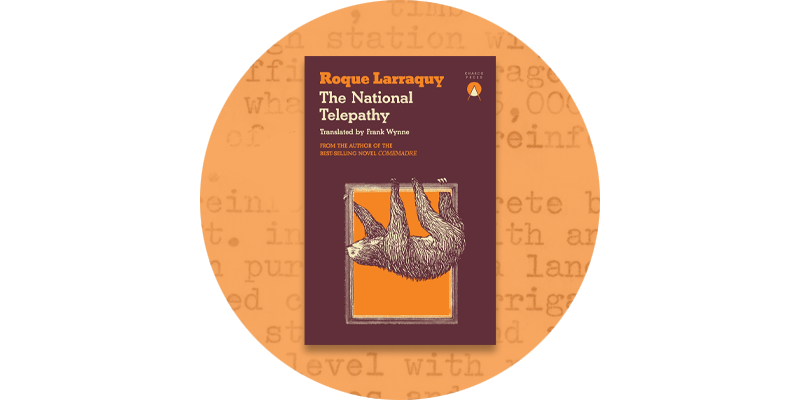
Roque Larraquy, tr. Frank Wynne, The National Telepathy
Charco Press, February 18
Looking back over my reading this year, I had a clear preference for strange novels in translation, and The National Telepathy was one of my favorites. It’s a funny, weird, and satirical book about capitalist exploitation, gender anxieties, and a sloth that makes people horny.
In the 1930s, a rubber company kidnaps a group of indigenous people and hands them off to a businessman who is setting up a human theme park in Argentina. But the kidnapped group has a a secret hidden inside a hollow statue: a sloth that can open up a telepathic connection between people that is intensely psychedelic and erotic.
Larraquy writes in an impressive range of voices and modes, blending first person accounts, letters, diary entries, and commission reports. The distance of these formats is fitting for a novel of strangers. His characters are unable to understand each other, except when they know each other all too intensely. The telepathy sequences read like The Lost Weekend’s careening around a city as seen through 2001’s trippy light show. They’re grotesque and absurd passages, and the most memorable parts of the book.
These jags of overwhelming knowing fuel Larraquy’s satire. Characters see the systems they’ve put so much stock in melt away and their fear of other bodies becomes too visceral to bear. –James Folta, Staff Writer
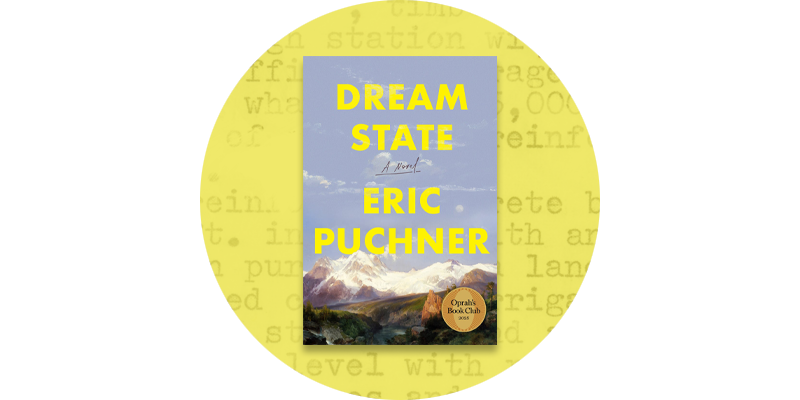
Eric Puchner, Dream State
Doubleday, February 18
Dream State is the kind of sprawling family saga that I will always drop everything else to read. It opens on the eve of a wedding (where, we later learn, a stomach bug knocks out nearly everyone in attendance), and follows the intended couple, CeCe and Charlie, and Charlie’s best friend, Garrett, across fifty years. In addition to providing an uncommonly beautiful portrait of marriage, grief, and friendship, Puchner renders the painful slipping of the natural beauty of the US, particularly Montana, due to climate change, with painful precision. If this all sounds a bit heavy—it is!—rest assured that the book is also the best kind of funny. Puncher writes about life with all the humor it deserves. In the era of the divorce book, I found Dream State especially refreshing. What if, the novel asks, regret doesn’t mean you made the wrong choice—what if it just means that every choice can be both wrong and right, and different ones would only mean your life was differently painful? Both the question and the novel will remain with me for a long time. –Jessie Gaynor, Senior Editor
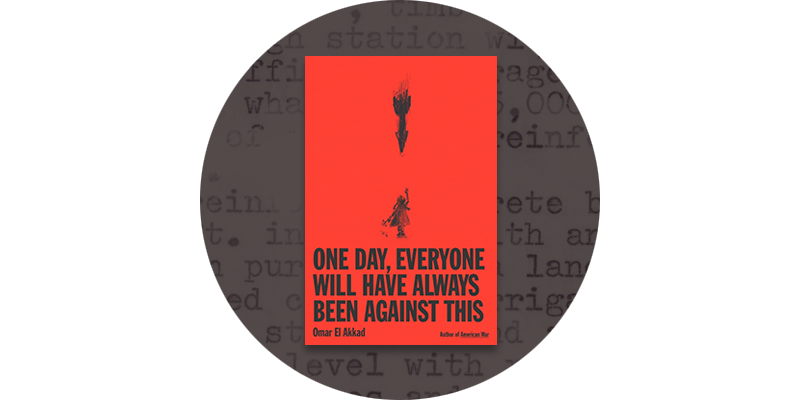
Omar El Akkad, One Day, Everyone Will Have Always Been Against This
Knopf, February 25
As prophetic and provocative a title, perhaps, as any book has ever had, Omar al-Akkad’s riveting memoir-cum-polemic shifted from predictive to descriptive quicker, even, than anyone might have thought. And while al-Akkad’s rage is chiefly aimed at the most current example of Western hypocrisy—the failure to restrain Israel in any meaningful way in its ongoing genocide of Palestinians—the author of the novel American War (2017) situates Gaza as merely the latest in a long line of moral (and actual) catastrophes engineered and abetted by liberal democracy.
Al-Akkad reserves his harshest criticism not for the obvious warmongers of American empire, explicit in their jingoism and nationalist fervor, but for the decorous liberal centrists, complacent in their institutional comfort, their birthright virtue too easily claimed. An urgent book written to the future (that judges the past and the present), One Day will outlast the pieties of liberal empire, and is destined to enter that great and important canon of moral polemic alongside James Baldwin, Angela Davis, Edward Said, and Frantz Fanon. –Jonny Diamond, Editor in Chief
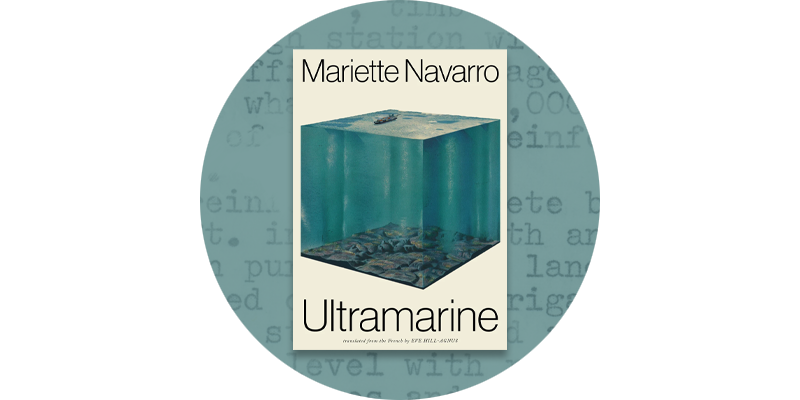
Mariette Navarro, tr. Eve Hill-Agnus, Ultramarine
Deep Vellum, March 4
Another Wet Book! As the saying I made up goes!
I’ve been using this phrase at my bookstore job (at Rough Draft in Kingston, NY, come say hi!) to describe a small subset of reads that I adore: books that are so suffused with water, they feel like they might have been left in the rain or dropped in a bath. They are also, as a result, usually pretty weird books—Julia Armfield’s Our Wives Under the Sea is perhaps the original, most exemplary Wet Book for me.
My favorite in the sub-sub-sub-genre this year was absolutely Ultramarine, which I grabbed on a whim this summer at The Corner Bookstore on a visit to the city. I read the entirety of it on my train ride home, unable to tear my eyes away from the hypnotic prose and the shimmering sense of the uncanny. In it, the captain of a shipping boat stops in the middle of the ocean to let her crew swim in the water. 20 men get off the boat, but 21 get on. No one can tell who the extra is, or how, or why. But instead of treating it like The Thing (i.e. a horror story), it’s instead used to examine questions of hierarchy, gender, and isolation. Fast, fleet, and earth-shaking. Also, if you’re reading this, you need to read more books in translation—so start here. –Drew Broussard, Podcasts Editor
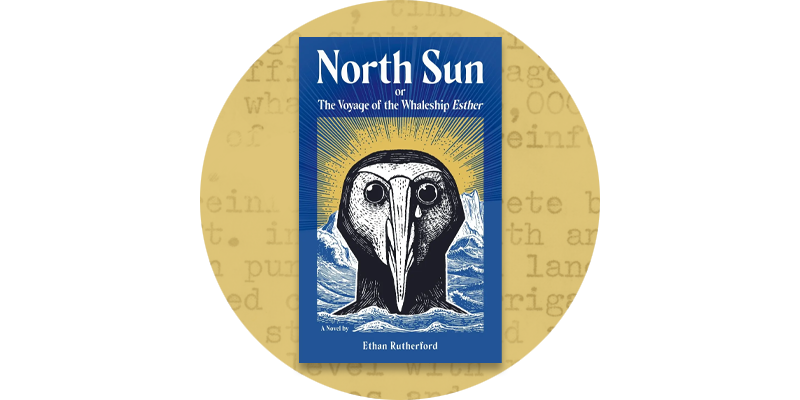
Ethan Rutherford, North Sun
Strange Object, March 11
I never thought I’d be a ship-book guy. I read one Aubrey/Maturin novel and I guess you could consider the Temeraire and Amina al-Sirafi books as ship-books in a way, but I never really got into the whole whaling / men on the cold seas genre until a couple years ago when I read Moby-Dick with what-was-then-nearly-all-of Bluesky. Turns out, Ishmael’s whole “whenever it is a damp, drizzly November in my soul…” thing is the real deal! Sometimes you want to take to the sea!
Enter Ethan Rutherford’s North Sun, right when I needed it this year. I wish I’d jumped on it earlier, to be honest: it’s a spectacularly weird book, set at a time when myth and legend were perhaps still a bit more a part of reality than they are now. It is about a whaling voyage, but it is also about the whaling industry, about the power imbalance between the rich funders of such voyages and the men who crewed them. It is an unsparing book, in how it deals with violence (towards children, towards animals, towards adults) and how much it demands the reader give over the wheel. But it’s funny, too, and powered by a deep sense of the supernatural’s place in our world—the kind of book that should be in the genre-fiction conversation this year as much as it is the literary one. (Although the fact that this made the National Book Award shortlist for fiction this year made me cheer—god bless a weird book that will be read by normies, may it change them forever.) It rewired my brain and, indeed, helped keep me from “deliberately stepping into the street, and methodically knocking people’s hats off.” –DB
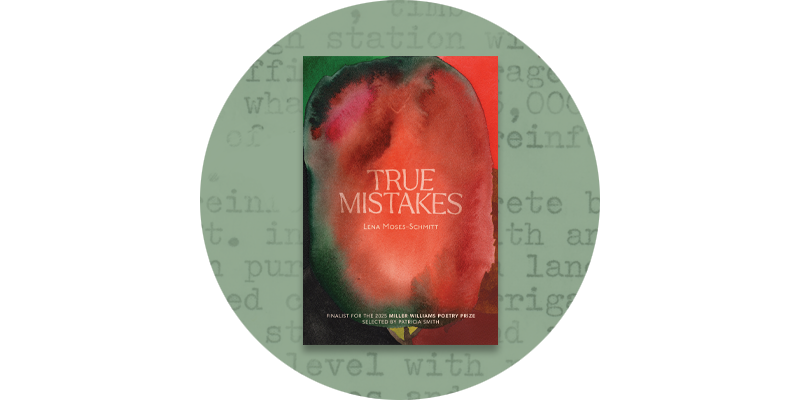
Lena Moses-Schmitt, True Mistakes
University of Arkansas Press, March 14
Once in a very blue moon, you will receive into your possession a book of poetry so correct, so completely transcendent and transforming, seemingly, somehow, about your specific, small life, while also about the grand majestic nature of existence itself, that it, in its incisive accuracy, will nearly do you in. True Mistakes is such a collection for me. I can hardly get through a single poem, let alone many, without weeping. I’m usually on the train as I weep. It’s the kind of book I need with me wherever I go. I’ve spent lazy afternoons sitting by water and reading it aloud to other like-minded individuals, turning over words and meanings like river-churned rocks, and I’ve spent evenings reading it alone on my couch. It’s my companion, and my guide. Both a mirror and a pathway to somewhere bigger.
Lena Moses-Schmitt is aware of death. And she’s aware of beauty. She’s aware of the dailiness of life, the pleasure we can create, and take, and she’s aware of the cavernous desire beneath our lived existence: for meaning, for permanence. Moses-Schmitt has, without realizing it perhaps, in thinking aloud about her fears, and fixations, and ruminations, about her drawings, and her flowers, and her friends, and her desires, managed to do the thing she would never dare to dream. With True Mistakes, she has, in a sense, beat death. She has made something real. She has made something that made the world better. She has made something that will live on: she’s made something that will truly last. –Julia Hass, Book Marks Associate Editor
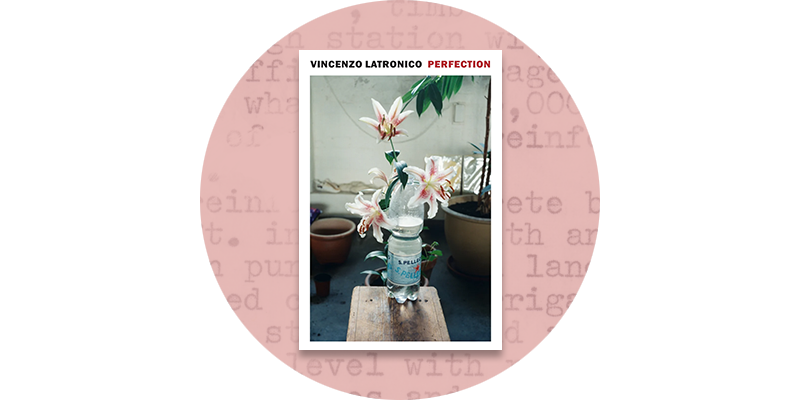
Vincenzo Latronico, tr. Sophie Hughes, Perfection
NYRB, March 18
Some novels are mirrors, and this is one of those, and some novels are hit jobs on a certain kind of fantasy, and this is one of those too. It is a reworking, and updating, of George Perec’s Things: A Story of the Sixties, and might itself have been subtitled A Story of the 2010s, the “things” replaced by, broadly, the “internet,” which directs the lives and identities of Anna and Tom, ex-pat “digital nomads” living in Berlin. Nothing happens, which is the point. Anna and Tom are just like you and I, neither more or less reprehensible, which is the point. Instead the book is a collection of images and ideas and ordinary moments and banal successes and disappointments that slowly becomes much more than the sum of its parts. –Emily Temple, Managing Editor
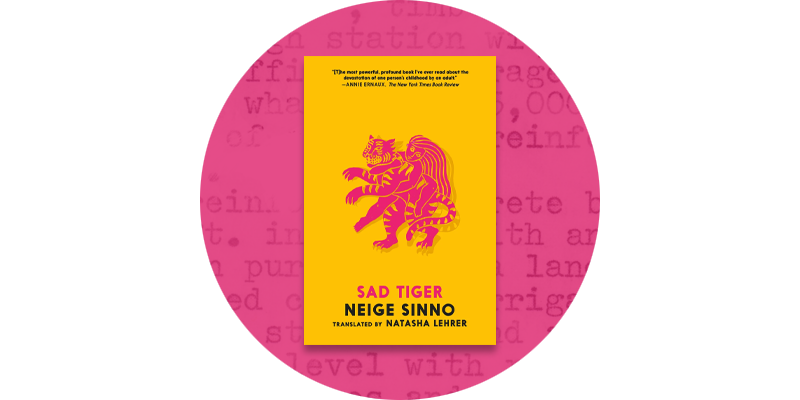
Neige Sinno, tr. Natasha Lehrer, Sad Tiger
Seven Stories Press, April 1
This hard-to-classify work is a hybrid thing: part memoir, part cultural criticism. Sinno’s devastating subject is her rapist, and the sexual abuse that ruined her childhood. Such material would be hard to handle in any container, but Sinno’s project is especially profound (and novel) for its clear-eyed aims. At top of book, she announces a wish to understand her predator. In two meaty, devastating halves (“Portraits” and “Ghosts”) she invokes work by Toni Morrison, Vladimir Nabokov, Antonin Artaud and other thinkers in attempt to understand incest as an anthropological, psychological, and interpersonal phenomenon. The result is a brilliant, generous, vulnerable act of imagination. –Brittany Allen, Staff Writer
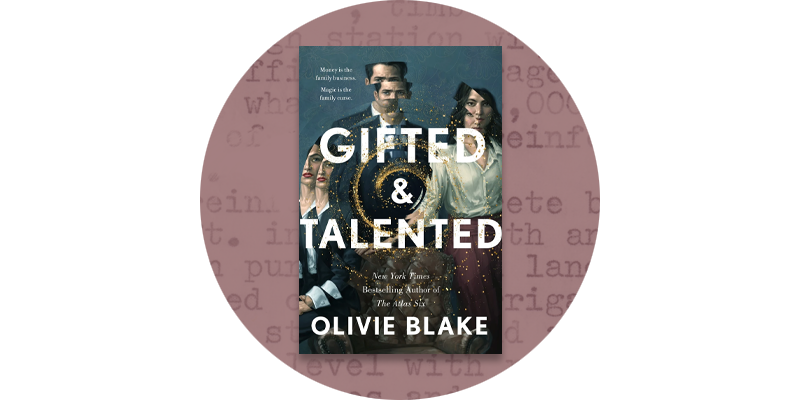
Olivie Blake, Gifted and Talented
Tor Books, April 1
When I finished Gifted and Talented, the first thing I thought was “how dare you, Olivie” and I have since said that to her face. I was a gifted & talented student—I bet a bunch of you were too—and so I think you’ll know what I mean. Not since The Royal Tenenbaums has a work of art so masterfully and warmly chronicled the moment when a bunch of formerly-gifted kids finally have to grow up. There’s a rousing catharsis from this book, as we watch fucked-up people who have kept fucking up manage to… well, to fuck up a little bit less, I guess.
There are shades of King Lear and Succession in here too, but life is hard enough without true tragedy intervening and Blake wisely keeps to the warmer side of the street. She also pulls off a trick that Fleishman is in Trouble attempted, with a delicious payoff to boot. For every former gifted kid missing Tumblr, for every parent of a Millennial who has forgotten what it was to be not-so-young-anymore but still oh-so-foolish, for everyone who loves a family story that leaves you with a bit more love and hope than you came in with. (Oh and the fact that we got not one but two great Olivie novels this year?! Girl Dinner is also terrific. It’s almost unfair.) –DB
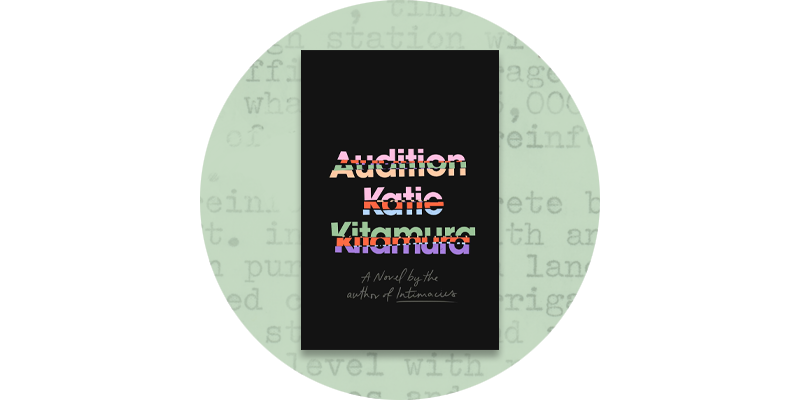
Katie Kitamura, Audition
Riverhead, April 8
I could read Katie Kitamura write about anything; I love her cool, riverstream style, the sense you so often get that you’re reading a thriller even when almost nothing is literally happening. The point is, she herself is thrilling, and no more so than in her latest novel, which—on top of the prose itself—manages to invent and pull off a structural conceit I have never quite seen before. I won’t give anything away to those who haven’t read it, but it’s been a long time since I finished a novel and felt so desperate to hear other people’s ideas about it. For instance: did I read this right? For instance: and then what? Audition is divisive and daring; I know people who hated it (always a good sign). But for me, its destabilizing brilliance makes it both more unsettling and more exciting than anything else I’ve read in a long time. –ET
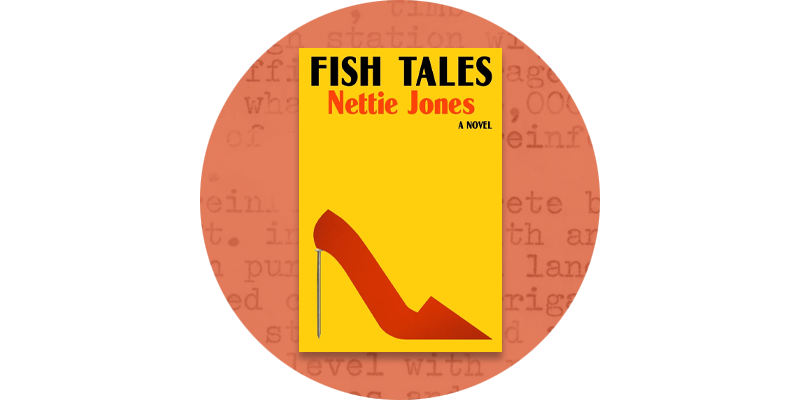
Nettie Jones, Fish Tales
FSG, April 15
Lewis, the id-driven star of Nettie Jones’ Fish Tales, has been in my head all year. The picaresque account she populates–originally published in 1984, reissued this year by the top brains at FSG–is a surreal, squirmy pleasure. Erotic, irreverent, and insane. Through this mostly plotless amble, we follow Lewis from Studio 54 to Detroit flophouses, and in and out of love with a cast of unforgettable shady characters. There’s raunchy sex, drug reveries, and the cruel afterglow of heartache. As Kaitlyn Greenidge put it in Harpers Bazaar, this book defied expectations–then and now–around horny, messy (Black?) femme narrators. (Also it just reads different.) –BA
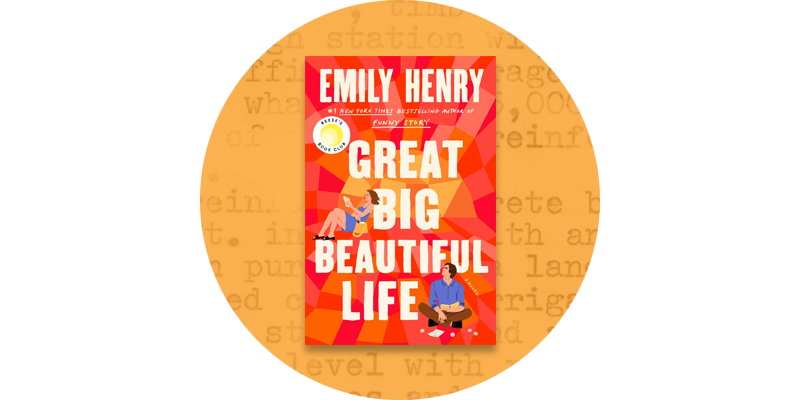
Emily Henry, Great Big Beautiful Life
Berkley, April 22
I love love and crushes and flirting and good books and good writing! I love Emily Henry! Big Beautiful Life isn’t exactly a straightforward romance, and it’s not exactly what you’d expect from one of today’s preeminent swoony romance authors, but that’s part of why I loved it so much. It’s sort of like if Citizen Kane was an enemies-to-lovers romance. It’s got old Hollywood glamor, noir intrigue, and lots of fun, flirty moments. Big Beautiful Life is two stories in one: it’s about two writers competing to tell the story of a famous ex-socialite and heiress who hasn’t been seen publicly in years. It’s also the story of that heiress’s complicated, extravagant, haunted life. The two stories weave together and inform each other, elevating the novel beyond a handful of cute romantic tropes. It’s the kind of book that seems simple and saccharine, but it’s actually thoughtful and complicated. I love a book that’s fun and smart! –McKayla Coyle, Publishing Coordinator
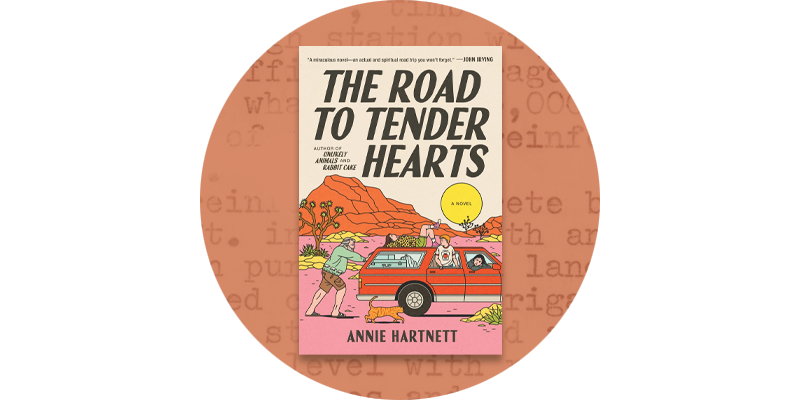
Annie Hartnett, The Road to Tender Hearts
Ballantine, April 29
The funniest book with such a high body count I’ve ever read. Hartnett has a delightful touch when it comes to the humorous macabre—or to put it another way, she’ll make you laugh in the face of death, because that’s the full experience of being human.
An aging retiree decides to set off on a cross-country road-trip to woo his high school sweetheart (recently widowed, they have not spoken in decades) but ends up bringing along not only his ornery daughter but a pair of orphaned children from up the street whose parents died in a truly outrageous murder-suicide. Like, please believe me when I say: you will be laughing even at the most horrifying moments of this book, not because of any kind of insensitivity but because Hartnett writes like the successor to Edward Gorey you didn’t know to look for. Speaking of which: there’s a cat who can predict death! The cat is occasionally the point-of-view character! A romp! –DB
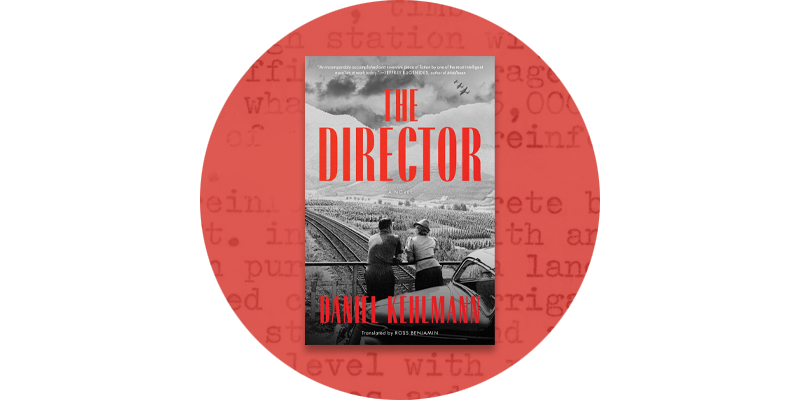
Daniel Kehlmann, tr. Ross Benjamin, The Director
May 6, S&S/Summit Books
This engrossing historical fiction (with some critically fabulated elements) was such a fun read. Kehlemann’s novel imagines the life of the German genius and eminent film director, G.W. Pabst. The book’s built like a kaleidoscope; we pivot between the 30s and the 60s, tracing Pabst’s rise and fall alongside the rise and fall of the Third Reich. There’s lots of gossipy Hollywood tea (imagined or no), and some slippery tonal shifts that keep us swinging between horror and comedy, satire and drama. A great book on the costs of art-making in an era defined by its crises. –BA
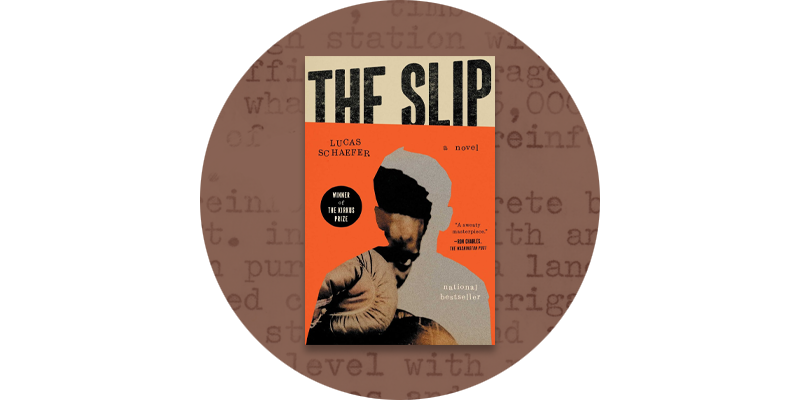
Lucas Schaefer, The Slip
Simon & Schuster, June 3
I chose a boxing novel (Rita Bullwinkel’s Headshot) for this list last year and I’m choosing another one this year. (Might we be entering a new golden age for pugilist prose?) Lucas Schaefer’s Kirkus Prize-winning behemoth of a debut is a tragicomic Texan picaresque par excellence. It’s the story of Nathaniel Rothstein, an awkward teenage boy (as if there’s any other kind), sent to spend the summer of 1998 with his aunt and uncle in Austin. Just as Nathaniel is beginning to find his place in the world—under the tutelage of a magnificently vulgar ex-fighter at the local boxing gym—he disappears. The symphonic epic that Schaefer builds around this disappearance, involving a small legion of colorful supporting characters, is nothing short of spectacular. –DS
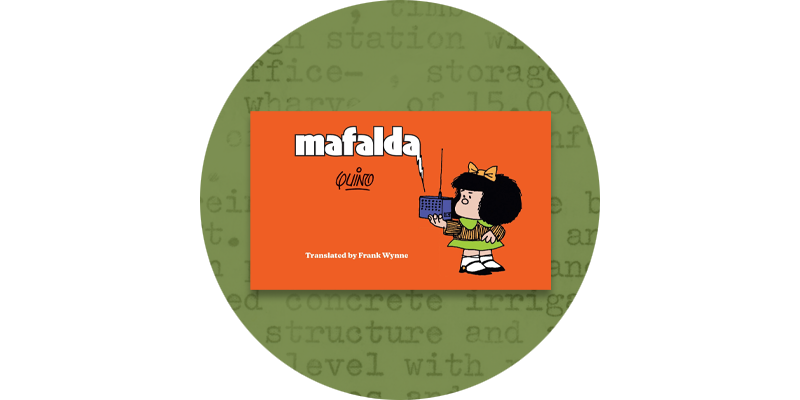
Quino tr. Frank Wynne, Mafalda
Elsewhere Editions, June 10
Mafalda, in my understanding, is the Peanuts of Latin America, a cartoon that is as beloved and highly regarded as it ubiquitous. Thankfully a new translation from Elsewhere Editions is introducing the legendary strip to a wider audience. And I do mean legendary—the new translation features blurbs from the likes of Umberto Eco and Gabriel García Márquez.
Quino’s comics star a young girl named Mafalda, who hates soup and has a childish, plain spoken observance about her world. The strips are excellent, full of keen satirical observations, focused especially on the political and social situation in Argentina in the ‘60s and ‘70s, right before the killing of Salvadore Allende and the coup of Augusto Pinochet. Many of the jokes are still timely, like a strip where Mafalda asks a cop if he’s a good person and he says, with a smile, “Police officers are always good people.” Then she looks at his gun, walks away, and says, “I think I’m starting to figure out how goodness works.”
But this isn’t some didactic political cartoon that only exists in archetypes. Mafalda is full of wacky, non-sequitur jokes and vibrant art. Quino can express so much through his character’s bodies even though they’re so squat, that they appear to be completely without joints.
This is just the first book out of ten collecting Quino’s newspaper strips that ran from 1964 to 1973—hopefully they’re all getting translated soon. –JF
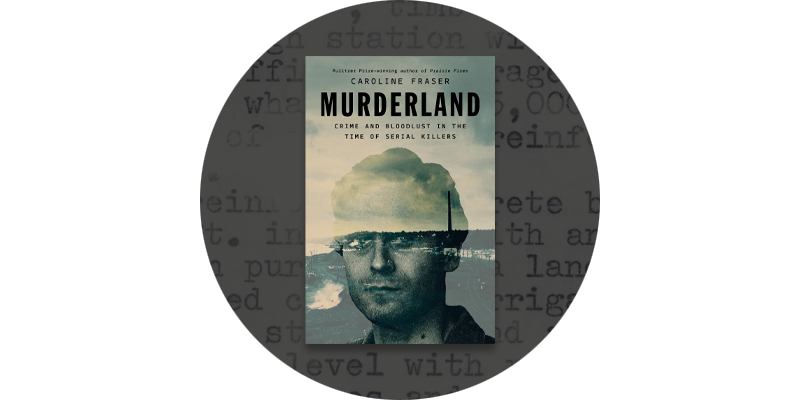
Caroline Fraser, Murderland: Crime and Bloodlust in the Time of Serial Killers
Penguin Press, June 10
I have no idea how many times over the past six months I have managed to shoehorn Murderland into casual conversation, but it must be double digits at this point. Fraser’s follow-up to Prairie Fires, her Pulitzer Prize-winning biography of Laura Ingalls Wilder, is a hallucinatory hybrid work of true crime, memoir, environmental reportage, and Lynchian fever dream that makes an audacious claim: that the toxic plumes from industrial smelting plants helped birth a generation of American serial killers. A Tacoma native who grew up in the shadow of Ted Bundy (“the most notorious serial murderer of women in American history”), Fraser plunges us into the dark, poisoned underworld of the Pacific Northwest at a time when bloodstreams were full of lead and monsters were ten a penny. A riveting, terrifying descent. –DS
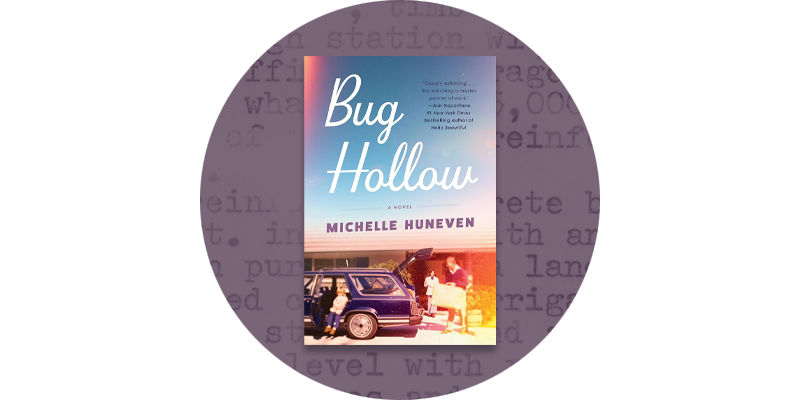
Michelle Huneven, Bug Hollow
Penguin Press, June 17
Huneven’s been on my radar since I stumbled upon her windy and wonderful Off Course in a used bookstore years ago. She’s since become one of my favorite chroniclers of California. In Bug Hollow, her latest, Huneven’s love for the rural Northern climes is clearly and authentically rendered. But the heartbeat of this Pasadena-based micro-epic is the Samuelson family. We follow the gang over roughly fifty years, in vignettes that ricochet between tragedies and romances. At its core, this stunning, sneaky punch of a book is about life’s unlikely attritions. The family’s darkest moments keep begetting light, somehow. –BA
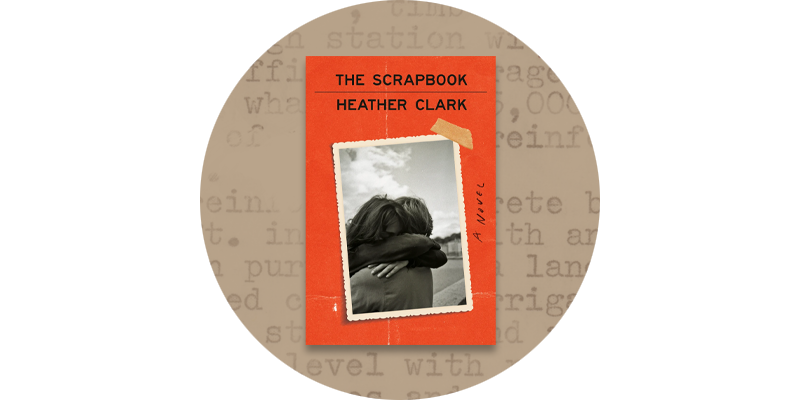
Heather Clark, The Scrapbook
Pantheon, June 17
It isn’t a huge surprise that Clark’s debut novel is full of information, a sort of history lesson and love story in one, given her remarkable biography of Sylvia Plath. The story is perhaps improbable—Anna, an American student and granddaughter of one of the first Allied soldiers to find Hitler’s mountain retreat at Berchtesgaden, falls in love with Christoph, a German student whose grandfather served in the Wehrmacht. Anna visits Christoph in Germany—in between parties and meeting his parents, they discuss German history and philosophy with the intensity of young lovers trying to construct a shared understanding of the world.
Meanwhile Anna’s college roommates, who are Jewish, are skeptical of Christoph, “a German who’s only two generations from Auschwitz.” Anna goes back to America, working a menial job in her hometown to save money to visit Christoph again. There are interludes (imagined by Anna, perhaps?) of Christoph and Anna’s grandfathers’ war-time struggles, which, as a whole, create a full and interesting story of the generational reverberations of the Holocaust. It is a mediation on what it means to be a good person in the face of a national crime; something our own children will no doubt be thinking about in years to come. –EF
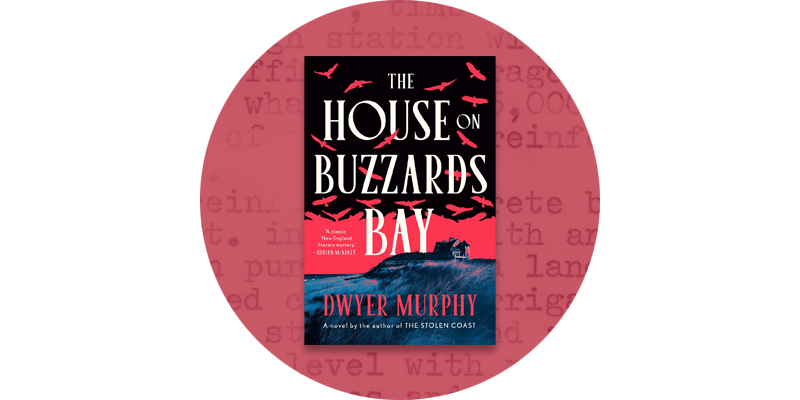
Dwyer Murphy, The House on Buzzards Bay
Viking, June 24
Dwyer Murphy’s third novel is a knottily brilliant psychosexual literary thriller that begins as a warm and melancholy ode to old friendships before morphing into something altogether darker and stranger. [Murphy is an editor at CrimeReads, a sister site of Lit Hub.] The story of a group of old college friends, now approaching middle age, whose vacation at a beach house on Cape Cod turns sinister when their most taciturn member—a novelist with a wandering eye—disappears, and an alluring mystery woman shows up in his stead, The House on Buzzards Bay has the dreamily atmospheric menace of an Antonioni film. Murphy’s command of mood, his character portraits, and his sentence-level prowess make all his novels must-reads, but there’s a new eeriness to this one that I found particularly compelling. –DS
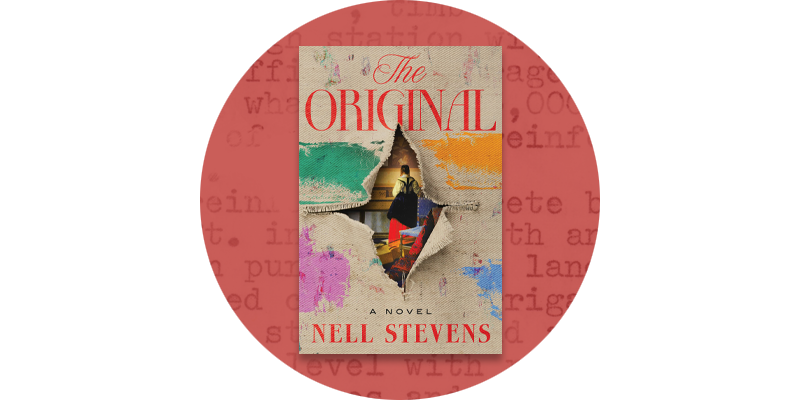
Nell Stevens, The Original
W.W. Norton, July 1
I am not a habitual reader of historical fiction, per se, but as a lifelong Anastasia truther I have a certain weakness for the impostor plot, and this is only one of the deep pleasures delivered by this novel. Some of the others being: a daughter of madmen trapped and dismissed in the house of an aunt; the discovery of a skill, the skill being forging great paintings and selling them off; interspersed, brief chapters on the philosophy of copying itself; an elaborate and deeply satisfying two-pronged Victorian plot; family curses; family machinations; the sense of a greater intellectual project, a question of what is fake and what is real and what being an original means, or could possibly mean. If you missed this novel this year, it is perfect midwinter reading. –ET
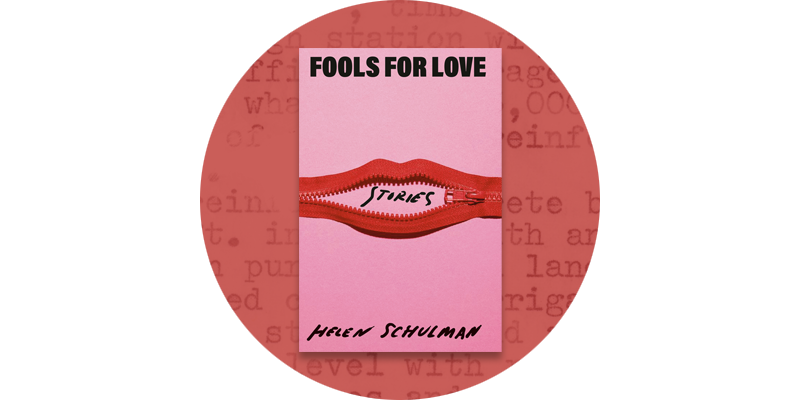
Helen Schulman, Fools for Love: Stories
Knopf, July 8
This was my first Helen Schulman collection, and as shelves are my witness it won’t be my last. Here we find a real master of the medium, at the top of her craft, spinning out strange, sweet, pristinely drawn human encounters. Schulman has a knack for taking certain well worn tropes and settings–the chaotic first love story, downtown Manhattan as a coming-of-age site–and infusing them with freshness. You also just leave these pages with the sense that this is a writer who really loves people, for all their itty-bitty idiosyncrasies. “My Best Friend” was a favorite in this collection, for its flashes of absurdity, and sheer distance traveled. –BA
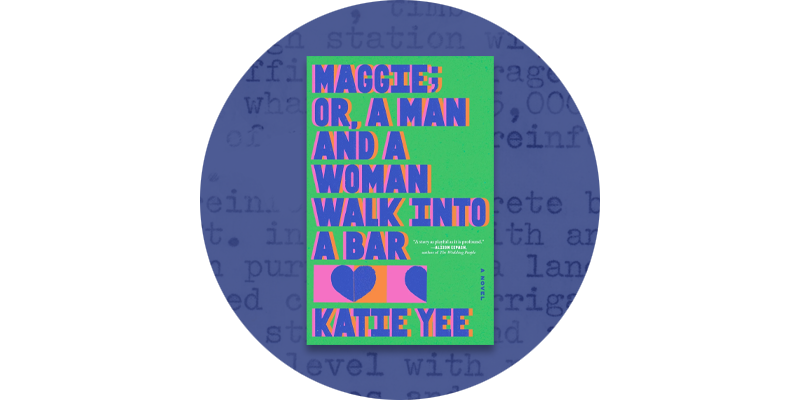
Katie Yee, Maggie, or a Man and a Woman Walk into a Bar
S&S/Summit Books, July 22
(Former Lit Hub editor!) Katie Yee’s debut novel is a joyful story of cancer and divorce. It’s a tricky feat, but in Yee’s capable hands, the result is pure magic. The narrator of Maggie is a mother of two who learns in quick succession that her husband is leaving her for the titular Maggie, and that she has a tumor in her breast (who she names, yes, Maggie). The book is a hopeful exploration of the forces that upend our lives, and the comfort we can find amid the turmoil. It’s lovely and surprising and very, very funny. –JG
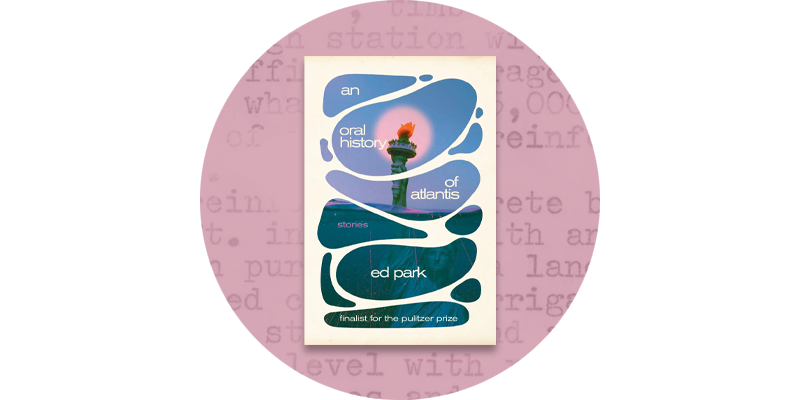
Ed Park, An Oral History of Atlantis
Random House, July 29
I’ll throw my gauntlet down and say that Ed Park is the funniest prose writer in America. There isn’t a novelist I know of who can match his ability with jokes, callbacks, and anagrams. Park’s wordplay is unsurpassed: the writer Hans de Krap, the reappearing Penumbra College, a menu that is actually an acrostic warning.
All of this and more appears in the electric An Oral History of Atlantis, a collection of Park’s short fiction released hot on the heels of his brilliant Same Bed Different Dreams. Atlantis’s stories are excellent, and very funny, but what blows me away about this collection is how varied and experimental it is in form. There’s a transcript for a gossipy DVD commentary track, a tender piece composed of password creation prompts, and a series of revealing repetitions in the story “The Wife on Ambien.”
Park’s formal experimentations are unforced and unpretentious. They’re not distractingly precious baubles calibrated to impress a workshop audience. Park isn’t interested in any “is this your card?” stunt for its own sake. These are stories finding an interesting, seemingly natural form.
They’re just damn good stories, and in many cases thoughtfully reflective satire. A piece about generative, hacked ebooks anticipated something crucial about writing in the AI age. And the opening story, written as a letter berating a translator for a series of out of control and likely intentional errors, communicates a subtle craft lesson about the work of writing, or perhaps how Park approaches it.
If you’re a reader who wants to be dazzled or a writer who wants to be inspired, I can’t recommend this collection more highly. –JF
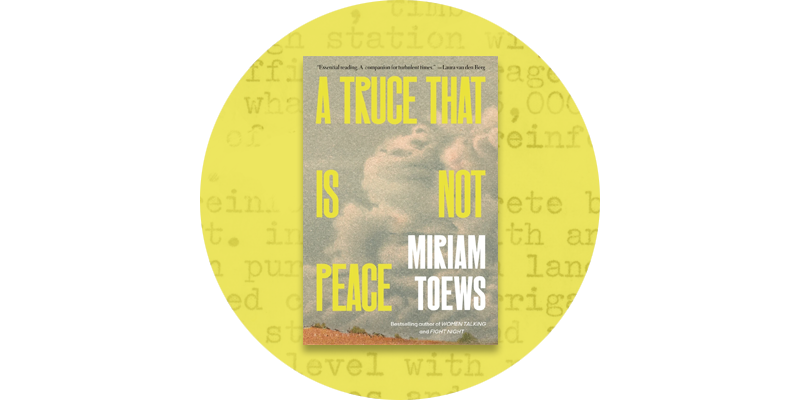
Miriam Toews, A Truce That is Not Peace
Bloomsbury, August 26
Any new Miriam Toews book is a new favorite book of mine. I simply couldn’t dream up a better writer than Miriam. I couldn’t imagine someone being able to speak as directly to my heart as she always is able to do. A Truce That is Not Peace is, at least in name, her first work of memoir. It’s a book length project wherein she attempts to answer that unanswerable question: why do I write? She tries, and tries again. She fails, and fails again.
Miriam Toews tells stories about joy and survival, about grit, and gumption, and inevitable darkness. She tells new stories, and she tells the same old hard story, over and over again, trying to get it right this time. She never gets it right. She tells it again. And the true honesty comes through in this book: all the while, all this time, as she writes and rewrites, tells and retells, she has been writing for one person, in an effort to find her way back to her, in an effort to right (write) everything that came before. It’s hard to get it right. It’s impossible. But she’ll try again. And for that, we can only be grateful. –JH
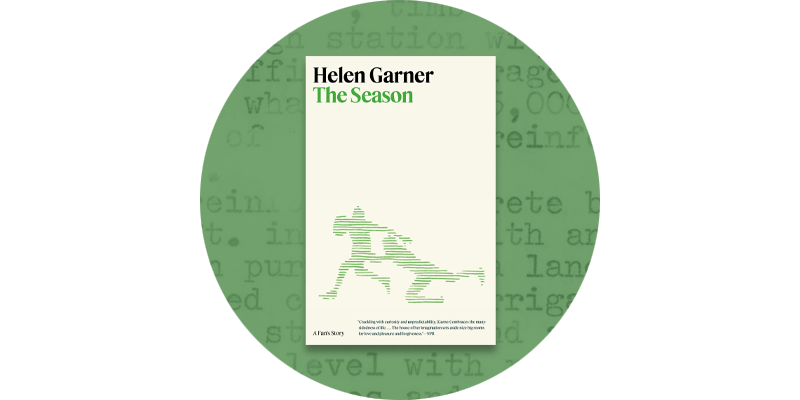
Helen Garner, The Season
Pantheon, September 2
The greatest sports writing of all time isn’t really about sports (writing specifically about the action of any sport, the mechanics of it, is a bit like writing about sex: “adequate” is about the best you can hope for). So it is with Helen Garner’s wonderful memoir, which takes as its ostensible subject a year in the life of her grandson’s Australian Rules youth football team (aka footy, aka a uniquely wild and entertaining Aussie mash-up of rugby, soccer, and roller derby).
But of course Garner isn’t really writing about sports: she’s writing about boyhood and its tender, defiant transitions to adolescence; she’s writing about the slippery passage of time, how simultaneously brief and eternal a single life can seem; she’s writing about the tricky bonds of masculinity, where they hold and where they break; and, as she puts it herself, she’s writing “a record of a season we are spending together before he turns into a man and I die.” So yes, a brilliant book about sports—and just about everything else. –JD
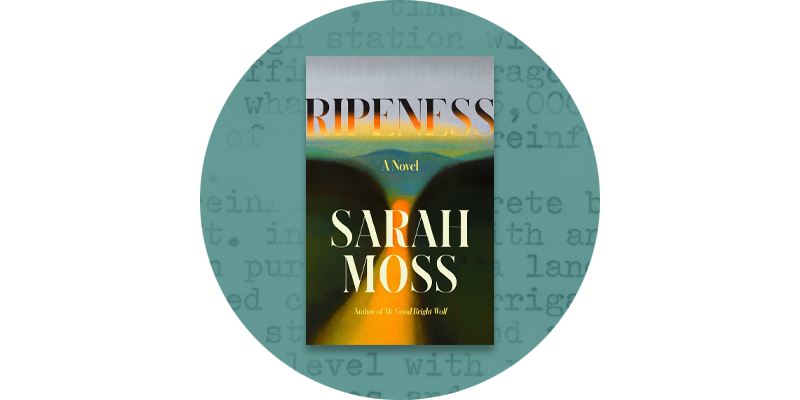
Sarah Moss, Ripeness
FSG, September 9
Sarah Moss is the contemporary writer I recommend the most. I devoured her weird and compelling 2018 novel, Ghost Wall, in one sitting, and was similarly engrossed by Summer Water (2020) and The Fell (2021). Moss is one of those writers so in command of her characters and her pacing that it’s difficult to pinpoint her genius, but with her latest, Ripeness, which has less of the atmospheric menace of her earlier work, I think I’ve found it: she is our laureate of dissatisfaction. I’m not talking about people who leave fussy reviews on Yelp, I’m talking about the distant echoes of regret that wake us in the night whispering that eternal question: Is that all there is? And what makes Moss so brilliant is that though her answer to that is an emphatic YES, she nonetheless writes us worlds so radiant that it doesn’t even matter. –JD
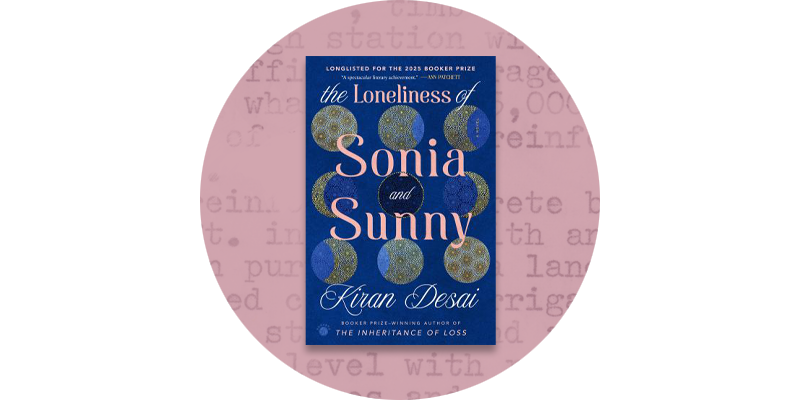
Kiran Desai, The Loneliness of Sonia and Sunny
Hogarth, September 23
When the weather starts to turn, I always crave a novel I can really sink into, an epic that I also feel compelled to carry from room to room in my sweatpants, in case I have five minutes to read a few more pages. I want something immersive, something complex but also human. This is it. This is a house inside your house, a book you can live in—a rare thing for a literary novel these days, and deeply (for this reader anyway) pleasurable. It’s a love story, certainly, but it’s also a story about difference and family and stories themselves, and manages to feel both profoundly universal and painfully intimate. It is lush and specific and completely engrossing. Honestly, the fact that I tore through this book, despite having a toddler (it’s 688 pages), should tell you everything you need to know. –ET
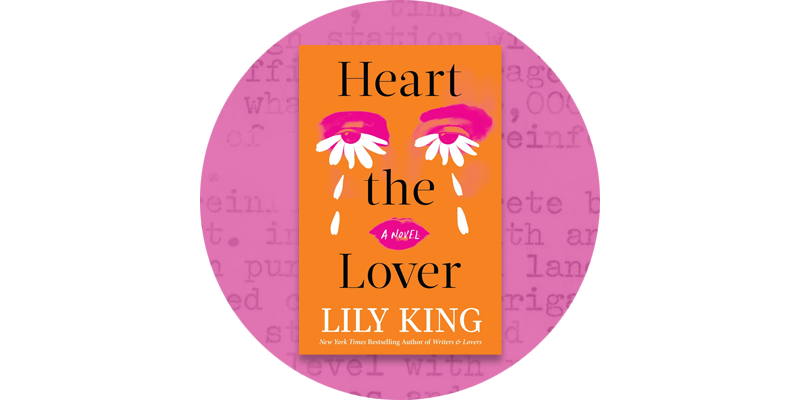
Lily King, Heart the Lover
Grove, September 30
The first half of Lily King’s latest is the best campus novel you’ve ever read (and doesn’t even have any murders); the second half does something I’ve never realized I always wanted a campus novel to do, which is acknowledge the youth of its characters, and acknowledge the prism of the campus itself, by following them into their imperfect, complicated adult lives. I think the great emotional impact of this novel has something to do with this admission: that our first loves and our early selves may pierce us deeply but are never the whole picture, even as we sometimes like to pretend they are.
Of course it also has to do with the convincing characters, the complicated love story (or series of love stories), the clear-eyed portrayal of the passage of time. King is a beautiful, natural writer who I think we must now accept as our patron saint of literary love triangles; without giving anything away, I have to say I was shocked that she pulled off the last third of this novel without it feeling too maudlin, even to my brain, more cynical and emotion-adverse than some. But she really did, and I’m still thinking about it. Whew. –ET
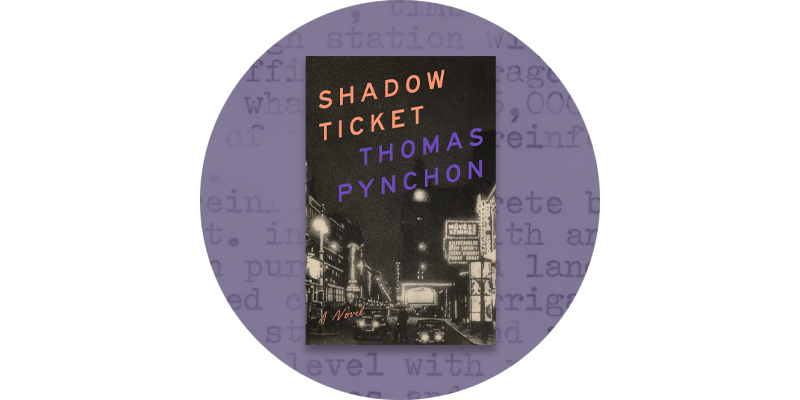
Thomas Pynchon, Shadow Ticket
Penguin Press, October 7
Of all the Pynchon I’ve read (which isn’t all of it, to be fair) Shadow Ticket is the most unapologetically fun. Loosely plotted around the picaresque travails of a hardnose Milwaukee gumshoe, Hicks McTaggart (a relatively restrained name for the otherwise megaloponymous Pynchon), the story takes us from a midwestern demimonde at the tail-end of Prohibition, rife with gangsters, anarchists, and an ahistorically robust Wisconsin Nazi party, to a chaotic mittel European landscape similarly populated by fascists, communists, dropouts, and everyone in between.
As ever, Pynchon’s linguistic register is virtuosically tuned to the milieu he’s writing in: I can only imagine how many hardboiled dimestore period pulps he read (or, indeed, how many serialized radioplays he consumed… Perhaps listening to Shadow Tickets as an audiobook is coloring my experience, but I could almost hear the old-timey foley work implicit in Pynchon’s descriptions of shadowy speakeasies and Nazi bowling alleys and anarchist motorbike rallies.) Whatever the case, I haven’t delighted in a novel like this in years. –JD
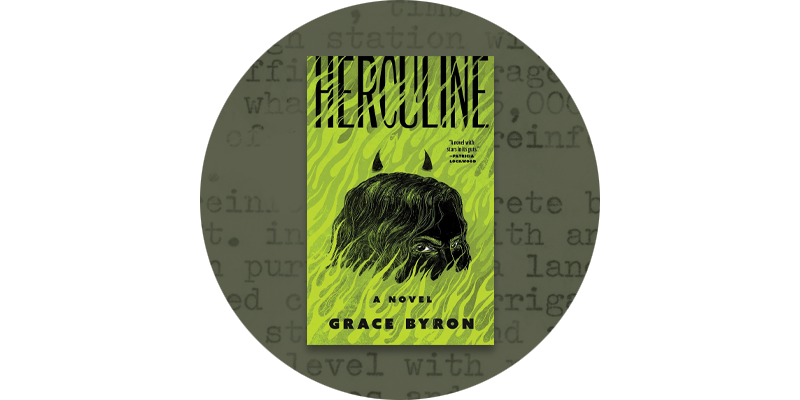
Grace Byron, Herculine
S&S/Saga Press, October 7
The thing I’ve found interesting about Grace Byron’s Herculine is that everyone seems to describe it a little differently, focusing on some aspect that felt underlined for them: it’s a queer horror, it’s a novel about identity, it’s a cult book, it’s trans girl Buffy, it’s about faith, it’s about community and what we’re owed, it’s a trauma story, it’s about that one big ex.
Herculine is, of course, all of this. Byron’s debut is the rare book that is able to elegantly juggle many different elements without feeling overstuffed.
The back cover will tell you part of it: a woman flees NYC and her demons, both literal and figurative, and seeks refuge in all-trans girl commune in Indiana. The cult-y community she finds is not all it appears to be, and the unease she feels turns out to be well founded.
Byron’s writing is full of sly, withering observations and sharp articulations of very specific anxieties. I’ve been thinking about these lines after therapy sessions lately: “I was philosophizing, something that people who are flailing almost always do. It is much easier to create a theory.”
I’ve been describing Byron’s book as about survival, and how hard it is to reconcile with a past that doesn’t point naturally towards a particular future. Surviving life’s contingencies, to say nothing of finding meaning or fulfillment, can drive us to desperate interventions—moving out of the city or summoning demons, for example.
Herculine is a bigger book than it seems, and you’ll have to read it yourself to find out how. –JF
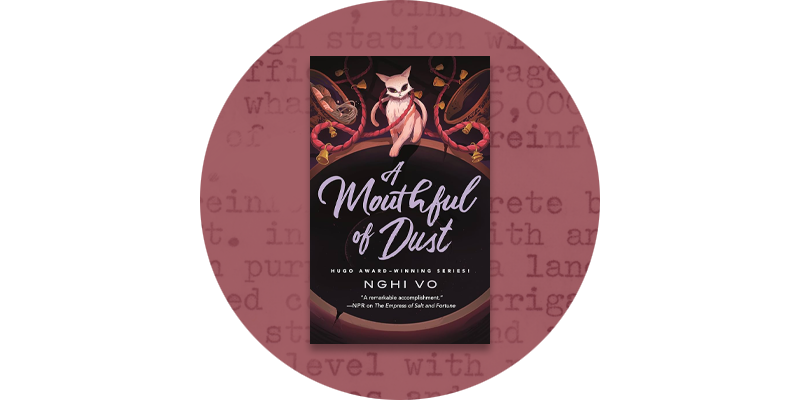
Nghi Vo, A Mouthful of Dust
Tordotcom, October 7
Every year I look forward to the new installment in Nghi Vo’s Singing Hills cycle, and every year I’m rewarded for my patience with a lovely little treat! The Singing Hills cycle is a series of novellas that follow a nonbinary monk named Cleric Chih as they travel through a vast, lush world and record the stories of its inhabitants. Mouthful of Dust finds Cleric Chih investigating the story of a great famine that destroyed a town many years ago. The novella is strange and macabre and fascinating and a stunning addition to the series. I generally love novellas and worldbuilding, so a series of fantasy novellas whose express goal is exploring a beautifully realized fantasy world is beyond extremely my bag. The books in the Singing Hills cycle can be read in any order, so grab whichever one is available now at your local library or indie bookstore and get reading! –MC
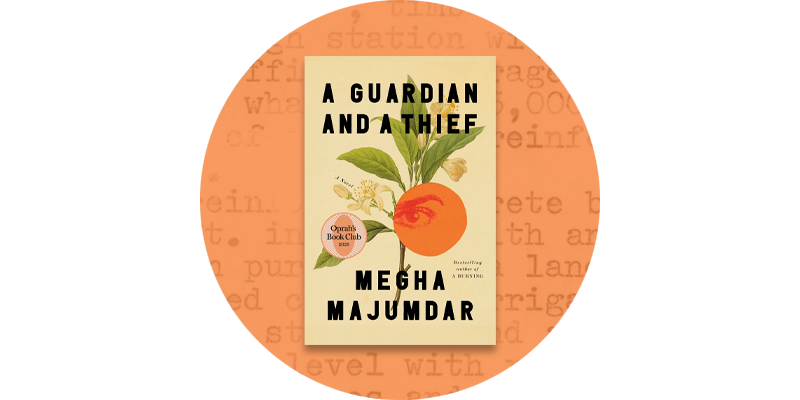
Megha Majumdar, A Guardian and A Thief
Knopf, October 14
Everyone and their mom (even my mom) has raved about Majumdar’s sophomore novel, which was selected by Oprah for her book club and shortlisted for the National Book Award. In a near-future Calcutta, where food is scarce and temperatures are unbearable, Ma has secured climate visas to join her husband, a scientist, in Michigan. Ma has been working for a shelter, helping the city’s most vulnerable people, but she has also been stealing from the shelter—a little food, some money—to help care for her daughter and elderly father. When her own home is vandalized by one of the shelter residents and her family’s passports stolen, she must do everything she can to reach her imagined future. It’s a tense read, full of questions of morality and justice. Who is the guardian? Who the thief? And what sacrifices must a person make for their own family—and are they justified? The questions of morality are unsubtle, but the story feels very true to the reality of parenthood, of love, of sacrifice, and of an uncertain moral future where our very survival will pit humanity against each other. –EF
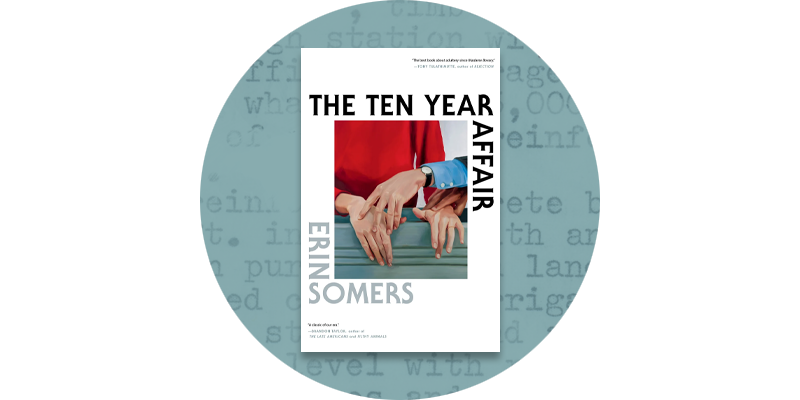
Erin Somers, The Ten Year Affair
Simon & Schuster, October 21
For a good time, even when the times are really quite bad, to be honest, call Erin Somers. I hate describing things by generation, but this novel does in fact capture a certain, very current millennial milieu: having become adults, having moved upstate, having procreated but still thinking of themselves as fairly cool, having lived through the pandemic more or less anxiously, having smoked too much, or perhaps not enough, pot, having wild affairs, but only in their imaginations. To wit: Somers evokes everyone you know (and the things they’re secretly thinking about and/or doing) with perfect, pleasurable clarity, and keeps you turning pages with her smart conceit. Will reality ever live up to fantasy? If you relate to the characters in this novel, you already know the answer, though you may not want to. –ET
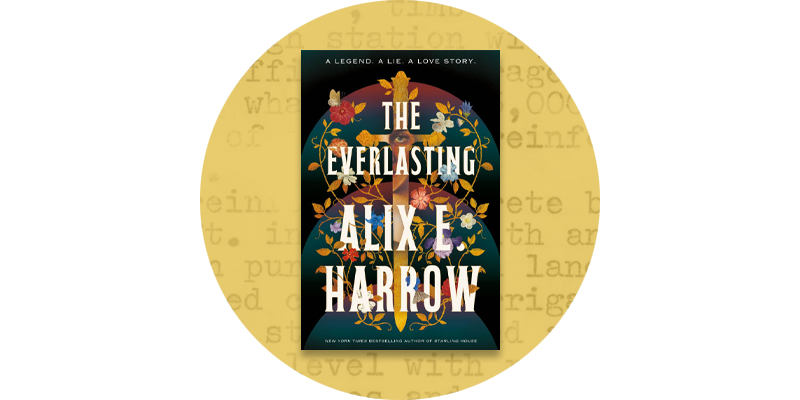
Alix E. Harrow, The Everlasting
Tor Books, October 28
I have been an Alix Harrow fan since I picked up The Ten Thousand Doors of January at Northshire Books in Vermont on a cold evening late in 2019 and read it in about 36 hours. I believe she’s one of the best writers doing it, in any genre. But I was not prepared for how exceptional The Everlasting would be.
I could just tell you that this is not only my favorite book of the year, but that it immediately leapt to my all-time favorites shelf. I could tell you that it is a steamy and fiery book about love across time, for the Romantics and romance readers alike. I could tell you that it’s a great adventure story, for fans of The Bright Sword and Robin Hobb. I could tell you that it’s a tremendously ambitious novel on a formal level, with perhaps the best point-of-view trick I’ve experienced in fiction in a long time. I could tell you that it will help fire you up for the fight against fascism, that it is an unsparing exploration of the power of stories to both shape and destroy a world.
It is all of those things, and about seventeen more besides—a love story, a story about time travel, a story about cultural mythologies, about gender norms, about academia, about a scholar who falls in love with a knight and how they try to make a better world against impossible odds.
It should have been in the National Book Awards conversation, because I dare you to show me a better novel this year by an American writer about the forces buffeting our society right now—but because it is a genre novel, it gets glossed for such things. I bet some of you aren’t even willing to give this a shot because it has a sword on the cover and it’s out from a genre publisher. But more than any single other thing I’ve said, I hope you’ll take this recommendation: this is a spectacular novel, by an exceptional writer, delivered at the moment that readers needed it most.
I think I’ll love it forever. –DB
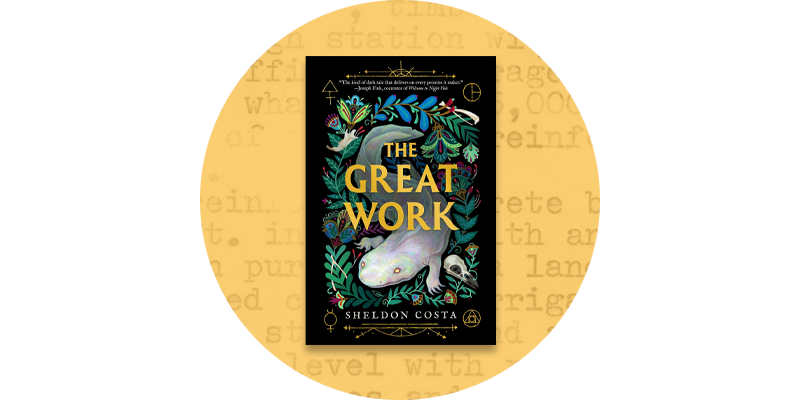
Sheldon Costa, The Great Work
Quirk Books, November 4
The Great Work is a book that I’ve been recommending to everyone I interact with. It doesn’t matter if you’re a friend or an enemy or an unsuspecting barista trying to make casual conversation, I will absolutely tell you to read this book. It’s just that good! The Great Work follows a grizzled embalmer and his sweet nephew as they track a mythical creature through the late-1800s Pacific Northwest. It’s a cowboy story and an alchemist’s fable and a knight’s tale all in one. Costa’s debut is at once East of Eden and Princess Mononoke—smart, compassionate, complex, and completely magic. –MC
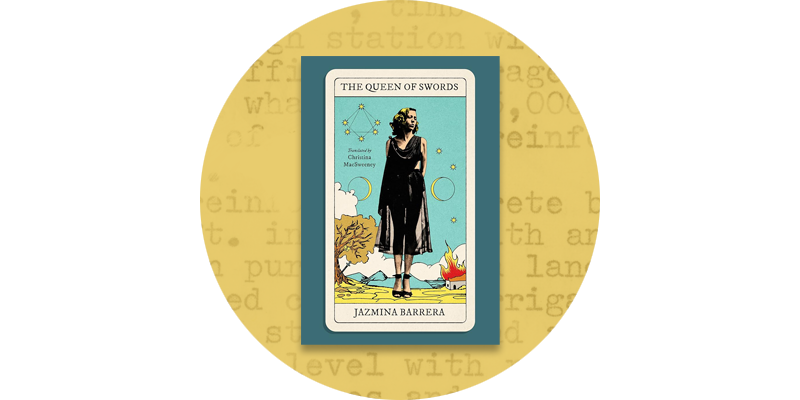
Jazmina Barrera tr. Christina MacSweeney, The Queen of Swords
Two Lines Press, November 11
When this won the Cercador Prize a few weeks ago, I immediately picked it up—and here it is, a late-breaking addition to my best-of list (and a great example of why I wish the world would do best-of in January: there’s still so much reading time in the year!). I’d never heard of Elena Garro, although the cover had caught my eye (a Tarot-inspired illustration, paper-over-boards with a lovely feel and a great spine)—but now, I feel like I have to read everything Garro ever wrote. A playwright, novelist, activist, larger-than-life figure who was married to Octavio Paz and had an affair with Adolfo Bioy Casares, I’m absolutely taken by the portrait that Jazmina Barrera presents—and with how she presents it. Barrera doesn’t hide her joys, her frustrations, her self in the writing and as a result, pushes the idea of biography forward (akin to some of what Alexis Pauline Gumbs did last year with her biography of Audre Lorde). Form-busting, playful, and inviting. –DB
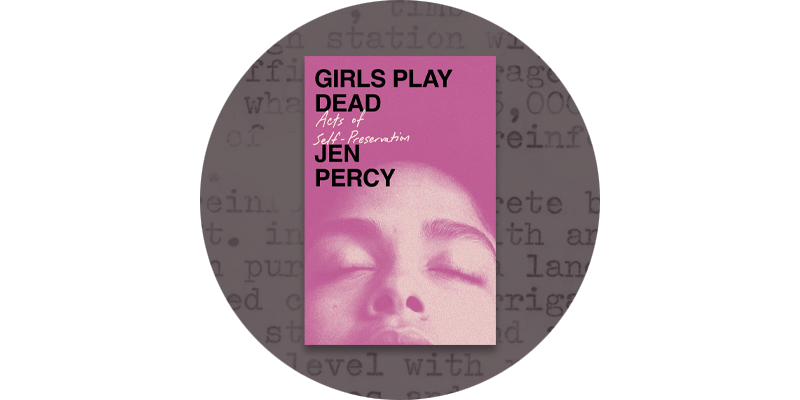
Jen Percy, Girls Play Dead
Doubleday, November 11
Girls Play Dead isn’t an easy read, but Jen Percy’s seamless blend of memoir, reportage, and cultural criticism, is so enthralling that I tore through it in a weekend. Percy delves into her own “grey” experiences with sexual violence, investigating her troubling (to her) passivity in the face of it. Percy also spoke to a vast number of sexual assault victims about their own experiences during and after their assaults, and allows their voices to exist alongside hers in a kind of overwhelming chorus of survival. She contextualizes these stories within our cultural understanding of sexual trauma, from Ovid to #MeToo. It’s a stunningly ambitious work, and the result is an uncharacteristically vivid portrait of collective trauma, which shies away from none of what we understand as messy grey areas. I’ve never read anything like it. –JG
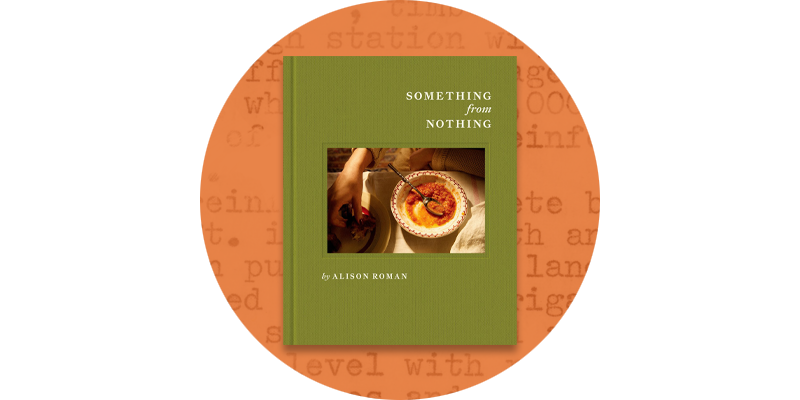
Alison Roman, Something From Nothing
Clarkson Potter, November 11
It’s not everyday that a cookbook makes it onto my list of favorite books of the year, but a special allowance must be made for Alison Roman, a life and cooking guru that I have been steadfastly loyal to throughout the ups and nonsensical downs of her reputation. How could I not be? She’s taught me so much, too much to thank her for, through her food as well as in a general-outlook-on-existence kind of way. This book accomplishes what any book I love is able to do: it reflects a way of living that includes warmth and hope and humor and reality in all its equal doses. It offers gems and insights and a rosy, can-do spirit.
Overall, it revolves around the very fact of living, and living well. Roman is a cheerful, adept writer as well as a stunning chef, and we’re lucky to be alive to the world that she is helping create. One where beauty and goodness is available to us all, one where the tangible and the real is the grounding force of life: in the very basic humanness of a good meal, and a crowded table. –JH
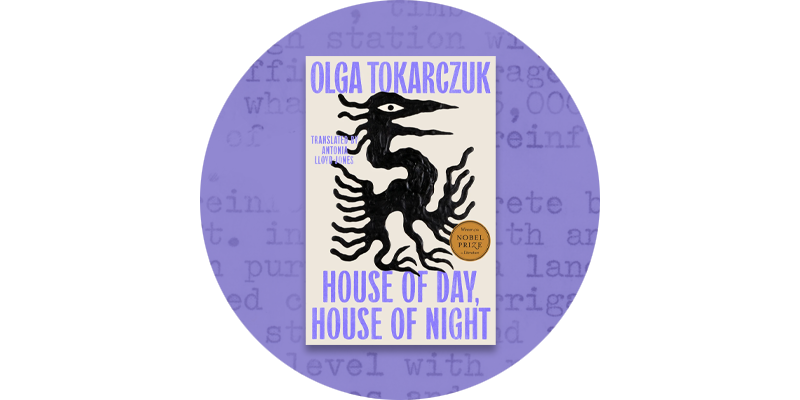
Olga Tokarczuk, tr. Antonia Lloyd-Jones, House of Day, House of Night
Riverhead, December 2
At this point it’s just a given that if Antonia Lloyd-Jones translates a novel by Olga Tokarczuk, it will be my favorite book. This new book—at once a novel and a short story collection—has a very similar feeling to Tokarczuk’s constellation-like novel Flights. Instead of the entire world, though, we are focused on the inhabitants of a remote Polish village. A woman has recently moved into an old house with her partner R, and is frequently visited by her elderly neighbor Marta. The book is filled with stories of the living and the dead—the town drunk Marek Marek, a clairvoyant, the unofficial Saint Kummerins, and the monk-turned-sister who writes her story, a bank teller in love with a man from her dreams, and, of course, deadly mushrooms. I love the way Tokarczuk’s work echoes within the text itself—it’s dreamlike, and makes any sort of summary a pointless simplification. This is just one of those books you need to read. –EF
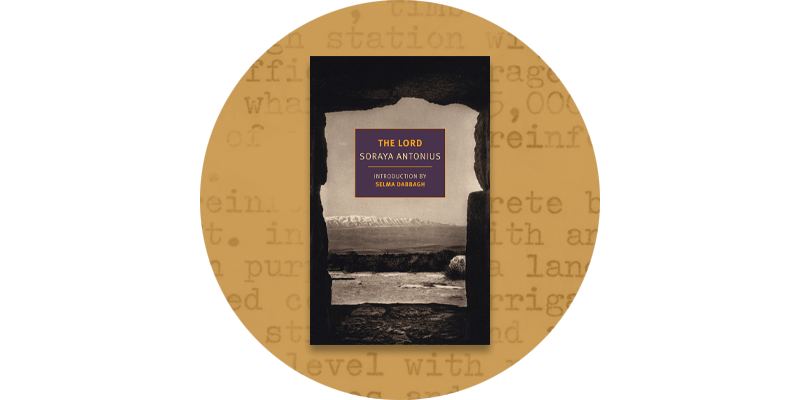
Soraya Antonius, The Lord
NYRB, December 2
A timely reissue from 1986 of a novel set in Palestine under British colonial rule, beautifully written and with a sympathetic attention to character and place. The Lord is narrated by a young journalist who is interviewing an older woman about her life as a missionary teacher in 1930s Jaffa. One of her students became a traveling magician, and as his act became increasingly uncanny (he turns brandy into juice) and then political (a Homburg hat becomes a keffiya), the British authorities started paying attention. The colonists could only understand this revolutionary as a cheap trickster, perennially unable to see the shape of the world around them. His first “miracle” was doing too well on a placement exam: how could he have done it without nearly divine intervene? The British are baffled.
An historical awareness prowls just out of the novel’s view: Sykes, Picot, and Balfour are casually referenced, as is rising Zionist violence. The landscape is full of echos and premonitions as well: crumbled crusader castles repurposed as picnic spots and barbed wired rolled out across the colony. We know where this is headed, but the British are full of breezy confidence and rooted in well-mannered denial. Any care or sympathy they might develop is hobbled by an unbroken tether to the metropole.
The parallels between The Lord and the current catastrophe in Palestine are hard to ignore. A British journalist, detached and mercenary, finds that his dispatches aren’t moving copies like they once were: “…the papers had found other subjects, Palestine not enjoying the capacity to increase sales, and things went on as before, except in the destroyed homes.” –JF