Lisa Lee on Translating an Emotion
“In writing toward what I didn’t know, I rediscovered something I had largely forgotten.”
This first appeared in Lit Hub’s Craft of Writing newsletter—sign up here.
In her 2017 novel The Idiot, Elif Batuman discusses the long-running controversy in linguistics over the so-called Sapir-Whorf hypothesis—the idea that different languages amount to different ways of thinking, different ways of seeing the world. “In my heart,” protagonist Selin says, “I knew Whorf was right. I knew I thought differently in Turkish and in English — not because thought and language were the same, but because different languages forced you to think about different things.” This question was on my mind as I wrote my debut novel American Han, and especially as I wrestled with the nerve-wracking decision to title the book after a Korean word that has no direct English equivalent. Noam Chomsky famously rejected the Sapir-Whorf hypothesis on the basis that the world is the world regardless of the words we use to name it. But han refers to an emotion—a purely internal state. Are our internal worlds all the same, or do the names we give to our feelings make certain feelings possible? If you don’t have a word for han, can you still have han?
Korean was my first language, but I can’t really speak it anymore. Like a lot of first-generation children of immigrants, I lost touch with my parents’ language sometime in childhood. I don’t think in Korean, but certain Korean words are still hanging around in the attic of my mind, and maybe they do shape the way I see the world, the way I understand myself. I can never remember the word scallion, for example. For me, it’s always pa. I have a theory that you can tell how central something is to a culture by how long or short the word is for it. For green onion, English uses a foreign word, borrowed from French, eight letters long—a name for an occasional indulgence, a garnish or flourish. In Korean, it’s one syllable, hardly distinct from a breath. As close as that. Han is like that, too: easy to say, to remember, to whisper. In my family it was usually whispered. Probably it was thought in silence more often than it was said. It had the air of a secret or an insult. She has han, just like her dad.
This is one of the benefits of writing into uncertainty. Sometimes you find out that you know more than you thought.
I’ve often struggled to explain to non-Koreans exactly what han is. I tend to fall back on academic definitions. In “Home Is Where the Han Is,” Elaine H. Kim calls it “the sorrow and anger that grow from repeated experiences of oppression.” This is good as far as it goes, though of course many cultures have sorrow and anger from repeated experiences of oppression. Does that mean they have han, too, even if they don’t have a name for it? Or if they have a different name for it? In South Korea, meanwhile, I’ve been told that few people think about han anymore. It’s a thing of the past, irrelevant in the technologically advanced, culturally dominant Korea of today. The community for whom it remains relevant is the Korean Americans, with whom it “smuggled itself into the U.S. with our baggage,” as Kim says. I wonder what percentage of the people who have han are people like me, who have lost most of the language to which the word belongs. I wonder how that changes the word’s meaning.
In my book, the word han never appears except in the title and the epigraph. This wasn’t exactly a conscious choice. I didn’t set out to practice some extreme version of the writer’s dictum “show don’t tell.” I didn’t know I was writing about han until I was well into the writing, and I didn’t know I was going to call it American Han until I had finished several drafts. I had set out to convey an emotional atmosphere that I hadn’t yet put a name to. In the process of writing the early drafts of the book, trying to articulate what this atmosphere felt like, trying to understand where it came from, I came to recognize it as han and then as a specifically American kind of han—one that has as much to do with American racism, and the pressure to assimilate and forget, as it does with the history of colonial oppression in Korea.
In writing toward what I didn’t know, I rediscovered something I had largely forgotten. This is one of the benefits of writing into uncertainty. Sometimes you find out that you know more than you thought. For me, I think this embrace of uncertainty might be the answer to the question of how to write about a word that has no direct English equivalent. I believe firmly that nothing is untranslatable. It’s just that sometimes a word might take a whole book to translate.
___________________________________
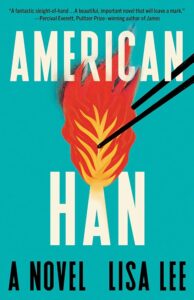
American Han by Lisa Lee is available via Algonquin Books.
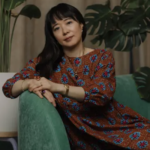
Lisa Lee
Lisa Lee is the recipient of the Marianne Russo Emerging Writer Award from the Key West Literary Seminar, an Emerging Writer Fellowship from the Center for Fiction, and a Pushcart Prize. She has received other fellowships and awards from Kundiman, Millay Arts, Hedgebrook, the Rona Jaffe Foundation, Tin House, Jentel Artist Residency, and the Korea Foundation. Her work has appeared in Ploughshares, VIDA, North American Review, Sycamore Review, Gulf Coast, and elsewhere. Lee holds an MFA from the University of Houston and a PhD in Creative Writing and Literature from the University of Southern California. American Han is her first novel.