Life-Giving, Imaginative and Underfunded: Small Press Publishers in Crisis
Lucy Mercer and Livia Franchini Discuss the Landscape of British Publishing with Jack Thompson, Jess Chandler, Sam Fisher and Kristen Vida Alfaro
A recent letter co-written and signed by small press publishers has highlighted the significant pressures they face, threatening them with closure and potentially damaging the literary ecosystem irreparably. Here, Jack Thompson (Cipher Press), Jess Chandler (Prototype Publishing), Sam Fisher (Peninsula Press) and Kristen Vida Alfaro (Tilted Axis Press) meet to discuss these pressures, how they work, what they publish and why, and what small presses do in comparison to commercial publishers. As well as drawing awareness to the critical situation facing small press publishers in the UK and beyond, by opening up these conversations they hope to create collective structures of support, skill-sharing and resources.
*
As a coterie of independent publishers you have produced some truly brilliant and beautiful books that outshine in both content and form those produced by commercial publishers, despite working on shoestring budgets and with minimal resources. What are some of the books you are happiest to have published? And what are some of your special moments, when you think about the work that you have been doing?
Jack: Since we launched Cipher we’ve had the privilege to publish some of our absolute favorite authors from the US, authors we’d followed for a long time before Cipher was even an idea, like Brontez Purnell, Michelle Tea, Matilda Bernstein Sycamore. Some of these authors hadn’t yet been published in the UK, so it’s been an honor to bring their work to readers here. And through open submissions we’ve also found some really exciting debut authors, like Alison Rumfitt, Nat Reeve and Gareth Gavin, who each experiment with traditional forms to give us completely original and groundbreaking trans literature. Gareth was shortlisted for the Goldsmiths Prize, which was a highlight. We have a really hands-on approach to publication and some of my favorite moments have been traveling with authors for events, like the Tell Me I’m Worthless tour we did with Alison Rumfitt, or traveling with So Mayer to Glasgow, Edinburgh and Liverpool when Truth & Dare came out. It’s a great way to celebrate writing while connecting with community and booksellers.
Jess: One of the great things about running a small press is the freedom we have to publish books we love, and having the autonomy to choose. Every book is important, and something we believe in. I love the feeling of defying expectations, of successfully breaking with convention and tradition, all of which is built on the importance of the relationships with our authors, within a community of readers and other publishers. Jen Calleja’s experimental verse novel Vehicle is perhaps the title that I think best illustrates what small publishers can do with books that commercial publishers don’t know what to do with: it showed very clearly that there is a wide, engaged, excited audience for experimental writing, that small publishers can build tours and campaigns that reach thousands of readers, and that community, dedication, and a true spirit of collaboration between publisher and author, is what really allows a book to make a mark.
I think generally small presses take risks that bigger publishers don’t, so we end up with some really interesting and original writing.
Sam: One of my favorite things about running a press alongside a bookshop, is how they inform one another, and how a lot of our books have come out of the community around the bookshop. We published Sterling Karat Gold by Isabel Waidner after I met Isabel at a reading at Burley Fisher. It was a big moment for us when they won the Goldsmiths Prize! But there is also a global community of indie presses which we have enjoyed coming to be a part of—working with Soft Skull in the US on Lynne Tillman’s work or Greywolf on work by Elvia Wilk and Aea Varfis-van Warmelo (whose book is coming next year), and which came to us on an open submission. Love, Leda by Mark Hyatt, another title which came via open submission is another favorite of mine, a book about a bisexual bohemian in Soho in the early 60s, which was never published at the time because of censorship and was subsequently found by an academic called Luke Roberts in the writer’s papers—50 years on!
Kris: We’ve had the privilege of publishing many firsts—the first Hindi novel to win the International Booker Prize in 2022 (Tomb of Sand by Geetanjali Shree, translated by Daisy Rockwell), the first English translations for authors from Vietnam (Thuận), Thailand (Prabda Yoon), Singapore (Hai Fan), and Kazakhstan (Baqytgul Sarmekova), and first translations by translators who have gone on to have prolific careers. We’re thrilled to be a part of these moments, to be a part of the ecosystem bringing these authors and translators to wider audiences and global anglophone readers.
The most rewarding moments are when we’re able to bring authors, translators, and readers together. Tilted Axis is a publishing house, but our books and events contribute to the larger project of coalition building, global solidarity, and community.
What do you do that commercial or big publishers don’t—and why?
Jack: I think generally small presses take risks that bigger publishers don’t, so we end up with some really interesting and original writing. With Cipher, we publish exclusively queer and trans literature; our aim was to amplify work from underserved authors that is consistently overlooked by bigger publishers, or deemed unmarketable or unaligned with industry “trends.” Like other small presses, we don’t publish with a commercial outlook, which fills some of the gaps left by big publishers and adds a lot of variety to the trade.
I’ll talk also about the process of producing a physical book; it’s a very intimate process, as, along with the author, we’re involved in every step, from editorial to the design of the end product. We work incredibly closely with the text. This is perhaps a different way of working than bigger publishers, who have separate departments for each stage. The fact of having a small list allows us the time and attention to carefully consider how we make each book, keeping the author in every conversation. We work with one designer across our list, which means our books stand on their own feet but also have continuity of design—we wanted each book to be different but still recognizable as a Cipher book. Making a high quality book, from paper stock to cover design to the typeset, has always been a priority for us.
Jess: As Jack says, our ability to take risks and to publish books that would struggle to find a home with bigger publishers, is our strength, and in many ways the reason we exist; I think, fundamentally, this is why we believe the survival of small publishers matters. Without the existence of publishers able and willing to take risks, the literary ecology would be a lot more homogenous and closed-off. This isn’t to say that bigger publishers should necessarily do things differently; we do different things, in different ways, and that’s why it’s so important that we are able to co-exist, so that the culture of publishing is diverse and rich and there are viable outlets for all kinds of writing.
As with Cipher, and I think all of us, we put great care into the whole process of creating each book, and are involved in every stage of the process. Design is really crucial for us, and is something we closely involve the authors in. For poetry and hybrid projects in particular, the visual representation of the text, and sometimes images (such as your book Emblem Lucy!), is inseparable from its content. We have the freedom to make each book unique, and for many of our authors, this collaborative process is hugely important.
Sam: We are with the author at every step of the process. We generally don’t have separate marketing/publicity or production departments so it’s quite a close relationship that we develop with authors. We take risks on books that have been passed over on submission by corporates and we offer open submission windows so that writers can submit their work directly to us. A lot of us have come to publishing from circuitous pathways (in my case bookselling) and bring with us different skills and experiences from other parts of the sector or from outside of it. We develop close personal relationships with independent bookshops, event spaces and other indie publishers in other parts of the world, bringing both a highly local and also globalized set of relationships to each book we publish.
Kris: We take risks. We publish literature that is largely ignored or considered unprofitable. We provide a platform for writers who are often relegated to the margins of UK publishing. We publish stories that are for us, not an imagined white readership.
At Tilted Axis, we focus on publishing Global Majority writers and translators, largely from the Global South. Our list is a nod to the politics of migration, an effort to expand how English readers think about translated literature, and a way to ensure that readers have access to translations from non-European languages.
We are also a press with a Global Majority staff who are predominantly female or non-binary. This makes our workforce an extreme rarity in the publishing industry, where ethnic minority representation is declining from already-low levels. Publishing isn’t just about who you publish, it’s also about who has the power to make those decisions.
Can you talk about the communities that you have helped create and maintain through this work, and the impact that small press publishing on a whole has had on the literary landscape in the UK?
Jack: One of the things I love about Cipher is that we have a community of dedicated readers who will read our books because they are a Cipher book, no matter the author or genre. We’ve published horror, speculative fiction, experimental short stories, historical fiction—all kinds of stuff—and our readers are open to all of it. We wanted Cipher to be a community press from the start, which to us means actively engaging with readers through social media, events, and things like the Hastings Queer Book Festival we organize. The queer and trans communities have been instrumental in Cipher’s success, and the literary community more widely. I think small press publishing generally allows for more reader access.
Jess: It’s the same for us; over time, and through events and newsletters and an openness and friendliness in the way we work, we’ve also built up a community of dedicated readers. This allows us to take risks and publish work we believe in, whether it’s a debut poetry collection, a verse novel, or a collection of hybrid experimental texts. We’ve focused in particular on interdisciplinary work, and building a community around this, offering a space for unconventional work, has felt particularly special. I think that small press publishing has shown that there are alternative ways of doing things, and that commercial publishing isn’t necessarily the right route for everyone. The success of so many books published by small presses has shown that publishing with us can bring just as much exposure, prize shortlistings, and sales, as the bigger publishers.
Kris: The Tilted Axis community is intergenerational and intersectional. Our events reach people from diasporic communities of South, Southeast, East, Central, and West Asia. We have also expanded the literature we publish and are starting to reach Latin and African diasporas. We publish stories that are anti-colonial, queer, trans, intergenerational, and working class. We also have a large international community that we engage with through social media and when we can, in person.
Small presses ensure bibliodiversity within the UK literary landscape. Small presses are likely to take the most risk and for translated literature, ensuring that non-European languages continue to be translated and available to anglophone readers. Aside from risk, small presses create spaces for critical discourse, community, and coalition building.
What makes a press? What are some of the things you do, who are the people you employ or work with—what are the stages of production that you go through, perhaps that as readers we are not aware of?
Jack: Cipher is run by just two of us, on a part-time basis, and we do everything! Unlike bigger houses that have separate departments for each publication stage, we read all submissions, write contracts, do production, editorial, publicity and marketing. We work with freelancers where possible, for our typesetting, copyediting, and sometimes our publicity. And we have a designer who has a share in the company and does all our design work. I think this is something that often surprises people—we often get emails asking to be put in touch with our publicity department, for example, and really it’s just two of us.
Jess: We often receive similar emails! I don’t think people realize how small publishers of our size are, and that we don’t have teams or departments. I started Prototype on my own, and was able to employ a part-time colleague for a few years, but now it’s back to being just me, with a wonderful freelance Commissioning Editor for Translation, and a few brilliant freelance designers, who are a crucial part of everything. I feel grateful for all of the skills I’ve had to learn, and am still learning. Every part of the process is in my hands, from editorial, to proofreading, posting website orders, processing royalties, managing book production, marketing and publicity, social media, contracts, and so on.
I think that small press publishing has shown that there are alternative ways of doing things, and that commercial publishing isn’t necessarily the right route for everyone.
Sam: It’s the same with us, there are three of us and all of us are involved with every part of it, from commissioning and editing books, to stuffing envelopes and badgering journalists. We use freelancers for design, typesetting, some publicity, and occasionally copy editing. We work with international rights agents for selling foreign rights in some territories. We also go to publisher fairs and sell our books direct.
Kris: Tilted Axis is a small team that are predominantly part-time, freelance, or voluntary. It’s a similar environment to the others—the day-to-day requires all hands on deck and a dedicated team who are willing to go above and beyond. Since our processes and hardships are similar to what has already been described, I want to go into what feels simultaneously like an understanding but also an elephant in the room. Small publishers are literature people before they are business people. We’re here because it’s something we’re passionate about but at the end of the day, we need the money to acquire, translate, edit, publicize, market, distribute, and print a single book. Without investment, it’s an impossible task. So to go back to the first question, ‘What makes a press?,’ I think we need to talk about what makes a press possible and most of this comes down to financial investment.
You all recently co-wrote and signed an important letter stating that small press publishers in the UK are facing an existential crisis that threatens your basic survival and continuation. As you outline, rising costs, corporatisation and lack of funding means that you have all been brought to breaking point. We know that things have been difficult for some years—can you talk a little about what brought you to this point?
Jack: For me personally it has been seeing other presses close doors, and realizing how impossible it is to grow as a business. We’re stable but we can only publish around 5 books a year without help and support, and we’re unable to get that without the income from publishing more books per year, or else funding. It’s a catch-22. The changes mentioned in the letter, like lack of funding and production cost increases are making it increasingly difficult, and I think there’s a lack of awareness within the wider industry of this.
Jess: The impetus for the open letter, for me, came from conversations with other publishers, and a realization that so many of us are in similarly tenuous positions, even when from the outside it might look like things are going incredibly well. I feel a growing sense of urgency to raise awareness of the practical realities, and to be transparent about the fight for survival that many of us are facing. It felt important to share this, and to try to open up a conversation about how to change things, and to do our best to articulate why we believe the existence of small publishers matters. And this is part of a much wider problem about how the arts are becoming increasingly sidelined and undervalued, and how damaging this is (as well as making no economic sense).
Kris: I think many of us have been at some kind of breaking point for years, we just haven’t been able to organize in the way that we are now. It is exhausting and demoralizing to depend on project funding. We are working with low resources and a need to increase sales, meet deadlines, manage expectations, and write grant applications. The labor is unsustainable and we have to do something to break the cycle of burn out. We are incredibly passionate about the authors and translators that we publish but we shouldn’t have to sacrifice our mental health or finances for it.
Sam: For us, I think it was having a growing sense that all of the pressures that we described in the letter were combining to close off avenues to a sustainable future for the press, under the traditional funding model. We felt that it might be helpful, for people around the industry, for us to gather together the full picture.
You are struggling, but the publishing industry in commercial and big publisher terms is not. In 2023, the UK publishing industry made £7.3 billion, and will make an additional £5.6 billion in the next decade. In total the value of the publishing industry to the UK is £11 billion. Do you think the books industry has been mismanaged by big five publishers, and if so what and how could they do differently?
Sam: A big question! My main criticism would be of how successive governments have failed to tackle industry consolidation both on the publishing and retailing sides, the most obvious examples of this being Amazon, and the PRH/Random House merger. It privileges efficiency gains at the expense of choice. Which in turn suppresses risk taking and innovation because it makes it harder for newer entrants like us to compete. As for corporate publishing itself, I don’t think we can be surprised or angry at them for being profit-seeking as that is what corporations are set up to do. It’s proper governance that has been lacking.
Jack: Am I allowed to say that they could…publish fewer books? I just read a great Substack from a US bookseller about this, and the sheer number of hours he now has to put into dredging through the big five’s catalogues each month—it’s completely untenable and leaves little space for anything else. And I’m thinking about when multiple big five editors announced their resignation on Twitter a few years back, due to being consistently overworked. Then there’s all the discourse about debut authors being dropped if their first book doesn’t immediately hit sales targets. There’s a sense that big publishing has stopped investing in people, authors, and good writing, and is just producing huge amounts of product, which means a completely oversaturated market and overstuffed bookstores. And as Sam says, the innovation small press publishing brings is then pushed aside. But yes, we’re talking about corporations, and this is what they do.
Jess: I agree with everything Sam and Jack have said here. The consolidation of the industry into giant corporations, with huge outputs, makes it even harder for smaller presses to compete. But we know from experience that authors, and readers, want alternatives to the corporate model. It also seems that there isn’t enough balance between commercial best-sellers and more innovative literature; one should support the other, but the big publishers, on the whole, seem more risk averse than ever, which from my perspective is really hard to understand. It’s also impossible to ignore the rapid arrival and implementation of AI, and its worrying uptake in publishing. It’s vital that we resist this, and continue to value the skill and craft of every individual’s role in the publishing process.
Kris: I think we need to talk about legislation. The UK government needs to bring back the Net Book Agreement and make it part of UK legislation. We need the government to recognize literature as a national asset that must be protected. A fixed-price law prevents bulk discounts from e-commerce companies like Amazon and ensures a level playing field between small independent publishers and the big five. In 1995, publishers like HarperCollins and Random House withdrew from the Net Book Agreement, allowing a free market that continues to impact independent booksellers and publishers as well as their authors and translators.
In France, there are three legislations that protect publishers and booksellers: the Fixed Price Law, the Anti-Amazon Law, and the Regulated Shipping Costs Law. Together, they ensure that publishers of all sizes are competing at the same level (book prices are regulated and can’t be discounted more than 5%). Bookshops and online retailers can’t offer free shipping (it must be a minimum cost of €3). Each legislation signifies the national relevance of literature and the recognition of the ecosystem that supports it. We need this equivalent here and UK funding bodies and associations must lobby the government to protect the industry.
What are some of the conceptual and formal themes, from genre to idea to style to a reliance on anglophone literature, that are pushed by big five or commercial publishers in response to or in pursuit of markets, that make you turn away from this literature? What are its impacts on our culture and society?
Sam: We’re publishing a book about this in 2026 called Against Literature, by the very brilliant Lola Olufemi…So you’ll just have to wait and see what she says about it…But the title gives, I think, some clue.
Jack: I’m not sure if this is what you mean exactly, but speaking as a queer and trans publisher, I get very squeamish about commercial publishing’s bandwagoning of our community, especially using queer and/or (to a lesser extent) trans characters and stories as a tickbox exercise. And their obsession with “queer joy” or whatever, which to me often feels like a way of making queer and transness more palatable to their markets. They want books and ideas from LGBTQIA+ writers, but only those books and ideas that are easily digestible or “likeable.” This doesn’t put a lot of trust in readers, and it also doesn’t let queer and trans literature exist on its own terms.
Jess: This is such an interesting question. I’m excited to read Lola Olufemi’s book Sam! I think what I find most frustrating is the idea that readers want formulaic stories that conform to expectations and don’t challenge or provoke. This isn’t to say that commercial publishers don’t publish exceptional books, and I want to make it clear that we’re not saying that at all; this isn’t a good/bad dichotomy. But I am continually surprised that books we publish are considered too risky for bigger publishers, simply because they’re formally experimental and difficult to categorize. There is too strong a need for books to be easily definable, to make marketing them as easy as possible, and I find that in itself makes me turn away. It creates a climate of dumbing down and patronizing readers, which I don’t think is responding to what people actually want.
Kris: The industry tends to talk about what is underrepresented in literature but I think we need to go further and discuss how communities and experiences are represented. If we don’t, we risk the conflation of Global Majority and migrant experiences. We need to ask questions and engage in critical discourse. Are people writing for their communities or for people outside of their communities? Is the desire to be included in the industry or to imagine a different kind of literary ecosystem?
Commercial literature can also be formulaic—that is to say written in a style that has evolved from the anglophone and Eurocentric canons of literature. I am more interested in writing that pushes the boundaries imposed by commercial publishing and the Eurocentric canon. I want to read literature that defies this canon and experiments with texture, emotion, and rhythm in a way that reflects the nuanced and intersectional experiences of the Global Majority.
Dan Sinykin, author of Big Fiction, said in an interview, “nonprofit publishing entails its own financial, institutional, and, subsequently, aesthetic constraints […] Nonprofits escape one kind of constraint (the market) in exchange for another (funders).” Can we talk about funding, on which many of you depend as a lifeline, and which as you say in your letter has been cut by successive Tory and Labour UK governments. What funding is available to you—you mention both the Arts Council and Creative Scotland in the letter? How do the loops and mazes of funding applications affect the books that you publish, want to publish, can’t publish?
Sam: We’ve been fortunate enough to have some funding from ACE on a project basis, and we’ve also had translation funding from PEN Translates Grants and from various other national funding bodies (from Spain, Sweden). The application managers at ACE who have helped us out have always been really great, it’s just the criteria under which the funding is awarded doesn’t really line up with what we do (it’s currently much more about “participation” than “audience”), which makes it hard for us to make the case. One thing that strikes me about the readiness of other governments to finance translations into English is how valued publishing is as a cultural export. This doesn’t seem to be a priority here. It seems to me that there’s a certain complacency that arises out of the UK feeling like it occupies a place that it no longer does.
I feel a growing sense of urgency to raise awareness of the practical realities, and to be transparent about the fight for survival that many of us are facing.
Jack: We’ve also had ACE funding in the past, which was instrumental to our growth in the first couple of years. As with Sam and Peninsula, this has been on a “project” basis, which means we’ve been funded for a set period of months for a very specific project, i.e. to find three new LGBTQIA+ debut writers from the UK. We’ve also found the ACE application managers super helpful and supportive, but the system itself is less so and, as Sam says, it doesn’t suit the work we do as publishers. Getting ACE funding now is a bit of a square peg round hole situation, meaning we have to do a huge amount of work to make our bid fit ACE’s model, and when we’ve been successful, we’ve found ourselves using up resources that could perhaps have been better spent elsewhere to make these projects a success. Our audience (readers of our books) is sizable, but yes ACE puts a lot of weight on participation, and other than book events, which we do as a matter of course, while reading isn’t necessarily a participatory activity. Funding (or lack of) hasn’t really affected the books we want to publish, but it has affected what we can do with those books in terms of author tours and publicity. Other than ACE, I’m not aware of any other funding bodies we can apply to.
Jess: Our experience is very much the same as Sam and Jack’s. ACE has been vital to our survival and growth so far, but we’ve also only ever had project grants, and these are always hugely demanding and ambitious, in order to fulfill the criteria that gives us any chance of being successful. This means that we have to go way beyond the work of publishing books, and while it’s important to create projects that bring the arts to wider communities and audiences, for small publishers it’s a huge challenge to manage these projects without the proper resources. Apart from the National Portfolio, there aren’t any grants that offer core funding to support the work of publishing books, which is no doubt partly because publishing is considered a commercial venture; ideally it can be this too, but we need support, and it’s hard to find a viable route to enable us to get to that point of sustainability.
Kris: Our experience is very similar to what has already been described. Tilted Axis started because of ACE project funding and ten years later, it’s still a crucial part of our income. Tilted Axis is a Community Interest Company and because of this, we’ve had difficulty receiving private donations. We aren’t a charity, so we can’t offer tax breaks and we aren’t a company Limited by Shares. We need multi-year funding that contributes to overhead and production costs. Many grants are specific to one aspect of funding (i.e. English PEN Translates funds translation costs but doesn’t contribute to production or editorial labor) or ACE project grants require community engagement. Although this is part of the Tilted Axis ethos, we need funding specifically to cover other costs, not just engagement or translation.
Moreover, if income generation is based solely on ACE project grants, organizations will be in a difficult position if the UK government revokes ACE funding or if the online platform malfunctions, as it did recently. Tilted Axis was deeply affected by this during a time where sales were low and other funding wasn’t available to us.
We publish mainly translated literature and we are also dependent on external funding from other governments, like Korea or soon, Germany. This reflects the different languages we are able to translate from, because we need the investment to acquire translations from languages or countries that don’t have national funding to support cultural exports.
Do you have anything else to add? What are your next steps to address these problems? What can we, as readers and writers, do to support you?
Sam: Buy our books, review our books, come to our events! You could also write to your MP about the open letter and the funding landscape. Any pressure on policymakers to make literature and its cultural impact a higher priority will help to sustain the ecosystem which we all publish our books into. We’re hoping that this letter might lead to further conversations about how we can work together to sustain this community, so please join up and take part in the next steps.
Kris: Personally, I think this is a significant moment for the industry. In the last two months, two independent UK presses have closed down. Rather than sustain, I think we need to imagine a radically different ecosystem that is inclusive and supports small publishers to continue pushing boundaries. We need to work together to fundamentally change the ecosystem that exists.
Jack: As Kris says, we’ll be continuing this conversation over the coming months to raise awareness of why small presses are important and of the challenges we’re currently facing. To readers, I’ll say engage with our books! Buy them, share them on your socials, tell your friends. Community and word of mouth is really important for us; it’s much harder for our books and authors to be known without big marketing budgets, so engagement from readers goes such a long way.
Jess: Continuing this conversation and keeping momentum going is our priority now, and I can only really echo everything the others have said. This feels like a vital moment for publishing and for the arts in general, and it’s vital that we are vocal and transparent, both about the challenges of this moment, and about why it matters. Community, inclusivity and cooperation are what matter most now. Buying our books is the first thing you can do as readers, as well as engaging with this conversation, so that it’s a collective process, in which everyone feels welcome to play a part.
What books do you have out or forthcoming that you would recommend to readers?
Kris: Capitalists Must Starve by Park Seolyeon, translated by Anton Hur (Tilted Axis Press, 2025). This is a fictional story about Kang Juryong, an actual female labor activist from 1930s Pyongyang. Park Seolyeon has written her into a global history of labor activism by creating a fictional story of Kang Juryong’s self-actualization and political commitment. Here, youth and yearning humorously co-exist with the gravity of protest under the Japanese occupation of Korea.
Jack: As I’m in the middle of editing it and currently obsessed, I’ll say look out for A Pizza Hut, A Pizza Hut, Kentucky Fried Chicken and a Pizza Hut by Hannah Levene, out next spring. It’s an incredibly innovative, strange, fun and playful novel that goes against the idea of the suburbs as a place queers leave and plays out the radical implications of staying put. I love it!
Sam: I’m going to cheat and offer two! Dog Days by Emily LaBarge is a genre-defying essay about trauma and the limits of conventional narrative, which harnesses the work of writers and artists, from Joan Didion to David Lynch, to think of new ways of seeing and being. Bad Language by So Mayer, another beautifully capacious essay, shows us how to avoid semantic traps in language. By examining how we learn and use it, So finds ways to reclaim language, together, for pleasure and protest. Riches abound at Peninsula this autumn.
Jess: Significant Others by frank r jagoe, which won the inaugural Prototype Prize last year. It’s a radical collection of fictionalized narratives exploring the porous boundaries between the human and the other-than-human. The book offers a different means of describing the world as it is, in opposition to the reductive logic of Western capitalism which views other-than-humans as only resources for extraction. I love it, and think it perfectly encapsulates the kind of hybrid writing that Prototype exists to celebrate.
*
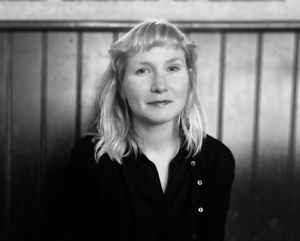
Lucy Mercer is a writer who lives in London. Her debut poetry collection Emblem (Prototype, 2022) was a Poetry Book Society Choice, and her nonfiction book Afterlife is forthcoming with Fitzcarraldo Editions.
*
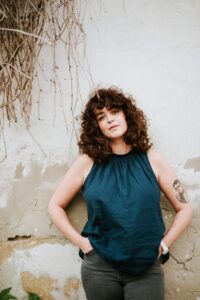
Livia Franchini is a writer from Tuscany, Italy. She is the author of a novel, Shelf Life (2019) and her second, High Tide, will be published by Doubleday in 2026. She is Lecturer in Creative Writing at Goldsmiths. Lucy and Livia are co-editors of the online publication Too Little/Too Hard: Writers on the Intersections of Work, Time and Value, which received a Literature Matters Award from the Royal Society of Literature.
*
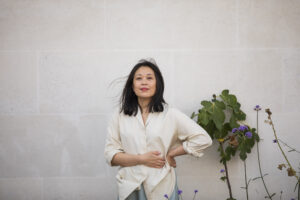
Kristen Vida Alfaro is the Publisher and Executive Director of Tilted Axis Press. She is also a writer and has previously led labour organizing at the Barbican. In a former life, Kristen pursued (and left) a doctorate in Cinema Studies at New York University. She is based in London and has appeared in The New York Times, The Observer, TANK, and Vogue Japan for her work with Tilted Axis.
*
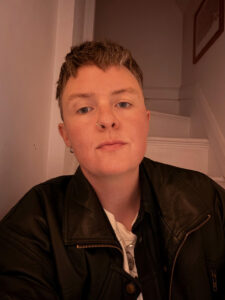
Jack Thompson is co-publisher and editor at Cipher Press, an independent publishing house amplifying the work of queer and trans authors. They were a 2021 Bookseller Rising Star, have appeared in The Observer for their work at Cipher, and have spoken about small press publishing at lit festivals. They have a Masters in Creative Writing from the University of East Anglia, and work with other independent presses at their day job in book distribution.
*

Samuel Fisher is a writer, bookseller and publisher. He runs Burley Fisher Books, The Ibraaz Bookshop and is a director of Peninsula Press. His most recent novel, Migraine, was published in 2025 by Corsair.
*
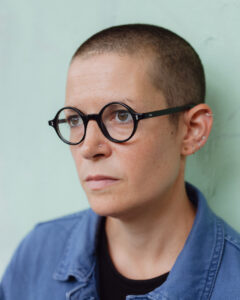
Jess Chandler is the founder and publisher of Prototype. She was a co-founder of Test Centre, which ran from 2011 to 2018, and co-runs the imprint House Sparrow Press. She has worked as an editor at Reaktion Books, was the Digital Editor of Poetry London for six years, and used to work as a researcher and producer on factual television programs. She was a 2024 Bookseller Rising Star.
*

Lucy Mercer and Livia Franchini
Lucy Mercer is a writer who lives in London. Her debut poetry collection Emblem (Prototype, 2022) was a Poetry Book Society Choice, and her nonfiction book Afterlife is forthcoming with Fitzcarraldo Editions. Livia Franchini is a writer from Tuscany, Italy. She is the author of a novel, Shelf Life (2019) and her second, High Tide, will be published by Doubleday in 2026. She is Lecturer in Creative Writing at Goldsmiths. They are co-editors of the online publication Too Little/Too Hard: Writers on the Intersections of Work, Time and Value, which received a Literature Matters Award from the Royal Society of Literature.