Letter From Minnesota: When Men With Guns Enter the Neighborhood
Sahra Noor on Finding Unwanted Echoes of Mogadishu
in Present-Day Minneapolis
The television was mounted high in the corner of the salon, flickering between music videos and breaking news. Three women sat in a row beside me under humming dryers, speaking in Swahili. Not fluent, I sat quietly, glued to the television screen.
Then the screen shifted to BBC News.
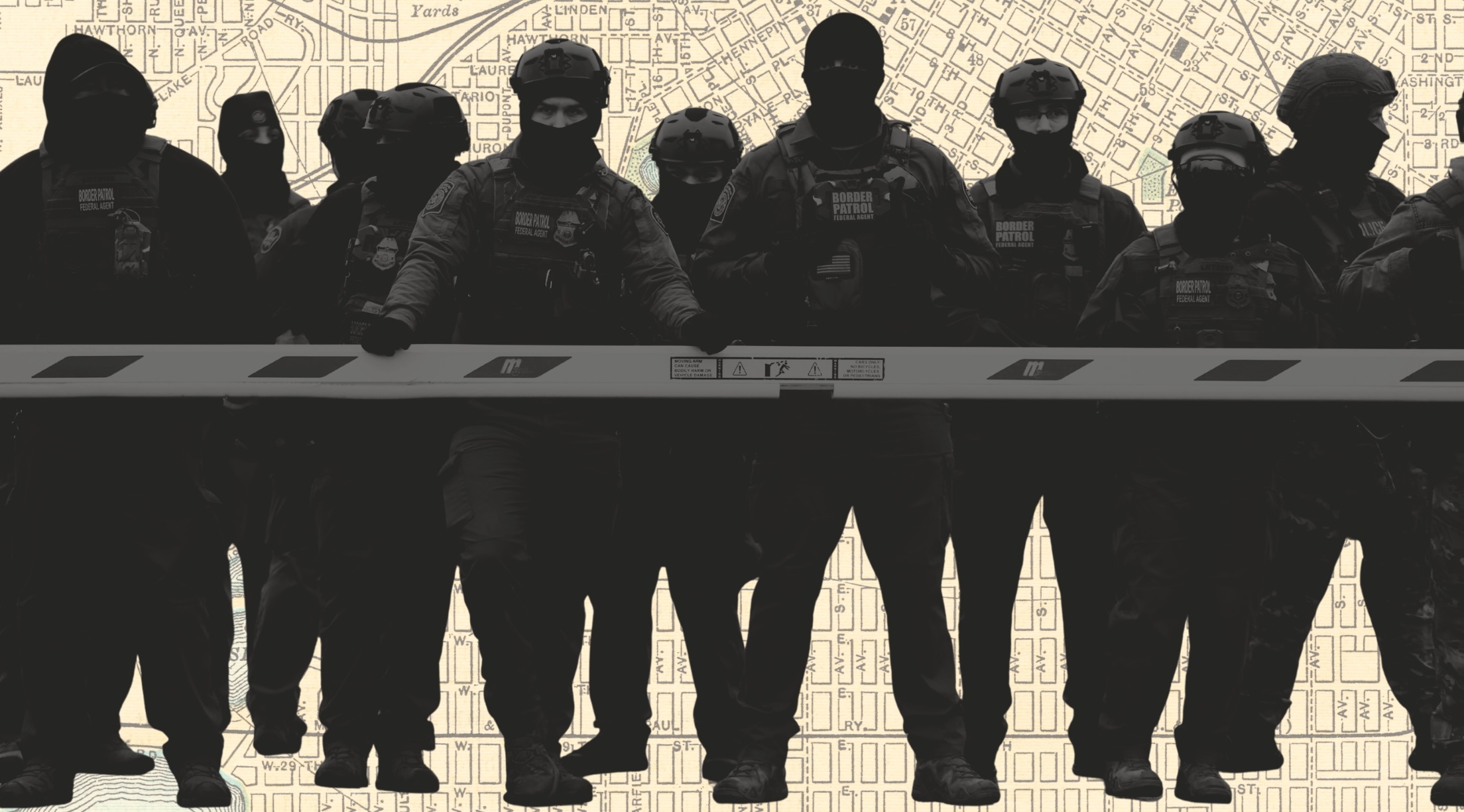
It showed masked men in military uniforms smashing car windows and firing tear gas into crowds on streets I knew: Cedar. Lake Street. Nicollet. Minnesotans wrapped scarves around their faces to block the tear gas and cold, shouting and whistling at ICE agents.
I heard myself say it before I realized I had spoken.
“That is my city,” I burst out to my hairdresser.
The words startled me.
I lived in Minneapolis for twenty-one years. I raised my daughter there. But I had never claimed the city out loud like that. Minneapolis was where I built a life, but I never stopped to ask whether it was mine. Yet watching federal immigration raids unfold on streets I know so well triggered me, and my body reacted before my mind did.
I know what it feels like when armed men enter neighborhoods and the air shifts. I know how quickly ordinary life can shrink into fear. I know how families begin locking doors and lowering their voices, how children learn to read adult faces before they understand the words being said.
I learned those lessons long before I ever saw snow.
I was barely a teenager in Mogadishu when peace and stability dissolved without warning. Young men with guns appeared in our neighborhoods. Adults stopped answering doors. Conversations fell silent when strangers walked by. When we finally left our home, we had no strategy, no plan. Leaving was a reflex to survive.
I arrived in Minneapolis trying to outrun fear. Now she stands in Minneapolis facing fear while helping others steady themselves against it.
We thought coming to America would mean safety, a distance from that kind of fear. Refuge was meant to draw a clean line between past and present. But trauma doesn’t just disappear. It travels through the nervous system, resurfacing in sounds, in headlines, in the sudden tightening of your chest when guns fire, people are beaten, or sirens get too loud.
I arrived in Minneapolis in the winter of 1997 carrying my infant daughter, Najma, and a determination I hoped could hide my fear. The air stung my face the moment I stepped outside the airport, and I saw piles of ice along the edges of streets. My breath came out in short white clouds I had never seen before. The sky hung low and gray that morning, and the bone-chilling cold and snow felt like an initiation to the Bold North.
Cedar-Riverside became our landing place.
At first, it felt temporary, like many refugee neighborhoods do. A waiting room where people catch their breath before moving on. But within months, it felt like home.
The halal shop down the block smelled like goat meat and cardamom. Women in hijabs pushing strollers through snowbanks reminded me of the strength and stubbornness of the women who raised me. Seeing East African and Southeast Asian elders sitting by the windows of their apartments, watching the streets, brought back memories of growing up near Siigaale Market, and watching people with my grandparents.
Here, we all exuded the calm authority of people who had survived too much to panic at new beginnings.
Najma grew up in those apartments and playgrounds, learning early that community could stretch across continents. She watched me navigate systems that seemed designed in a language far more complicated than English.
Long before the world saw ordinary people marching in the cold for their immigrant neighbors, I was seeing a bit of that care and solidarity up close.
Now Najma is an adult. And while I sit thousands of miles away, she stands inside the city that raised her, working directly with individuals and families caught in the uncertainty created by immigration enforcement as a mental health professional.
When we speak, she tells me about families trying to plan for possibilities they hope never arrive. She also shares her own fears of profiling and reflects on what it’s like to be an American-born child of refugees, witnessing every day how quickly stability can feel temporary.
There is a strange and humbling symmetry in that.
I arrived in Minneapolis trying to outrun fear. Now she stands in Minneapolis facing fear while helping others steady themselves against it.
After Alex Pretti was killed, I picked up the phone and asked her to leave, to come spend Ramadan with us.
“Najma, listen,” I said. “Come here for a few weeks. You can rest. You don’t have to stay in the middle of this.”
I could hear her take a slow breath, as she drove to her office, the faint hum of the city behind her.
“Hooyo,” she said gently, “I know you’re worried. But I can’t leave right now. I feel like I’m needed here. I have to keep working.”
“Najma…” I started, my voice tight. “It’s dangerous. I’m worried about you all the time.”
“I know,” she said softly, “but I can’t leave right now. I’ll be fine.”
My maternal instinct is to pull her close, to protect her, but I’m also proud of her courage and resolve to stay and to be helpful to others, when they need it the most.
When I said, that is my city, I was not claiming ownership. I was recognizing the connection that shaped me as a refugee, as a mother, and now as a parent watching her adult child step into work that demands courage and tenderness at the same time.
Minneapolis did not become my city because it was perfect. It became my city because it taught me that survival and resilience rarely look dramatic. They looked like professors letting me bring my baby to class. Like the counsellor at St. Catherine University, who helped me find childcare grants and scholarships so I could graduate on time with less debt. Or like the aunt offering to babysit so I could work the night shift as a nurse at the county hospital. Long before the world saw ordinary people marching in the cold for their immigrant neighbors, I was seeing a bit of that care and solidarity up close.
I do not know how this moment will end. History rarely offers clean conclusions. But I know this: the Minneapolis that helped me find peace, raise my daughter, and now holds her as she helps others, is a city that will keep showing up for itself and for one another.
Sahra Noor
Sahra Noor is a Somali-American writer whose work explores belonging, migration, and identity across borders. Raised between Mogadishu and the American Midwest, she now works in global health, supporting efforts to strengthen health systems across Africa. Her debut memoir Salt in the Snow is forthcoming from Catalyst Press in June 2026.