Letter From Minnesota: “We Had Whistles, They Had Guns.”
Andrea Jenkins on the Violent Echoes of Reconstruction
in the Streets of the Twin Cities
The first time I visited the African American Museum at the Smithsonian in Washington D.C. was 2017. I had just been elected to the Minneapolis City Council, the first Black, out Transwoman in the United States to hold office. The museum is the most comprehensive history of African American life in this country, and as I am sure you can imagine, it’s a very emotional, chronological journey through American history. I managed to constrain my tears (barely), until I reached the third level, which is right about the time of the Reconstruction Era, which followed the end of the Civil War.
This was a period of great African American progress, relatively speaking. Folks were reconnecting with family and loved ones when they could, building communities, and starting to plant new roots. There was a brief time when Black men could vote, and sure enough they elected city council people, state representatives, even congressmen and one senator. All of this progress came to a screeching halt when white Americans, desperate to hang on to power, enacted Jim Crow laws throughout society.
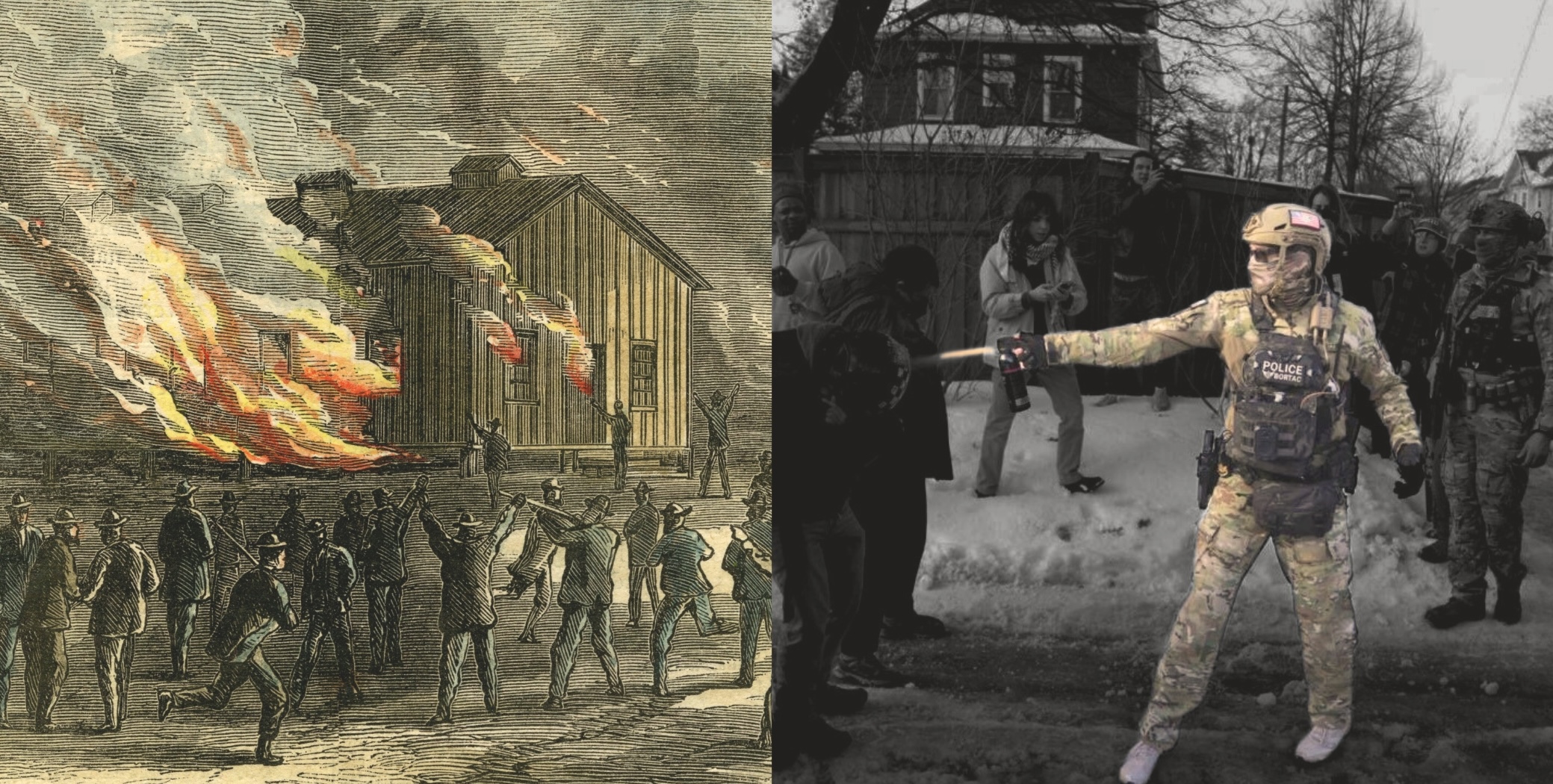
There was a photograph in the exhibit of maybe two-dozen Black State Legislators from South Carolina, and I suddenly burst into tears from all the built-up emotion I’d been suppressing, and in recognition of the enormous responsibility of being a Black elected leader. Jim Crow laws systematically stripped them of those posts, and made America a de facto police state for Black folks. All of the progress that had been made since the abolition of slavery was wiped out. Entire Black communities were burned down as lynching became rampant, a form of oppression and intimidation that persisted for almost a century.
That is what Minneapolis feels like now, and to be clear, the entire country is experiencing the same thing. The brutal tactics employed by the Immigration and Customs Enforcement agency and various other federal agencies are intended to strike fear in immigrants and other people of color, primarily Black folks, as well as Transgender and LGBTQIA+ communities.
As a person representing multiple identities, but most prominently, Black and Transgender, I am deeply concerned about my personal safety, and more broadly, others like me. This administration is literally erasing Black and Transgender people from society. They are removing names of cultural heroes and sheroes, attacking diversity and inclusion policies, banning books, and scrubbing websites. Just last week the president tweeted a vile and disgusting image of President Obama and First Lady Michelle Obama, and refuses to apologize. The racism is unabated and unashamed.
The people of the Twin Cities are standing strong for each other. Buying groceries for families afraid to leave the house. Blowing whistles to alert neighbors that ICE is in the area.
So let’s be very clear that the murders of Renee Good and Alex Pretti were public lynchings, with the same impact of those infamous lynchings of the last century. And those aren’t the only forms of intimidation and surveillance. ICE agents are walking up to legal observers, calling them by their first names, and letting them know that they have their home addresses. That is chilling and will make many folks think twice before participating in peaceful and constitutionally protected protest.
Operation Metro Surge is about more than deporting the worst of the worst (only two percent of the thousands of people detained and deported would even qualify as such). No, these actions are about reconstructing America and reverting to a time when only white men were allowed to run shit. Deport the immigrants, create financial instability for Black folks, destroy reproductive rights for women.
In other ways, it feels like reliving 2020 and the George Floyd uprisings. The same helicopters and drones surveilling the neighborhoods and protests. The same media outlets swarming around, talking to any and everyone who is willing. It’s the same collective trauma Minnesota experienced after the murders of State Representative Melissa Hortman and her husband, and the Annunciation School shootings. To say it’s exhausting would be an understatement.
But the people of the Twin Cities are standing strong for each other. Buying groceries for families afraid to leave the house. Blowing whistles to alert neighbors that ICE is in the area. People are protesting in freezing conditions and committing civil disobedience, getting arrested. And it’s not just in the streets: local and state governments are bringing legal pressure; and while it’s mostly not working it does send a message that we will not back down, we are fighting for the soul of this country.
*
“We Had Whistles, They Had Guns”
No sunshine on a foggy winter morning
No regard for humanity
No dignity, no self respect
“fucking bitch”
My neighbors lives matter
We support immigrants
We had whistles
“I ain’t mad at you dude”
9 seconds, there’s a motherless child
9 seconds, there a widow
9 seconds, there’s a grieving community
“He has absolute immunity “
“IGNORANCE allied with power, is
the most ferocious enemy justice
can have.”
James Baldwin
Who tore down the east wing
Who fired 300,000 Black Women
Who dropped a bomb on Nigeria
Who murdered Alex Pretti
Who took a chainsaw to the Constitution
Who ripped up the street in Washington D.C.
But, you know what? BLACK LIVES STILL MATTER
Bring Liam and Chloe home
Leave Minneapolis alone
We marched in the streets
We followed them with our cameras
We tried to love ourselves out of the darkness
But they had guns
Andrea Jenkins
Andrea Jenkins is a soulful poet, educator, artist, respected historian, and political powerhouse. In 2017, she became the first out Black Trans woman elected to public office in the United States. She formerly served on the Minneapolis City Council. She holds a Master’s degree in Community Economic Development from Southern New Hampshire University, a Master of Fine Arts from Hamline University, and a bachelor’s degree from Metropolitan State University. Additionally, she completed the Senior Government and Executive Leadership program at Harvard University. Her work and leadership have been featured in TIME Magazine, Essence, Teen Vogue, The New York Times, The Guardian, and Minneapolis St. Paul Magazine. In 2022, she was recognized on the OUT100 list by OUT Magazine, the Twin Cities Business 100 People to Know, and Fast Company’s Top 50 Queers.