Letter From Minnesota: We Are a People Born and Bred of Organizers
Marcie R. Rendon on the Importance of Doing the Right Thing
Before the current ICE occupation, many folks in the activist community moved off Facebook, Meta, X, and went to, at the time, more secure communication platforms. I asked a Lakota friend, activist at Standing Rock, if he was leaving FB. He said, “No, all the NDNs are on FB.” So, I stayed.
Facebook posts.
Feb 3, 2026 – they haven’t left – they are just being more covert and dispersed
Jan 30, ‘26 – i am marking myself safe (currently) during the ice storm in mpls
Jan 28, ‘26 – feel like i am in a domestic violent relationship – like this is the calm before the storm, and/or the honeymoon phase… on edge, treading carefully, waiting for the next assault… not knowing when or how or from what direction
Jan 25, ‘26 – i have heard so many folks say, ‘well i just needed one thing’ so i ran into (name the boycotted, non-dei, crump supporting store)… i have lived quite well without entering a starbucks or target for over a year now and now cbou is added to my list / i who never drink coffee pulled out the coffeemaker and made myself a cup of homemade coffee the other day… just for spite….
Jan 24, ‘26 – when i think of the woman in pink (hoping for her safety) i can’t help but think of another woman in pink… my life has been filled with one assassination after another (referring to the pink Chanel-style suit Jackie Kennedy wore the day John Kennedy was assassinated)
jan 21, ‘26 – i don’t think minnesota wants to be the hero for the rest of the usa – i think we wish you all had just voted differently, held a moral compass before the shtf….. and yes, we are very happy that many many of you have changed your minds and moved to the light….
As I’ve listened to people ask “why?” Minnesota. As I’ve listened to people talk about how brave we are. As people have wondered who we are and why we are, my thought is, “none of us wants to be a hero.” But as Native people and people of Scandinavian descent, and with so many Minneapolis residents as first or second-generation rural folks, we do know how to do the right thing at the right time.
I grew up in northern Minnesota with a father who often, in response to people’s racist remarks or general ignorance, would say in a gentle tone, “They’re people too.” Like many of the people around him, he held his grudges silent. He drove thirty miles to a neighboring town to get haircuts because the town barber nearest him made a racist remark about an NDN woman and a Black man. But he never said a bad word about the town barber.
Minnesota folks have a long history of organizing. The Dakota and Anishinaabe organized against the settlers. Then organized to survive them. A tactic still practiced.
In rural Minnesota, and on its eleven federally recognized tribal nations, there are folks who haven’t spoken to each other in so long they’ve forgotten why. But if one of them sees the other on the side of the road with a flat tire they’ll stop to help put the donut on. Silently. Avoiding eye contact the whole time. But the tire gets fixed.
In this land of four seasons, where winter snowstorms can be deadly; spring snow melt can flood entire towns, summer brings tornadoes, and fall might see forest fires, people know the value of human life and kindness repaid. And we are raised with the idea that in any kind of trouble we have a responsibility to show up, be there… shovel cars out of ditches, sandbag rising rivers, check on neighbors who were in the path of a tornado or fire. It’s not about bravery, it’s about making sure to do the right thing, at the right time, for the other human—because we too are human.
Minnesota folks have a long history of organizing. The Dakota and Anishinaabe organized against the settlers. Then organized to survive them. A tactic still practiced.
The early 1900s saw an influx of Scandinavian and Finnish immigrants who were socialists and farm-labor organizers, who shaped or laid the groundwork for today’s progressive political stance. The Democratic Farm Labor (DFL) Party was formed in 1944. When Minnesota was still a territory, so-called legal criminals like railroad baron James Hill proclaimed, “Give me Swedes, snuff and whiskey and I’ll build a railroad through hell.” In the 1930s organized criminals operated out of St. Paul; John Dillinger and Al Capone probably being the most infamous.
And then there are the women. The Lutheran Ladies Aid. The 1911 Minneapolis League of Catholic Women, formed to give aid to single working women in the city. Women’s church groups have incredible organization skills. Everything from church dinners, to baby showers, bridal showers, and wakes. Everyone is comforted, celebrated, and fed. And now the daughters and granddaughters of the Ladies Aid and League of Catholic Women’s groups are organizing food, shelter, and finances against stone-cold invaders.
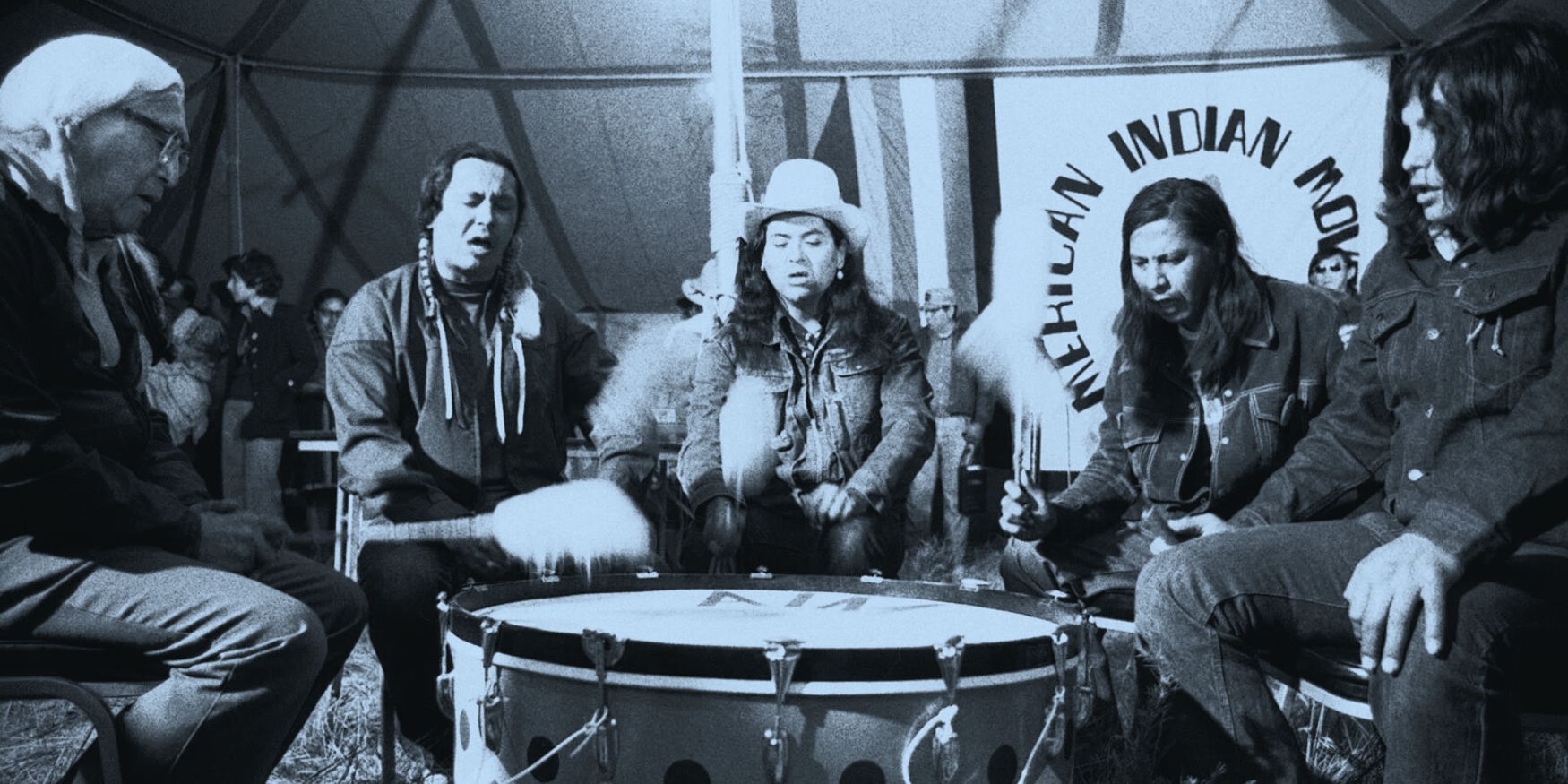
The American Indian Movement, which brought awareness to the need for international recognition of our rights as a sovereign people, was formed in 1968 right here in Minneapolis on the infamous Franklin Avenue.
Polly Kellog, one of the first organizers of Women Against Military Madness in 1981, is still protesting. Still giving guidance and encouragement to younger visionaries.
I moved to Minneapolis in 1978, never having lived in a city but familiar with farm co-ops, rural electric co-ops, and grain cooperatives. Here in “the cities,” food co-ops existed. WAMM protested the military every Wednesday, and still do, on the Lake Street Bridge through rain, snow or blistering heat. From 1968 to l990 Marv Davidov spearheaded the Honeywell Project to protest that company’s creation of nuclear arms products, cluster bombs, and other military equipment.
Many of us have PTSD from living in Minneapolis during the Murderapolis years when drive-by-shootings on our blocks were weekly if not nightly at times. Neighborhoods organized to get children safely to and from school while organizing at a city level to stop the violence. I schooled my grandchildren on how to prepare for teargas when they participated in Black Lives Matter marches in solidarity with the Ferguson Uprising and to protest the killing of Philando Castile by St. Paul police.
I tracked those same grandchildren on my phone while they protested, protected and evaded MN National Guard and Federal troops who invaded our city to quell the uprising after George Floyd’s murder. Now they leave their phones with me while they go out into the cold.
We are a people born and bred of organizers. We are the descendants of visionary leaders who have shaped history beyond our state. It isn’t about heroism or courage. It is about doing the right thing, in the right time, because that is what is required of us to remain human.
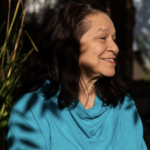
Marcie R. Rendon
Marcie R. Rendon is an enrolled member of the White Earth Nation, author, playwright, poet, and freelance writer. Also a community arts activist, Rendon supports other Native artists / writers / creators to pursue their art, and is a speaker for colleges and community groups on Native issues, leadership, writing. She is an award-winning author of a fresh new murder mystery series, and also has an extensive body of fiction and nonfiction works. The creative mind behind Raving Native Theater, Rendon has also curated community created performances such as Art Is… Creative Native Resilience, featuring three Anishinaabe performance artists, which premiered on TPT (Twin Cities Public Television), June 2019. Rendon was recognized as a 50 over 50 change-maker by MN AARP and POLLEN in 2018. Rendon and Diego Vazquez received a 2017 Loft Spoken Word Immersion Fellowship for their work with women incarcerated in county jails.