Letter From Minnesota: This is Actually What’s Great About America
David Mura on the Power of Solidarity and Diversity in the Twin Cities
After the attack on Pearl Harbor on Dec. 7, 1941, a spotlight immediately glared upon the Japanese community. My Japanese American parents were ten and fourteen; for months their families lived in fear of what might happen to them. Their community experienced harassment on the streets, racial insults, signs of “Japs Go Home.” Newspapers blazed false headlines of “Jap fifth column activities.” Referring to the Japanese Americans, like my parents, the LA Times editorial declared, “A viper is a viper wherever the egg is hatched.” We were rats, vermin.
When President Trump called the Somali community “garbage,” I immediately thought back to my parents and their families during WWII. When I was growing up, that time of persecution and unjust imprisonment was something the adults didn’t talk about to us, and it seemed so distant in time.
Now, living in Minneapolis, I have a lens upon what my parents and their families went through, facing a racist government who would take away their Constitutional rights.
In the last few weeks, ICE has occupied our city like a foreign army, an invading force. It has caused our neighbors to fear leaving their homes, caused children to be afraid to go to school. It has snatched the elderly, pregnant women, a five-year-old boy, a two-year-old infant. But the difference between what happened to the Japanese Americans in WWII and now is this: The people of our city are fighting back against these forces of hatred and violence unleashed by the Trump administration; we are standing up for our neighbors. We are organizing in unprecedented ways to protect each other, especially the most vulnerable among us.
Like so many, I have wept and watched the videos of the murder of Renee Nicole Good and Alex Pretti over and over, taking in new analyses of the footage, which only confirm what I already knew: ICE agents murdered Renee and Alex; Renee and Alex were not domestic terrorists, but concerned citizens who wanted to protect their neighbors.
The site of their killings are now hallowed ground, a testament to their fight for justice, a site of tears and mourning, a celebration of their lives.
Since Renee, a recent newcomer to the Twin Cities, was a poet like me, I probably would have eventually met her had she lived. But that is how connected we are here. We know the places where these murders took place, we’ve driven down those roads, shopped at Glam Donuts. The images of our everyday lives in the city now carry a nightmarish quality. These memories will be with us forever, just as that corner on Chicago Ave. where George Floyd was murdered will stay with us forever.
But the site of their killings are now hallowed ground, a testament to their fight for justice, a site of tears and mourning, a celebration of their lives. Standing with others in the January cold at the site of Good’s murder on Portland and Pretti’s murder on Nicollett I felt their presence and the collective grief and outrage we all felt.
Yes, we have experienced trauma, but we march on, we fight on.
On the night of Renee Good’s murder, my daughter, Samantha, spoke on CNN in her role as a MN State Representative from South Minneapolis. I was proud to hear my daughter call Renee’s death a murder. And yet I was terribly fearful for her too. She had now breached into a national media spotlight and we all know the negative threats that such exposure brings. Indeed, she was a friend and colleague of Rep. Melissa Hortman and the murder of Hortman and her husband was both a personal loss and a personal trauma for my daughter.
But it’s not just my daughter. I now have recent immigrants who are now part of my family. I can’t be any more specific about that, but to me and our family, given our lives and our friends, we are connected with so many of the communities who now find themselves fearing to go about their normal day-to-day lives.
What is happening now in the Twin Cities is a repudiation of the MAGA white supremacist vision of America.
My middle son works at the Wellstone High School for recent immigrants, whose students come from all over the globe. He fears and worries for his students, and yet I keep remembering his description of their prom where all the students sang along in Spanish to the Mexican pop hit Despacito—not just the Mexican students, but the Karin, the Somali, the Liberian. To him, this was America, the America he grew up in. It was his park-league basketball team where I would drive his team of two Somali kids, one Eritrean, a Mexican, two African Americans, a Tibetan and my mixed race son, all singing to a rap song on the radio. My children grew up in the diversity that JD Vance and Trump so hate; they have grown up to love those of other ethnicities and races. The resistance in our city comes out of how our children have come of age within a diversity that so many fear and we here celebrate.
In a town hall where my daughter served as the moderator, Rep. Ilhan Omar named our resistance as “radical love.” In the Atlantic, Adam Serwer calls what is happening in the Twin Cities “neighborism”—the belief in helping your neighbor, loving your neighbor, whatever their race, ethnicity, country of origin, gender orientation/preference, and of course immigration status:
Vice President Vance has said that “it is totally reasonable and acceptable for American citizens to look at their next-door neighbors and say, ‘I want to live next to people who I have something in common with. I don’t want to live next to four families of strangers.’” Minnesotans are insisting that their neighbors are their neighbors whether they were born in Minneapolis or Mogadishu
…or I might add Vietnam, Laos, Liberia, Eritrea, Bosnia, Mexico, Ecuador, Honduras, Tibet and so many more.
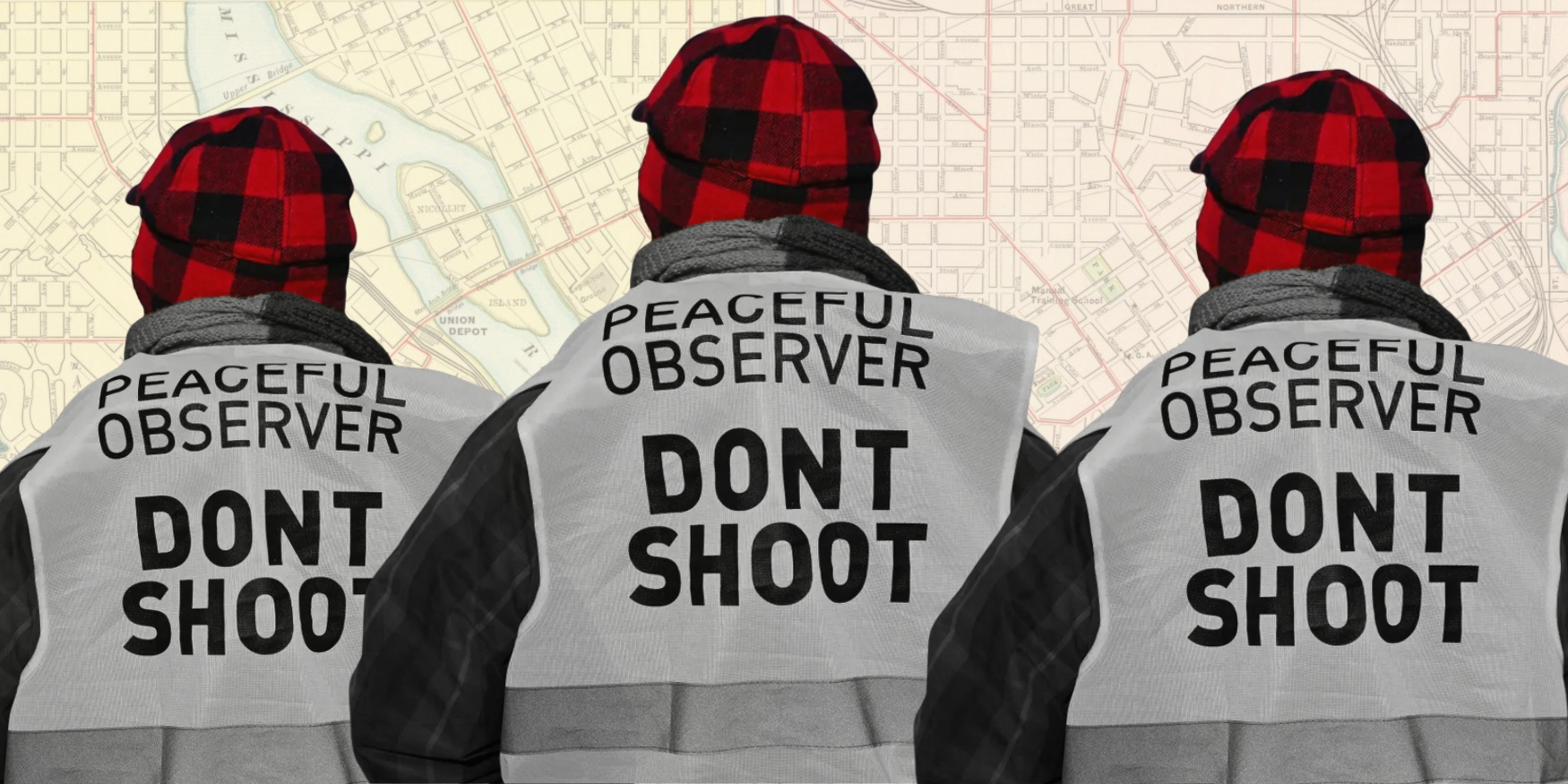
What is happening now in the Twin Cities is a repudiation of the MAGA white supremacist vision of America. It is a celebration of what the best in America has always been, a place where people from around the globe have to come to live because we believe in democracy, in equal rights, in justice and fair play. We are saying that strength comes from love not hatred, from our diversity not our sameness, from our capacity and willingness to band together. Patrolling and warning against ICE, delivering food to those in danger, hiding and housing them, walking the streets in protest in sub-zero temperatures, we have gone all in, tens of thousands of Minnesotans, a massive resistance. As some have remarked, it takes more courage to face the barrel of a gun with a phone than to point the gun at an unarmed citizen.
Unfortunately it took the killing of a second US citizen, a white male, that seems to have finally turned the national tide against the occupation of our cities. But it is not only Alex Pretti’s death—and brave and compassionate life as an ICU nurse—that has helped accomplish this. It is the work done by all of us in the face of Trump’s fascism. It is our communal belief in the values of the Constitution and neighborly love that has sustained us in this fight—and I believe we will, eventually, force ICE and Trump’s goons to leave.
In an irony MAGA will not understand, through the work of ordinary Minnesotans, we are making America great again.
David Mura
David Mura’s most recent book is the acclaimed The Stories Whiteness Tells Itself: Racial Myths and Our American Narratives. His previous book was on creative writing and race, A Stranger’s Journey: Race, Identity & Narrative Craft in Writing. With essayist Carolyn Holbrook, Mura co-edited the 2021 anthology of Minnesota BIPOC writers, We Are Meant to Rise: Voices for Justice from Minneapolis to the World. He has just finished a book of essays on Asian American issues and his own personal journey, Exit: Miss Saigon, which will appear in Sept. 2026. Mura is a poet, creative nonfiction writer, fiction writer, critic, playwright and performance artist. A Sansei or third generation Japanese American, Mura has written two memoirs: Turning Japanese: Memoirs of a Sansei , which won a 1991 Josephine Miles Book Award from the Oakland PEN and was listed in the New York Times Notable Books of Year, and Where the Body Meets Memory: An Odyssey of Race, Sexuality and Identity.