Letter From Minnesota: The Border is Everywhere
Victoria Blanco on Continuing Family Traditions of Organization and Resistance
This isn’t new, we say to our Minnesota-born son, the one with dark, wavy brown hair, eyes like his abuelita’s. Deep brown, the color of the desert where his father and I were raised.
We are making dinner in our kitchen in our Minneapolis home. The smell of onions and garlic fills the room. Our two younger sons are playing in their bedroom, their words mixed between English and Spanish. Our twelve-year-old hovers nearby, hungry for dinner, but also hungry in a deeper way. He wants to understand the world. Social studies is his favorite class, he tells us. They’ve been studying borders since the start of the year.
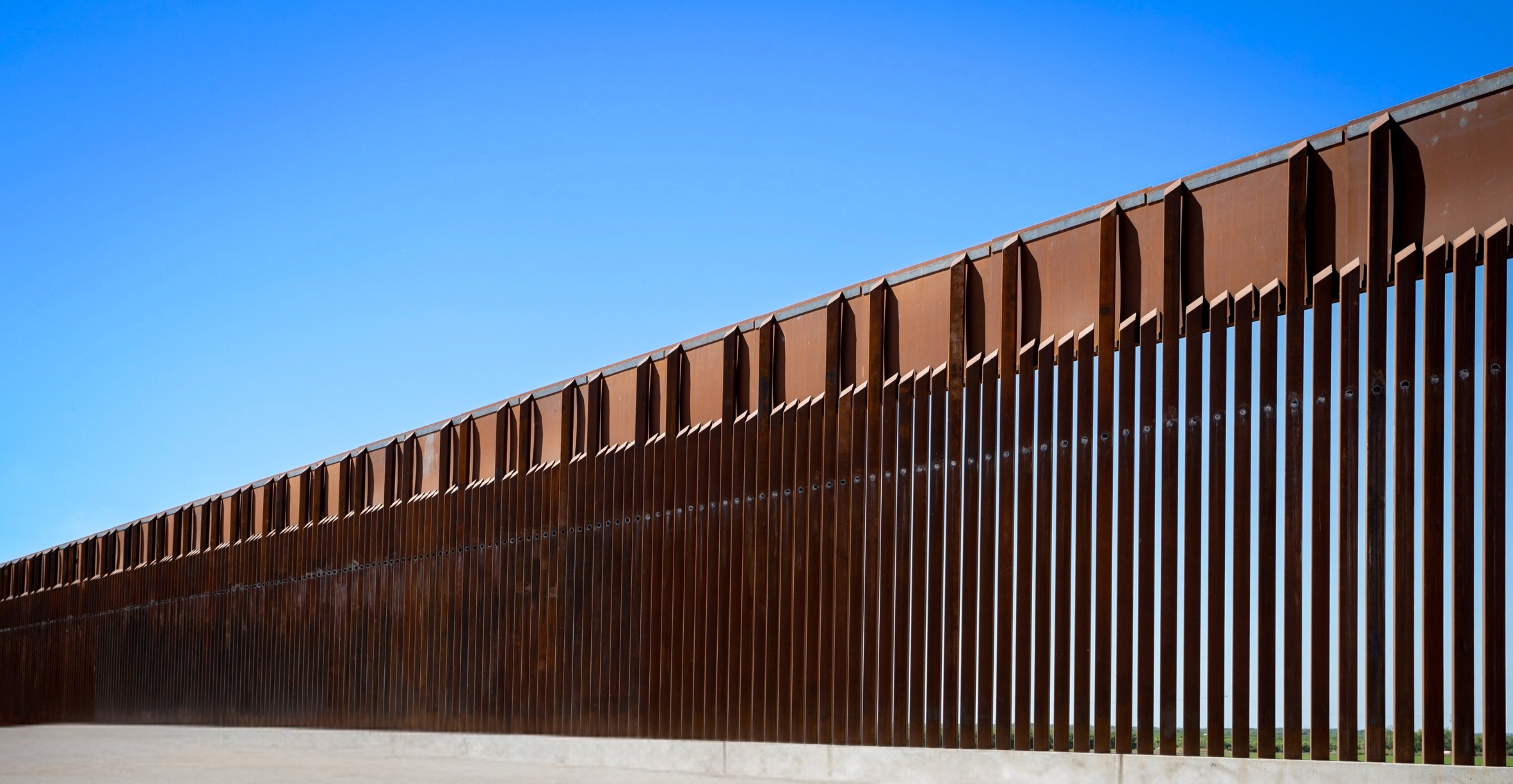
Borders, we know, are not abstract. They are lived.
When I was a child, we would cross the bridge into Juárez, heading south from El Paso, and I’d often see people running across the dry riverbed of the Rio Grande. The river was usually little more than a trickle. Border Patrol agents would catch some of the people running, but others would make it through. And they would find their way into the United States, build their lives, have children.
The point of this story, we tell our son, is not nostalgia. It is that borders are arbitrary. Borders are lines drawn by governments and enforced by force, not by nature or morality. What is happening today in Minneapolis, we explain, is yet another enforcement of the border, this time in a brutal and intimate way.
Raids. Detentions. Friends of ours living in fear, keeping their children home from school. We tell our son not to be afraid for himself or for us, to instead think about his inheritance at the southern border, which he crosses each time we go back to visit family.
I frame nearly everything around borders. It’s how my life has been shaped, growing up between El Paso and Ciudad Juárez, learning early that a few feet of geography could determine the language you spoke at school, the opportunities available to you, the assumptions people made about your worth.
In the spirit of peaceful activism, we guide him in organizing a walkout at his school. It feels small, almost symbolic, but this action is rooted in our family’s, and our people’s, history.
I’ve seen the borders in Minneapolis since I first got here fifteen years ago. The Mississippi River dividing Minneapolis and St. Paul, as if water itself were a declaration of difference. I-35 acting as a kind of wall, keeping communities of color on one side. Neighborhood signposts marking which community center you belong to, which school district, which resources you can access.
Our son listens quietly, absorbing this history. He is, after all, a Mexican-American child fully from Minnesota. He loves winter more than any other season. He goes sledding and ice skating and doesn’t mind the dull sun that hangs low in the sky for months. His sense of home is not split the way ours once was, and yet he inherits the consequences of lines drawn long before he was born.
“What can I do?” he asks.
The question lands heavily. Over Christmas, we watched a film about César Chávez together. We told him family stories about relatives who worked in the fields and restaurants of California during that time, drawing a direct line between their labor, their organizing, their sacrifice, and our comfortable life in Minneapolis. We wanted him to understand that the stability he knows did not appear by accident. It was fought for.
Still, his question is urgent, is about the present. In the spirit of peaceful activism, we guide him in organizing a walkout at his school. It feels small, almost symbolic, but this action is rooted in our family’s, and our people’s, history. A few days earlier, he had seen hundreds of high school students march past our house in protest of ICE. Their chants echoed down our block, bouncing off the same houses that had stood silent during earlier crises.
Just months before, he had watched these same students march for gun legislation in the wake of the Annunciation shooting, which happened five blocks from our home. Violence, borders, and resistance are all overlapping in Minneapolis in a way that I have only ever seen in El Paso and Juárez.
We tell him he is following a tradition. Not an abstract one, but a family tradition, carried forward from just a few decades ago. He is learning that citizenship is not just paperwork, that humans belong no matter their status, that belonging does not require silence. He is learning that borders can be challenged not only at bridges and checkpoints, but in classrooms, neighborhoods, and dinner-table conversations. They can be challenged by the children who are inheriting this world.
On the day of the walkout, he is nervous. His backpack feels heavier than usual. We reassure him that fear is part of doing something meaningful. When he steps outside with his classmates he is crossing a border of his own.
Later that evening, back in our kitchen, we make dinner again. Our twelve-year-old talks more than he listens this time, animated and proud with possibility. The borders of the day—between action and inaction, between learning and doing—have shifted just a little. And we know this, too, is not new. It is how change has always begun.

Victoria Blanco
Victoria Blanco's first book, Out of the Sierra: A Story of Rarámuri Resistance, was published by Coffee House Press in 2024. Her writing has appeared in The New York Times, Guernica, and Orion Magazine, among others. She is from El Paso, Texas and now lives in Minneapolis with her family.