Letter From Minnesota: “I Have My Passport With Me.”
Michael Torres on Life in the Lens of Authoritarianism
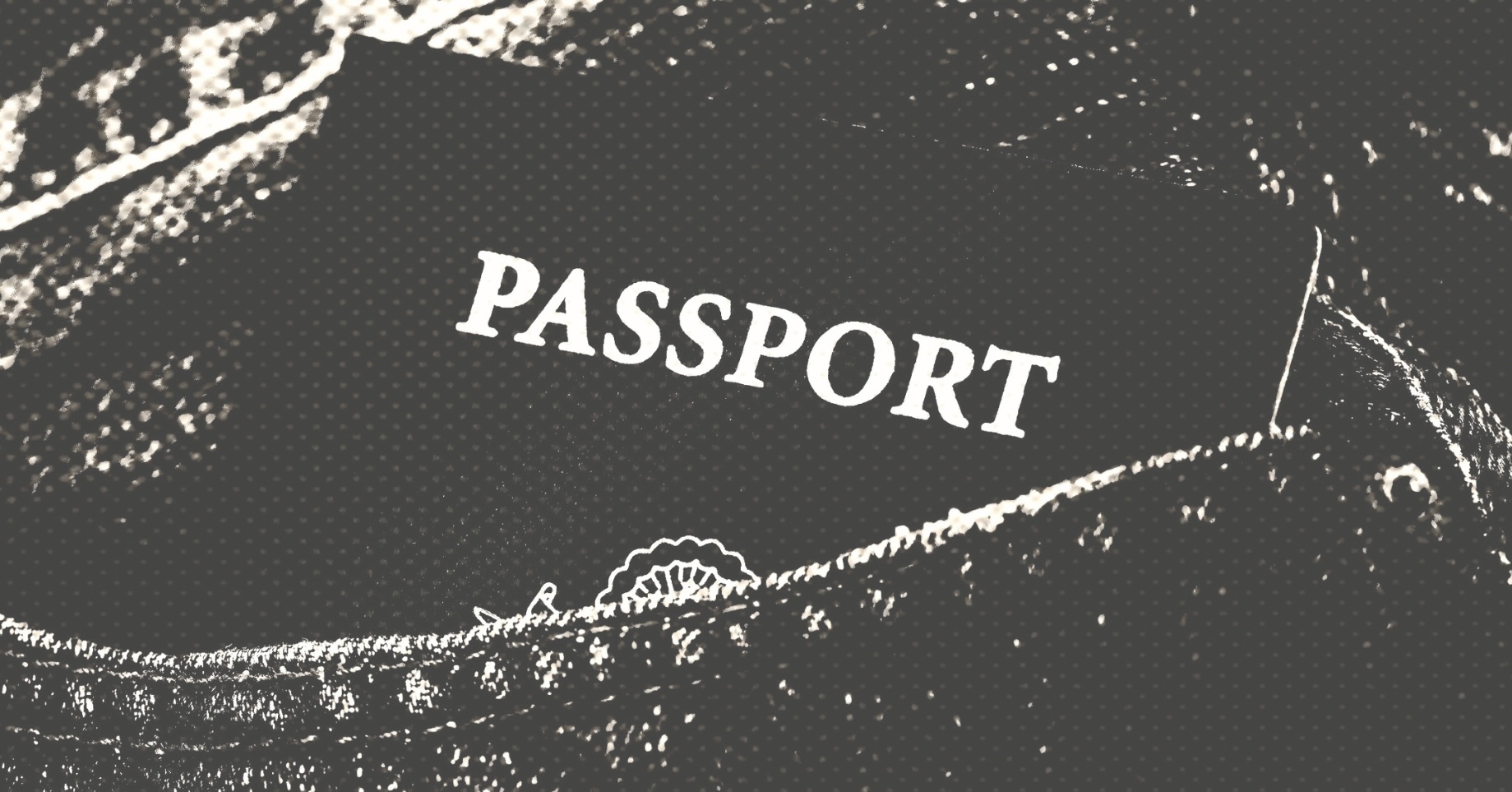
I’ve been carrying my US Passport in my backpack lately. Sometimes my coat pocket. Or pants pocket. I pat-pat it as I cross campus; when I walk into the grocery store. I live in a small town over an hour from Minneapolis where most of the ICE activity in the state is happening. But I hear from friends or read on the news about them here and other small towns. Like Saint Peter. Winona. Richfield. I hear from friends who are “laying low” and “staying safe,” that they “miss gathering.” It feels as odd as it does necessary to keep on me.
I told my wife about the passport just a day ago. She’d asked if I thought it was safe to go uptown by myself. This isn’t my hometown, but it’s home now. I grew up in southern California—the son of a Mexican-American mother whose father received the Purple Heart in WWII. My father grew up in a pueblo in Jalisco and crossed into California at nineteen-years-old. He met my mother at a dance hall on a Saturday night.
*
It’s Saturday morning, and the name held by an invisible wire between conversations is Renee Good. I’m at the YMCA—for a sense of routine, and a desire of life “before,” whatever that may mean. I walk into the aerobics studio and a white man in my group class, who, I feel, has never taken notice of me, looks up at me for a beat. Minutes before, near the check-in desk, a white woman was talking with a brown man in a turban and hushed, I hear him say, “Yeah, my brother was stopped on the way to Rochester.”
I think about how the other day, before the start of my poetry class an Asian American student said to me: “I thought there was a 50/50 chance you wouldn’t show up.” He said it so matter-of-factly.
“You mean, I could’ve had a day off?” I said, laughing so as not to worry any of them. I set my backpack down where my passport rested between books.
*
The other day my childhood homie Miguel texted, asking how I was doing with “everything going on.” We talked about our families and how he tried teaching his kids about the “Decade of Betrayal” when they were teenagers. We went back and forth until each of us had to get on with our days. Much later I recalled when I first learned about the deportation (or “repatriation”) of a million Mexicans during the Great Depression, and that of those million, an estimated 60 percent were US citizens of Mexican descent.
*
Passport in my pocket, a memory of a family trip comes back to me.
I’m eleven or twelve-years-old at the infamous O.K Corral. I try to imagine cap gun smoke in the air at the gunfight reenactment my sister said she took us to, but what I remember most is the return from an afternoon across the border in Nogales.
In a large room I watch my sister and mother walk in front of me through customs. They show IDs. And then I, without one—oblivious as a kid would be at eleven or twelve-years-old—follow them until I’m stopped by customs. I stand there, suddenly hyper-alert, and watch my family walk on. The crowd seems to deepen. It pulls them away.
I feel wild and lonely, and wonder if that’s how I am desired: unknown and at a distance. It’s easier not to care from that far away.
The officer asks if I’m a citizen. Or if I speak English. I answer that my family’s up ahead. He says something like, “Call to someone you know.” His tone isn’t unkind, just formal. Formal like formal like formality, like I just have to prove I belong.
I have enough sense of my masculinity not to call for my mother. Instead I yell for my sister, shouting, “Rose!”
Beyond me, the room flows with people going back into the United States. Finally Rose turns and looks at me. I look to the agent. I’m allowed to go. Just an interruption.
*
I learned about the “repatriation” of the 1930s in a Chicano Studies college class, which I attended with a sort of pride—learning my history after years of a public education where I hardly saw myself in books. I admit: that pride was rooted in a particularly American privilege I believe was mine to have: this happened to them, not me. This belief was immediately complicated by the fact of my upbringing in the hood, as we called it, which included the misfortunes of some brown boys I knew well. These were, to me, good kids—smart young men, artistic, and charming—who let me ride back pegs on the way to the Arco, who took me on graffiti missions. I lost them to drugs or gang life.
To avoid their misfortune, to hold onto the belief of my supposed privilege, which would grant me a life with possibility, I estimated I would have to leave home. That adage, to “get out the hood.” So I dreamt large enough to avoid the paths of those homies.
Only now, in retrospect, do I understand what fear my desperation sprang from.
So it’s at the gym, when I begin to wonder if I’ve been fooling myself, if I can’t after all, live the kind of life most here in my small town live. Is my life here, as an American, after all, merely conditional?
*
The result: I am a surprise unto myself. Here at the gym I am surprised (or reminded) that I am the one subject to question. I can’t help but imagine people imagining how I got here. Call to someone you know.
The result: I think of ICE presence and I think: they are memory takers.
As such, I exist without a history. Rather, when the white man in my workout class notices me, it feels as though I’m being considered with eyes that don’t allow him to recall that I’ve been coming to this class for months. It seems to me that I now carry a different history, one suddenly mine (again). One in which I am, possibly, from the look of things, here illegally.
But I have my passport with me. Pat-pat.
I feel wild and lonely, and wonder if that’s how I am desired: unknown and at a distance. It’s easier not to care from that far away. I can stand here, next to an officer and become small. And the flurry of American life can carry on without me.
In my hyper-alert state, it seems they—whoever they may be in a given moment—want me to forget who I am. Like it’s better if they don’t know I signed my daughter up for swimming lessons; or that my son says, “Squeeze” when I give him a hug before I leave for work.
They don’t see that I am kind and God will do right by me.
They don’t see the way I peel grapes before I eat them.
They don’t see when I stay up late, looking over at the clock is like a jump scare.
They don’t see that I like to eat chicken with crispy skins.
They don’t see how, when I was a kid, I caught a big salmon with my grandma’s neighbor, Doc.
They don’t see the time I lost a single Hoka in the Willow River, enough Spotted Cow in me to toss my head back, laugh, and toss the other in a trailhead trashcan.
They don’t see that I stop and observe squirrels and pigeons while I walk home from school.*
I won’t forget I have a history here.
Like how I answered the aspiring gangster when he stopped me by my house one night when I was sixteen.
“Where you from, homie?” he said.
“I don’t bang,” I said.
*
I could be wrong about the white man from the gym. I’d like to be. His gaze could’ve been wonder or worry—because I too will sketch others easily, blurred and far off. Forgive me, I’m just nervous. I don’t want to be the animal I sense when my movements become instinctual. Pat-pat.
So I try to write, to think, to slow myself.
I step back and count down from ten until I reach all I know and love. And I remember people showing up for one another in their various ways—fogged breaths, wide mittens, text messages. Closeness.
*
There’s a whistling that passes through this morning, and in my mind I tell you there is no cage for me to pace inside of. I must believe this. I’m constantly moving back towards faith. I’ve made the life I have out of community and words, and my job—if only for myself this day—is to attempt to piece together another bridge.
_________________________________________
*Italicized text is by students from my Poetry Workshop and Contemporary Writers course.
Michael Torres
Michael Torres was born and brought up in Pomona, California. His debut collection of poems, An Incomplete List of Names (Beacon Press, 2020) was selected by Roque Raquel Salas Rivera for the National Poetry Series. He teaches in the MFA program at Minnesota State University, Mankato and through the Minnesota Prison Writing Workshop. Visit him at: michaeltorreswriter.com