Letter From Minnesota: Echoes of the Other Occupation
Josina Manu Maltzman Finds Parallels, For Good and Ill, Between Palestine and the Twin Cities
The point of an occupation is you don’t choose when it happens. They descend upon you at their convenience. On day fifty-four I watch an almost-live stream of someone getting shot dead by federal agents a few blocks from my home, within moments of it happening in real time. It’s playing on my brother’s phone and we watch it again, trying to figure out how many shooters there are. We’d just been measuring our faces for gas masks and now we’re watching gas deployed on the gathering crowd. My phone is blowing up.
I text with my friend who lives in Palestine, in a refugee camp in the Occupied West Bank. She is who I think of talking to since this occupation started. I am considering walking over to the site on Nicollet Ave where ICE is cracking down on observers. “Stay Safe. Carry onions,” she advises.
From Palestine is where I get a definition of what occupation is, talking to people about their lived experiences and my own brief eyewitness. I learn that at any moment they can enter your neighborhood, enter your home, to upend it with chaos and kidnap people—and you live your life as normal as you can while everything is centered around an impending explosion of violence you have no control over.
It’s day fifty-six of occupation and I’m moving from the home I’ve lived in for seventeen years to a neighborhood I’ve been visiting for fourteen, only a mile apart. The move has been a months-long process, it just so happens to be taking place during Operation Metro Surge. Life goes on. Car accidents happen, as does jury duty. Toothaches. Life happens while sheltering at home, or after leaving the house only with accompaniment, always calculating the risk of every choice.
I pack up my old place with the music turned down, low enough to hear whistles should they go off. At least once a day they do, and sometimes for what seems like hours. ICE is here. Drop everything. Check my pockets that I have what I need, take a breath, and go out to form a crowd. One time we succeed in kicking them off the block empty handed. They tear gas us before the caravan careens the wrong way down our one-way street, exiting the scene. We whoop and holler between coughs. In this brief moment it feels like we’re winning.
In Palestine this looks like recording settler violence, accompanying shepherds in their orchards and kids to school.
“Well maybe your new place will be a little quieter?” shrugs a friend as she wraps my dishes. She’s taking a break in between doing school watch and packing food boxes at a distro site. She lives a few blocks away, in the same hot zone as this house I am leaving. She’s kidding; my new home is steps from two heavily targeted Somali hubs.
Besides, what is “quieter”? We talk about our experiences doing protective presence in Palestine, and how it’s the same work here. “Protective presence” is a tactic utilized by a targeted group of people in which they get untargeted people to be a buffer so that they can go along with trying to resist their occupation and live a normal life. In Palestine this looks like recording settler violence, accompanying shepherds in their orchards and kids to school. It looks like staying up all night and keeping watch, it means going back home and telling people about what you’ve witnessed.
Here in Minneapolis, because I’m not living in the crosshairs, the mandate is the same: protective presence. Here in Minneapolis it looks like giving rides to and from work to people who are taking the gamble to leave their homes. Delivering groceries to families sheltering in place. It looks like the elaborate networks called sanctuary schools, helping get kids fed and to/from school as safe as possible. It looks like the rapid response network. It’s the people in the streets planning rallies or just spontaneously showing up to combat an ICE presence, people maintaining vigil sites in negative twenty degrees. It’s the care network of healers doing bodywork for those targeted and those doing frontline response, it’s the street medics and their dispatchers, the people researching hotels and car rentals that do business with ICE and staging relentless noise demos and call-ins to ruin those businesses, it’s the people holding a presence at the Whipple building where detainees are caged, it’s being stationed at stores, at mosques, at schools. It’s the tow truck drivers moving vehicles abandoned when their drivers are snatched in the street. It’s the distribution sites and businesses donating all their meals, and the elaborate mutual aid infrastructure getting supplies and money in the hands of people who need it. It’s the people giving and taking know-your-rights and observer trainings. It’s the safety and security teams, the vets and doctors doing house calls, the journalists documenting all of it and getting arrested for doing so, and the artists and culture workers trying to make meaning out of all of this. And it’s everyone, targeted and not, who are living into this mandate.
Day sixty-six and Homan says they’re going to pull back 700 federal agents. That still leaves over two thousand murderous goons with their own mandate.
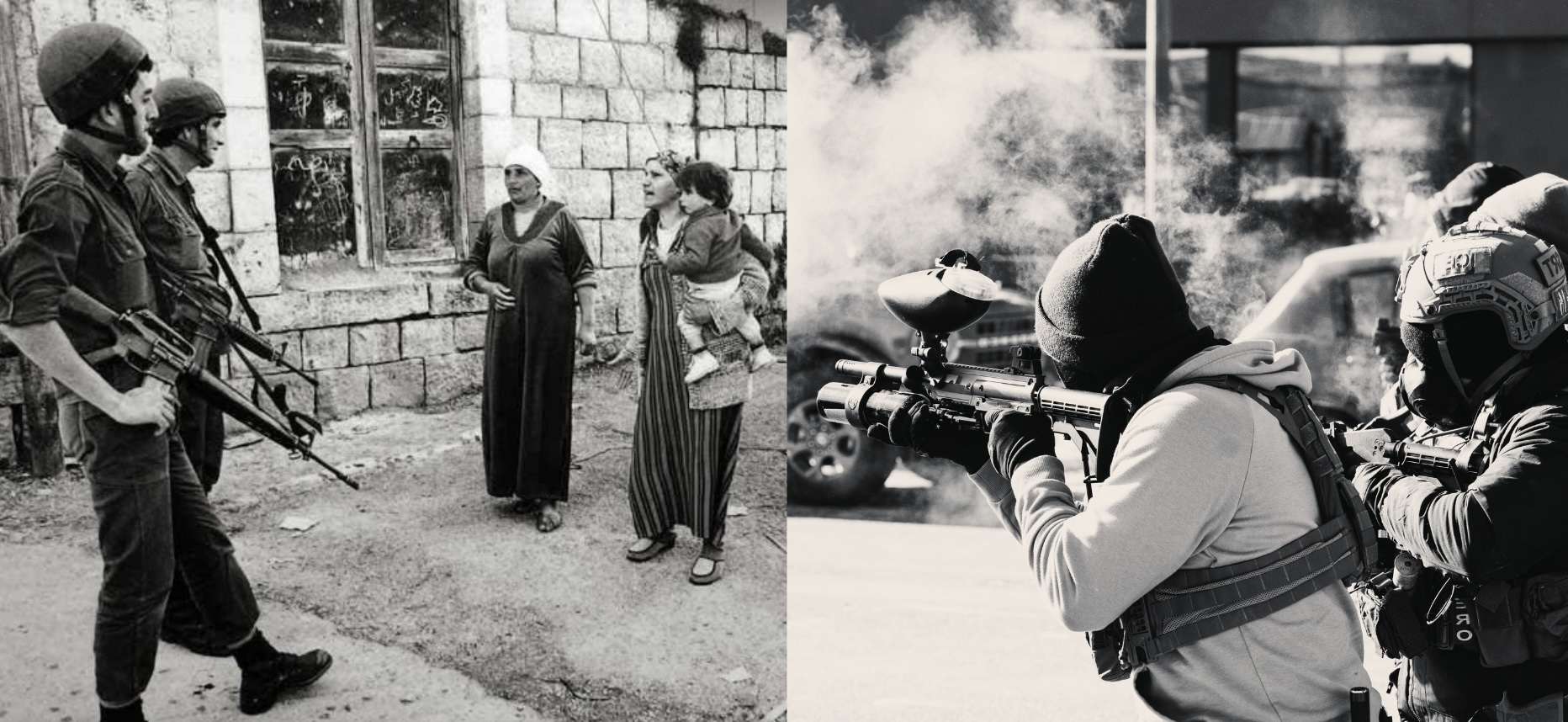
I’ve learned from the occupation of Palestine, and so has ICE. ICE has trained with Israel for at least sixteen years, sharing worst practices in what we organizers call the Deadly Exchange. Israel’s abusive tactics used against Palestinians get shared with ICE, as the agencies trade everything from crowd control weapons to Palantir-built surveillance tools.
It’s day sixty-seven and I’m grieving our beloved dog. Cancer took her quickly, two weeks, caring nothing about occupation. Life goes on, as does death.
We didn’t choose this occupation, but we choose how we respond. Sometimes we can choose what happens next.
Josina Manu Maltzman
Josina Manu Maltzman (all pronouns) is a writer, carpenter, and community organizer who believes we all have a role to play in ending genocide and settler colonialism. Josina is published in several anthologies and is the author of the essay chapbook Ride Safe. They have been awarded grants and fellowships from the Minnesota State Arts Board and the Loft Literary Center. For more about Josina’s writing and how it is informed by being in the trades for over twenty years and their organizing work as an antizionist Jew, visit www.josinamanumaltzman.com.