Leslie Cohen on How to Survive When You’re Between Writing Projects
“That’s the hardest part of any artistic pursuit: there is no path.”
This first appeared in Lit Hub’s Craft of Writing newsletter—sign up here.
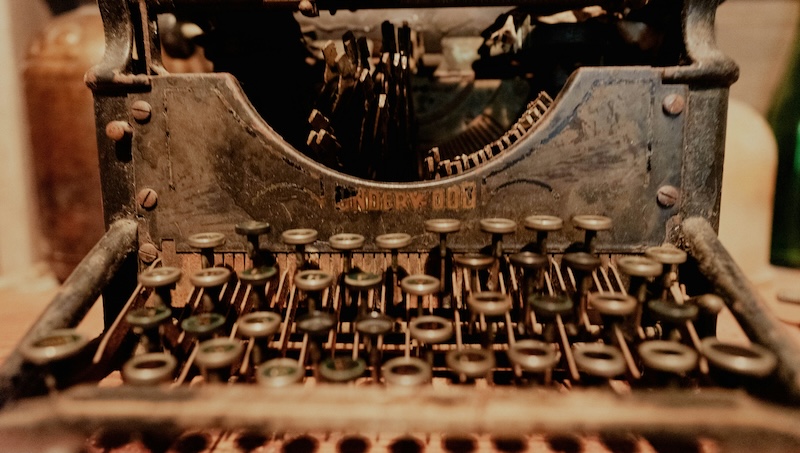
Writers love to romanticize the pain of their craft. Hemingway described it as sitting down at a typewriter and bleeding. Kafka compared it to descending into the cold abyss of oneself. David Foster Wallace said it was like pulling teeth… from his head.
Of course, writing is no worse than any other job. It’s just that writers are very good at and prone to expressing themselves. So, if a writer has anything negative to say about their daily life, you’re damn well going to hear about it. This is unlike other professions, where you might have one or two people capable of shutting up.
The truth is that we deeply, obsessively, love writing. And what hurts us much more is not writing. When I’m between projects, the world slows down and there is a silence that is at once peaceful and deafening. I have nowhere to channel my ideas and emotions. Writing a novel is a solitary experience but not writing one is even more so, without the occasional call from an editor or marketing person to keep me warm.
The publication process, on the other hand, is like walking around a carnival. You become addicted to the highs, used to hunkering down through the lows. There are bright colors, lights, rides, prizes, junk food, but also—the lingering possibility that you might get sick. After the rollercoaster of it all, the stillness of being between projects feels sort of like you’ve checked into rehab.
Having been through this cycle several times now, I’m trying to enjoy the silence. I’ll assign myself writing challenges, like helping my friend running for state assembly draft slogans for his campaign. You’re against octopus farming in New York? Where are they farming octopus? The East Village? I’ll organize a grammar bootcamp for my children. They’re only seven and four, but it’s never too soon to learn I versus me and good versus well. Alina and me went to the playground? Alina and I went to the playground! Have you gone mad? I order a megaphone online. I spring for the expedited shipping.
I’ll decide that maybe I’ll be the mom who bakes the best chocolate chip cookies, which, with no previous baking experience, quickly turns into: Maybe I’ll be the mom that buys the best chocolate chip cookies. Why take a job away from a perfectly qualified baker? Have I no shame?
But once I’ve gone to the woods and embraced my inner Henry David Thoreau, I start itching to get back in the game.
I look for inspiration from other writers, actors, anyone in a creative field. I scream at the TV while watching the celebrity interview portion of a late-night show: “Yes, but what did you do between Killers of the Flower Moon and One Battle After Another, Leo? How did you live?”
I never get an answer. Because there is no answer. It’s the wild west of scheduling, where routine comes to die. That’s the hardest part of any artistic pursuit: there is no path, no sure way to get from one place to another, no directions or map. It’s not the road less taken. It’s: there is no road.
There will be times when it’s hard to motivate, times when I find myself in a bit of a depressive state. Many artists I know are constantly looking for work in order to keep the lights on, both literally and psychologically. I have to tell myself that this is just the life of a creative, which is sometimes code for: permission to take naps in the middle of the day. I often think: Don’t fret! Maybe you’ll contract a virus and then all of this sipping tea and napping will make sense.
There will be times when too much time on my hands leads to nonsense, like deep character dives on Instagram regarding the wives of ex-boyfriends. Ohhh what an interesting ab workout you’re doing there, Jennifer! Riveting. Content. Sorry for living the life of the mind!
There will be times when I catastrophize. As I walk down the street, my imagination begins to turn on me—Does that tree branch look like it’s about to fall? Isn’t life interesting? One errant tree branch and my whole operation shuts down.
Eventually, I accept the fact that I have no routine, and that’s part of my job. One aimless walk can make my entire existence feel aimless, but I have to remind myself: aimless today does not mean aimless tomorrow, or aimless forever. I go home and compose a short story about the tree branch as a metaphor for the fragility of life.
Because a writer is never really between projects. I’m always listening, always jotting things down. Even a walk or conversation with a friend or fight with my husband (he loves it when I get wildly dramatic) can easily turn into material. It’s great fun, so long as you can avoid that looming feeling: Will I ever work again, or will the silence go on?
I prefer to be in the flow, to be in the midst of creating. Writing a novel sometimes feels like being inside of a snow globe. I like this bubble—the protection from the outside world, the meticulous arranging of the objects inside, making sure the snow falls just right. Once it’s done, it’s simply an object on my desk. I enjoy its beauty. I shake it whenever I want. But I’ll always miss being inside. It’ll always summon within me a slight pang of nostalgia and heartache.
But, you see, even that is part of the process, a process that I deeply, obsessively, love. And I wouldn’t be surprised if that very same pang of nostalgia and heartache makes it into the next project, whenever it comes along. Another chance to breathe.

Leslie Cohen
Leslie Cohen was born and raised in New York. She studied English and creative writing at Columbia University. Inspired by a combination of Jack Kerouac, James Joyce and Sex and the City, she composed many brooding personal essays that she hopes nobody remembers. Her first job was at a magazine called Outdoor Life, where she wrote about hunting and fishing, even though she knew very little about either. While working there, she received an unlimited supply of beef jerky and camouflaged clothing, which didn’t really suit her Manhattan lifestyle. So she moved to Colorado and penned a weekly music column for the Aspen Daily News, which was widely read, despite only occasionally referencing the subject of music. Upon returning to New York, she began writing fiction. She is the author of This Love Story Will Self-Destruct and My Ride or Die. She lives on the Upper West Side with her husband and two children.