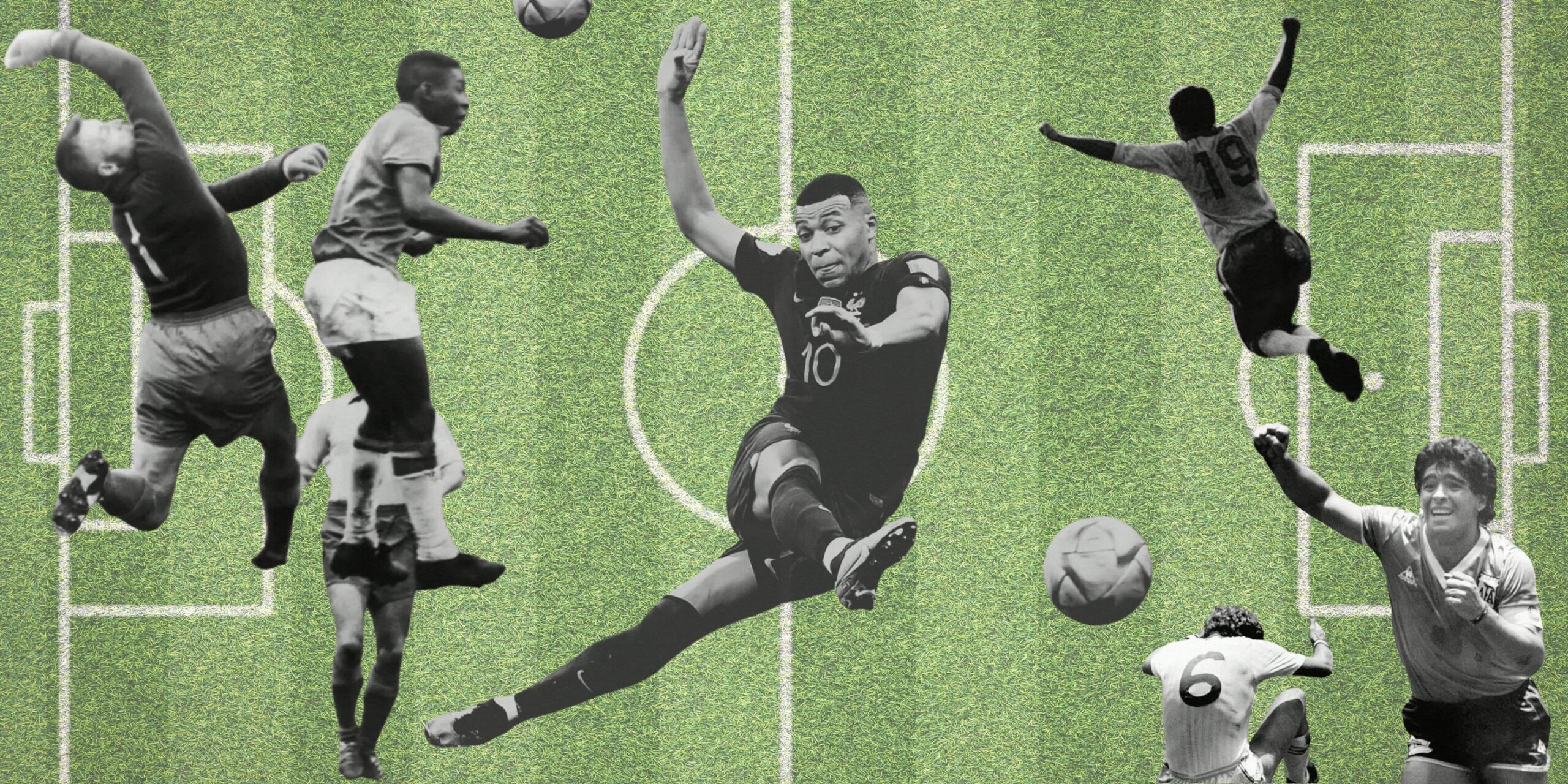
Leander Schaerlaeckens Recommends 5 Books to Better Understand the World Cup
“The action on the field is sublime, and yet it’s the least interesting thing about the sport.”
Soccer derives its beauty from its simplicity. Twenty-players and a ball on a rectangle of grass; put the ball in the other team’s goal; don’t use your hands.
What makes soccer popular, I believe, is its complexity, layered over this most basic of games. For as long as it has existed, this blank canvas has consumed clever coaches as they evolved, solved, and reinvented the sport’s tactics and strategies anew, over and over, season after season. There is a robust subgenre of soccer books dedicated just to those tactical renewals.
More compelling still is soccer’s socioeconomic and cultural and geopolitical capital. It’s the only sport credited with starting and stopping wars, with aiding in a new state’s self-determination, and both overthrowing regimes and keeping them in power. The societal implications are what have kept me hooked on soccer for some 35 years. The action on the field is sublime, and yet it’s the least interesting thing about the sport. That’s what makes it such an irresistible subject.
Which is why I really hope that readers don’t think of my new book on the United States men’s national team, The Long Game: U.S. Men’s Soccer and its Savage, Four-Decade Journey to the Top, or Thereabouts, as a treatise on soccer. It’s a most American story, I think. Because it’s about strivers and dreamers, only some of them competent. It’s about immigration and assimilation and capitalism. It’s about drama and dysfunction. About losing streaks that ran longer than a decade. About deluded coaches and philandering teammates and practice-field punch-ups. About intermittent success, too, followed by inevitable regression in the only game the United States takes seriously yet cannot seem to conquer the world in. It’s about national soccer teams as avatars for the nations that rear them.
It only occurred to me while working on one of the later drafts of the book that it has hardly any soccer in it.
The Long Game’s timing won’t come as a surprise if you are aware that the FIFA World Cup, the quadrennial mega-event that the rest of the planet keeps time by, will be played in the United States, Canada, and Mexico from June 11 to July 19. If you’re ready to commit yourself to all of that soccer goodness but need to bone up on the sport, here are five other books to get you going.
*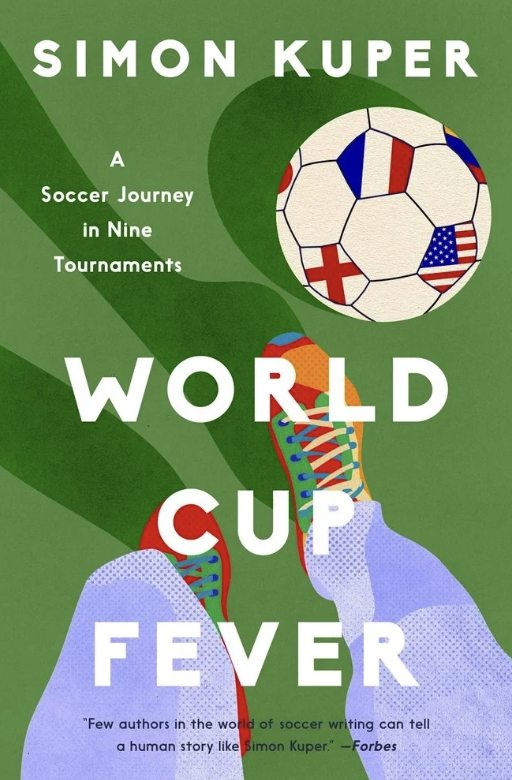
World Cup Fever: A Soccer Journey in Nine Tournaments, Simon Kuper
Kuper is the godfather of taking the anthropological angle on the sport, establishing the much-mimicked model for the soccer travelogue as geopolitical microcosm when he wrote Soccer Against the Enemy in 1994.
In World Cup Fever, he returns to his roots by retracing his steps through nine World Cups as he gets ready to cover his tenth. It makes for a transporting trip through the tournament’s modern history as it grew from being accessible to a few students with a bit of leftover beer money—like a young Kuper—to today’s ultra-exclusive $11 billion bonanza. It doubles as a quick and light primer to World Cup history, offered by a clever writer who works hard to keep his prose enviously clear.
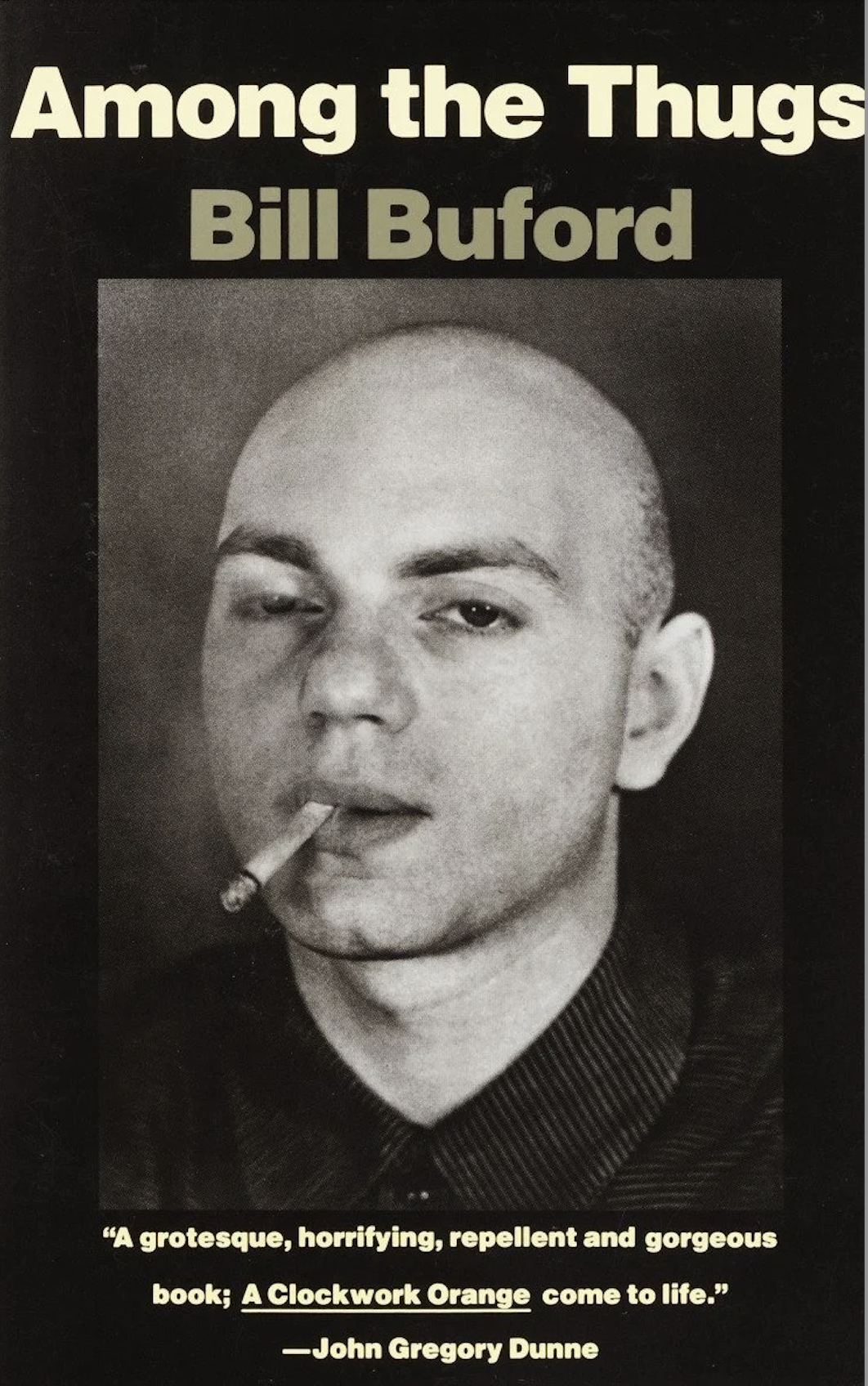
Among the Thugs, Bill Buford
In this unsettling bit of participatory journalism, Buford not only spends the better part of a decade burrowed deep into the world of English soccer during its 1980s hooligan heyday, but comes away with astonishing and alarming findings on the meaning and mechanics of organized violence in the modern world. The book is structured as a quest to figure out why a class of aimless young men in late-Thatcherist Blighty get their kicks out of getting paralytically drunk and bashing one another half to death every weekend.
Among the Thugs is less useful as a lens on modern soccer. In Western Europe, the sport has long since priced its hooligan problem away, after all. But it helps to get a feel for where the sport came from, and why soccer going all fancy—led by the “prawn sandwich brigade” as the old guard would sneer—rankles those who have loved it for a long time.
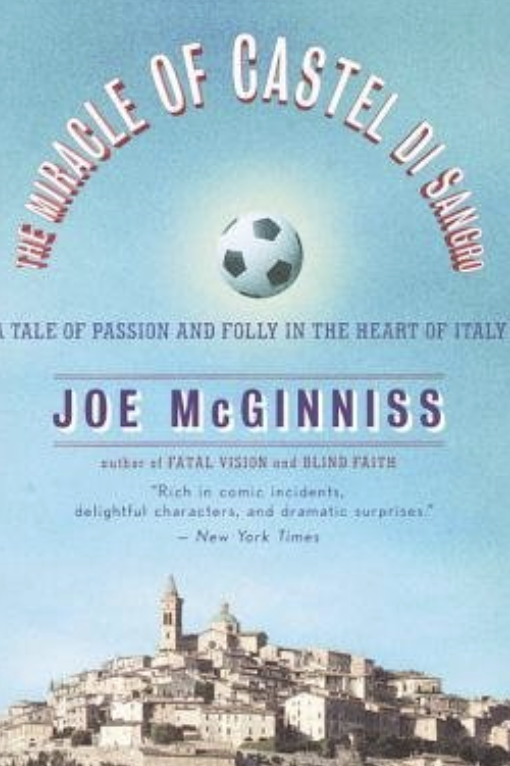
Miracle of Castel Di Sangro: A Tale of Passion and Folly in the Heart of Italy, Joe McGinniss
I think about this soulful work at least once a week. McGinniss claimed to have turned down a $1 million advance to write a book about the O.J. Simpson trial and, instead, spent the 1996-97 Italian soccer season embedded with Castel Di Sangro. This tiny professional team in a remote mountain town in the Abruzzo had gotten itself promoted to Italy’s second-tier Serie B, where it was massively outspent and overpowered by its much more reputable peers.
The team plainly had no business there. It hoped for little more than to avoid being relegated right back down to Serie C1 as one of the four last-placed teams. McGinniss watches and lives and eats with the team, painting enchanting portraits of the team hierarchy at work over many-course meals. In the end, McGinniss’s new team breaks his heart, as all your rooting interests in sports eventually will.
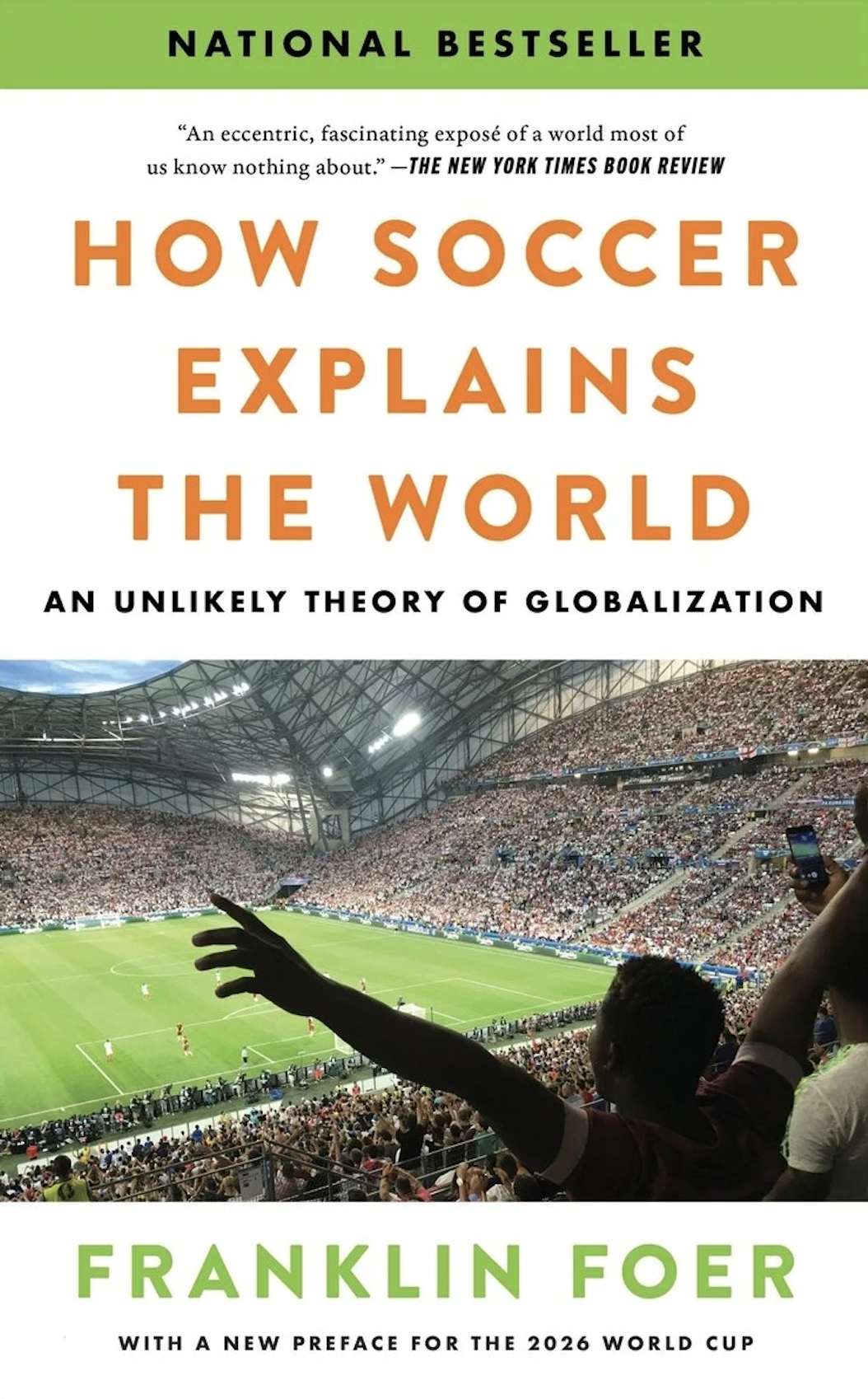
How Soccer Explains the World: An (Unlikely) Theory of Globalization, Franklin Foer
Standing on Kuper’s shoulders, Foer, a political journalist blessed with a healthy fixation on soccer, travels the world to see what he might learn from the sport. He rubs elbows with Serbian hooligans accused of atrocities during the Balkan Wars, the bloodthirsty Catholic and Protestant arch-rival fans of Celtic and Rangers in Glasgow, crooked Brazilian administrators, and Nigerians playing in Ukraine. The story makes stops in Milan, Barcelona and Tehran, and goes on detours through a Jewish powerhouse club in pre-war Vienna, and soccer’s place in the American culture wars.
Not all of the theorizing stands fully upright to scrutiny or time, but that’s sort of beside the point. Because after more than two decades, it still amounts to a wildly entertaining ride.
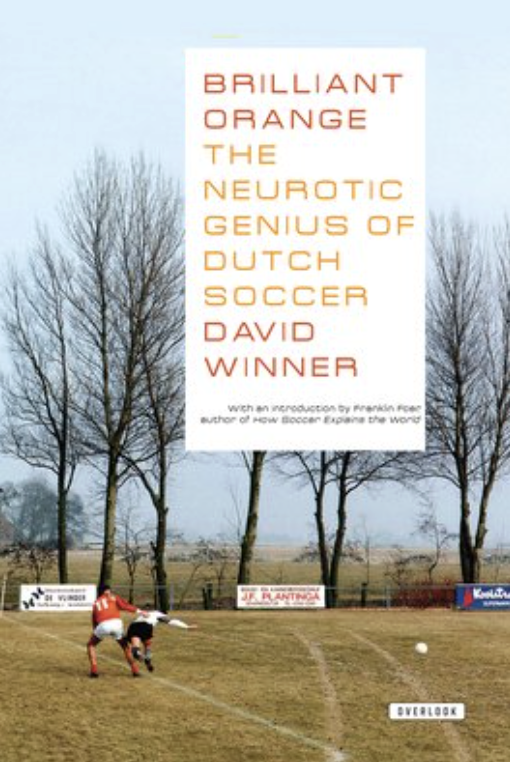
Brilliant Orange: The Neurotic Genius of Dutch Soccer, David Winner
In the early 1970s, the Dutch came up with something they styled “Total Football.” It was something of a fad at the time in the rapidly modernizing Netherlands to label every new idea Total Something-or-other. Total football remade soccer worldwide by emphasizing movement and pressure on the ball and the interchangeability of positions, laying the groundwork for the modern incarnation of the sport. But this is no book on tactics. Winner makes a convincing case that the Dutch influence on the soccer field—and its failures, as the only nation to lose four World Cup finals without winning one; three on the men’s side and one on the women’s—reflects the sentiments and instincts of a singularly contrarian, utilitarian and collectivist nation.
This Dutchman has yet to read a better explanation for what makes the nation of his birth tick.
____________________________________
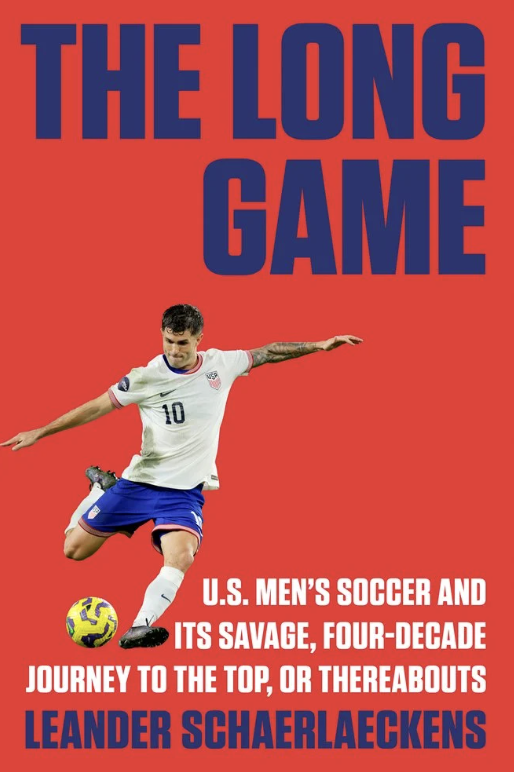
Leander Schaerlaeckens’s The Long Game is available now from Viking.

Leander Schaerlaeckens
Leander Schaerlaeckens is a long-time soccer writer and has worked for ESPN, FOX Sports, and Yahoo Sports, among others, covering the United States men’s national team at three World Cups. He currently writes about soccer for The Guardian and The Ringer. He teaches journalism and sports communication at Marist University. Born in the Netherlands and raised in Belgium, he went to college in London and Washington, D.C. He lives in New York’s Hudson Valley with his wife, son, and their mutt/squirrel-murderer, Eleanor Roosevelt.