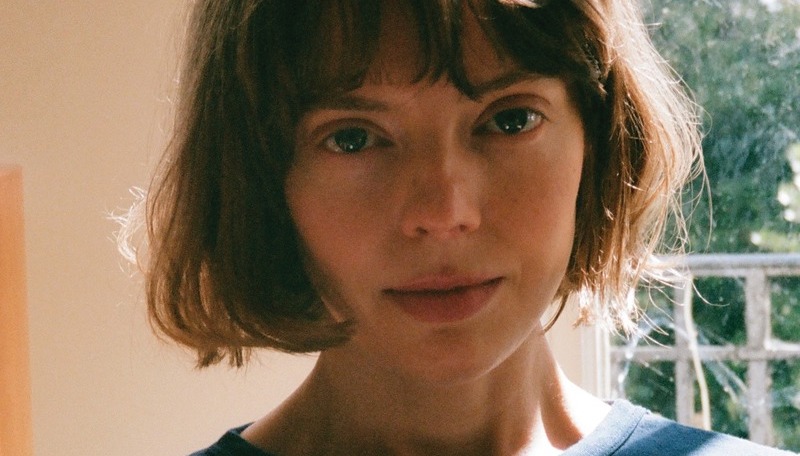
Lauren Rothery on Channeling Hollywood in Her Debut Novel
Jane Ciabattari Talks to the Author of Television
Lauren Rothery’s first novel offers up a trio of captivating voices from the ever-shifting cast of characters that is Hollywood, alternating perspectives in ingenious ways. She shifts between Verity, a top ranking box office star earning millions and working on the fifth movie in a blockbuster franchise (while making ironic asides about his fame and his drinking problem) and Helen, a screenwriter/editor/assistant who has known him since his “struggling years” and seems his only long-term relationship (the one who can tease him with impunity). Then Rothery adds a fresh voice, the young newcomer Phoebe, an aspiring screenwriter. (“The trouble about having an idea for a screenplay is you have to write the screenplay,” Phoebe notes wryly).
When did Rothery start writing Television, and what was the inspiration? I asked her via email. “I started writing Television in the spring of 2023,” she noted. “I had the idea for Verity’s lottery first, but the book didn’t make sense to me until I thought of Helen. Helen and Verity felt very real to me, and the way they remember things slightly differently, the way that they talk about each other with so much affection even when one is laughing at the other—that all felt real and interesting to me. I wanted to do a love story that I hadn’t read or seen before. One in which the two characters stick together because they like each other so sincerely—but they don’t actually want the same things and the circumstances are never right for them to be a classic couple. They’re a very unhollywood love story, for a love story set in Hollywood. What keeps them together is the inability to let go of each other. I don’t think it even occurs to them to let go.”
*
Jane Ciabattari: To what extent has Television been shaped by your time in the entertainment business, creating short films and videos, work experience in New York and Los Angeles?
Lauren Rothery: It has been shaped heavily by my own experiences. There is not, that I know of, any standard experience in the film business, it’s different for everybody. Some people start out with a lot of connections, some don’t. Some stay in one department and climb up, others bounce around and wear a lot of different hats. It’s why the three characters all have very different views of the business. Phoebe’s experience is very similar to my own, Verity’s I invented after reading an ungodly amount of Famous Actor profiles, and Helen is invented off how I imagine it would be in her unique position, where she doesn’t really have to think about money because of Verity, but she wants to retain independence from Verity, and his career and connections.
JC: How do you know so much about the movie business?
LR: From having worked in it for about ten years. I had what feels to me like a bizarre, non-linear experience in the movie business. I was never a part of any union, and worked all kinds of non-union assisting jobs to finance my own projects, which had small crews and shot on film in a very guerilla fashion. I didn’t go to film school, so everything I learned about telling stories in that way came from asking a lot of questions of crew members on various sets, watching a lot of movies and interviews, and making things up as I went along.
I liked the idea of this beautiful actor being embarrassed by his own good fortune and trying to offload it onto somebody else.
JC: What drew you to build the characters of Verity and Helen, his longtime muse and sometime colleague, and tell about their relationship through that alternating structure?
LR: I think I would describe Helen more as a best friend and sometimes lover, though she is certainly his only long-term relationship. I chose to alternate between their perspectives because I was interested in the way that their telling of an extensive shared history would differ—not necessarily that they would disagree about the details of significant events, but that different events would be significant to them.
JC: What gave you the idea for Verity’s lottery, in which he offers his earnings for a sequel movie to a viewer, based on drawing a ticket stub at random? Has anyone ever tried this?
LR: I had been writing stories during COVID, when I couldn’t really film anymore. And it was incredibly liberating. I enjoyed it a lot. I had the idea for the lottery one day, probably thinking about the role that luck and independent wealth can play in one’s success in the film industry and, thinking it might make a funny story, I told it to my boyfriend. I liked the idea of this beautiful actor being embarrassed by his own good fortune and trying to offload it onto somebody else. My boyfriend said something like “I hate to break it to you but that’s not a story, that’s a novel.”
JC: How did you figure the financial implications of that lottery for Verity, his studio, the winner, his future earnings?
LR: I knew roughly how points work, which is the percentage of box office sales that a famous actor might make on a big movie, as part of their contract. It occurred to me that if said actor included his points in the lottery, the pot would go up based on how many people bought tickets. So the entrants could game the system a bit by buying more tickets. And once they do that, the studio makes may more money as a result, because the ticket sales are enormous. It made me laugh to think about Verity trying to do this chaotic but altruistic thing, which then the studio wants to turn into a standard of marketing. I don’t know if this is how it would actually work, it’s totally imaginary, but it felt like a way of talking about something true within any capitalist system.
So much of the book is about luck to me, and something that interests me about luck is all that you are unaware of having missed.
JC: Phoebe is a young writer relocated from Los Angeles to a village in France to work on a screenplay. Her sections are in mosaic form—part narrative, part text, part screenplay by Phoebe, part transcript, part “story by Phoebe,” letters, text by Tarkovsky, and so forth. What led to your decision to add Phoebe to the cast of characters, structure her sections this way, and to find an ingenious way to link her to Verity and Helen?
LR: One reason that I added Phoebe, I think, was because it felt like a large part of Verity and Helen’s sense of closeness comes from a shared suspicion of other people. They seem to have decided a long time ago that they don’t like anyone else half so much as they like one another. Phoebe is, I think, someone they would really like. But, as a result of some frightful mix of chance and choice, their lives intersect—yet they never meet. So much of the book is about luck to me, and something that interests me about luck is all that you are unaware of having missed. That there are millions of people I would adore, but will never know about, is almost too much to hold in my mind. Like looking over the edge of some high up place. I’m very drawn to subjects that make me feel that way.
JC: What are you working on now/next?
LR: Another book!
__________________________________

Television by Lauren Rothery is available from Ecco, an imprint of HarperCollins Publishers.

Jane Ciabattari
Jane Ciabattari, author of the short story collection Stealing the Fire, is a former National Book Critics Circle president (and current NBCC vice president/events), and a member of the Writers Grotto. Her reviews, interviews and cultural criticism have appeared in NPR, BBC Culture, the New York Times Book Review, the Guardian, Bookforum, Paris Review, the Washington Post, Boston Globe, and the Los Angeles Times, among other publications.