John Cougar Mellencamp Will Fight You: On the Rock ‘n’ Roll Rise of a Combative Heartland Leftist
Erin Osmon Explores the Antiracist and Social Justice Ethos Underpinning the Midwestern Rocker’s Career
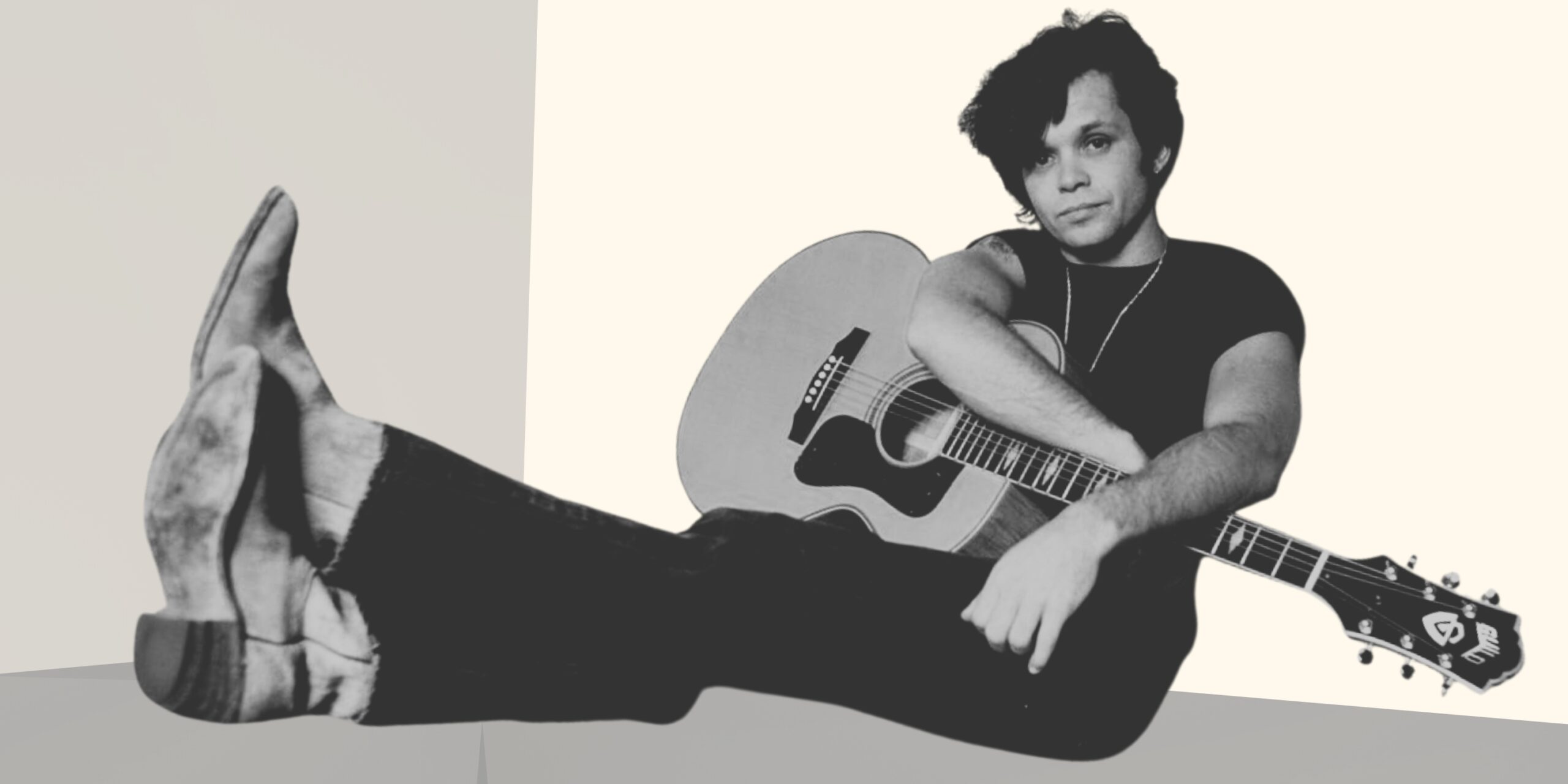
John Cougar Mellencamp’s combative liberalism has long been an unexpected plot twist for casual fans, politicians, and country music stars who’ve misinterpreted his populist lyrics as base expressions of American chest-beating. Today, he’s been met with some version of “How about you stick to music?” for so long that commenting is restricted on many of his social media accounts.
Amid the Reagan presidency and throughout the subsequent decades, Mellencamp’s antiracist, pro-farmer, anti-capitalist diatribes were tantamount to a bag full of hornets: intimidating in principle, and punishing when released. Mellencamp has regularly reminded Americans, through a torrent of fucks, that musicians also participate in the political process.
Before he became a vocal ally of leftist causes, however, the singer reached a do-or-die crossroads. By the early ’80s, he’d come to understand that success was determined by radio play, and that radio play was achieved by a sound much bigger and slicker than the uneven albums he’d been releasing. He knew that he needed to have a hit that could reach as many people as possible.
This didn’t stop him from lining his commercial breakthrough, American Fool, with deeper meaning; with a kind of mutiny. The same can be said of his performances in this era. As an elder, Mellencamp often jokes about how many tours he was fired from in his salad days, usually because the headlining acts (KISS, REO Speedwagon, British hard rock act Rainbow) and their audiences didn’t take to his kiss-off attitude and misfit energy. What may sound apocryphal—like an old man crafting a fiery archetype—has been verified by at least one notable fan.
If Bruce Springsteen’s greatest gift was mythologizing the existential open graves swallowing up blue-collar workers, Mellencamp’s was his piercing ability to at once celebrate and dismantle agrarian fantasy.
Gregg Turkington, who performs standup comedy as the misanthropic character Neil Hamburger, recalled an October 1982 gig at Sun Devil Stadium in Tempe, Arizona, where rising radio rocker John Cougar opened for Loverboy and the Who:
“He came out and started doing ‘Jack & Diane,’ his big hit. Somebody threw a bottle at him and hit him in the head. It just exploded, shattered right on his head, and blood was pouring everywhere. It was insane. Somebody comes and drags him off the stage, the band leaves, and there was an announcement over the PA: ‘Coming up next is Loverboy, John Cougar will not be returning.’ Five minutes later, he comes back onstage with a hardhat on and his head bandaged up like a fucking mummy. He grabs the microphone and says, ‘You fucking pussy cocksucker asshole! I’ll kick your motherfucking ass!’ Just this insane profanity-laden tirade that went on and on and on. Then they played ‘Hurts So Good.’ My jaw was on the floor. That was as good as [hardcore punk band] Black Flag.”
Mellencamp grew up modestly but comfortably in the idyllic town of Seymour, Indiana, the son of a mother who was an artist and nascent beauty queen, and a father who worked a white-collar job with a local electrical contracting firm. Like much of his heartland rock cohort, Mellencamp wrote from his life—the people and places of his formative years burrowing into his lyrics as an adult. Though Mellencamp had a comfortable upbringing, he saw the hardship endured by his extended family and rural neighbors, the farmers and other laborers. If Bruce Springsteen’s greatest gift was mythologizing the existential open graves swallowing up blue-collar workers, Mellencamp’s was his piercing ability to at once celebrate and dismantle agrarian fantasy.
It’s why “Jack & Diane,” from American Fool, remains a fan favorite. Mellencamp’s tale of two lovers on the cusp of adulthood, staring down the barrel of societal expectations—with mortality looming in the background—is rife with the details of an Indiana that raised the singer. In the song, an old-growth tree provides cover from the watchful eye of puritanical church folk; chili dogs and ice cream are an excuse to break free from parents. Listeners who’d never stolen away to a soft-serve stand under the guise of an innocent meetup responded to the song’s mellifluous reading of coming-of-age courtship and simpler-days nostalgia. Tastee-Freez, which Mellencamp name-checked, was any diner or drive-in. Jack and Diane were any number of wanton teens.
If there is one place that embodies Middle American disposition, it is Tastee-Freez—“The Tastee-Freez” to many Hoosiers—where frozen confections and encased meat flowed like wind through a field of yellow dent corn. Tastee-Freez was where Middle American children were rewarded, budding adults savored their first morsels of independence, and old-timers gathered to reminisce. It was bad-for-you food at good-for-you prices and more nourishing than its nutritional comportment implied. However, no Tastee-Freez location has ever existed in Mellencamp’s hometown. Kovener’s Korner, a tiny shop that opened in 1949 about two blocks from Mellencamp’s boyhood home at 714 West Fifth Street in Seymour, was most likely the singer’s childhood frozen-treats respite, but it was a Tastee-Freez in spirit only. In the “Jack & Diane” video, Mellencamp and his second wife, Victoria Granucci, paw at one another outside of a rustic stand serving big Tastee-Freez energy. But that stand was in fact the Penguin, located at 405 S. Walnut Street in nearby Bloomington, which lives on as beloved local ice cream shop the Chocolate Moose.
Even if Tastee-Freez wasn’t part of Mellencamp’s regular soft-serve rotation, his invocation of the brand in “Jack & Diane” all but secured its position in the annals of history. It also implied a brilliant strategy on behalf of the singer: to spotlight all people in all small towns, folks who aren’t often celebrated in popular music.
In the fall of 1982, “Jack & Diane” spent four weeks at No. 1 on the Billboard Hot 100 singles chart, his only song to do so. American Fool also went to No. 1 on the Billboard 200 for nine weeks and became the biggest record of the year. Upon its release, it knocked Fleetwood Mac’s Mirage, a symbol of overproduced pop excess and the antithesis of heartland rock’s back-to-basics essence, from the pole position.
Like the first single from American Fool, “Hurts So Good,” cowritten with Mellencamp’s childhood friend George Green, “Jack & Diane” is a horndog anthem of pre-AIDS crisis dispensation. But the similarities stopped there. “Hurts So Good” and its biker-gang music video only hinted at the heart and rural perspective that became synonymous with the singer. Among the dirtbag fraternity, Mellencamp appears with a red bandana fashioned around his neck—a nod to America’s original “rednecks,” those miners in West Virginia in the early 1920s who wore them as a symbol of solidarity and resistance amid an ongoing struggle for fair wages and safer working conditions.
Hitching his wagon to the geography of working people was a bold enough choice in a decade marked by widespread social and economic warfare against blue-collar workers and the middle class. But Mellencamp took it a step further when writing “Jack & Diane.”
In Mellencamp’s original demos, Jack was a young Black man, and Diane was white.
Amid archival research for the songwriter’s 2010 career retrospective box set, On the Rural Route 7609, it was revealed that the two American kids raised in the heartland are an interracial couple. In 2009, Mellencamp explained that the set’s archivist rediscovered this fact when digging through old demos.
Steve Berkowitz, a Grammy Award-winning producer, and the man who signed singer-songwriter Jeff Buckley to Columbia Records in the early 1990s, stayed with Mellencamp at his home in Bloomington, Indiana, for weeks during the research phase of 7609, and was the guy, as Mellencamp described it, “leaving no stone unturned.”
The origins of “Jack & Diane” may be traced to a demo from the late ’70s, titled “Jenny at 16.” It contains a few lines from the chart topper, and also mirrors its nostalgic spirit. The song’s narrator runs with Jenny through a field of Johnson grass, a weed that is particularly invasive in farmland, and can grow up to ten feet high. The pair “suck” on a cigarette outside of Tastee-Freez, and Jenny places her hands between the young man’s knees. Bobby Brooks trousers are also summoned.
The demo of “Jenny at 16” included with On the Rural Route 7609 makes no mention of the young man’s race, or Jenny’s. But that changed when Mellencamp recast the song ahead of the American Fool sessions.
Berkowitz was the first person to whom Mellencamp revealed the song’s origin story all those years later. “He says I discovered it,” Berkowitz told me. “But he did sing it, and he handed me the cassette demos…and I listened.” He explained there are at least four different demos of “Jack & Diane” with just Mellencamp and an acoustic guitar in his troubadour mode, wherein he sings, “Jack was Black…Diane was white.”
However, none of those versions of the demo made it onto the 7609 CD box set, and the line was cut from the studio version of “Jack & Diane” released on American Fool. Mellencamp has attributed the edit to both an overbearing record label and his own reluctance to rock the proverbial boat any more than he already did during the protracted and tumultuous making of the album.
Over the years, Mellencamp has claimed that his great-grandmother (or great-great grandmother, depending on the interview) was Black, though public genealogy records show no direct evidence of that. However, he may have distant African American ancestry on his father’s side. What is more accurate is that Mellencamp, like many kids in Indiana, grew up with Black friends and witnessed interracial couples in his high school years and in audiences as a young musician.
It also implied a brilliant strategy on behalf of the singer: to spotlight all people in all small towns, folks who aren’t often celebrated in popular music.
In high school, Mellencamp joined Crape Soul, a covers band. The group had eight members at its height, a couple of them Black, including founding member and lead singer Fred Booker. Some time after the group formed, Mellencamp signed on as the band’s second singer and performed with them at school dances, sock hops, fraternities, and battle of the bands competitions. According to Booker and fellow founding member Duane Zimmerman, the group played its first show at a “splash dance” at a local public pool on July 19, 1968. At one point, they had business cards printed that touted Fred Booker as vocalist, Rod Chavez on bass, and John Mellencamp as another vocalist. “For the Best in Popular Music,” the card proclaimed.
As the band’s second singer, Mellencamp belted out covers of James Brown, Sam & Dave, and Motown singles, and also pop hits like “I’m Your Puppet,” and songs by Mitch Ryder and John Sebastian, in sparkling stagewear and pointy Flagg Brothers oxfords. At times he even donned a cape. But by the summer of 1969, Mellencamp’s participation in the group was spotty or had ended. An article in The Tribune, Jackson County’s newspaper, published on August 5, named members Booker, Zimmerman, Dave Hinton, Dennis Blair, Mike Henderson, Gary Keck, and Rick Schill as the winners of that year’s Combo Clash at the Jackson County Fair, where Crepe Soul was awarded $50.
In the 1960s, when Mellencamp was coming of age, Jackson County, which includes his hometown Seymour, hovered around thirty-one thousand residents, with about 1 percent of that population composed of Black families. Demographically, it was a far cry from the more populous and integrated environs of nearby cities like Indianapolis and Evansville. But the singer has often said that his time in the group was an education in both music and prejudice, with audiences cheering on the band during performances, and then hurling punches and racial epithets after their shows. “The interesting thing about being in that band was I learned about race, real quick,” Mellencamp said. “There were a couple of times when we played some place, and they loved us on stage. But when we came off stage, it was like the white kids were able to stay inside the building, but Fred and everybody else had to go outside. So I just went outside with them.”
As the years wore on, Mellencamp became increasingly vocal about his antiracist stances. In 1983, he released “Pink Houses,” a song about redlining specifically and inequality more broadly, whose “Ain’t that America” refrain was quickly mistaken for a 10-cent expression of patriotism. A year later, in 1984, he began incorporating Bob Dylan’s antiracist anthem “The Lonesome Death of Hattie Carroll” into his live sets. Throughout the succeeding decades, Mellencamp released music videos portraying interracial love and friendship, and often spoke out against America’s enduring legacy of racism. In 2008, he released “Jena,” a song protesting the trial of the so-called Jena Six in Louisiana. (In the early ’90s, he carved the phrase “fuck racism” into the body of his Gibson Dove acoustic guitar.)
When President Barack Obama was elected to his first term in office in 2008, Mellencamp performed at the administration’s inaugural “We Are One” concert at the Lincoln Memorial. He also sang the traditional folk song “Keep Your Eyes on the Prize” at Obama’s White House celebration of music from the civil rights movement. “It was at that point in my life that I learned about how hate can really affect people,” he explained to the audience ahead of the song, referring to his time in the Crepe Soul, when he witnessed racism and discrimination aimed at his Black bandmates.
“I think John Cougar is the best spokesman of our time. The guy’s not fucking around,” the musician Steve Wynn, leader of the influential Los Angeles-based paisley underground band the Dream Syndicate, told a reporter for Creem magazine in 1983. “John Cougar’s a better spokesman for our time than any art critic’s band. I mean, what has Gang of Four done for the heartlands of America that John Cougar hasn’t done?”
Reflecting on the gamble of his 1982 album and its left-wing populist spirit, Mellencamp asked, “Can you imagine if American Fool had stunk? I mean with a title like that, I could have been crucified,” he said. “But the original name was even worse…the name of that record was gonna be ‘I May Look Silly, But I’ve Still Got a Job.’ ”
__________________________________
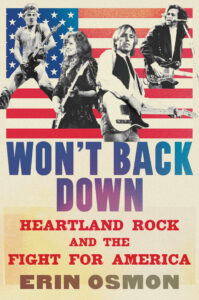
Excerpted from Won’t Back Down: Heartland Rock and the Fight for America by Erin Osmon. Copyright © 2026 by Erin Osmon. Used with permission of the publisher, W. W. Norton & Company, Inc. All rights reserved.

Erin Osmon
Erin Osmon is a music journalist, critic, and author of books on John Prine and Jason Molina. Her writing appears in the Los Angeles Times, New York Times, Rolling Stone, and others. She won the Deems Taylor/Virgil Thompson Award for album notes in 2023 and several LA Press Club Southern California Journalism awards. She lives in Nashville.