







Is It or Isn’t It? How Generative AI is Poisoning the Literary Well For Everyone
James Folta on Holding the Line Against AI Experimentation
Vauhini Vara, who has for years been investigating the impact of AI on writing, published a piece in The Atlantic over the weekend that suggested it was probable that “The Blue Fighter,” a Caine Prize-winning short story, was written using AI. The claim is based on a close reading of the story and the AI detector Pangram, after the story by Zimbabwean writer Simbarashe Steyn Kundizeza was awarded the 2026 Caine Prize.
This is the third time this year that a major literary prize has been tainted by AI accusations: the Commonwealth Prize and the Prix Goncourt have also contended with issues around inhuman tools being used to generate text.
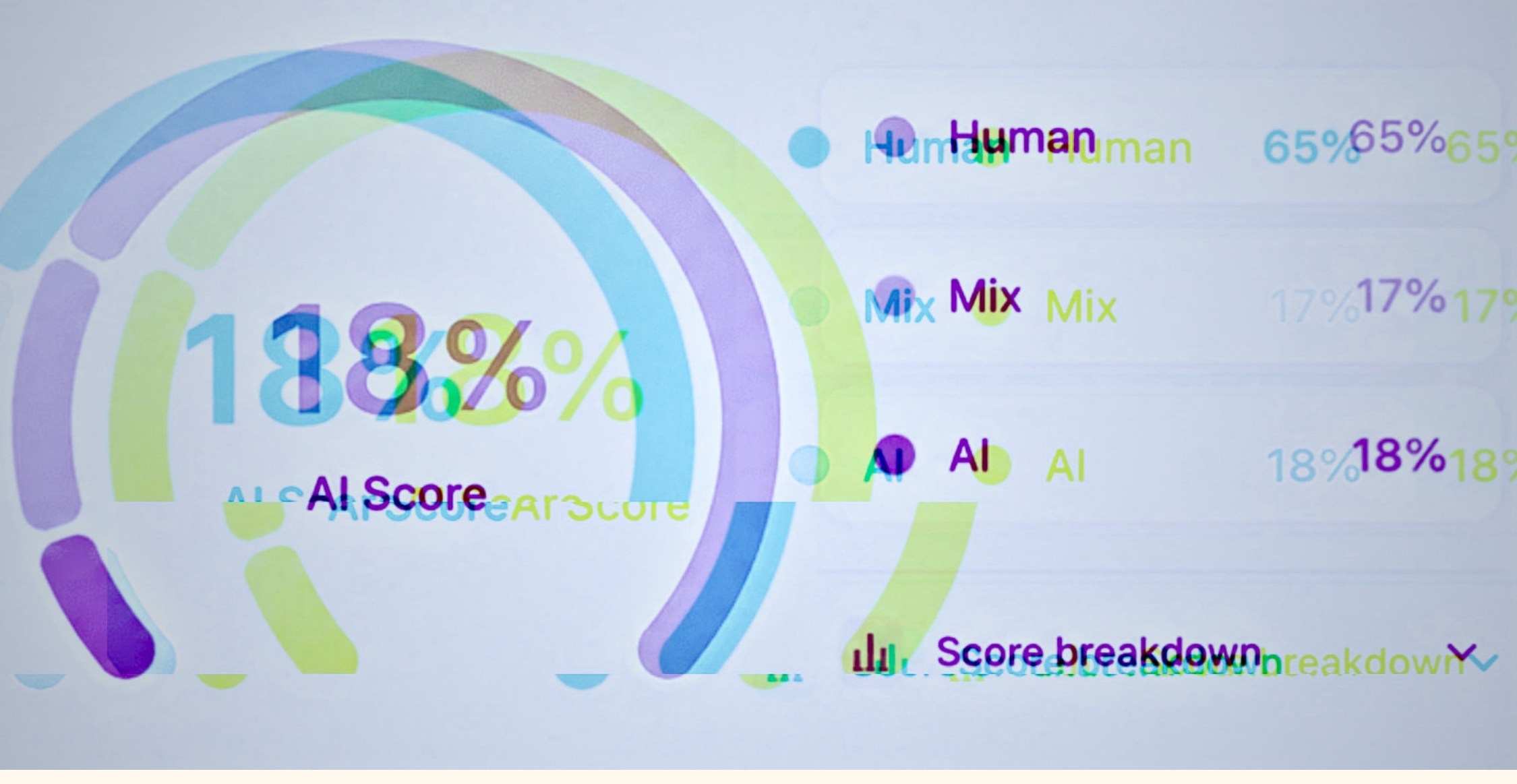
Vara was asked to look into “The Blue Fighter” after an Atlantic editor checked the story’s text in Pangram, in light of other recent controversies around AI and literary prizes, and the AI detector “flag[ged] almost the entire story as AI-generated.” In their investigation, the team also checked all previous Caine Prize winners and other writing of Kundizeza’s in Pangram; the program “labeled them as 100 percent human-written.”
The Caine Prize team has responded and are looking into the allegations, but will be taking a more human approach without using software tools. Ellah Wakatama, the chair of the Caine Prize’s board of trustees, told Vara:
“My stance, as the person who leads the prize, is that if there is such an accusation, I want proof that does not come from a machine.” She said she planned to approach Kundizeza with “compassion” and the presumption of honesty. Wakatama is also Zimbabwean. “As an African,” she said, “my first stance is, if I ask you, Are you telling the truth? and if you say yes, I am going to believe you—especially because the accusers are not coming from amongst our own people.”
Kundizeza denies that he used AI, and made a long post on X responding to the article, “because of the level of public interest generated in [the article’s] aftermath, and out of respect for the people who have supported and championed my writing.” He is adamant that the writing is his own: “I did not use generative AI to write it. It is entirely my own work.” He includes “concrete, documented history” of the story’s development, as well as a defense of his style.
That the accusation is being made against an African writer about a prize celebrating African writing is something others have noticed and called out. The Caine Prize is “the foremost international literary prize for a short story by an African author,” and aims to celebrate writers both in Africa and the diaspora. Not to say that Vara is working in bad faith, but there is an ugly history of bad actors seizing on these kinds of accusations against writers of color.
One example is unfolding right now in France, where the Haitian-born Canadian novelist Thélyson Orélien has been accused of using AI in his new novel. Orélien has firmly denied the accusations, but the controversy was quickly pounced on by the far right to discredit the non-white writer. The accusations are already having an impact: Orélien admitted to using AI for research and to past plagiarism, and was dropped from the longlist for the Prix Goncourt. He has also left France in the middle of his book tour. (The controversy has boosted his sales though, so that might be a silver lining.)
Even if you could find something interesting in this tech and its uses, the ugly complication is that too many AI boosters are also rich and powerful, and uninterested in compromise.
Another issue is that there is still doubt around the reliability of AI detection software. Vara bolsters the detectors’ reliability throughout her piece and in a Businessweek profile of Pangram, and told me in an email that Pangram, “according to its own research as well as a small body of external research, is very effective.”
But these tools have been shown to be particularly spotty when it comes to writing from outside a dominant, white and Western writing culture. A 2023 Stanford study found that older, pre-Pangram AI detectors tend to fare poorly with non-native English writing, for example:
While the detectors were “near-perfect” in evaluating essays written by U.S.-born eighth-graders, they classified more than half of TOEFL essays (61.22%) written by non-native English students as AI-generated (TOEFL is an acronym for the Test of English as a Foreign Language).
It gets worse. According to the study, all seven AI detectors unanimously identified 18 of the 91 TOEFL student essays (19%) as AI-generated and a remarkable 89 of the 91 TOEFL essays (97%) were flagged by at least one of the detectors.
This technology is getting better at catching digitally generated text—though if Kundizeza is telling the truth about his writing being organic, it would mean there is still room to improve. Still, AI’s track record of hallucination and inaccuracies is a hard reputation to overcome, and this tech and its training datasets are known to have racial and cultural blindspots. For years people have been raising the alarm about facial recognition software—popular amongst cops and militaries—being unable to detect dark-skinned faces, for example.
As a result, The Caine Prize’s investigation into the claims against Kundizeza will be a “human-centred approach ensuring that writers are supported and cared for during the process.” I think it’s the right call. Beyond simply the integrity of the Prize, the organization is keeping its focus on its community of writers—and their reputations too. They see their role also as a “key part of an ecosystem that validates and supports the writing and publishing of African authors.”
AI’s muddying of the cultural waters is one of my major frustrations with the industry and its boosters. This tech’s omnipresence has introduced doubt about the provenance of any text, and I fear that erosion of trust is going to have an outsized impact on writers from more marginalized backgrounds. Vara spoke to former Caine-winner Tope Folarin, who said, “There are a lot of writers from the global South who feel this extreme pressure to write to expectations so their work is legible to the West, and obviously chatbots have glommed onto that.”
All of this doubt is an opening for bad actors, like the French racists coming after Thélyson Orélien, to push their own noxious narratives. But the opposite is true, too. AI evangelists can wave at AI stories winning prizes as proof that extruded text is just as good as anything a human can do. It’s a dynamic Vara has grappled with. She has worked with AI and published AI-generated writing in the past, including a viral Believer essay called “Ghosts” where she used GPT-3 to generate writing about her dead sister, a topic she had trouble writing about.
I don’t find this to be a compelling use of generative software; essays like Vara’s will legitimize AI-text and create a permission structure for writers who are less thoughtful or talented than she is. And it’s already happening: as Vara herself reflected on “Ghosts” and its aftermath in a Wired piece titled “Confessions of a Viral AI Writer”:
I thought I should feel proud, and to an extent I did. But I worried that “Ghosts” would be interpreted as my stake in the ground, and that people would use it to make a case for AI-produced literature. And soon, that happened. One writer cited it in a hot take with the headline “Rather Than Fear AI, Writers Should Learn to Collaborate With It.” Teachers assigned it in writing classes, then prompted students to produce their own AI collaborations. I was contacted by a filmmaker and a venture capitalist wanting to know how artists might use AI.
The essay is worth reading, as she has interesting things to say both about her own experience and about larger trends in AI and literature. Vara is a good writer and her curiosity about this tech is admirably open-minded, which makes her frequent criticisms especially well informed, but it still feels naive to me.
Less thoughtful AI centrists than her, who are looking for a middle ground, aren’t being honest about how extreme and out of control the pro-AI crowd is behaving. I have less and less interest in finding a middle ground with this technology. AI maximalists are boring and strange—look no further than the “parenting hits different when you work in AI” guy who hacked his way out of spending time with his own child. What use is triangulating with people who have so thoroughly lost the plot?
Even if you could find something interesting in this tech and its uses, the ugly complication is that too many AI boosters are also rich and powerful, and uninterested in compromise. The tech giants aren’t asking for consent or input, so any use of AI is not choice but capitulation.
As much as I admire Vara’s intellectual curiosity, I think the only responsible reaction to an industry so unreflectively barreling ahead is to get as many hands pulling on the brakes as possible.
Note: I’ve updated this piece to clarify a few points raised in emails from Vara and The Atlantic, and to include Kundizeza’s response to the article and its claims about his story.

James Folta
James Folta is a writer and the managing editor of Points in Case. He co-writes the weekly Newsletter of Humorous Writing. More at www.jamesfolta.com or jfolta@lithub.com.