Inside the Brutal Center of Copper and Cobalt Mining in the Congo
Nicolas Niarchos on the Unsavory Sources of the Minerals That Power Our World
When Odilon Kajumba Kilanga got home, usually late at night, it was hard for him to get any rest. He lived with his brother, Amos, and another man in a tiny one‑bed room. It was the mid‑2010s, and he was in his late twenties, working as what Congolese refer to as a creuseur, or digger, and what the Anglophone corporate world calls, somewhat deceptively, an “artisanal miner.” What this meant was that he made his living searching for copper and cobalt in the mineral‑rich soil of the Democratic Republic of the Congo using only the most rudimentary of tools.
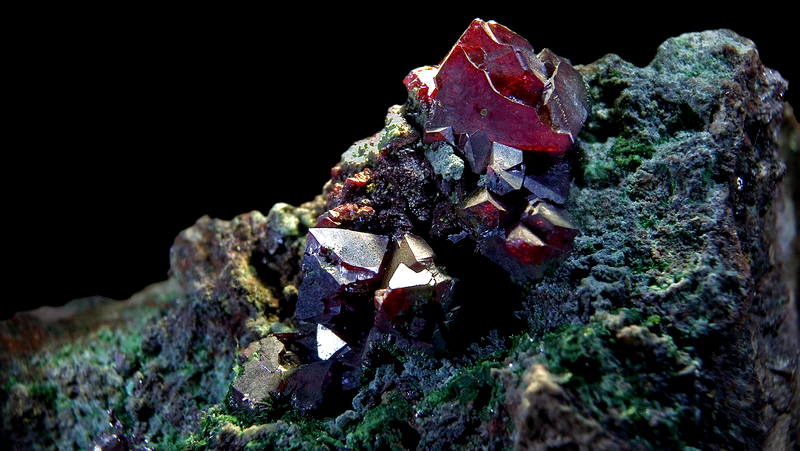
Kajumba’s life was shaped by riches in the soil beneath his feet, for he lived in an area of southern Congo called Katanga, in the city of Kolwezi. To certain foreign ears, “Katanga” meant valuable metals that could be traded on international markets, and fortunes were being made as Katanga’s earth was traded, refined down into metals, and made into batteries and electrical wire. Kolwezi had particularly rich mineral deposits: After the rain, puddles would sometimes shimmer green with oxidized copper.
Kajumba was a laconic man, rail‑thin, with the type of largish head that suggested nature had intended him for corpulence, even as circumstance had conspired to keep him slender. The air in his cramped room was thick, stuffy with the stench of three sweating men. Coming back late at night, Kajumba would call beforehand to let his roommates know it was him and not one of many strangers who might rob them in the early hours. Then he would knock at the door, and one of the slumbering men would groggily open it up for him. Trying to make as little noise as possible, Kajumba would crawl into bed, crowded with hot limbs, and attempt to sleep.
There is a cruel dichotomy that separates the haves—the rest of the world—from the Congolese and other people who inhabit the zones where the minerals that will power the future are mined.
The buzz of the city, with its thousand megaphones and beery canteens, would crackle around him; he would sweat; the mosquitoes—not as many as in some other parts of the city but annoying all the same—would flit about him, filling his ears with a thin whine. As he drifted off, his brain would play back a series of images from his time in the deep pits, where he wrenched minerals from the soil with his bare hands and a metal bar.
These were places where he had seen his friends crushed and suffocated, where he had seen lives given over to immense toil simply as a means of escaping the poverty that weighed down on them every day. “The worst souvenir of my time working as a miner is the nightmares,” he said. He described the horror of hearing a mine shudder and collapse, the sadness he felt upon seeing metal‑poisoned children with swollen, malformed heads and pinprick eyes peering out of hovels. “I would never accept for my children to become miners.” Lives like his, he reasoned, were being sacrificed for another generation, one that he hoped would never have to descend into the sweltering underground of Congo’s copper‑and‑cobalt mines.
When I met Kajumba in 2019, Amos had left, and Kajumba was sharing his room in Kolwezi with Trésor Mputu, a friend and colleague from Likasi, a town on the road to Lubumbashi. They were two‑thirds of a three‑man team of creuseurs. The third member was Trésor’s brother Yannick, who lived nearby. Other people worked as porteurs (mineral carriers), laveurs (mineral washers), and ramasseurs (groups, consisting mainly of children, who pick up slag that has been discarded near the mines).
Trésor had, like Kajumba, come to the city to dig riches from the soil, only to discover a daily cycle of miserable hours, backbreaking work, and anemic pay. (Kajumba’s brother was now looking for work in a town called Kasaji, maybe a day’s drive to the west when the roads hadn’t been turned to soup by rains.) Kajumba’s small room was in a poor neighborhood, but he didn’t mind; everyone who lived there knew one another and, Kajumba was sure, would keep their neighbors safe.
The mining economy that Kajumba was part of in Kolwezi was brutal, and it was key to powering the global economy. On six trips to Congo between 2019 and 2022, I visited the city four times. There I saw children and mothers on the roadside, sorting through minerals. Former child miners explained to me how they had learned to pick out the purest ore from rock slabs. Soon enough, they were lugging ore for adult creuseurs. Then, as teenage boys, they worked perilous shifts that saw them navigating rickety shafts. Near large mines, the prostitution of women and young girls was pervasive. Women washed raw mining materials, which are often full of toxic metals and, in some cases, mildly radioactive.
Researchers have estimated that thousands of children work in Kolwezi’s mining industry alone. It is hard to ascertain how many children actually work in the mines; figures range from thousands into the hundreds of thousands, although the higher numbers are often extrapolations based on small sample sizes. In the summer of 2024, UNICEF’s representative in Congo suggested that 361,000 children might be laboring in mines in southern Congo, though this number seems implausibly high and drew quick opprobrium from Congolese NGOs that work on the issue.
The truth is that there are no reliable census data, a problem compounded by the rhythm of artisanal mining: While some children work consistently at specific sites, others enter the mines during particularly hard times for their families. “I don’t think the government has any capacity to monitor children’s involvement in this,” said Mark Canavera, who has spent time in Kolwezi and worked as the co-director of the Care and Protection of Children Learning Network at Columbia University. “Even if it did,” he told me, “it doesn’t have a framework for thinking about what is child labor and what isn’t.”
The health effects that attend the extraction of this precious haul from the soil are not limited to just radioactivity. In March 2022, I spent a day with Dr. Billy Mukong, a local physician in Kolwezi. As he made his rounds, he introduced me to women whose children were born with defects. Some had distorted heads. Some were developmentally disabled.
The abnormalities, Dr. Mukong said, were due to exposure to dust, either directly, down in the mines, or secondarily, by breathing in what was blown off the backs of trucks carrying raw and processed ore around Kolwezi. “The illness rate is also very high because they work with no protective equipment,” said Charles Carron Brown, a consulting mining engineer who spent much of the 2010s working in Katanga. “They have no protection against dust. They’re breathing in silica dust and other metals as well. From a health standpoint, it is very bad for them. But they have no real choice, because it’s the only way they can make a living.” The respiratory effects of such minerals have long been known: In 1965, a biochemist hired by the region’s largest mining company noted that around a third of deaths among workers at the company had been caused by respiratory illness, even as confirmed cases of tuberculosis were dropping, and that such ailments were the primary cause of sickness in workers’ children.
Dr. Mukong’s observations were also backed up by more contemporary science: If, for example, a pregnant woman works with heavy metals such as cobalt, or other metals that are by‑products of the mining process, her chances of having a stillbirth or a child with birth defects increase. According to a 2020 study in The Lancet, women in Lubumbashi “had metal concentrations that are among the highest ever reported for pregnant women.” The study also found a strong link between fathers who worked in mineral extraction and fetal anomalies in their children, noting that “paternal occupational mining exposure was the factor most strongly associated with birth defects.”
*
The political and economic geography of the copperbelt, the mining zone that snakes under Katanga and northern Zambia, has been fashioned by external forces and outside greed since at least the time of Belgian colonization. In the 1880s, Belgium’s King Leopold II annexed the entire Congo Basin, more than nine hundred thousand square miles of Central African jungle, highlands, savanna, and forest, Katanga included. (Belgium wasn’t even twelve thousand square miles.) The regime that Leopold put in place was responsible for the deaths of up to thirteen million people, as his agents frantically plundered ivory and rubber in what the novelist Joseph Conrad famously capsulized as “the vilest scramble for loot that ever disfigured the history of human conscience.” Katanga, with its copper mines, escaped the worst of the violence. It first began to be exploited for its metals by the Belgians who came after Leopold.
By the 1930s, the Union Minière du Haut‑Katanga, the Anglo‑Belgian concern that ran the mines of the southern Congo, was the largest copper‑producing company in the world. Over two decades into the twenty‑first century, the Central African Copperbelt is still globally important—a little more than a tenth of copper mined worldwide in 2020 came from Zambia and Congo alone, and 70 percent of the world’s cobalt came from Katanga.
Not that Kajumba or many of his fellow miners saw more than a trickle of the massive profits produced by those minerals. In Congo, vast wealth, much if not most of it accrued from selling off the country’s abundance of natural resources, coincides with crippling poverty. Kajumba was one of seventy‑four million Congolese who lived below a poverty line of $2.15 a day. Forty‑three percent of children in the country were malnourished.
The minerals Kajumba and hundreds of thousands of impoverished Congolese were digging up allowed the rest of the world to enjoy the benefits of electricity, but the benefits to the people of Congo were woefully limited.
And yet, if you knew where to look, there was a tremendous amount of wealth circulating in Congo. Patrick Masengo Kalasa, a Katangese politician who worked as a tax adviser until 2017, told me that the large companies he worked with had to pay their tax bills at a government office in Kinshasa, Congo’s capital. Masengo worked for a large gold‑mining firm but his colleagues worked with Tenke Fungurume Mining, the largest copper‑cobalt mine in the country. “You would go to the window at the government office, and they would say, ‘Wait for a special account number.’ You would wait, and then sometimes at five o’clock in the afternoon, you would hear that taxes had to be paid into a special account,” he explained. “Most of those accounts were in foreign countries. Sometimes they would be private accounts at private banks. This would happen at the level of the central bank, but we would never be paying into government accounts.” I asked him to whom the accounts belonged, but Masengo said he was never told. The answer became partly clear when a series of leaks known as the Congo Hold‑Up showed that Joseph Kabila Kabange, the former president, and his entourage had used a bank called BGFI to siphon at least $138 million from the country.
Such practices, Masengo heard from people he worked with, were “still very current” in 2024. Large companies were to blame too: “Accountants fake earnings, so there is a work of corruption, and taxes are not paid at their real value.” The result? “There is no money circulating in Katanga. Can you imagine? The governor’s office is in arrears—it’s supposed to be at the head of the province, and people haven’t been paid for eight months.” On the same day that the iPhone 16 was released, September 20, 2024, Masengo was detained by the Congolese government for publishing a charter demanding rights for the Katangese people and calling for the mineral wealth of the province to flow back to them.
Only a small number of Congolese have profited from their country’s riches. When I visited Congo for the first time, in 2019, I sat on the terrace of a high‑end mall in Kinshasa with Onasis Kavul, a thirty-something political functionary whose loyalties lay with the party of Kabila, then the outgoing president. Kabila had privatized Congo’s mining sector and, in doing so, made fortunes for his family and the people around him. Kavul crowed about how quickly he could drive a Porsche Cayenne from Lubumbashi to Kolwezi. The car’s price point in the U.S. started somewhere around $80,000—more than 170 years’ salary for many Congolese at that time—and prices were always higher in Congo, thanks to steep import fees and tariffs. Outside, the children of the elite, many of them people who had made money from mining, revved their late‑model sports cars in the humid Kinshasa night. They couldn’t go far, though: Beyond a few stretches of road in the upscale Gombe neighborhood, the roads were too rutted and chewed up for the fleet of low‑riding Ferraris and Aston Martins to handle.
Under Congo’s next president, Félix Antoine Tshisekedi Tshilombo, the cast of characters would change, but the principle would remain the same. And, as bad as all that looting was, the wealth that remained in Congo constituted only a small percentage of what was being made on markets globally, and from the technology those minerals powered.
There is a cruel dichotomy that separates the haves—the rest of the world—from the Congolese and other people who inhabit the zones where the minerals that will power the future are mined.
The minerals Kajumba and hundreds of thousands of impoverished Congolese were digging up allowed the rest of the world to enjoy the benefits of electricity, but the benefits to the people of Congo were woefully limited. Almost all cell‑phone batteries contain cobalt, and although more and more people in Katanga had cell phones, few of them could pay to use them regularly. And away from Congo’s town and city centers, there was little or no reliable electricity.
__________________________________
Excerpted from The Elements of Power: A Story of War, Technology, and the Dirtiest Supply Chain on Earth by Nicolas Niarchos. Copyright © 2026. Reprinted with permission of the publisher, Penguin Press, an imprint of Penguin Publishing Group, a division of Penguin Random House. All rights reserved.

Nicolas Niarchos
Nicolas Niarchos is a journalist whose work focuses on energy, war, and migration. His work has been published in The New Yorker, The Nation, and The New York Times. He has testified on the effects of Congolese battery metal mining on Capitol Hill. His work on mining in Indonesia was shortlisted for a 2024 Livingston Award. In 2023, he won an Edward R. Murrow Award for a radio report from Ukraine for The New Yorker and WNYC.