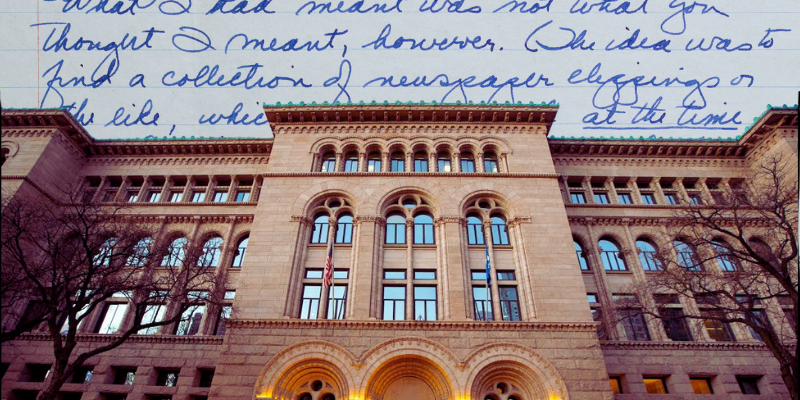
If you read cursive, the Newberry has a job for you.
The Newberry Library in Chicago is scouting transcribers to demystify its handwritten collection.
As Dan Kelly wrote in yesterday’s Chicago, the archive’s hunt for “living Rosetta stones” first kicked off in 2013, when the Newberry launched a campaign to transcribe all its Civil War letters in time for the sesquicentennial. This was such a success that the project has since gained momentum, expanding into all corners of the collection’s vast archive.
Volunteer crowdsourcing efforts began in earnest during the pandemic. Because, as Alison Hinderliter, the Newberry’s curator of modern manuscripts and archives has put it, “people were looking for something meaningful to do.”
But as digitization demand stays up, the trusty transcriber herself has become harder to source. And this seems a harbinger, given that cursive has been cut from the Common Core.
In 2022, historian Drew Gilpin Faust rang the bell for the dying art of handwriting, cautioning NPR that “we will become reliant on a small group of trained translators and experts” to keep the historical record.
All archives predating the printing press, Faust said, “including the documents and papers of our own families,” are in danger of going the way of the dodo bird if there are no people around who can read them. Which is why projects like the Newberry’s—and this similar call last year, from the National Archives—are more important than ever.
So what’s in the Newberry that’s so in need of saving? It’s honestly hard to say where to begin. The Chicago behemoth holds documents that date back to the 17th century.
Others hold the key to early modernism. There’s correspondence to and from Chicago literary luminaries like Nelson Algren, Gwendolyn Brooks, Jack Conroy, and Sherwood Anderson.
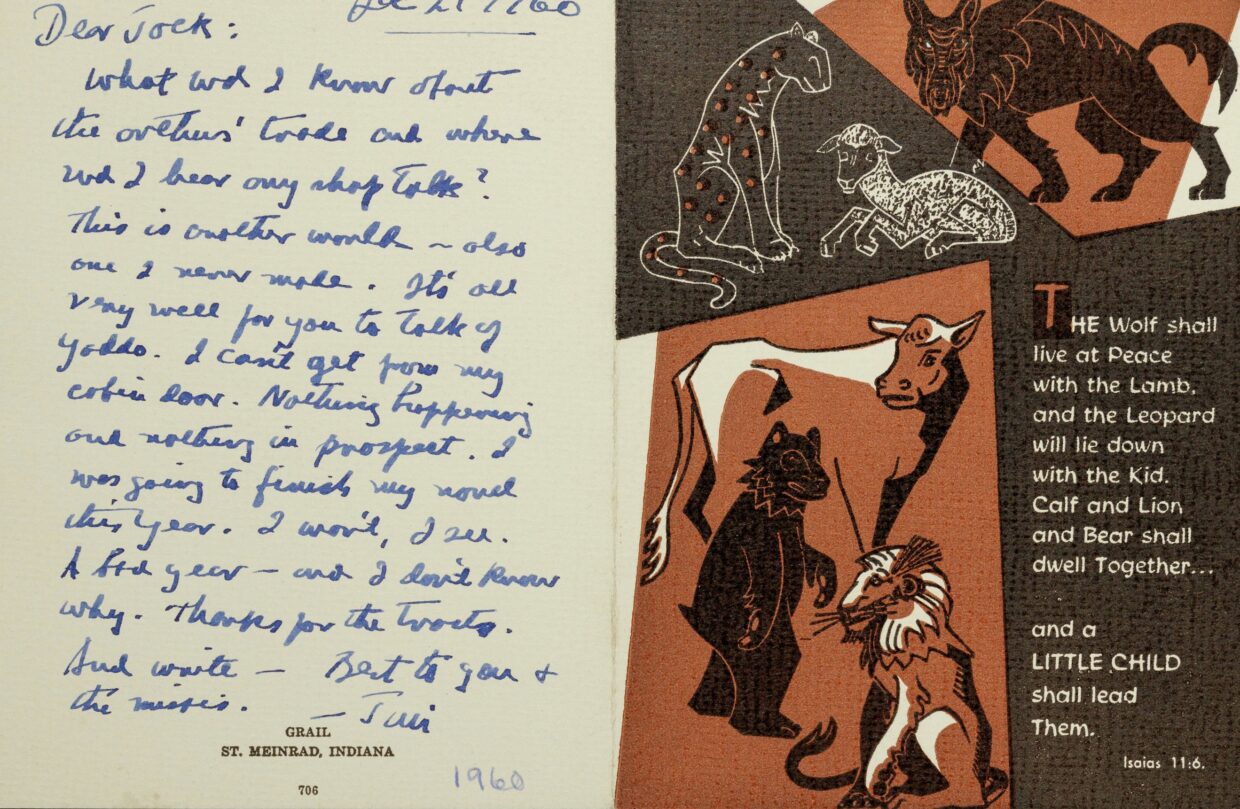 A 1960 postcard to Jack Conroy. Pull quote: “It’s all very well for you to talk of Yaddo. I can’t get from my cabin door.”
Kelly noted discrepancies after a visit to the stacks. “Algren’s correspondences are at least semi-legible,” he said. “The same can’t be said for Sherwood Anderson’s.”
But you be the judge.
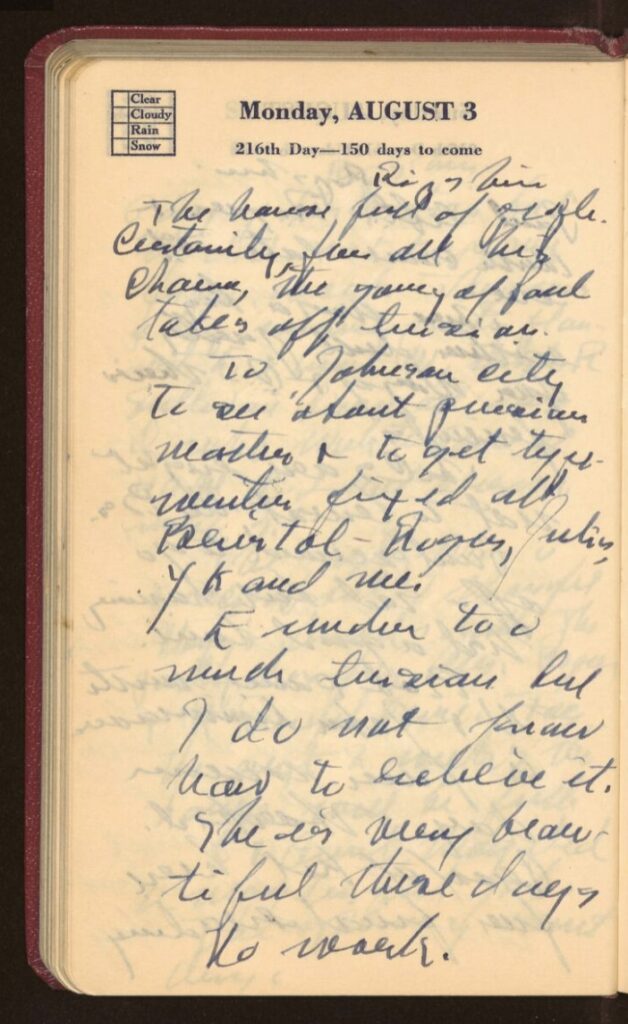 A page of Sherwood’s diary that’s in desperate need of deciphering.
There’s also a trove of city-specific history. Like irreplaceable firsthand accounts of the Great Chicago Fire, and diary entries from attendees of the World’s Columbian Exposition of 1893.
But my personal favorite? A 17th century book of magic spells.
The Newberry currently has 146 registered transcriber volunteers, but thousands of others have come and gone over the last decade. If you’re willing to brush up on those loopy Qs, you too can join the bold at Newberry Transcribe.

Brittany Allen
Brittany K. Allen is a writer and actor living in Brooklyn.