How World War I Created the Army Olive Green We Know Today
Kory Stamper on the Wartime Development of the Dyestuff Industry in the United States
Color occurs naturally, but most of the color in our modern world is manufactured. Margarine makers, for instance, didn’t just forage prepackaged yellow dye from some mountain meadow. Even if the raw materials for that dye were from a meadow, the colorant itself, in its liquid gold form, was carefully, lovingly synthesized.
The production of colorants—dyes, in particular—was a global concern. German dye manufacturers reigned supreme prior to the start of World War I. Read any history of the development of synthetic dyes, and apart from a Brit and a handful of French chemists the pages will be lousy with Germans: unsurprising considering that modern chemistry was essentially born in the nineteenth-century German academy. Synthetic dyes were more colorfast, lightfast, and consistent than natural dyes, and the industry boomed. By 1914, 90 percent of the world’s synthetic dyes were produced by German companies.
Once color became a wartime concern, everything colorful—paints, stains, glass coatings, metal coatings, dyes, enamels—needed to be color coordinated on a national scale.
Then two shots straight at the heart of the Austro-Hungarian Empire, then a local skirmish or two, and then cataclysm. The once thriving dyestuff industry in Germany found itself in increasingly dire straits as the war progressed. Important chemicals needed for the manufacture of dyes were requisitioned for the creation of pharmaceuticals, and the blockade enforced by Britain threatened the ability to deliver one of Germany’s main commercial exports to neutral nations. The industry was at risk of collapsing—until the physical chemist Fritz Haber, at the behest of the German Supreme Command, managed to take a common by-product of dye manufacture and weaponize it. Fashion, but make it deadly: In 1915, chlorine gas became the first lethal chemical weapon used on the battlefield in World War I, and the German dye industry was the main supplier.
Dyestuff creation may sound very Ren faire, or like something the Weird Sisters from Macbeth would do in their downtime, but modern synthetic dye manufacture is hardcore chemistry with hardcore chemicals. One early synthetic dye, 2,4,6-trinitrotoluene, yielded a lovely yellow color; we know it today by its shorthand, TNT. Many of the chemical catalysts and intermediates that were used to create commercially popular dyes like sulfur black and crystal violet also made great explosives, as was clear from the conflagrations that would break out with some regularity at dye works. Germany repurposed dye works into munitions plants with very little effort, and though Britain did its level best to choke off Germany’s importation of some of the chemicals used in dyestuffs and explosives, Haber’s discovery was the nail in the coffin. Dyeing killed.
Over in the still-kind-of-neutral United States, the loss of imported German dyes was a huge economic shock. Dyes, and especially those formerly easily imported high-quality synthetic dyes, were used in everything, from money to fabric, house paint to buttons. When war broke out and it was clear that there’d be no more German dyes for import, America scrambled and bought German dye reserves from China and India, but by 1915 they were gone. It wasn’t just a fashion crisis: One newspaper writer noted in a 1916 column that the dearth of commercial colors affected so many industries that it could cost the American economy $5 billion, or about $1.4 trillion in modern moolah. It was so severe, it even got its own sound-bitable name: the Dye Famine.
There was a push to use American dyes and colorants to stave off a deep economic recession—there wasn’t really any other choice—but the cold commercial reality dumped water all over that flag-waving parade. American-made dyes had relied very heavily on chemicals that were synthesized and supplied by the country that had dominated chemistry throughout the nineteenth century: Germany. Without them, the resulting dyes were middling at best, and despite a hardcore propaganda campaign to the contrary, and a call to meet the dye shortage with “a spirit of generous compromise,” people still longed for the vibrancy and colorfastness of the traitorous stuff.
Once Germany reverted to unrestricted submarine warfare in January 1917 and America stopped pretending to be neutral and joined forces with Britain, we had a whole new reason to worry about what Germany’s dye works were getting up to. Color, it turns out, was tactical, and just like at home color was everywhere. A flare pistol could shoot bright white flares at night to illuminate no-man’s-land and enable riflemen to shoot enemies who might be creeping across it under cover of night, but the same bright white flare was invisible during the day, when flare pistols were used for signaling—what color, then, would be dark enough to show against the haze of the front and still be bright enough to use at night? Gray ships were easily seen in profile against the sky and horizon by U-boat periscopes—was there a better color to paint them to help camouflage them from attack?
Thousands and thousands of yards of camouflage covers needed to be dyed a consistent color: Make one batch just a smidge too green, for instance, and that camo cover no longer blends in with the mud of the Somme, but stands out like the proverbial green thumb, signaling to German aircraft just where to aim their guns. Aerial surveillance and reconnaissance, both innovations of the war, required photographs taken through high-quality optical glass (Germany’s domain) with spectrally sensitive film that could pick up troop movement through smoke and haze: Where was that going to come from now? Even chlorine gas itself became problematic in wartime use—not for its lethality, but because it produced a distinctive yellow-greenish cloud when released that was easily detectable by the enemy.
Once color became a wartime concern, everything colorful—paints, stains, glass coatings, metal coatings, dyes, enamels—needed to be color coordinated on a national scale. Easier said than done: America lacked Germany’s centralized manufacturing structure since it was a tiny bit larger than Deutschland, and now it also lacked the time, money, and raw materials needed to build such an infrastructure. Paints and stains were heavy and expensive to ship over such long distances, so the industry had favored smaller local paint makers instead of big manufacturers. No centralized manufacturing meant that the government relied heavily on already overburdened paint companies to scale up production exponentially and immediately.
Very few places made optical or metal coatings, and rarely in the quantity needed by the government. Dyestuffs manufacturers competed with pharmaceutical companies for the same chemicals: Which industry is the War Department going to prioritize when just as many soldiers were dying of disease as were killed in action? The government mobilized the entire economy to support the war effort: Rationing, war bonds, requisitions, and contracts with every Tom, Dick, Harry & Co. became common within months of America entering the war. If large companies balked at letting Uncle Sam decide what they were making and what the government would pay them for it, they might well have found themselves the subject of antitrust suits brought by the government.
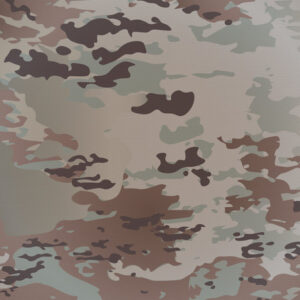
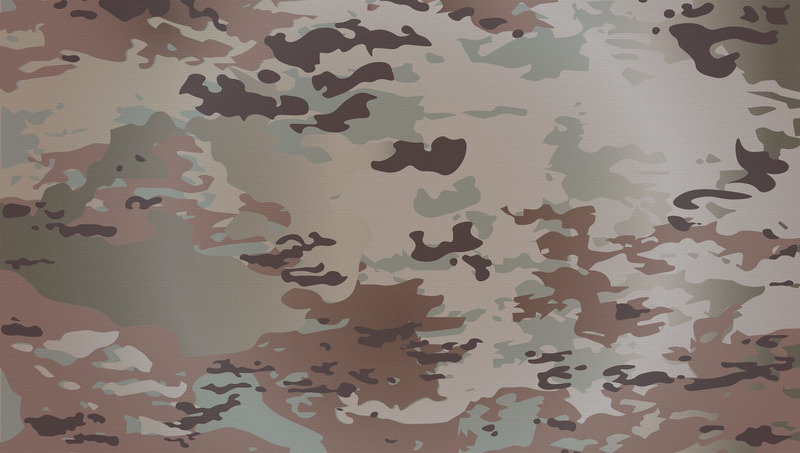
When freedom itself was on the line, the name of the game was efficiency, and anything that gummed up the works was a national defense crisis. It was suddenly a liability that America didn’t have a centralized and standardized way to describe and create colors. One supplier of dyes for army uniforms, for example, might be running low for any number of reasons—not enough labor, not enough chemical intermediates, sudden plant explosion at the dye works. The government could go to another supplier with a swatch of the dyed fabric they wanted and say that it was olive drab. But that other supplier would have to try to reverse engineer that particular dye—formulas for dyes and colorants were, in spite of being in service to the war effort, still proprietary—and backward engineering color from a finished product is a crapshoot. You have to start by figuring out what color this olive drab actually is.
Colorimeters, or instruments to accurately measure color, had been developed prior to the war, but the ones that were easiest to use were the most limited, and the ones that were the most accurate were the fiddliest. Operating these colorimeters required a deft hand, a trained eye, the right light source, reliable equipment—most of which were in short supply during the war. But even a colorimetric measurement of a color doesn’t tell you what chemicals made up the dye that gave you that color. That relied on the chemist’s experience on the bench and off: This sort of chemical synthesis would probably give you a green close to what you’re looking for, but not on short fibers like cotton, unless we tried to use this sort of intermediate chemical, though in this chemical process that intermediate might blow up the plant while we’re making the dye, in which case we may want to consider this other-other chemical process that would… ad infinitum. And once you had a working formula for the color mixture, then what? You still had to synthesize it in a lab; you still had to source the chemicals to make your dyes at scale; you still needed to test how the dye struck the fabric, how it weathered, whether it was going to cause a reaction with the skin of the wearer. This couldn’t be done in a matter of weeks. And this is assuming that the swatch handed to the manufacturer was, in fact, U.S. Army olive drab: Different branches of the military used the color names “khaki” and “olive drab” to refer to different colors throughout the war.
When freedom itself was on the line, the name of the game was efficiency, and anything that gummed up the works was a national defense crisis.
The U.S. government needed to keep tabs on all this, and who better but the science nerds at the National Bureau of Standards? The bureau was officially created in 1901 as the first national physical sciences research lab—a bold move, since America had few working scientists within its borders. (Science was mostly an academic discipline in the nineteenth century; if you wanted to actually do the science, Europe was the place to be.) Its mandate was to measure and standardize everything it could, and it was desperately needed: One scientist complained that when dealing with liquid measurements, he had to deal with eight different “standard” gallons, and this in spite of the fact that the U.S. Office of Weights and Measures had been setting standards for, well, weights and measurements since 1836.
The early work of the NBS focused primarily on consumer goods, but war changed that as well, and the bureau was quickly called to help fix the issue of national manufacturing unevenness. It had started a running list of all the ways that color was weaponized or problematized during the war; it touched on physics, chemistry, optics, illumination, all fields dominated by Germany, all fields that America would need to make serious headway in to guarantee lasting national peace.
The head of the NBS went before Congress in 1916 and asked for the wartime equivalent of a unicorn: an extensive increase in funding so they could investigate all these new technologies and shore up American research. “The items submitted—I think I can say all of them—are as fundamentally concerned with both industrial and military preparedness as any that will come before you,” he said during the hearings. The budget was approved, which meant that a wartime American Congress threw oodles of money at something that, just ten years earlier, had been considered the province of Parisian couturiers and dress-mad socialites: color standards.
The war was over, but another was just beginning, and butter was the battlefield.
__________________________________
From True Color: The Strange and Spectacular Quest to Define Color—from Azure to Zinc Pink by Kory Stamper. Copyright © 2026 by Kory Stamper. Excerpted by permission of Alfred A. Knopf, an imprint of Knopf Doubleday Publishing Group, a division of Penguin Random House LLC. All rights reserved. No part of this excerpt may be reproduced or reprinted without permission in writing from the publisher.

Kory Stamper
Kory Stamper is a lexicographer who has written dictionaries for nearly thirty years at Merriam-Webster, Cambridge Dictionaries, and Dictionary.com. She is the author of Word by Word. Her writing has appeared in The Guardian, The New York Times, New York, and The Washington Post, and she blogs regularly on language and lexicography at www.korystamper.com.