How The Great Gatsby Inspired My Debut Literary Thriller
Amin Ahmad on Putting His Own Immigrant Twist on an American Literary Classic
I.
In the fall of 1985, I discovered a tiny bookstore in Poughkeepsie, NY.
It was a hot, humid evening. I’d escaped from Freshman Orientation and was wandering aimlessly through the streets of this tiny town, looking for some sort of refuge. I’d been in America four days, and it was bewildering: The accents. The brightly colored clothes. The strange, flavorless American food.
I needed a respite, and I found it in a bookstore, tucked away on a side street, the owner almost hidden by towering stacks of books. Back home in India, books were expensive, but here I could miraculously afford several paperbacks.
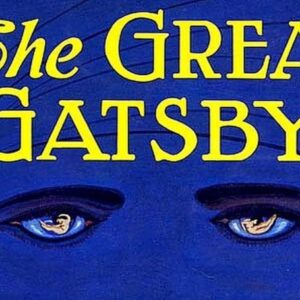
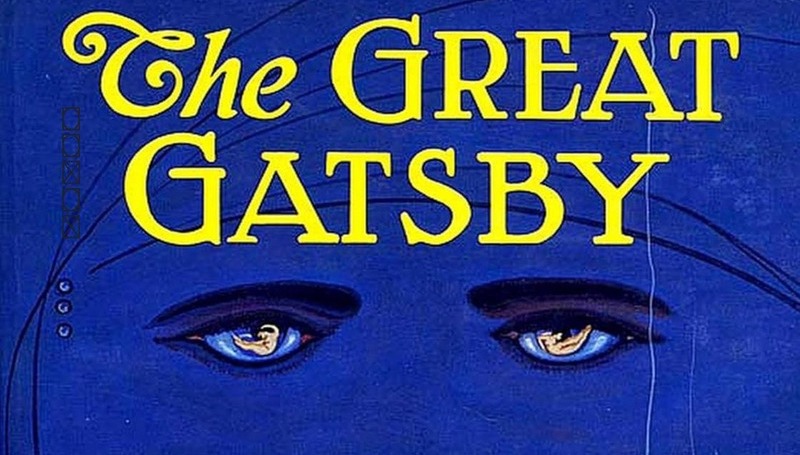
One of which, The Great Gatsby, I bought simply because I had heard of it. An American classic, the cover oddly archaic, blue, with disembodied eyes. I read it slowly, during the first few weeks of Freshman year—while my roommates got drunk, threw up, and chased girls—and a vision of America unfurled: Tycoons. Mansions out on Long Island. Parties. Gatsby himself, in his finely tailored clothes, calling people “Old Sport.” Despite his wealth, he remained an outsider, ill at ease.
I realized why Gatsby had stayed with me all these years…. In short, Gatsby was an immigrant—like me.
I tried to discuss the novel with my roommates, but they had been forced to read it in high school, and to them it was a dull textbook, to be mined for themes and symbolism.
Well, I had not come to America to study literature. I commenced my study of more practical subjects, but in my spare time consumed the American classics. None stuck like The Great Gatsby, which I would read, many times, drawn into its world.
II.
In 2022, I was driving down a congested stretch of the New Jersey Turnpike near Newark. By then, I’d burned through a career as an architect and reinvented myself as a writer. I’d published two suspense novels and then spent a decade writing four novels that no one wanted. I was on the verge of giving up on the writing life.
That muggy afternoon on the Turnpike, a black Lincoln Continental drove past me. Tinted rear windows hid the passenger. The chauffeur up front wore a dark uniform. The vanity license plate read, “SINGH IS KING.”
I’d just finished re-reading Gatsby for the millionth time, and I saw everything through its lens: I imagined a newly-minted Indian tycoon in the back of that limousine, a self-made man, drunk on the American vision of success.
In that instant I realized why Gatsby had stayed with me all these years. No matter how much wealth Jay Gatsby amassed, he would always struggle to reinvent himself, to outrun his humble origins.
In short, Gatsby was an immigrant—like me.
In that moment, I wanted to write a new Gatsby, an Indian immigrant version. I filed away the powerful image of the person sitting in the back of that black limousine.
III.
For the next year, the vision of the car on the New Jersey Turnpike haunted me. I did some research on rich Indian businessmen in New York City and found a hotelier who had made so much money that he was building an elaborate estate out on Long Island, to be staffed by Indian servants. This was promising—Long Island was Gatsby territory—but whenever I tried to flesh out the story, I hit a wall. Yes, the guy was rich. Yes, he had a lot to prove: He was a brown man in a white world. He had to be threatened by some sort of scandal that would reveal his past, but what was it?
Maybe this rich Indian Gatsby had a son who was a drug addict, who caused him a lot of grief. Maybe the novel was narrated by an outsider who was hired to babysit the son and keep him out of trouble. I wrote a few pages in that vein, and my Gatsby character gained a name—Abbas Khan, a powerful real estate developer: Shaved head, bespoke suits, fake Brit accent. Ruthless power player, ladies’ man.
Abbas Khan sat in the back of my head and glared at me.
“Get on with it,” he seemed to say. “Stop being a milksop. Be a man.”
IV.
When stuck with a story, there is a technique I use: When meeting friends, I tell them the story of the book I am working on. It’s an X-ray in real time. As soon as their eyes glaze over, I know it’s not working. In that moment, I will backtrack, I will revise, I will try out a new version. I will do whatever I have to do to keep their attention.
During the early part of 2023, I tried out the rich-guy-with-an-addicted-son narrative with little success. Then two things happened: I started to joke with my writer friends that I should just write another cliched Indian family novel about an arranged marriage. Publishers ate up that stuff, didn’t they? And readers, too.
Also, in a distracted, third-hand way, I became conscious of a Long Island story that was playing out on newspaper headlines and television news: The police had finally caught a guy nicknamed ‘Long Island Serial Killer,’ who, for years, had been burying his victims on a deserted stretch of beach. What caught my attention was the nostalgic tone that the newspaper reports were taking: A serial killer! Wow! There were stories about how, nowadays, with DNA and surveillance cameras, it was hard to be a serial killer. The guy they caught was a throwback to some easier, simpler time…when it was easier to kill people and get away with it.
F. Scott Fitzgerald…[had] taken the American Dream—with all its contradictions—and written the story of an outsider.
At one gathering with friends, I gave the pitch another shot, and this time it went something like this:
“So, I’m writing a story about a Gatsby-like super-rich Indian real estate guy, he has a mansion out on Long Island, and…and…he’s looking for a husband for his daughter. An arranged marriage, you know? So they find this guy from India, and he agrees to the marriage, and comes to America. He thinks he’s got it made, marrying into a superrich family…but then he finds out there is something wrong with his new family…and maybe they’re linked to a serial killer who was active over a decade ago…”
This time I got their attention.
IV.
A few days ago, I received a heavy box from my publisher. Inside were stacks of pristine copies of A Killer in the Family. I opened a book and started reading. The story seemed inevitable: The novel was narrated by an outsider to the Khan family: Ali, the naïve new son-in-law, who has agreed to an arranged marriage with Maryam Khan; in Nick Carraway fashion, he observes the peculiarities of the Khans. There was the patriarch, Abbas Khan, prowling through the pages, making real-estate deals, manipulating people. There were scenes set at the Khan family’s opulent 1920s estate out on Long Island. There was the threat of the Jackson Heights Serial Killer, slowly seeping through the narrative. By the end of the novel, Ali, the narrator, was completely changed by his immersion in this world. The story was done.
In the back of the book was a list of acknowledgments, but I seemed to have left out an important one: F. Scott Fitzgerald had not made the list. He’d taken the American Dream—with all its contradictions—and written the story of an outsider. I was grateful to Fitzgerald for this template, but I should have also acknowledged that young man who walked into a bookstore forty years ago and bought a copy of The Great Gatsby.
That young man was lost and lonely, but he already believed in the power of fiction. And little did he know that he was giving his older self a present, one that would travel through time on a long journey.
It would just take forty years to complete.
__________________________________
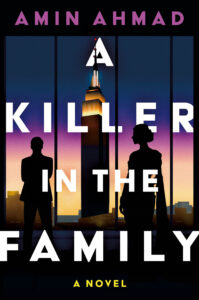
A Killer in the Family by Amin Ahmad is available from Henry Holt and Co., an imprint of Macmillan.

Amin Ahmad
Amin Ahmad was raised in India and came to America at the age of 17. He worked as an architect for many years before turning to writing. He teaches creative writing at Duke University, and lives in Durham NC with his family and a very mischievous cat. Learn more at https://www.aminahmadbooks.com/